
Altamira Oriole
Altamira Oriole
Icterus gularis
Quick Identification guide
Quick Identification guide
- •
Displays a striking bright orange-yellow body with contrasting black back, wings, and tail
- •
Features a stout, conical beak perfect for eating a variety of foods
- •
Characteristic black throat patch that extends to its face and upper chest area
What does an Altamira oriole sound like?
The Altamira Oriole produces a series of loud whistles and harsh chatters. Its call pattern varies, featuring falling, flat, and undulating notes. The bird pauses intermittently in-between, forming a unique melody. The vocalizations typically fall into two categories: chirp/chip, and whistle types. The songs are identifiable by their significant volume and variable pattern.
Description
Altamira orioles aren't known for being territorial but that doesn't mean they don't appreciate their personal space. They make sure they have plenty of it by placing their nests a good deal apart – around 900 feet! They like being alone but not lonely and breeding pairs stay together year round.
The Altamira oriole can weigh between 47to64grams and be from21to25centimeters tall.
The Altamira Oriole typically has a lifespan of 11 years. This places it middle-ground when compared to related species such as the Scott’s Oriole, with a lifespan of 8 years, and the Baltimore Oriole, that can live up to 12 years. An Altamira Oriole's life duration thus reflects its sturdy adaptation in various habitats, ranging from riverbanks to human settlements.
Did you know?
Most popular questions about Altamira oriole
How to recognise an Altamira oriole?
General appearance
The Altamira oriole is a strikingly colorful bird native to southern Texas and parts of Mexico. It is easily identifiable by its vivid orange-yellow body, contrasting with black wings and tail. The bird's face features a distinctive black throat and eye mask. Its robust build, measuring about 9-10 inches in length, includes a long, slightly curved bill.
Male vs female
Males and females of the Altamira oriole species are similar in appearance, both showcasing the bright orange-yellow and black coloration. However, females may be slightly duller in hue than males, although this difference can be subtle. Both sexes retain their coloration year-round, without significant seasonal variation.
Juvenile
Juvenile Altamira orioles have a more subdued appearance compared to adults. They exhibit a duller yellow-orange plumage and less defined black markings, particularly around the face and throat. As they mature, their coloration gradually intensifies, and the distinctive black facial features become more pronounced.
Often mistaken for
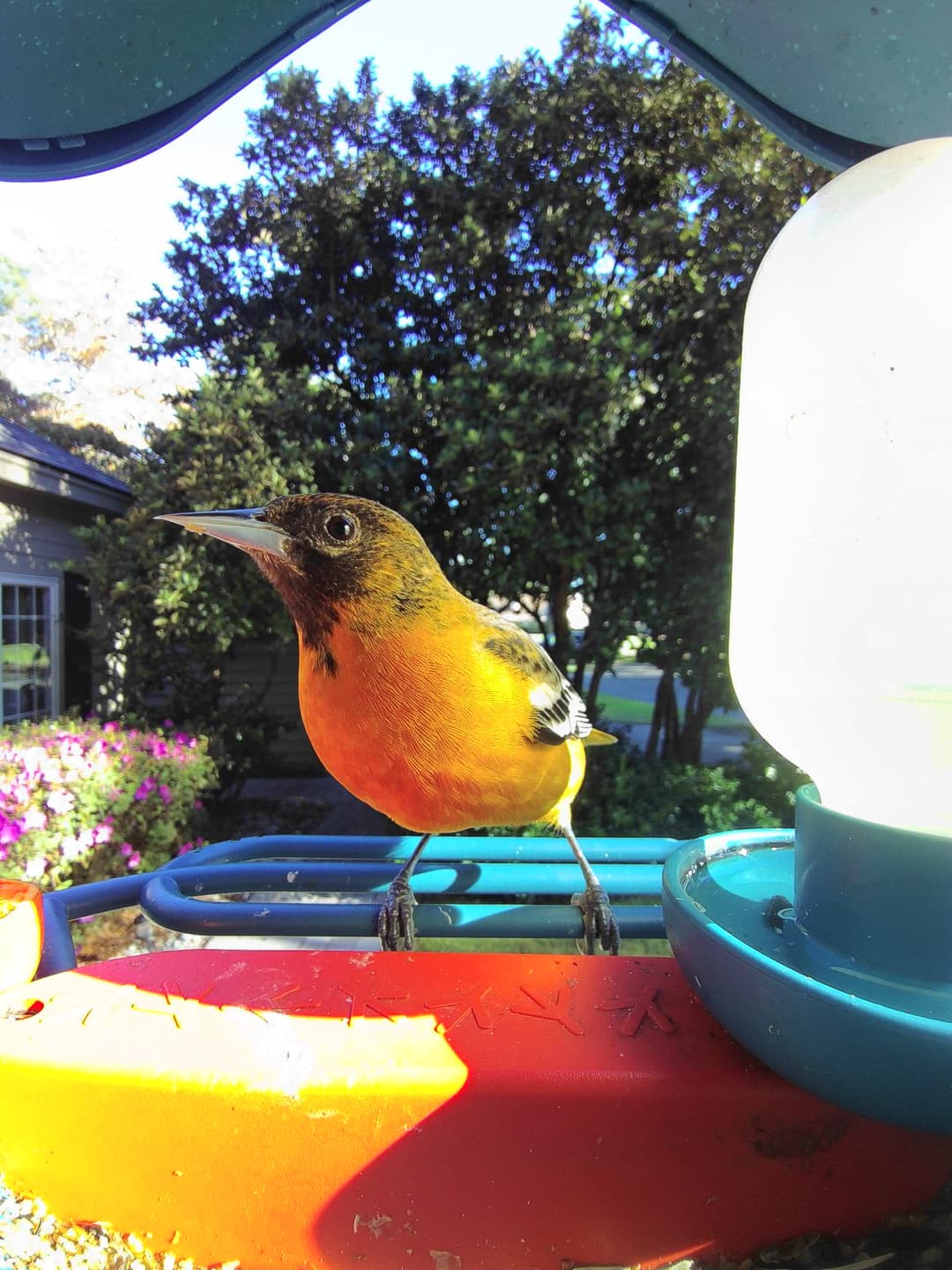
Baltimore Oriole vs Altamira Oriole
The Altamira Oriole is larger and more robust than the Baltimore Oriole. Altamira shows a more striking orange plumage without the black head and with a bright orange shoulder patch. Baltimore Oriole has an orange body with a black tail and head. Look for the Altamira's deep orange and stout bill.
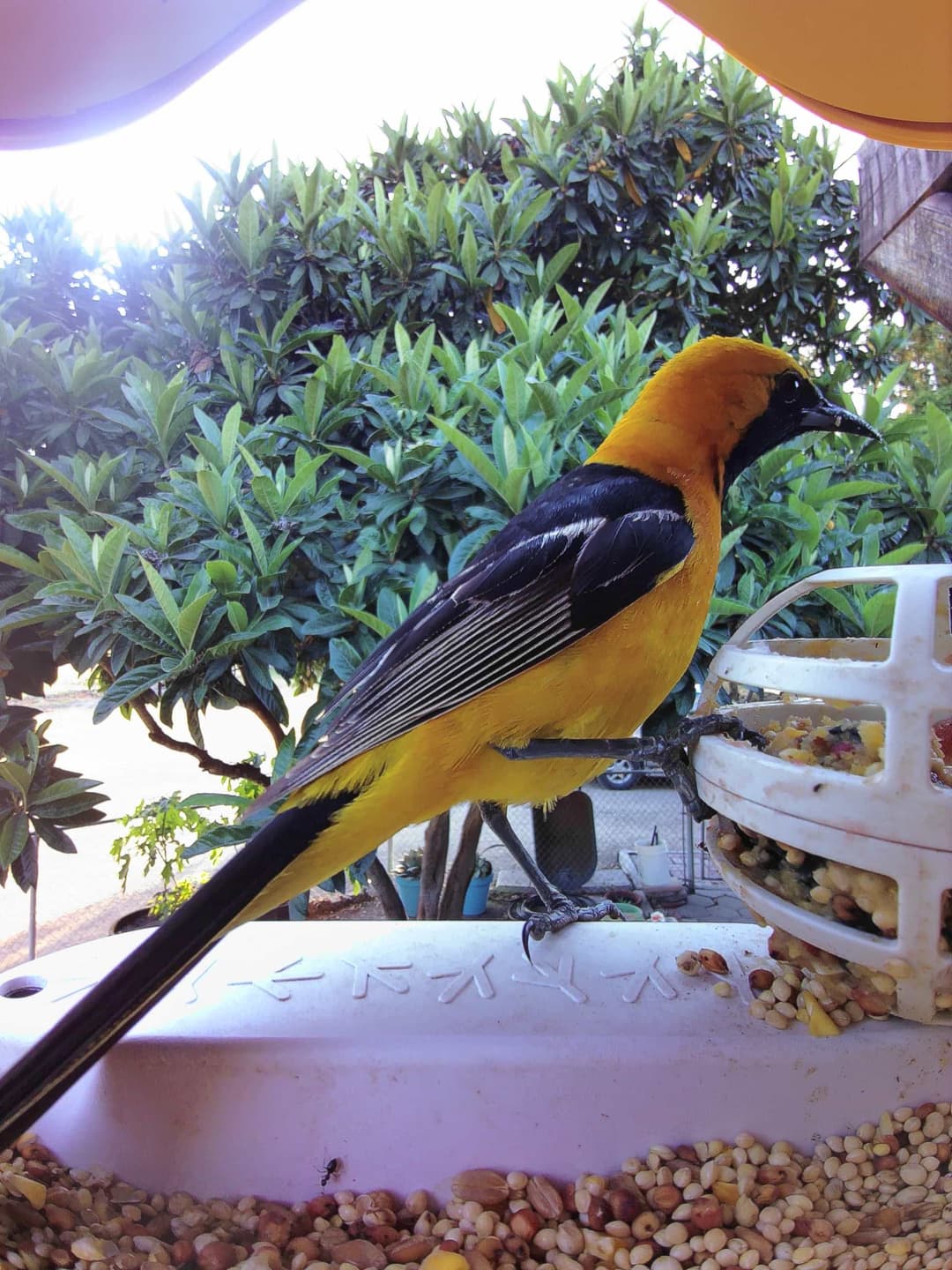
Hooded Oriole vs Altamira Oriole
Altamira Orioles are larger with a more vivid orange and lack the black hood of the Hooded Oriole. Altamira has a longer tail and heavy black on the back. Hooded Orioles tend to have more slender bodies and a clear black bib on the chest. Note the absence of a dark hood on the Altamira.
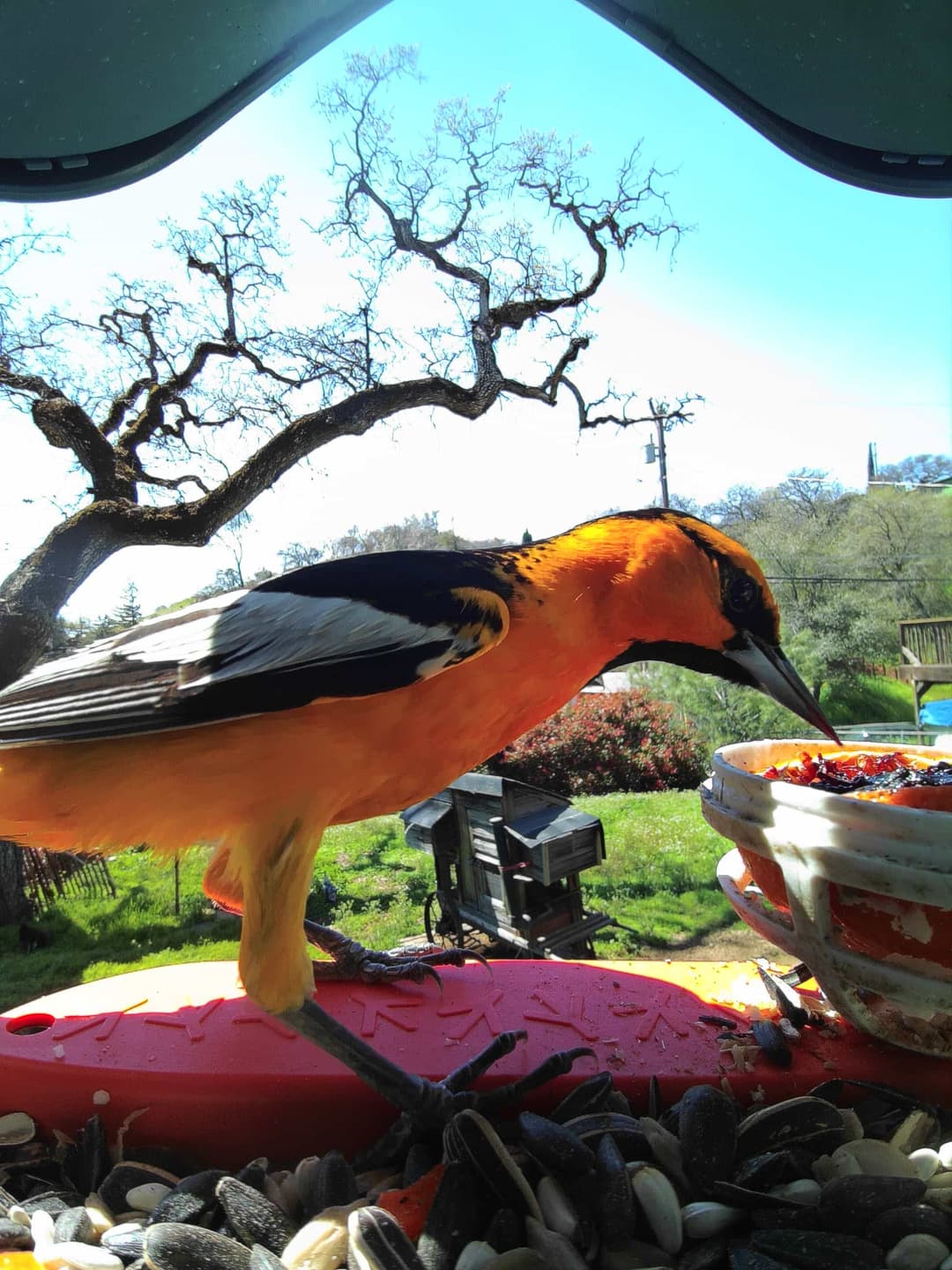
Bullock’s Oriole vs Altamira Oriole
The Altamira Oriole is generally larger with more intense orange coloring compared to Bullock's Oriole. The throat of the Altamira is orange compared to the black of Bullock's. Bullock’s Oriole has a distinctive black line through the eye and a more slender appearance. Observe the heavy black tail of the Altamira.
Breeding and nesting habits of the Altamira oriole
Mating behaviors
The Altamira oriole is known to breed predominantly from late April to late July. Pairs engage in courtship display, with vocalizations and mutual preening to strengthen their bond before nesting.
Nesting details
Altamira orioles construct nests conspicuously at the end of horizontal branches, averaging 30 feet above ground, but can vary between 10-80 feet. In tropical areas, nests might even hang from telephone wires. The female builds an elaborate, long hanging pouch up to 2 feet long using Spanish moss, grass, palm fibers, and other natural materials, lined with down, hair, or feathers. Nest construction can take over three weeks.
Eggs and chick-rearing
Once the nest is built, the female lays a clutch of eggs, which she predominantly incubates. Both parents participate in feeding and caring for the chicks once hatched, providing a diet of insects and fruit. For garden nesting, ensure tall trees or strong structures for nest suspension, and avoid disturbance during the breeding season.
What does an Altamira oriole like to eat?
Fruits
Insects
Nectar
Seeds
Natural diet
The Altamira oriole primarily feeds on a variety of natural food sources found in its habitat. Its diet consists mainly of insects, such as beetles, caterpillars, and ants, which provide essential protein. Additionally, this oriole consumes nectar and fruit, making it a crucial pollinator and seed disperser in its ecosystem. Fruits like figs and berries are favored, offering vital carbohydrates and sugars. The species also feeds on spiders and small invertebrates, which contribute to its varied diet and nutritional needs.
Bird feeders
Altamira orioles are attracted to bird feeders that offer foods resembling their natural diet. Common offerings at feeders include sugar water in hummingbird feeders, which simulates the nectar they consume in the wild. They are also drawn to fruits such as oranges and grapes, which can be placed on platform feeders. Some people offer jelly, particularly grape jelly, known to appeal to orioles' sweet tooth. Additionally, mealworms can be provided to mimic their insectivorous diet, supporting their protein intake.
Feeding altamira orioles
One of the best ways to attract Altamira Orioles to your yard is by stocking your feeders with their favourite snacks. Oranges, bananas, and jelly are loved by this bird. Halve an orange or banana and place it on a platform feeder or spear on a branch. Fill a small dish with jelly but just enough that the Orioles can get a taste. Bird Buddy seeds have been proven to be highly effective and a favourite of the Altamira Oriole as well. Experts at Bird Buddy carefully select seeds for each season to ensure that you attract the most amount of birds to your yard.
Creating a haven for altamira orioles
In addition to food, consider providing nesting sites to encourage Altamira Orioles to make your yard their home. They are known to weave hanging nests on tall trees, so if you have suitable trees in your yard that's a plus. Lastly, hummingbird feeders with perches and shallow bird baths can be a source of fun for these birds. Fill your feeder with sugar water – about a 4:1 water to sugar ratio. And remember, although Orioles love to sing, they have their own melodies, so we may not be able to have that sing along we were hoping for!
Where can you find Altamira orioles?

Primary habitat
The Altamira oriole primarily resides in open tropical woodland and edges, mainly in areas near the Rio Grande in southern Texas.
Additional range
In Mexico and Central America, it resides in open dry woods, forest edges, streamside groves and scattered trees in the open country. It usually avoids unbroken humid forest.
Do they migrate?
The Altamira oriole is a permanent resident throughout its range, meaning it does not migrate. This bird species is found primarily in Mexico and Central America, extending into the southernmost parts of Texas in the United States. Unlike some other oriole species that migrate seasonally between breeding and wintering grounds, the Altamira oriole remains in its habitat year-round. Since it is a non-migratory bird, the Altamira oriole establishes and maintains its territory within its preferred environments, which typically include open woodland, forest edges, and semi-open areas with large trees. This lifestyle allows it to focus on breeding, foraging, and other daily activities without the need for the long-distance travel associated with migration. The Altamira oriole's sedentary nature can be attributed to the abundance of resources within its range, such as food and suitable nesting sites, reducing the necessity for relocating seasonally. Thus, there is no specific migration route, timing, or key locations associated with the Altamira oriole, as it remains within its established range throughout the year.
What is the role of Altamira orioles in nature and how to protect them?
Conservation status
The Altamira oriole is considered common, particularly in its southern range, and has become more prevalent in Texas over the last 50 years. Unlike some oriole species, it may be less affected by cowbird parasitism, which poses a threat to bird populations by leading to nest failures. Currently, there are no significant conservation efforts specifically targeting the Altamira oriole, as it is not classified as vulnerable or endangered. However, maintaining its habitat and monitoring cowbird populations can help sustain its numbers.
Ecological role of Altamira orioles
Its role in the ecosystem
The Altamira oriole serves a critical ecological function with its diet largely comprising insects and small fruits. Its predatory behavior targeted at insects, such as grasshoppers, crickets, caterpillars, ants, and many others along with spiders, contributes to pest control. In doing so, it plays a significant role in maintaining ecological balance and supporting agricultural systems by reducing harmful insects. In addition to consuming insects, the bird also feeds on berries and fruits, including hackberries and figs. By feeding on these, it aids in seed dispersal as the seeds pass through the bird's digestive system and are excreted in different locations, promoting plant distribution and diversity. The bird’s distinctive habit of creating long hanging nest bags from natural materials such as Spanish moss, grass palm fibers, weeds, and strips of bark adds a unique characteristic to its habitat's ecosystem.
How to help protect Altamira orioles
Preservation tips
Habitat preservation strategies for the altamira oriole
The habitat of the Altamira Oriole can be preserved by avoiding deforestation in areas where they reside, as they depend on mature forest environments. Promoting reforestation can aid in restoring their shelter and food sources. Also, legislations can be enacted to protect such habitats from industrial encroachment and invasive species that might harm their habitat.
Community science initiatives for the altamira oriole
The community can participate in citizen science programs that monitor the population density and behavior of the Altamira Oriole, providing valuable insights for conservationists. Additionally, local communities can host educational programs to raise awareness and teaching the significance of this species and the need for its conservation. Participation in bird-counts and reporting sightings to bird database can help track their migration patterns and threats.