
Double-Barred Finch
Double-Barred Finch
Also known as: Bicheno's Finch, Owl Finch
Stizoptera bichenovii


Quick Identification guide
Quick Identification guide
- •
Features two prominent black bars across its chest and face, giving it a distinctive masked appearance
- •
Exhibits a pale grey to white body complemented by brown wings and a dark tail
- •
Boasts a small, conical beak adapted for seed eating, set against its round, compact body
What does a double-barred finch sound like?
The double-barred finch produces short, high-pitched chirping sounds that contain some musical elements. Its song is a simple, repeated melody, often delivered in quick succession. They are social birds known for their constant and communicative calling. Typical calls include warning calls, mate calls, and flock calls, each one distinct yet equally sharp and brief. Both sexes can vocalize, but the songs are predominantly delivered by males, notably during breeding season.


Description
This little bird has earned the nickname the owl finch or the owl-faced finch. Owl bet it's because of that big black circle on its face! You know what they say, there's never a dull moment when you're surrounded by friends and these little guys make sure of that by being constantly surrounded by other birds.
The double-barred finch can weigh between 7to12grams and be from10to11centimeters tall.
The double-barred finch typically lives 7 to 10 years in captivity. Compared to related species like the zebra finch and the Gouldian finch, the double-barred finch tends to have a slightly longer lifespan.
Did you know?
Most popular questions about double-barred finch
How to recognise a double-barred finch?
General appearance
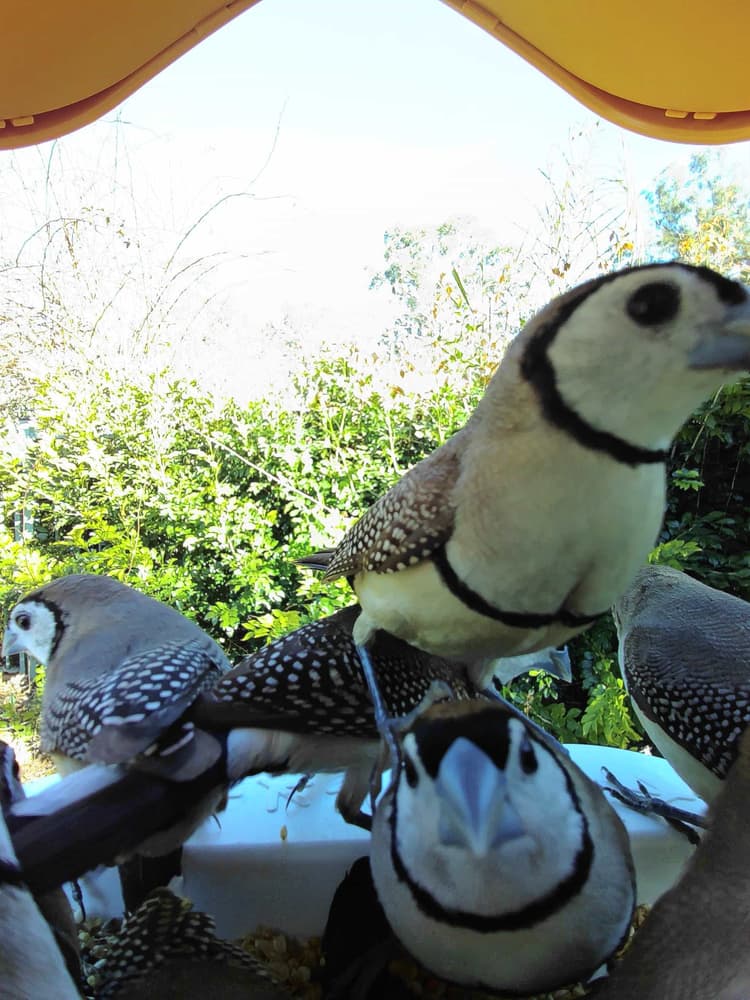
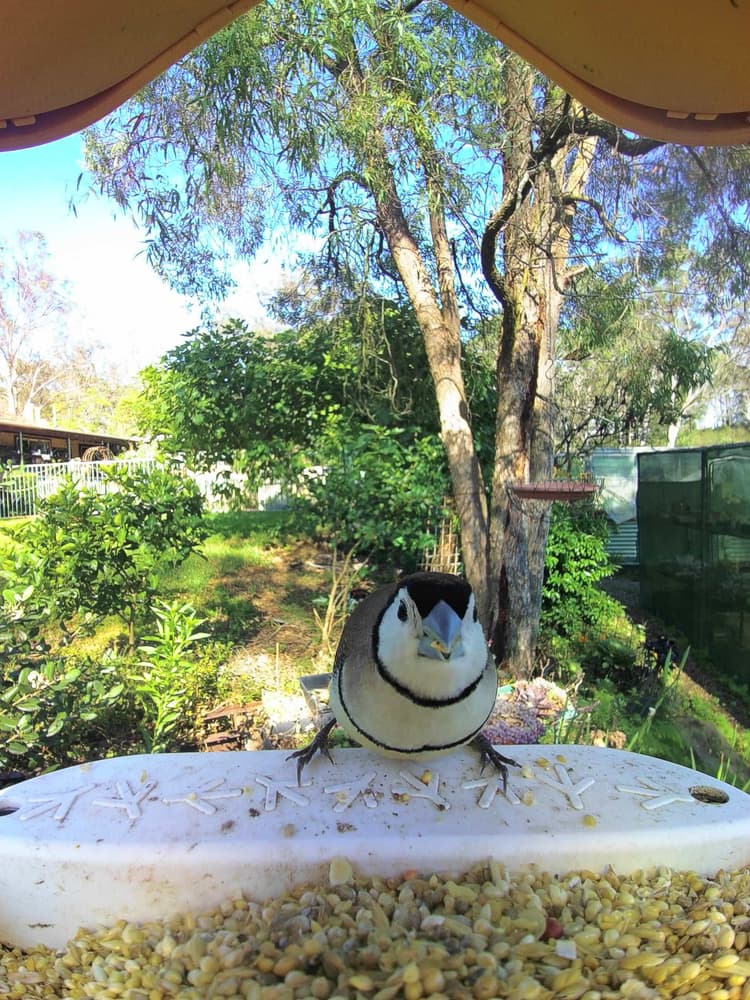
The double-barred finch is a small bird predominantly coloured black and white. Their common name comes from two distinctive chest bars. The face is black, the back, wings and tail are brownish, and their belly consists of white plumage. They have long, pointed conical bills and swift-looking wings.
Male vs female
Physically, males and females look similar, but males typically feature a more vibrant appearance. For instance, males have a bigger dark face mask extending across the eyes, and more intense white feathers on the belly. Females, on the other hand, tend to have a smaller face mask and paler under-parts.
Juvenile
Juvenile double-barred finches are similar to females but their plumage is duller. They show a less defined face mask and they have absence of double bars across their chest. Their coloration becomes vibrant as they mature.
Breeding and nesting habits of the double-barred finch
Mating behaviors
Double-barred finches perform courtship displays involving hopping and singing to attract mates. Males present nesting material to females as part of their courtship ritual.
Nesting details
They construct dome-shaped nests using grass and feathers, located in bushes or trees. In urban areas, they may nest in gardens. To encourage nesting, plant dense shrubs and provide accessible water sources.
Eggs and chick-rearing
Females lay 4-6 white eggs, incubating them for about 12-14 days. Both parents participate in feeding the chicks, which fledge approximately 20 days after hatching.
What does a double-barred finch like to eat?
Insects
Seeds
Natural diet
The double-barred finch primarily feeds on a variety of seeds, including grass seeds and small grains found in its natural habitat. It also consumes small insects and larvae, particularly during breeding season when extra protein is needed for chick development.
Bird feeders
At bird feeders, the double-barred finch often consumes seeds such as millet and canary seed, which suit its seed-based diet. It may also enjoy offerings of finely chopped fruits or vegetables, although seeds remain its primary food choice.
Attract double-barred finches with delicious snacks
One way to attract these charming birds to your yard is by offering them their favorite snacks. They particularly love small seeds from grasses. Bird Buddy seeds are an ideal choice as they are chosen by experts for the season, and have consistently shown great results in attracting double-barred finches.
Offer suitable feeders
Choose feeders that are safe and easy for the finches to use. Small tube feeders or tray feeders are preferable as the double-barred finch likes to feed in a group. Make sure the bird feeders are positioned in quiet, sheltered locations out of the reach of predators.
Create a finch-friendly environment
Maintain a bird-friendly environment in your yard. This includes providing fresh water for the finches to drink and bathe in. Planting native shrubs and trees can also provide the finches with nesting places and protection from predators.
Incorporate fun tricks
A fun trick to keep the finches around longer is to play some bird songs. These social birds may feel encouraged to join in the sing-along. Remember that consistency is key, so keep your feeders stocked with Bird Buddy seeds and ensure that water supplies are fresh.
Where can you find double-barred finches?
Primary habitat
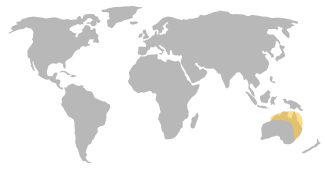
The Double-barred Finch primarily inhabits tropical and subtropical areas in northern and eastern Australia. It prefers woodlands, open forests, and grasslands.
Additional range
Unexpectedly, they can also be found in man-made environments such as gardens, parks and farmlands.
Do they migrate?
The double-barred finch, also known as the owl finch, is a non-migratory bird. It is native to Australia, particularly found in the northern and eastern parts of the continent. Instead of migrating, double-barred finches typically remain within their home ranges throughout the year. Their habitat consists mainly of open forests, grasslands, and savannas where they can find seeds, their primary food source. These finches are highly adaptable to different environments but prefer areas with access to water and low vegetation for cover and foraging. Seasonal movements may occur locally, driven by food availability and environmental conditions rather than long-distance migration patterns. Typically, they dwell in regions from Cape York in Queensland down to northeastern New South Wales. They are also found in the Gulf of Carpentaria and the Top End of the Northern Territory. Since they do not undertake long migrations, there are no specific routes, timing, or key migratory locations to describe. Instead, they focus on sustaining their populations within suitable habitats year-round.
What is the role of double-barred finches in nature and how to protect them?
Conservation status
The double-barred finch is currently listed as a species of "Least Concern" on the IUCN Red List, indicating it is common and not considered vulnerable or endangered. This small bird inhabits open grassland and savanna regions in Australia, where it remains widespread and abundant. However, habitat degradation due to agriculture and urbanization poses potential threats. Key conservation efforts focus on maintaining habitat quality and preventing further habitat loss. As of now, no significant targeted conservation actions are in place, primarily due to the species' stable population.
Ecological role of double-barred finches
Its role in the ecosystem
The double-barred finch, native to Australia, plays a significant role in maintaining the health of the ecosystem. These birds primarily feed on seeds and insects which influences the population dynamics of those species. Particularly, they control the population of certain insects by preying on them, thereby serving a natural pest control function. Their diet involves different types of seeds, and while eating, they contribute to seed dispersal. This seed dispersal is crucial for plant propagation, leading to the growth of new plants in different areas, greatly aiding in plant biodiversity. Additionally, their habitats often include low grasses and shrubs; their nesting habits can also affect plant growth and distribution patterns. The double-barred finch further enriches ecological diversity as it is prey to other predators, including cats and foxes. Thus, the disappearance of this species could potentially disrupt the balance of its overall environment.
How to help protect double-barred finches
Preservation tips
Habitat preservation
Promote and support the preservation of the double-barred finch's natural habitats. Ensure the protection of native grasslands and eucalyptus forests in Australia, which includes controlling invasive plant species and preventing habitat fragmentation. Support reforestation projects and foster the planting of native tree species necessary for the bird's nesting.
Community science initiatives
Encourage community involvement through citizen science projects. Engage local schools and community groups in monitoring and data collection about double-barred finch populations. Promote educational initiatives about the importance of biodiversity and the role of these birds within the ecosystem. Participate in bird-watching societies, report sightings, and join or donate to bird conservation organizations.