
Golden-Crowned Kinglet
Golden-Crowned Kinglet
Regulus satrapa
Quick Identification guide
Quick Identification guide
- •
Notable for its bright yellow crown stripe bordered by black, giving it its 'golden-crowned' name
- •
Features olive-green upperparts and grayish-white underparts, creating subtle but distinct contrast
- •
Tiny body with a short, thin beak and white wing bars accentuating its delicate form
What does a golden-crowned kinglet sound like?
The golden-crowned kinglet has a complex call pattern that includes a thin, wiry, ascending 'ti-ti-ti' followed by a tumbling chatter. Its calls are diverse, represented by chatters, chirps or chips, including high-pitched whistling notes. Generally, it produces falling, flat-toned sounds, contributing to its distinct, versatile vocalizations.
Description
Golden-crowned kinglets may be barely larger than a hummingbird but these tough cookies can survive -40°C nights! They don't do it alone, of course but huddle together for warmth in an adorable tiny bird pile! Fun fact: each of their nostrils is covered by a single, tiny feather.
The golden-crowned kinglet can weigh between 4to7.7grams and be from8to11centimeters tall.
The golden-crowned kinglet has a typical lifespan of two years, though it can live up to eight years in the wild. This is relatively short compared to related species such as the black-capped chickadee, which can live over 12 years. Data on lifespan largely depends on survival rates of young birds, which tend to be lower due to dangers such as predation and environmental factors.
Did you know?
Most popular questions about golden-crowned kinglet
How to recognise a golden-crowned kinglet?
General appearance
The golden-crowned kinglet is a small songbird, approximately 3.1 to 4.3 inches in length. It features a distinctive bright yellow or orange crown patch bordered by black stripes, which is the bird's hallmark. Its underparts are pale gray, and the upperparts are olive-green. The bird's small body is complemented by short wings and a short, thin bill. It is agile, often flitting through tree branches in search of insects.
Male vs female
Males and females are similar in appearance, but males have a vibrant orange center to their crown patch, whereas females display a yellow center. Both sexes showcase the black border around the crown, and their overall color palette is the same. During the breeding season, the orange in males can appear more vivid.
Juvenile
Juvenile golden-crowned kinglets resemble adults, but their crown patches are less pronounced, often lacking the vibrant hue found in adults. The coloration of juveniles is more subdued, with the overall plumage being duller compared to adult birds. As they mature, the crown becomes more distinct.
Often mistaken for
Ruby-Crowned Kinglet vs Golden-Crowned Kinglet
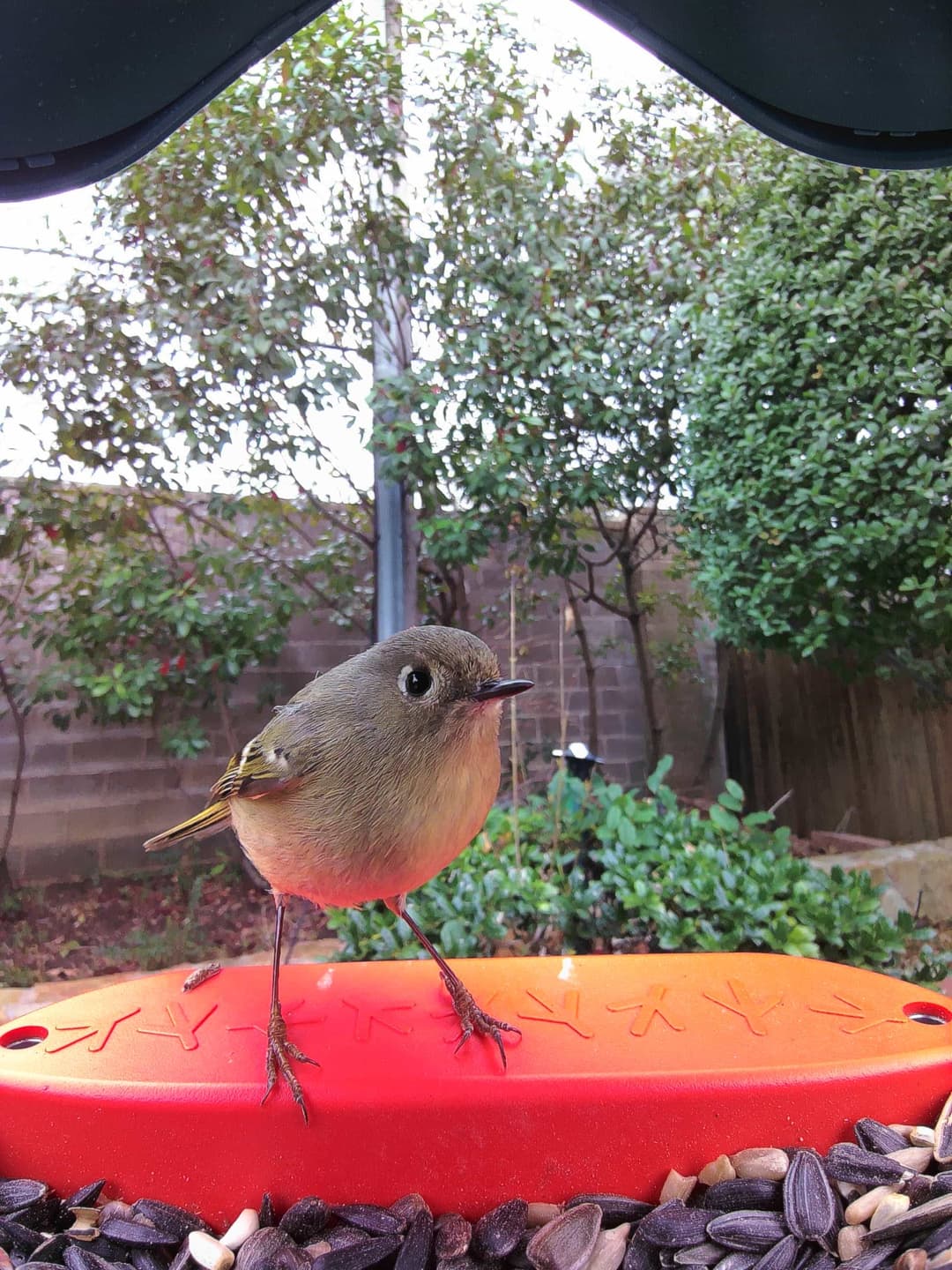
The Golden-Crowned Kinglet has a distinctive orange and yellow crown bordered by black stripes, while the Ruby-Crowned Kinglet sports a hidden red crown, only visible when the bird is excited. The Golden-Crowned Kinglet tends to have a more vibrant and striking crown, and its overall body is grayer and smaller than the plump, olive-green Ruby-Crowned Kinglet. Look for the distinct black eye stripe and white wing bars on the Golden-Crowned Kinglet to tell them apart.
Brown Creeper vs Golden-Crowned Kinglet
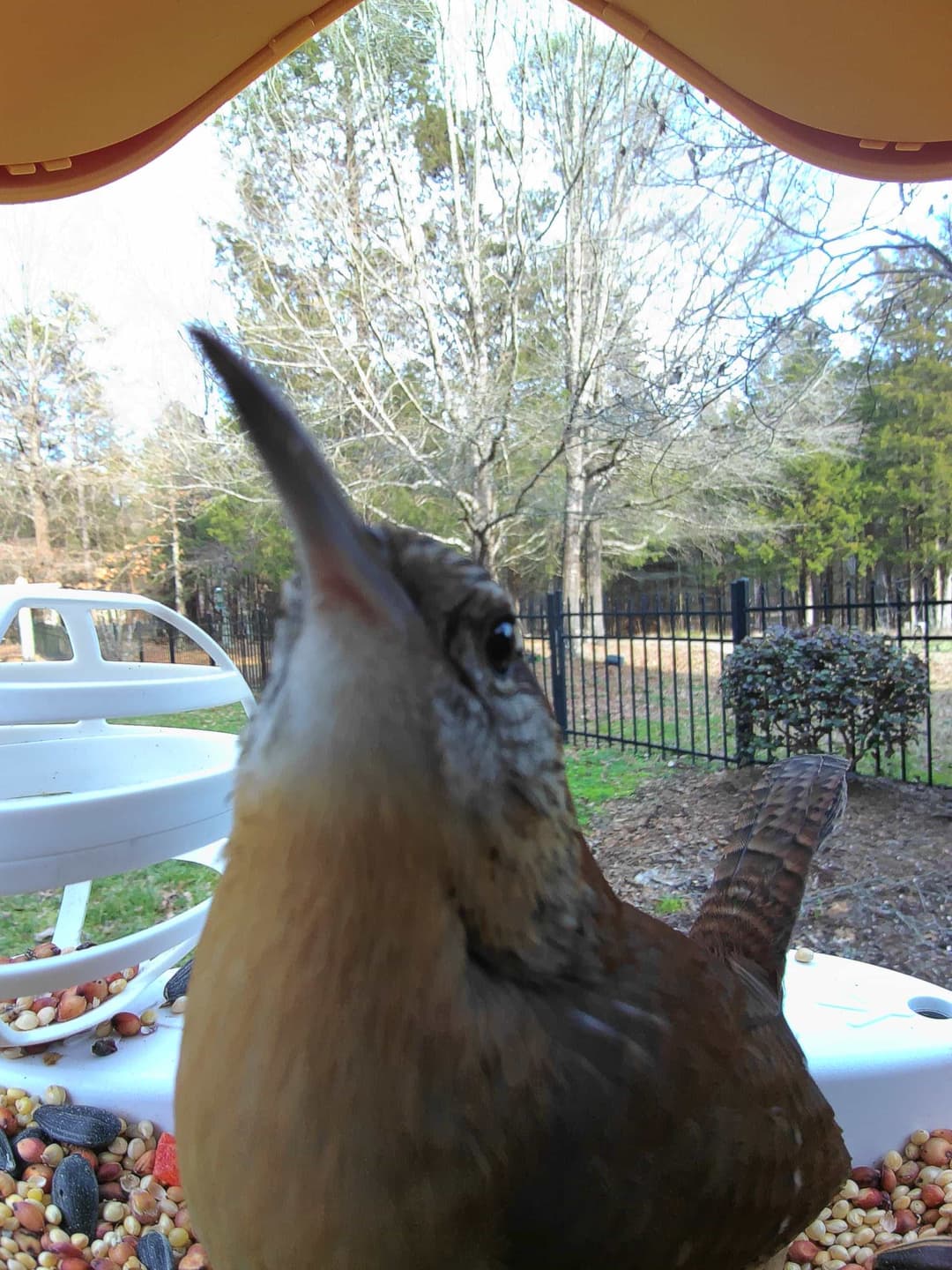
The Golden-Crowned Kinglet is smaller and more colorful, with a bright yellow crown and olive-gray body, whereas the Brown Creeper is camouflaged in brown and white plumage with a distinct spiraling foraging behavior around tree trunks. The kinglet is often seen flitting among branches, unlike the Brown Creeper's signature upward creeping motion. The creeper's slender, decurved bill and streaked back contrast with the kinglet's small, sharp bill and lack of streaking.
Breeding and nesting habits of the golden-crowned kinglet
Mating behaviors
The male defends his nesting territory by singing. During aggressive encounters with rival males, he may display by leaning forward and down, crown feathers raised, while flicking his wings and tail in a show of dominance and territory establishment.
Nesting details
Nests are placed in spruce or other conifers, usually around 50 feet high. The nest is attached to hanging twigs under a horizontal branch and close to the trunk, protected by foliage. The female constructs a deep hanging cup using moss, lichens, bark strips, spiderwebs, twigs, and leaves, lining it with feathers, plant down, rootlets, and other soft materials.
Eggs and chick-rearing
While specific details on eggs and chick-rearing are not specified, typically small birds like the golden-crowned kinglet lay clutches of several eggs, with both parents likely involved in feeding and caring for chicks. Ensuring the nest is well-camouflaged and protected by surrounding foliage is crucial for successful chick-rearing.
What does a golden-crowned kinglet like to eat?
Berries
Fruits
Insects
Sap
Seeds
Spiders
Natural diet
The golden-crowned kinglet primarily feeds on a diverse array of tiny insects, such as small beetles, gnats, caterpillars, scale insects, and aphids. It also consumes spiders and many insect and spider eggs. Occasionally, it feeds on oozing sap, but it seldom eats fruit.
Bird feeders
Golden-crowned kinglets are not frequent visitors to bird feeders, as their diet predominantly consists of insects and spiders found in their natural habitat. They may be attracted to feeders offering suet if it contains insect inclusions, but generally, they favor foraging in the wild for their primary food sources.
Setting up the perfect feeder
Golden-crowned Kinglets are small birds who prefer a quiet and secluded feeder. Choose a tube or hopper style feeder with small holes that's easy for them to access. Position your feeder in a sheltered location, preferably near or within evergreen trees. Keep it clean and regularly filled.
Selecting the right snacks
These tiny beauties love to feast on small insects and spiders, but during colder months, they also enjoy eating seeds. We recommend Bird Buddy seeds as they are chosen by experts for the season and have shown to deliver the best results. Occasionally, you can also offer them suet, which provides a good source of fat and energy especially during winter.
Making your yard attractive
Golden-crowned Kinglets love habitats full of conifers or mixed forests, so consider planting some in your yard. A birdbath with fresh water can also be a significant pull. Remember, keep the environment quiet and free from predators (like cats) to encourage these birds to pay a visit.
Sing along with them
These birds communicate with high-pitched 'see-see-see' sounds. If you listen closely, you can tune into their call and maybe even mimic it. Over time, they might see your yard as a safe and inviting hangout, and who knows, they might even stay for a sing-along!
Where can you find golden-crowned kinglets?

Primary habitat
The golden-crowned kinglet mainly resides in dense coniferous forests, preferring spruce, fir, and hemlock trees over Douglas-fir or pines.
Additional range
In migration and winter, it may inhabit deciduous trees but still prefers conifers, including pine groves and even exotic conifers in cemeteries and parks.
Do they migrate?
The golden-crowned kinglet exhibits migratory behavior, though the extent of migration varies based on geographic location. It generally migrates late in the fall and early in the spring. Many populations in North America, particularly those breeding in the northern and interior parts of the continent, migrate southward in the fall to avoid harsh winter conditions. These birds may winter in the southern United States and as far south as Central Mexico. However, the migration patterns are not uniform across all regions. On the northern Pacific Coast, some populations of golden-crowned kinglets are probably permanent residents. This suggests they do not undertake long migrations and are able to survive the winter in these milder coastal climates. During the migratory periods, the kinglets travel primarily at night and primarily through forested areas, often taking advantage of stopover habitats with abundant food and shelter. Key migratory routes typically follow the availability of forested corridors, although specific routes can vary. Overall, while many golden-crowned kinglets do migrate to escape colder temperatures, the exact migration routes and destinations can depend on specific population locations and local environmental conditions.
What is the role of golden-crowned kinglets in nature and how to protect them?
Conservation status
The golden-crowned kinglet currently maintains a healthy long-term population, indicating it is neither vulnerable nor endangered. While populations can decline following severe cold winters on their wintering grounds, the species has adapted by expanding its breeding range into new northeastern areas, utilizing planted conifers for nesting. No significant threats are highlighted beyond weather-related challenges. Overall, the species remains common, and its range expansion suggests adaptability and resilience, though monitoring population trends and conserving habitat are essential to ensure continued stability.
Ecological role of golden-crowned kinglets
Its role in the ecosystem
The Golden-crowned Kinglet plays a crucial role in its ecosystem through pest control. It forages very actively in trees and shrubs, primarily coniferous, where it feeds on a wide variety of tiny insects, including small beetles, gnats, caterpillars, scale insects, aphids, and many others. In addition to insects, it also consumes spiders and their eggs, which contributes to population control of these species. While its diet does include some plant material in the form of oozing sap and, to a lesser extent, fruit, the primary reproductive strategy doesn't reflect a significant contribution to seed dispersal. Instead, its small size and surprising number of eggs means it forms an important part of the food chain, providing a food source for larger predators. It also plays a role in maintaining the health of coniferous woodland habitats through its unique nesting habits which are high in trees and well protected by foliage.
How to help protect golden-crowned kinglets
Preservation tips
Habitat preservation
Protect forests, especially old-growth coniferous forests, from deforestation and splitting into smaller chunks (habitat fragmentation). Support policies that limit the pace of development and focus on sustainable practices. Leave dead or dying trees in place as they provide habitats for insects, which are the main source of food for the golden-crowned kinglet.
Community science initiatives
Participate in and promote community science initiatives such as the Audubon’s Christmas Bird Count and the Great Backyard Bird Count. These collect valuable data on bird populations. Encourage local schools to integrate bird watching and environmental education into their curriculums. Advocate for public programs that raise awareness of the plight of the golden-crowned kinglet and the importance of biodiversity.