
Java Sparrow
Java Sparrow
Also known as: Java Finch, Java Rice Bird, Paddy Bird
Padda oryzivora


Quick Identification guide
Quick Identification guide
- •
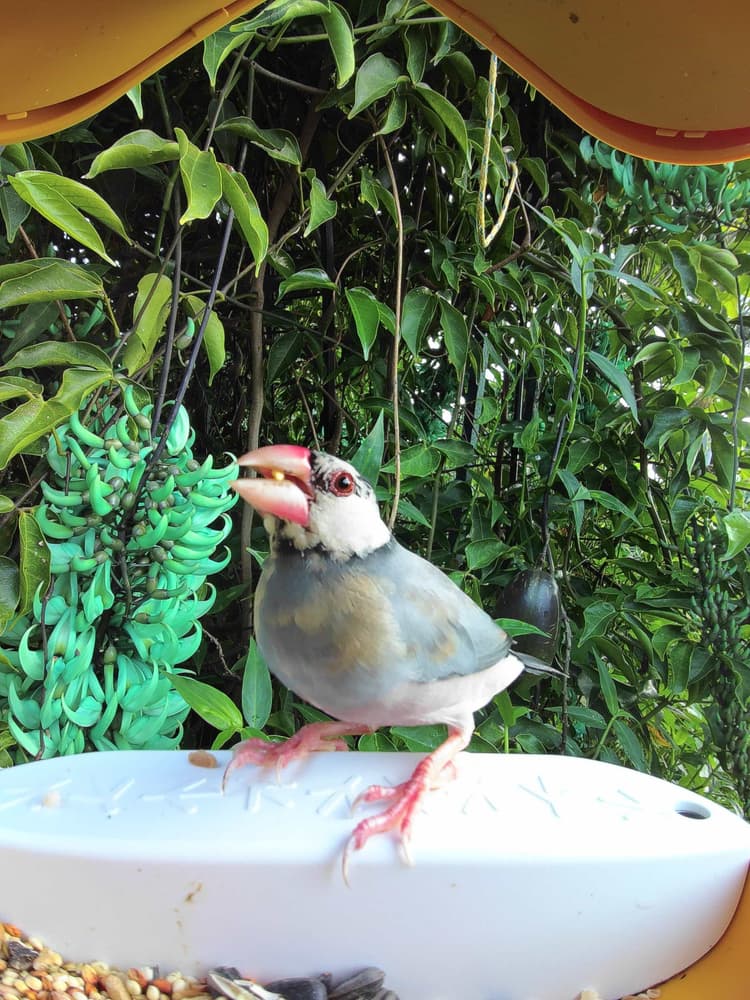
Recognizable by its gray body contrasted with a distinctive white cheek patch
- •
Features a pinkish-red conical beak, which is stark and vivid against its face
- •
Exhibits a sleek black head cap, enhancing its charming and unique appearance


Description
Java sparrows love rice but can be a real headache for rice farmers! These striking birds have been introduced everywhere you can think of but their numbers are still under threat, no thanks to humans and the exotic pet trade. A group of finches is referred to as a charm, a company or a trembling!
The Java sparrow can weigh between 20to22grams and be from15to17centimeters tall.
The Java sparrow typically lives for 5 to 7 years. This lifespan is modest when compared to some related species, such as the Zebra Finch, which can live up to 12 years. As with most birds, the Java Sparrow's lifespan can be influenced by factors such as diet, habitat, and exposure to predators or disease.
Did you know?
Most popular questions about Java sparrow
How to recognise a Java sparrow?
General appearance
The Java sparrow (Padda oryzivora) is a small, plump bird with distinct coloration. It features a soft gray body, a black head, and a contrasting pink breast. Its beak is thick and red, while white cheek patches add to its uniqueness. The bird's legs are pink, complementing its overall color scheme. Known for its lively nature, the Java sparrow is often spotted in groups.
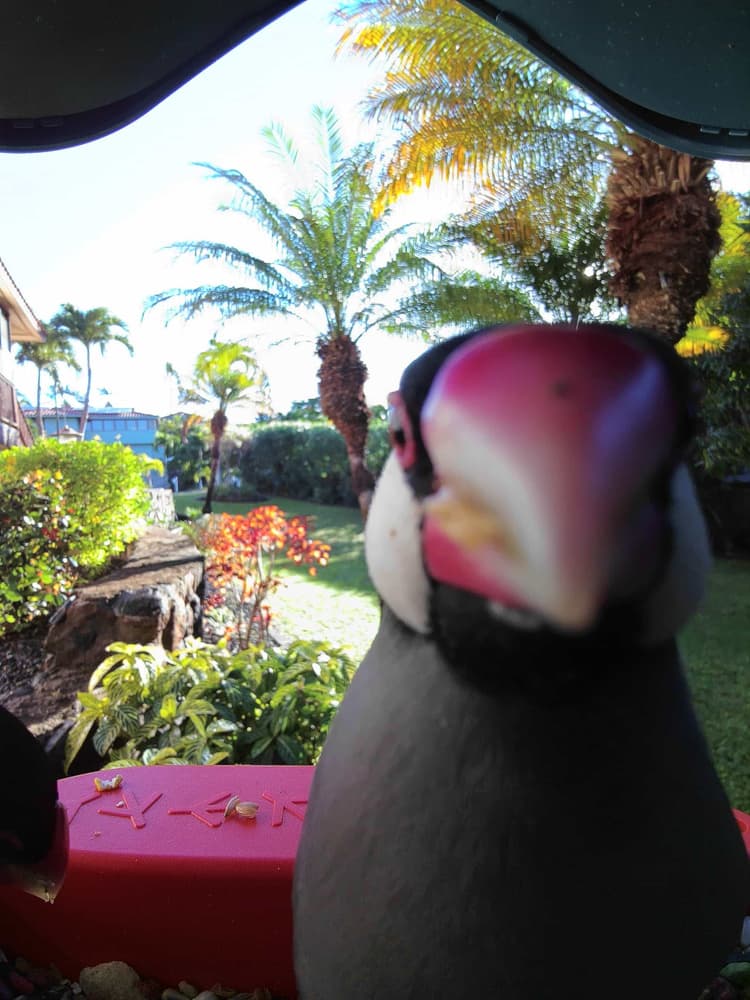
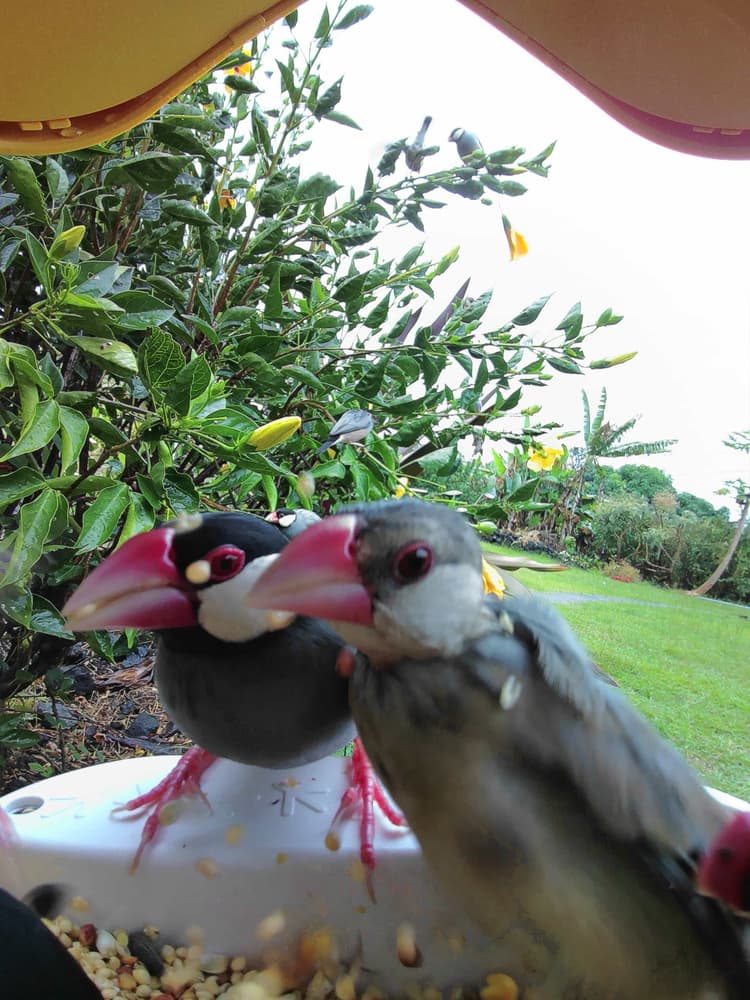
Male vs female
Males and females are visually similar with minor differences. Males typically exhibit a slightly larger body size and more intense coloration, especially around the beak and cheek patch. Males also possess a characteristic song used for courtship, whereas females generally remain quieter. Both sexes contribute to nesting and rearing of young.
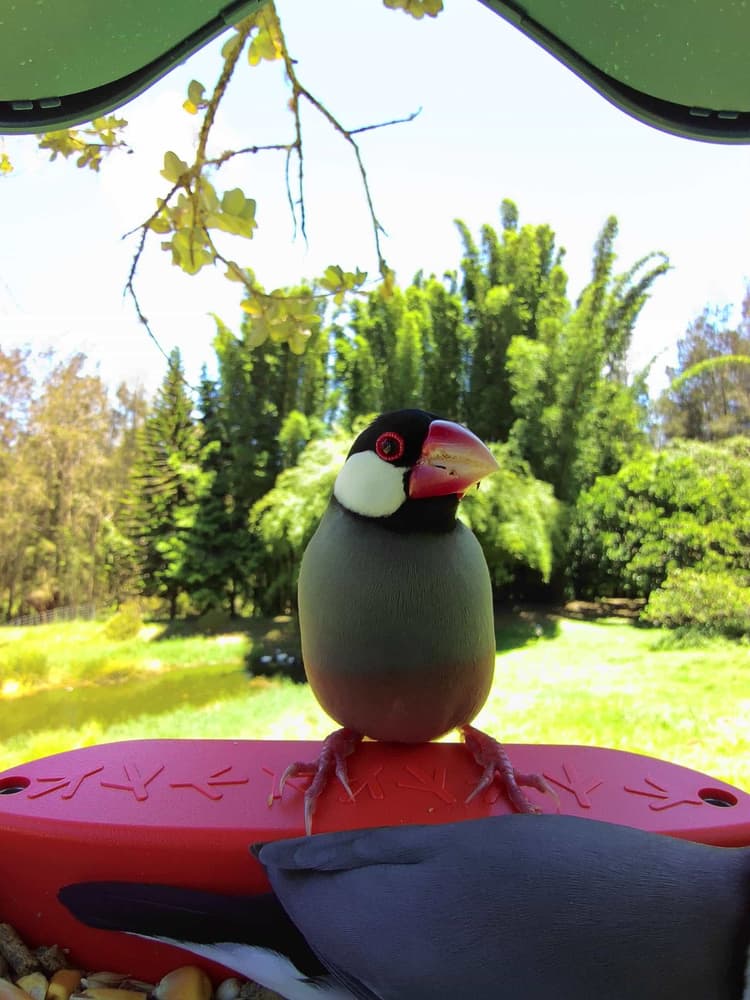
Male Java Sparrow
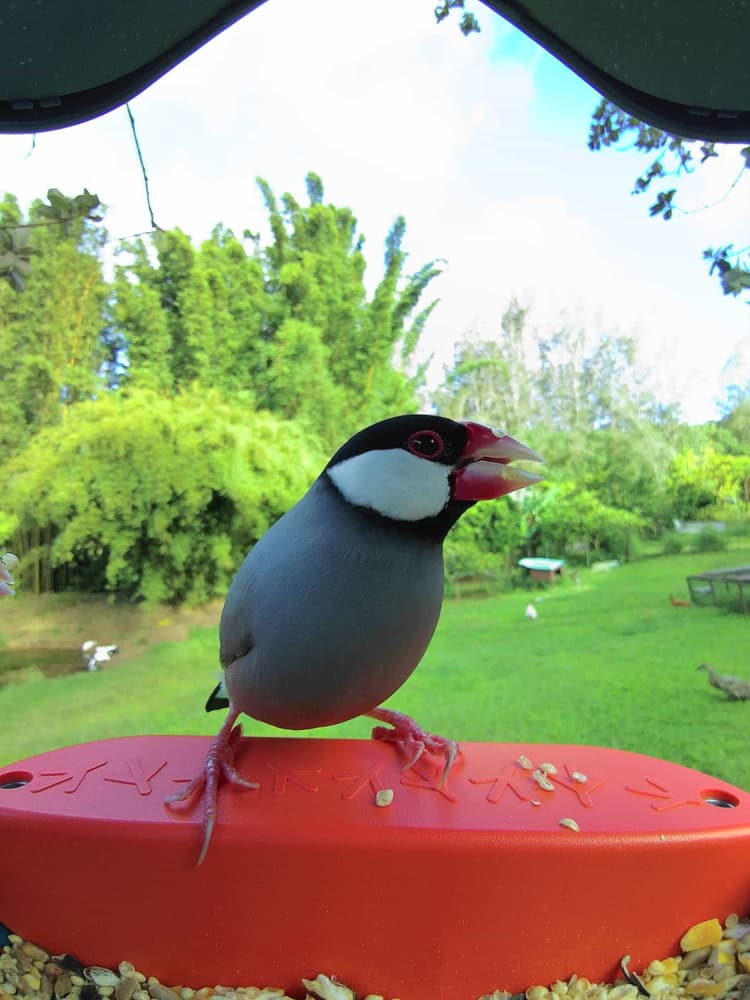
Female Java Sparrow
Juvenile
Juvenile Java sparrows are distinguishable by their brownish-gray plumage, lacking the distinct black head and pink hues of adults. Their beaks are lighter, with a more orangish-pink tone. As they mature, juveniles transition to adult plumage, acquiring characteristic color patterns. Juveniles are less vocal and often stay close to parents during feeding.
Breeding and nesting habits of the Java sparrow
Mating behaviors
Java sparrows engage in courtship through singing and dancing displays. Males often showcase their vibrant plumage and perform elaborate dances to attract females, occasionally bringing nesting materials as part of their display to demonstrate suitability as a mate.
Nesting details
Java sparrows typically nest in cavities of trees and buildings but can also utilize nest boxes in gardens. They construct nests using materials such as grasses, twigs, and feathers. For gardens, providing nest boxes with entry holes around 3 cm wide and placing them at least 2 meters above the ground can attract these birds.
Eggs and chick-rearing
The female lays around 4-6 eggs per clutch, with both parents sharing incubation duties over approximately 13-15 days. After hatching, chicks are cared for by both parents and fledge after about three weeks. Parents continue to feed the fledglings for several weeks post-fledging, teaching them essential survival skills.
What does a Java sparrow like to eat?
Seeds
Natural diet
Java sparrows primarily feed on seeds from grasses and other plants in their natural habitat. They favor seeds from rice, which form a significant part of their diet in the wild. In addition to seeds, they consume small insects and larvae, which provide essential proteins. The availability of different food sources may vary with seasons, influencing their feeding behavior and patterns throughout the year.
Bird feeders
At bird feeders, Java sparrows often eat commercially available seed mixes designed for finches and small birds. These mixes typically include millet, canary seed, and sunflower seeds. Java sparrows may also enjoy small pieces of fresh fruits and vegetables offered at feeders, such as apples, lettuce, or spinach, although seeds remain their preferred choice. Ensuring a clean and safe environment at feeders is crucial to attracting these birds.
Feeder types and placement for attracting java sparrows
Firstly, Java sparrows prefer a quiet and calm environment. Place feeders in a safe location, away from human activity and potential predators. As for the type of feeder, use tube feeders fitted with trays. This design allows the Java sparrow to perch and eat in comfort.
Java sparrow's favorite snacks
Java sparrows are primarily seed eaters. Their favorite foods include millet, canary seed, and rice. For optimal results for attracting these lovely birds, we highly recommend Bird Buddy seeds. These seeds are expertly chosen for the season, ensuring the java sparrows find them irresistible.
Adding fun elements
To make your yard more engaging, consider adding a bird bath or a fountain. Java sparrows love water, and such features attract them. Also, music can invite them over! Play some soft, relaxing bird sounds or nature-inspired music to draw them in for a visit, and possible sing-along.
Where can you find Java sparrows?

Primary habitat
Java sparrows prefer open grasslands, fields, and areas near water bodies, thriving in tropical and subtropical climates.
Additional range
Apart from their native range in Indonesia, they have adapted to urban areas and can be found in unexpected environments like city parks and gardens in regions such as Hawaii and parts of India.
Do they migrate?
The Java sparrow does not migrate; it is a resident bird that stays in one place all year round. Originally native to Java, Bali, and Bawean in Indonesia, the Java sparrow thrives in tropical environments and typically inhabits areas close to human habitation, such as rice paddies, grasslands, and gardens. The species has been introduced to various locations worldwide, including other parts of Southeast Asia, Hawaii, and certain islands in the Indian and Pacific Oceans. In the regions where they have been introduced, Java sparrows have established stable, non-migratory populations. Their behavior as permanent residents is facilitated by their ability to adapt to a variety of habitats and their association with agricultural areas where food is plentiful. The Java sparrow's non-migratory nature is supported by its social structure and feeding habits, as they usually form flocks and feed on grains, seeds, and small insects largely available year-round in their habitats. Thus, Java sparrows are well-adapted to staying in their respective regions throughout the year without the need to undertake seasonal migrations.
What is the role of Java sparrows in nature and how to protect them?
Conservation status
The Java sparrow is currently classified as endangered. Its population has drastically declined due to habitat destruction, the illegal pet trade, and agricultural expansion. While once common, these threats, particularly the capture for the pet trade, have severely impacted their numbers. Key conservation efforts include habitat protection and regulations on trade, with several reserves established to safeguard their environment. Additionally, captive breeding programs aim to boost wild populations. Awareness campaigns are also critical in promoting the importance of preserving this species and its natural habitat.
Ecological role of Java sparrows
Its role in the ecosystem
The ecological significance of the Java sparrow lies primarily in its activities as a seed eater. As seed eaters, Java sparrows play a significant part in seed dispersal, which is vital for the propagation of vegetation in their ecosystem. When these birds forage and subsequently defecate, they unknowingly transport seeds to different locations, aiding in plant biodiversity and reforestation. Furthermore, Java sparrows can contribute to pest control. They help control the population of certain insects or smaller pests by preying on them. However, they are also known to be pests themselves in certain agricultural settings due to their preference for grains such as rice. Lastly, Java sparrows, like other bird species, can contribute to the ecosystem by acting as indicators of environmental health. Changes in Java sparrow populations can signal changes in their habitat conditions or the presence of environmental threats.
How to help protect Java sparrows
Preservation tips
Habitat preservation strategies
Preserving the natural habitats of the Java Sparrow is the most pivotal step in its conservation. Start by working with local authorities to establish protected areas, halting any harmful human activities such as deforestation and urban development in these zones. Adopt restoration techniques where necessary to enrich degraded habitats. Further, raising awareness about this bird and its dire circumstances can foster support for preservation efforts.
Community science initiatives
Community engagement is key in conservation efforts. Initiate community science programs that involve local communities in data collection and monitoring bird population trends. This cumulates in valuable information needed for conservation planning and also heightens local interest in the species. Collaboration with educational institutions can also encourage research and awareness raising. Finally, promoting responsible birdwatching practices can form a balance between eco-tourism and bird protection.