
Lawrence’s Goldfinch
Lawrence’s Goldfinch
Spinus lawrencei
Quick Identification guide
Quick Identification guide
- •
Features an unmistakable yellow patch on the wings and yellow rump, contrasting with its grey body
- •
Exhibits a black face mask that accentuates its lively appearance
- •
Has a small, conical beak perfect for seed eating, and a sleek, streamlined body that enhances its flight
What does a Lawrence's goldfinch sound like?
The Lawrence's goldfinch displays a complex vocal repertoire. Its song is characterized by a hurried mix of mellow and scratchy notes, often mimicking its own as well as other species' calls. Additionally, its flight note, usually indicating its high presence overhead, is a high tinkle, with the first note higher. Its call pattern encompasses a mix of falling and rising sounds, with its call types including chatter, chirp, chip, trill, and whistle.
Description
If you ask these guys, home is where the food and water are! They are nomads and like to move around, migrating not only north–south but also east–west. They're not the toughest, though, and often get bullied by the smaller lesser goldfinch. They were named by John Cassin in 1850 in honour of the ornithologist and businessman George Lawrence!
The Lawrence's goldfinch can weigh between 9to13grams and be from10to12centimeters tall.
The Lawrence’s Goldfinch typically lives up to 6 years. This is quite similar to the American Goldfinch, which can live up to 7 years in the wild. However, compared to larger finch species, like the Evening Grosbeak that lives up to 15 years, the Lawrence’s Goldfinch has a comparatively shorter lifespan. Lifespan may vary due to factors such as predation or disease.
Did you know?
Most popular questions about Lawrence's goldfinch
How to recognise a Lawrence's goldfinch?
General appearance
The Lawrence's goldfinch is a small songbird with a distinctive appearance, featuring gray body plumage and bright yellow highlights on the wings, chest, and rump. Black is present on the forehead and throat, enhancing its distinctive look. The wings and tail display a black and white pattern, adding to the contrast in its appearance.
Male vs female
Males are more brightly colored, with vivid yellow on the chest and flanks, and they have a more pronounced black face mask. Females are similar but have duller coloration, less yellow on the underparts, and a reduced or absent black facial mask, leading to a more subdued overall appearance.
Juvenile
Juvenile Lawrence's goldfinches are generally drabber compared to the adults, predominantly gray-brown, lacking the vivid yellow and black markings. They may still exhibit some yellow on the wings but are generally less colorful, which aids in camouflage. As they mature, their coloring gradually intensifies.
Often mistaken for
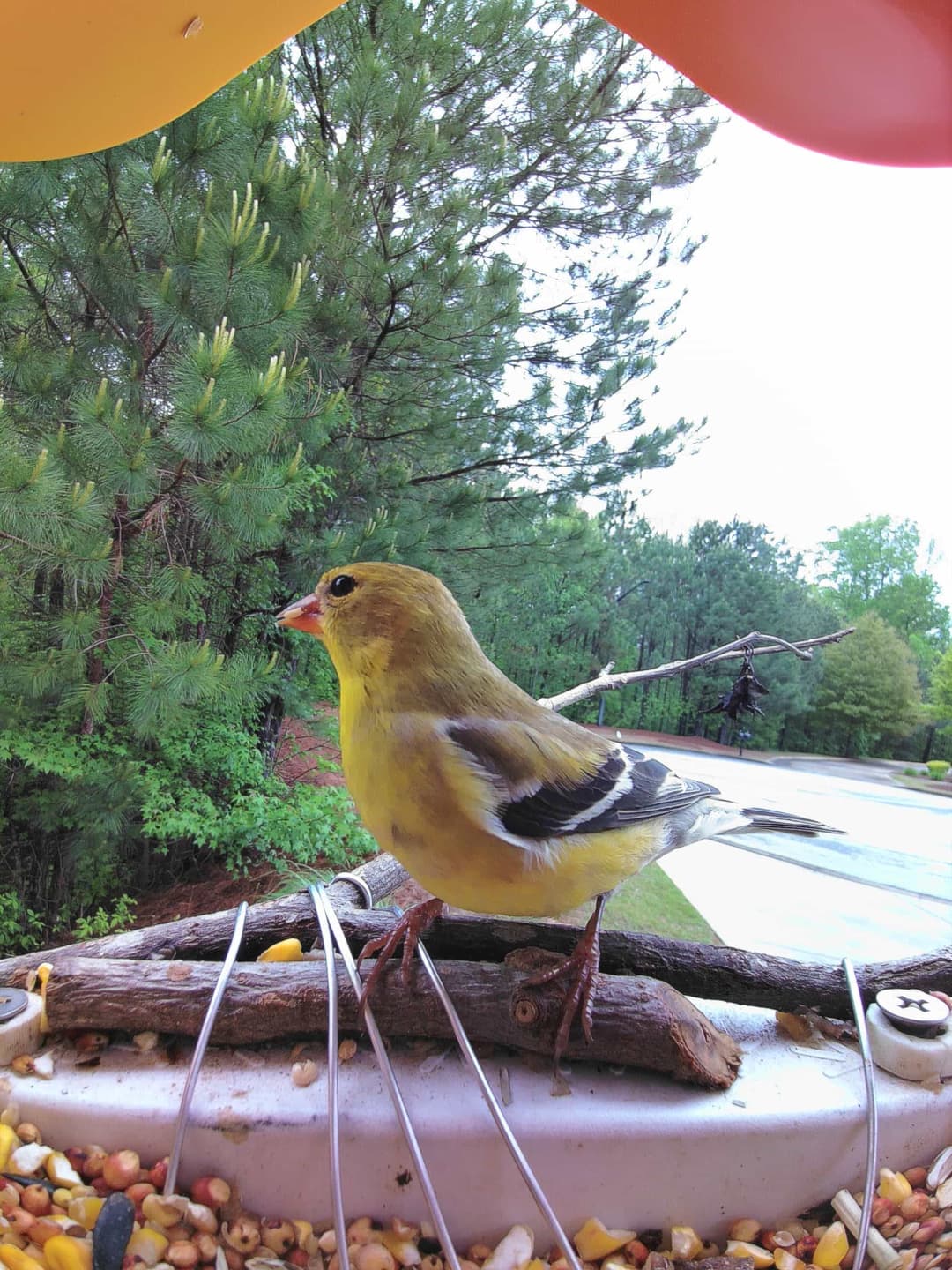
American Goldfinch vs Lawrence’s Goldfinch
Lawrence’s Goldfinch is more subdued in color, lacking the bright yellow body of the American Goldfinch. Look for the grayish body and yellow patches on wings and chest of the Lawrence’s, compared to the American’s all-yellow body during breeding season. The black cap is more prominent on the American Goldfinch.
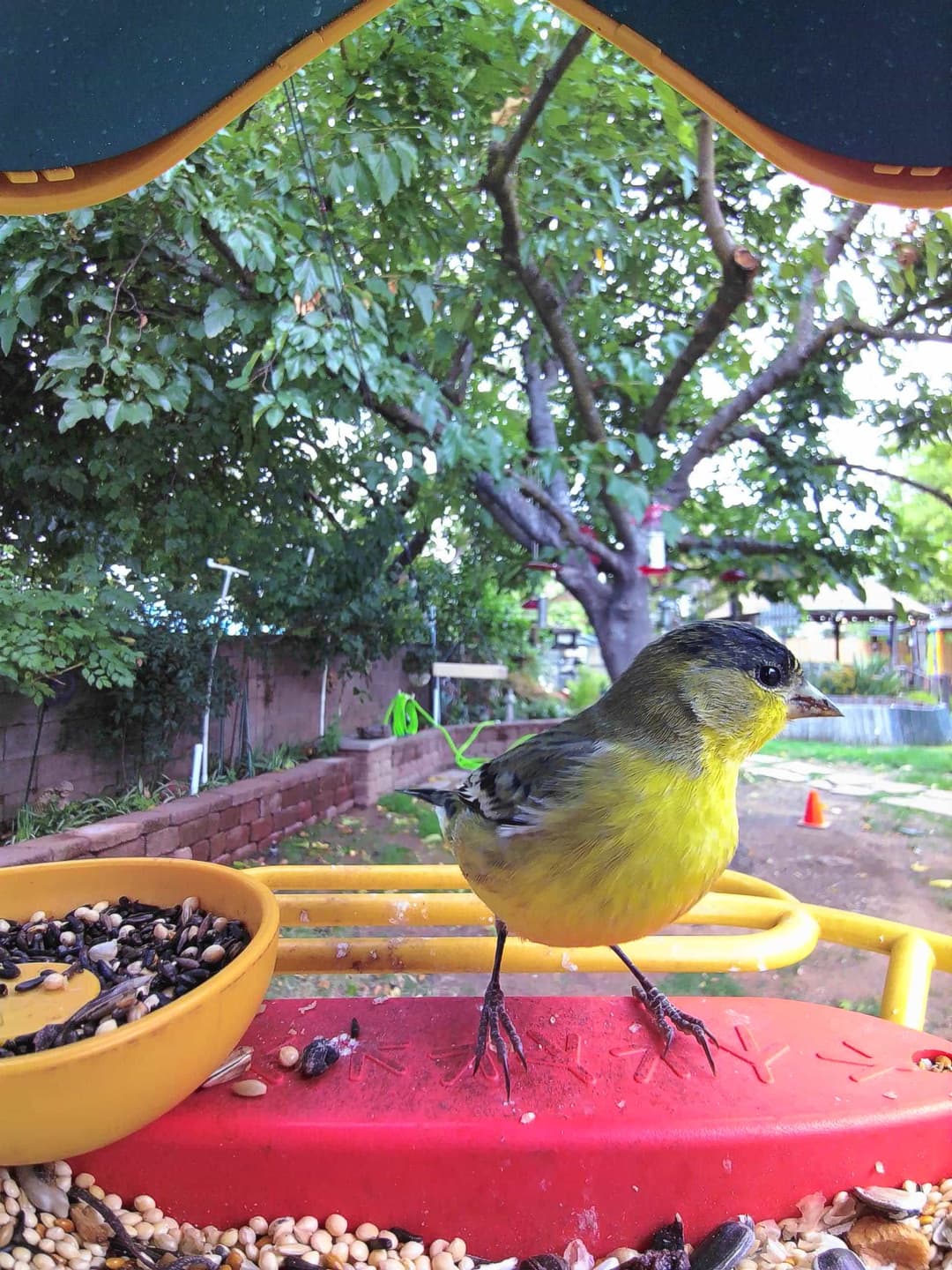
Lesser Goldfinch vs Lawrence’s Goldfinch
Lesser Goldfinch has a more extensive black cap and a greenish back compared to the Lawrence’s Goldfinch. Lawrence’s has a gray body with distinct bright yellow on the chest and wings. The Lawrence’s wing bars are more noticeable, and the yellow is less extensive compared to the Lesser Goldfinch.
Breeding and nesting habits of the Lawrence's goldfinch
Mating behaviors
In the courtship of the Lawrence's goldfinch, the male engages in a ritual where he follows the female closely, perches near her, and sings. This behavior is integral to attracting a mate but does not involve aggressive territorial defense.
Nesting details
Nesting sites are typically located in trees such as oak, cypress, sycamore, or pine, usually 15-20 feet above the ground, though they can range from lower shrubs to 40 feet high. The nest is an open cup constructed from materials like grass, flower heads, plant down, feathers, and animal hair. The female builds the nest, often accompanied by the male, who may carry materials but does little to assist.
Eggs and chick-rearing
Information on egg-laying and chick-rearing specifically was not provided. However, by understanding common finch behaviors, one could extrapolate that the female likely incubates the eggs, with fledglings being dependent on parental feedings post-hatch. Observing nearby goldfinch behaviors may give further insights.
What does a Lawrence's goldfinch like to eat?
Insects
Plants
Seeds
Natural diet
The Lawrence's goldfinch primarily feeds on the seeds of native weeds and plants, including fiddleneck, peppergrass, and chamise. It also consumes plant galls, buds, and a limited amount of insects. Additionally, this bird is known to feed on salt.
Bird feeders
Lawrence's goldfinch may be attracted to bird feeders offering seeds, especially those with a mix that includes small seeds similar to those found in their natural diet.
Attracting the lawrence's goldfinch
If you desire to see Lawrence's goldfinches in your yard, there are a few simple steps you can take to make your yard more inviting to them. First, you'll want to provide the right kind of feed. Lawrence's Goldfinches are fond of seeds, especially sunflower seeds and nyjer. It's also a great idea to include Bird Buddy seeds on the menu, as they have been expert-selected to attract birds during different seasons.
Feeder types for the lawrence's goldfinch
The type of feeder you choose can also impact whether these finches will feel comfortable feeding in your yard. They like tube feeders with short perches as it allows them to cling and feed. Furthermore, placing the feeder in a quiet and safe location, preferably with a water source nearby, will tempt them to stay longer.
Fun tricks to keep lawrence's goldfinch around
To keep the Lawrence's goldfinch coming back, consider adding a birdbath or water feature, since these birds are particularly attracted to the sound of running water. Providing nesting materials like twigs, leaves, and small branches might also encourage these lovely birds to set up home in your yard. Lastly, playing bird songs, especially that of the goldfinch, could trigger their interest and invite them for a sing-along.
Where can you find Lawrence’s goldfinches?

Primary habitat
The Lawrence’s goldfinch occupies a range of habitats, often close to water. These include oak and pine woods, chaparral, pinyon-juniper woods, and streamside trees.
Additional range
In migration and winter, it frequents weedy fields, farmlands, brushy areas, and streamsides. Despite its preference for water proximity, it often settles in fairly dry conditions.
Do they migrate?
The Lawrence’s goldfinch exhibits irregular migratory behavior rather than a fixed migration pattern. Its movements are not fully understood, and it does not follow a consistent migration route like some other bird species. During winter, it vacates many of its known breeding areas, though the exact destinations of these birds remain uncertain. In some winters, a significant number of Lawrence’s goldfinches expand their range eastward into Arizona, suggesting a partial migratory move. However, in other years, the whereabouts of these birds are largely unknown. Some evidence suggests they may migrate to areas such as Baja California, although this is not consistently documented. Since the movements of Lawrence’s goldfinch are irregular and poorly documented, there are no specific key locations, times, or routes that can be reliably identified beyond the occasional appearances in Arizona during some winters. This lack of predictable migratory behavior makes it challenging to study and understand their seasonal movements comprehensively.
What is the role of Lawrence’s goldfinches in nature and how to protect them?
Conservation status
The Lawrence's goldfinch is uncommon and local, with potential vulnerability due to habitat loss. While it is not classified as endangered, its restricted range makes it susceptible to environmental changes. Key conservation efforts focus on preserving its natural habitats, especially in areas affected by urban development and agricultural expansion. Significant threats include habitat destruction and climate change, which could further impact its population. Ensuring the protection and restoration of its habitat is crucial to prevent further decline and support the species' survival.
Ecological role of Lawrence’s goldfinches
Its role in the ecosystem
The Lawrence's Goldfinch plays a significant ecological role mainly through its feeding behavior and diet. It primarily feeds on weed seeds, plants seeds like fiddleneck, peppergrass, and chamise, insects, plant galls, and buds. This feeding behavior contributes to seed dispersal which aids the propagation of these plants, thus preserving plant diversity and ensuring plant growth in its ecosystem. It also serves as a form of pest control by consuming plant-damaging insects, and this is crucial for the health and survival of plants in its habitat. Also, their feeding pattern on the ground and in different vegetation levels aids in soil fertilization and in maintaining a healthy ecosystem. Lastly, their habit of nesting in trees and shrubs aids in the lifecycle of these plants by promoting growth and contributing to the prevention of overgrowth of certain plant species.
How to help protect Lawrence’s goldfinches
Preservation tips
Habitat preservation strategies for lawrence’s goldfinch
Preserving and improving the natural habitat of the Lawrence's Goldfinch is vital. This includes maintaining coastal and deciduous shrublands, as well as weedy grasslands. Forest management techniques should be implemented to prevent the densification of their habitats. Encourage the growth of native plants, such as sunflowers and thistles, which provide natural food sources.
Community science initiatives
Engage local communities in observing and monitoring Lawrence’s Goldfinch. Initiate birdwatching programs or citizen science projects focusing on these birds. Use platforms like 'iNaturalist' or 'eBird' for data recording. Organize educational workshops or talks, creating awareness about the need for conservation of Lawrence’s Goldfinch. Promote sustainable bird feeding practices at home to support the dietary needs of this species.