
Plain-Breasted Ground Dove
Plain-Breasted Ground Dove
Columbina minuta
Quick Identification guide
Quick Identification guide
- •
Exhibits a plain gray-brown body with lighter underparts, providing excellent camouflage on the ground
- •
Features a small, slender build with a compact size, often appearing more petite than other doves
- •
Possesses a short, straight beak and pinkish legs that complement its earthy tones
What does a plain-breasted ground dove sound like?
The Plain-Breasted Ground Dove, also known as Columbina minuta, has a distinct, soft cooing vocalization. Its song is a a repetitive “coo-rup” or “coo-roo-rup”, starting at a high pitch and gradually descending. This dove also produces shorter calls when disturbed. The vocalizations are soft and subtle in nature, often seen as a characteristic of the ground-dwelling bird species.
Description
One of the smallest pigeons in the world is, aside from the striking purple markings on its back, pretty plain! Who would have thought? These birds are generally seen hanging out in pairs or small groups but, other than that, not much is known about them.
The plain-breasted ground dove can weigh between 24to26grams and be from14to16centimeters tall.
The typical lifespan of the plain-breasted ground dove is unknown. However, related species like the mourning dove can live up to 10 years in the wild. Compared to other dove species like the rock pigeon, which can survive for 3-5 years in the wild, the plain-breasted ground dove's lifespan is largely undocumented, requiring more research for accurate information.
Did you know?
Most popular questions about plain-breasted ground dove
How to recognise a plain-breasted ground dove?
General appearance
Plain-breasted ground doves are small birds with a generally grey-brown plumage. The species showcases a distinctive bluish-grey crown and nape, contrasting a pinkish-brown body. The wings have black spotting, and the tail is broad and black-tipped. Their eyes show a unique crimson red hue, encircled by a thin blue eye ring.
Male vs female
Sexual dimorphism is minimal in plain-breasted ground doves. However, females tend to be slightly duller in coloration compared to males. The females display more of a brownish-grey color, whereas males exhibit a pinkish hue on their chests.
Juvenile
Juvenile plain-breasted ground doves resemble adults but are generally less vibrant in color. They lack the adult's distinctive bluish-grey crown and have a more uniform greyish-brown coloration. They are also devoid of the black spotting typically seen on the wings.
Often mistaken for
Common Ground-Dove vs Plain-Breasted Ground Dove
The Common Ground-Dove is often mistaken for the Plain-Breasted Ground Dove due to their similar size and earth-toned plumage. However, the Common Ground-Dove has a scaly pattern on its head and neck, which the Plain-Breasted Ground Dove lacks.
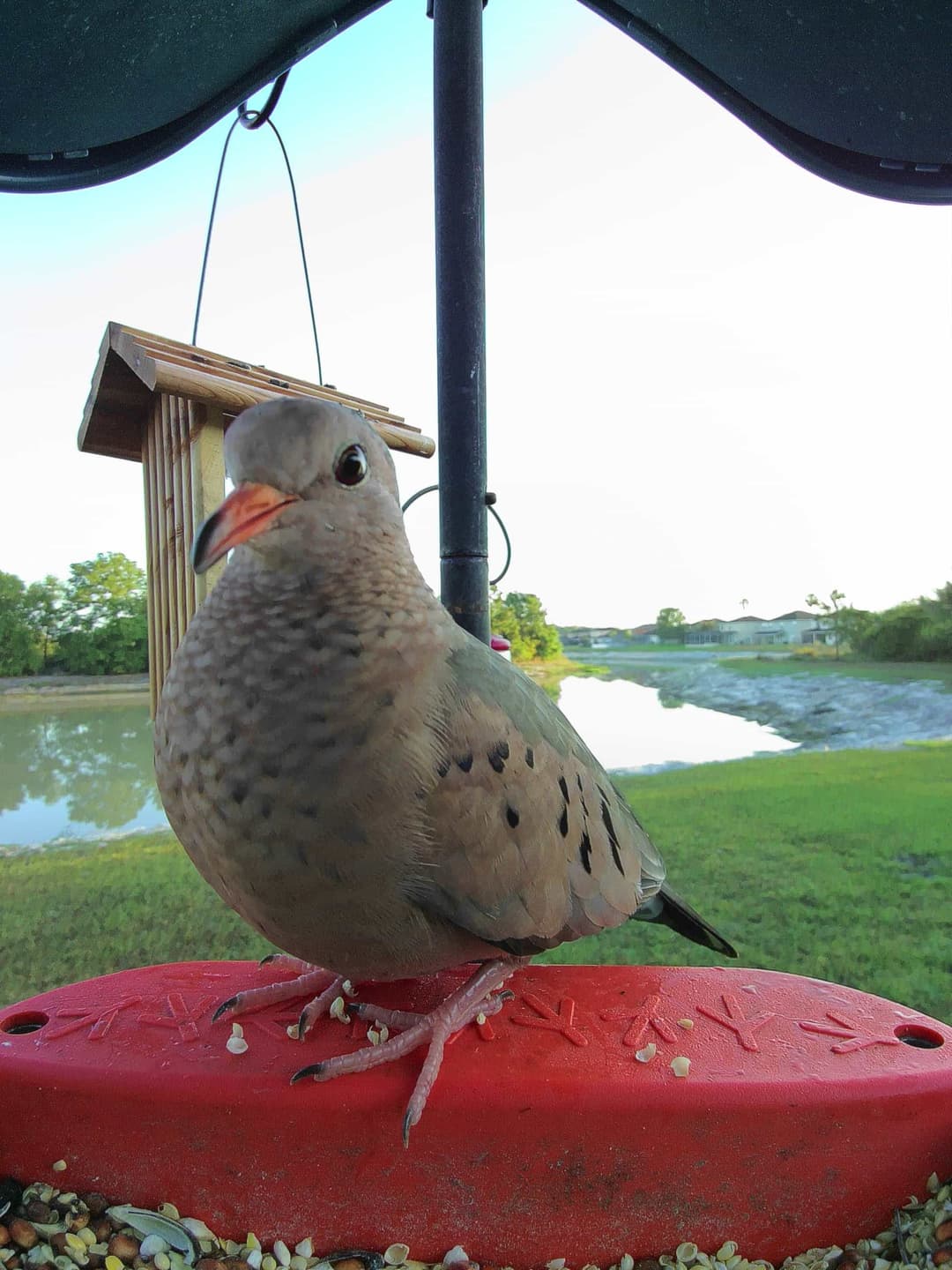
Ruddy Ground Dove vs Plain-Breasted Ground Dove
The Ruddy Ground Dove shares a similar body shape with the Plain-Breasted Ground Dove. Despite this, the Ruddy Ground Dove can be distinguished by its rufous coloration and contrasting black spots on the wings, a feature not present in the Plain-Breasted Ground Dove.
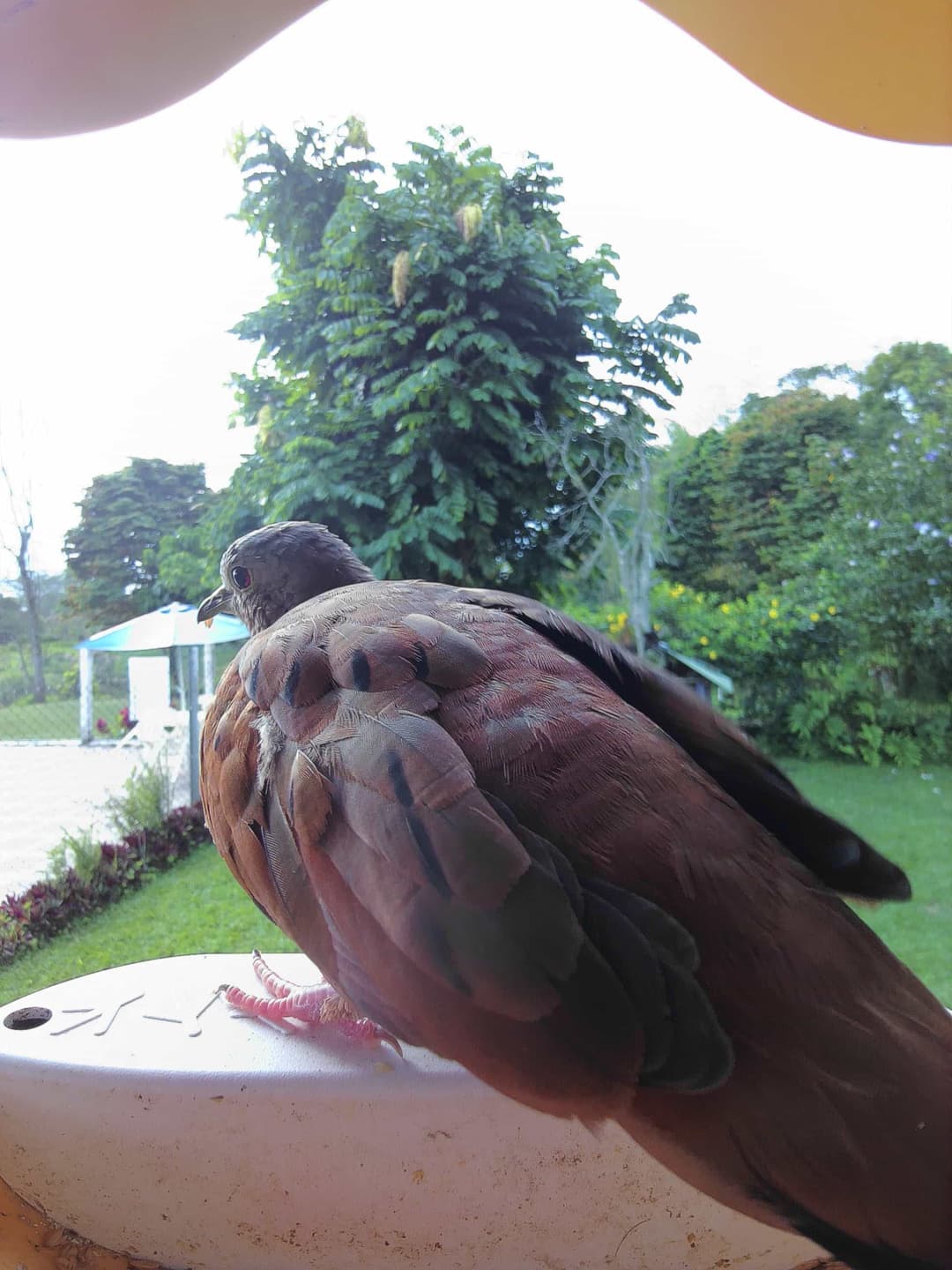
Breeding and nesting habits of the plain-breasted ground dove
Mating behaviors
The plain-breasted ground dove engages in a simple courtship display, which involves the male performing soft coos and wing displays to attract a mate. Pair bonding is observed during the breeding season.
Nesting details
Nesting typically occurs in low shrubs or on the ground, utilizing grasses, small twigs, and leaves for construction. They may build nests in gardens if suitable cover and protection from predators are available. Providing dense shrubs or low bushes helps create a conducive environment.
Eggs and chick-rearing
Females usually lay 2 white eggs. Incubation lasts around 12-14 days. Both parents participate in feeding chicks via regurgitated food. Fledglings leave the nest approximately two weeks after hatching but remain under parental supervision for additional weeks.
What does a plain-breasted ground dove like to eat?
Seeds
Natural diet
The plain-breasted ground dove primarily feeds on a variety of small seeds found on the ground. It commonly forages in open fields and grasslands, consuming seeds from grasses, weeds, and other low-growing plants. It may also eat small insects and other invertebrates, though these form a minor part of its diet. The bird is well adapted to exploiting the seed resources that occur in its natural habitat.
Bird feeders
While not a frequent visitor to bird feeders, the plain-breasted ground dove may sometimes consume seeds commonly offered in feeders. These may include millets, cracked corn, and other smaller grains. Due to their ground-feeding habits, they are more likely to be attracted to platform feeders or scattered food on the ground. The species prefers areas where seeds are readily accessible and usually avoid feeders that are elevated or designed for perching birds.
Feed preference of plain-breasted ground doves
Plain-breasted ground doves are not finicky eaters. They have a fondness for grass seeds and grains. By sprinkling some of Bird Buddy's expertly chosen seeds in your yard or at a feeder, you should start to see these charming birds making your yard their dining destination. Bird Buddy's seeds are seasonal and nutritionally balanced, providing the ideal mix to attract these doves.
Feeder preferences and location
Plain-breasted ground doves, as their name suggests, spend much time on the ground, feeding on fallen seeds and grains. Therefore, a ground feeder or a low-platform feeder would serve best in attracting them. Place the feeder in a quiet, near shrubs or low bushes area to provide the doves with a sense of safety against predators while visiting.
Fun tricks to attract more doves
Adding a bath or a water source to your yard could significantly increase the visits from plain-breasted ground doves as they love to keep their feathers clean and drink frequently. And who knows? If you're lucky and patient, you might witness them engaging in an enchanting bird song 'sing-along' during their visit. These doves love to coo, especially early in the morning.
Where can you find plain-breasted ground doves?
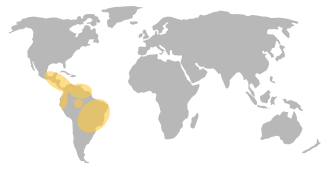
Primary habitat
The plain-breasted ground dove primarily resides in the dry savanna and subtropical or tropical regions of South America.
Additional range
Unexpectedly, this species can also thrive in human-modified areas such as plantations and gardens, expanding its range beyond natural habitats.
Do they migrate?
The plain-breasted ground dove is primarily a non-migratory bird, meaning it typically remains in the same area throughout the year. This small dove is distributed across a wide range in Central and South America, including countries such as Mexico, Colombia, Venezuela, Ecuador, Peru, Bolivia, Brazil, and Paraguay. The species inhabits open and semi-open landscapes like savannas, grasslands, and agricultural areas, often avoiding densely forested regions. While the plain-breasted ground dove does not engage in long-distance migrations, it may exhibit some local movements in response to changes in food availability or environmental conditions, such as during the dry or wet seasons. These movements, however, are short-range and lack the structured migratory patterns seen in many other bird species. Overall, the plain-breasted ground dove maintains a relatively stable presence within its habitat, relying on local adaptations and minor relocations rather than extensive migrations to sustain its populations.
What is the role of plain-breasted ground doves in nature and how to protect them?
Conservation status
The plain-breasted ground dove is currently classified as Least Concern, indicating it is relatively common and not immediately at risk. Its wide range across South America and adaptable nature help maintain stable populations. However, habitat loss due to agricultural expansion and deforestation could pose future threats. Conservation efforts focus on habitat preservation and management to ensure long-term stability for the species. While not currently endangered, ongoing monitoring is essential to detect any population changes or emerging threats.
Ecological role of plain-breasted ground doves
Its role in the ecosystem
The plain-breasted ground dove, scientifically known as Columbina minuta, plays a crucial role in the maintenance of ecological balance. Its significance lies primarily in its contribution to seed dispersal and control of pests. Specifically, as it feeds on a diet primarily made up of plant materials such as fruits, it facilitates the dispersal of various seeds spread through its droppings. This activity aids in the propagation of different plant species as well as the potential distribution and colonization of these species in new habitats. Additionally, the plain-breasted ground dove also feeds on small invertebrates, serving as a natural form of pest control. By predating on these small pests, ground doves help in minimizing potentially harmful insect populations, reducing damage to crops and other vegetation. Therefore, this species is vitally important for agricultural practices and maintaining biodiversity.
How to help protect plain-breasted ground doves
Preservation tips
Habitat preservation strategies
Prioritize protecting and restoring habitats vital to the Plain-breasted Ground Dove, such as forests and grasslands. Lands identified as the dove's breeding or feeding areas should be conserved. Engage local communities and organizations in conservation efforts. Discourage habitat disruption activities like deforestation, construction, and agricultural expansion. Establish conservation areas where their habitat is protected and where their population can be monitored.
Community science initiatives
Encourage community participation in conservation initiatives. Promote community science programs where locals can contribute to monitoring the dove's population and habitat conditions. This can be achieved through regular bird watching activities, data collection, and timely reporting of observed changes. Provide education and training about the importance of biodiversity and conservation, specifically addressing the importance of the Plain-breasted Ground Dove. Through this, communities will be empowered to become active conservationists in their localities.