
Redwing
Redwing
Turdus iliacus


Quick Identification guide
Quick Identification guide
- •
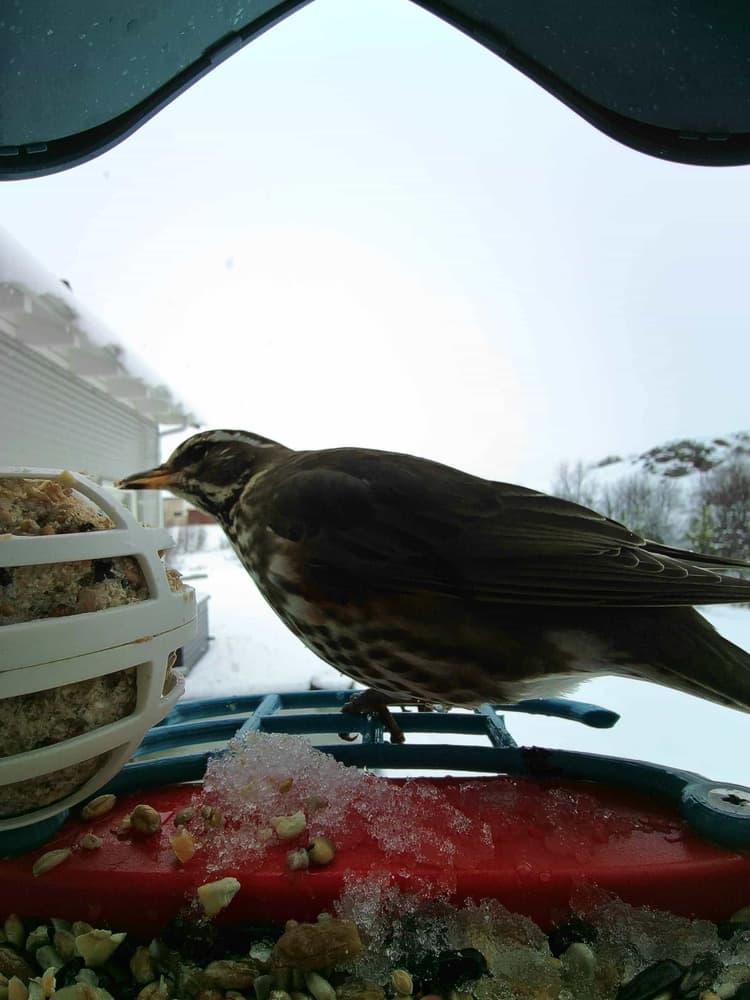
Features rich reddish-brown flanks with a distinctive white supercilium (eyebrow) above each eye
- •
Has a streaked brown back and lighter underside, often showing a subtle mottling
- •
The slim body and straight, yellowish beak help distinguish it from other similar thrushes
What does a redwing sound like?
The redwing's vocalizations are diverse, with a primary song consisting of a descending warble made up of simple notes. The song varies across different dialects, indicative of its geographical spread. Its repertoire also includes a wide variety of calls, augmented by a distinctive buzzy note referred to as "dsssi", and numerous chip-like notes. These myriad vocal variations offer a broad spectrum of communication expressions for the redwing.


Description
Nobody likes to eat alone and that is especially true of redwings. These migratory birds have a number of luch buddies, most notably fieldfares, common blackbirds, starlings and the odd mistle thrush, song thrush and ring ouzel. Careful not to mix it up with the American red-winged blackbird that's also sometimes called redwing, although the two are not related.
The redwing can weigh between 46to80grams and be from20to24centimeters tall.
The typical lifespan of a Redwing is around 2-3 years, although the longest known lifespan recorded is 10 years. This is similar to other small passerines like the Song Thrush that typically live for 3-5 years. However, survival rates post-fledging can be low, with a large number of individuals not surpassing their first year of life. This all largely depends on environmental factors, including their geographical location and food supply.
Did you know?
Most popular questions about redwing
How to recognise a redwing?
General appearance
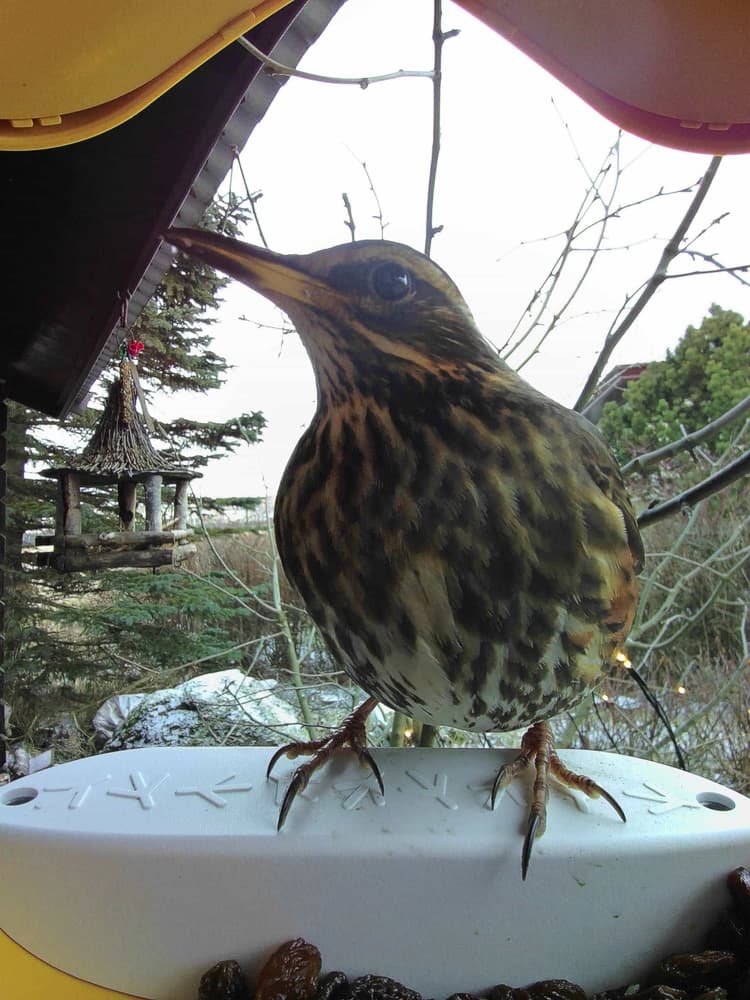
Redwings are small thrushes, measuring about 20-24 cm in length. They have a distinctive brownish upper body with pale spots and a striking white eye stripe. Their underwings flash reddish-orange in flight, contrasting against a cream or buff breast with varying spots. This contrast aids identification, especially in flight during migration or winter months.
Male vs female
Male and female redwings closely resemble each other, with no significant differences in plumage. Both sexes share the same coloration, making it difficult to distinguish between them by appearance alone. Observing behavior during breeding seasons may be more indicative of gender.
Juvenile
Juvenile redwings appear mottled, often less vibrant than adults, with a duller, less defined eye stripe. Their plumage contains more brown and less defined spots, lacking the bright coloration seen in adults. Juveniles gradually develop adult plumage before their first winter.
Breeding and nesting habits of the redwing
Mating behaviors
Redwings engage in courtship displays involving melodious singing and aerial displays by males to attract females. The males establish territories and defend them from rivals.
Nesting details
Redwings build cup-shaped nests in dense vegetation, often in low shrubs or trees near wetlands. Preferred materials include grass, moss, and mud, suggestive of environments rich in natural debris.
Eggs and chick-rearing
A typical clutch consists of 4-6 pale blue eggs with brown spots. Both parents partake in feeding the chicks, which fledge about two weeks after hatching. Gardens can attract redwings by providing dense bushes and a source of water.
What does a redwing like to eat?
Berries
Fruits
Insects
Seeds
Snails
Spiders
Worms
Natural diet
Redwings primarily consume insects, earthworms, and other invertebrates during the breeding season. In autumn and winter, they shift to berries, seeds, and fruits, including those of hawthorn, rowan, and holly trees.
Bird feeders
While redwings are not frequent visitors to bird feeders, they may occasionally eat food such as suet, mealworms, and fruit offerings, especially during harsh winter conditions.
Create a delightful redwing menu
The key to attracting Redwings is all about what you serve! These typical thrushes are partial to fruits and berries. In fact, their favorites include apples and berries from trees like rowans and hollies. Aside from this, they also like to feed on mealworms, sultanas, and seed mixes. Bird Buddy's seeds have consistently demonstrated better results as they are expertly chosen depending on the season.
Ideal feeder types for redwings
Redwings are ground feeders. However, they have also been observed to use hanging feeders. They are not fussy, though! You can simply lay the food on a bird table or use a ground feeder. During the winter months, when food is scarce, they can be tempted to use hanging feeders as well.
Encourage redwings to keep coming back
Offering a consistently replenished food source will encourage Redwings to visit your yard or feeder regularly. It’s also advisable to maintain a quiet and stress-free environment as these birds are quite shy. Moreover, you can plant berry bushes or fruit trees in your yard. This way, your yard will always have the food these birds love, encouraging them to drop by and maybe, stay for a sing-along!
Where can you find redwings?
Primary habitat
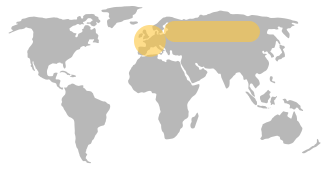
The redwing primarily inhabits woodlands, hedges, and farmlands in the high latitudes of Europe and Asia.
Additional range
They migrate for winter to warmer regions of Europe, North Africa, and Southwest Asia. Unexpectedly, they may also seek shelter in city parks and gardens.
Do they migrate?
The redwing is a migratory bird found primarily in Europe and Asia. During the breeding season, redwings inhabit northern regions, including Scandinavia, Iceland, the Faroe Islands, and parts of Russia. As winter approaches, they migrate to milder climates in search of food and better living conditions. Migration typically begins in late September and October. The redwings follow distinct routes, often flying southwest toward the British Isles, Western Europe, and southern Europe, reaching the Iberian Peninsula and the Mediterranean regions. Some redwings also travel as far as North Africa. During migration, key stopover locations include coastal and inland areas where they can find abundant food such as berries and insects. They often travel in flocks, sometimes joining other thrush species for the journey. By April, as conditions improve in their breeding grounds, redwings begin their return northward migration. This spring migration is crucial for their breeding cycle and typically concludes by early May when they arrive back at their northern habitats to begin nesting and raising their young.
What is the role of redwings in nature and how to protect them?
Conservation status
The redwing is classified as "Least Concern" by the IUCN, indicating it is relatively common. However, its population faces threats from habitat loss and changes in agricultural practices, which affect its breeding and wintering grounds. Conservation efforts focus on habitat protection and sustainable land management to support its habitat needs. Monitoring programs help track population trends, ensuring any significant declines are quickly identified and addressed. Despite current stability, vigilance is required to maintain healthy populations.
Ecological role of redwings
Its role in the ecosystem
Redwings, being insectivorous, play a vital role in pest control by preying on insects that are harmful to crops and forests, limiting the spread of these pests and diseases they may carry. Redwings also feed on berries and disseminate the seeds in their droppings, helping in seed dispersal. They, therefore, contribute significantly to the propagation of certain berry-producing plants, influencing the structure and diversity of plant communities. Moreover, by foraging on the ground, Redwings contribute to the process of soil aeration which aids in healthy plant growth. The nest-building activity of Redwings also modifies local habitats and can affect the distribution and density of plants and other organisms in the community. Lastly, these birds are also important as bioindicators, providing insight into the health of ecosystems, thus, their presence, abundance, or absence can reflect the state of the environment.
How to help protect redwings
Preservation tips
Habitat preservation strategies
To support redwing conservation, preserve and restore their habitat. This includes forests and wooded areas, especially those with dense understory for shelter and survival. Whenever possible, identify naturally occurring redwing habitats and safeguard these locations from urbanization or destruction. Finally, supporting broader environmentally friendly practices, such as sustainable forestry, can help ensure the longevity of these birds' habitats.
Community science initiatives
Engagement in community science initiatives can significantly impact redwing conservation efforts. Participate in bird monitoring and counting programs that track redwing populations, migration patterns, and habitats. Inform the relevant organizations and researchers about the presence and behavior of redwings in your area. Raise awareness in your local community about the importance of redwing preservation through educational programs, workshops, or community cleanup events.