
White-Headed Woodpecker
White-Headed Woodpecker
Leuconotopicus albolarvatus


Quick Identification guide
Quick Identification guide
- •
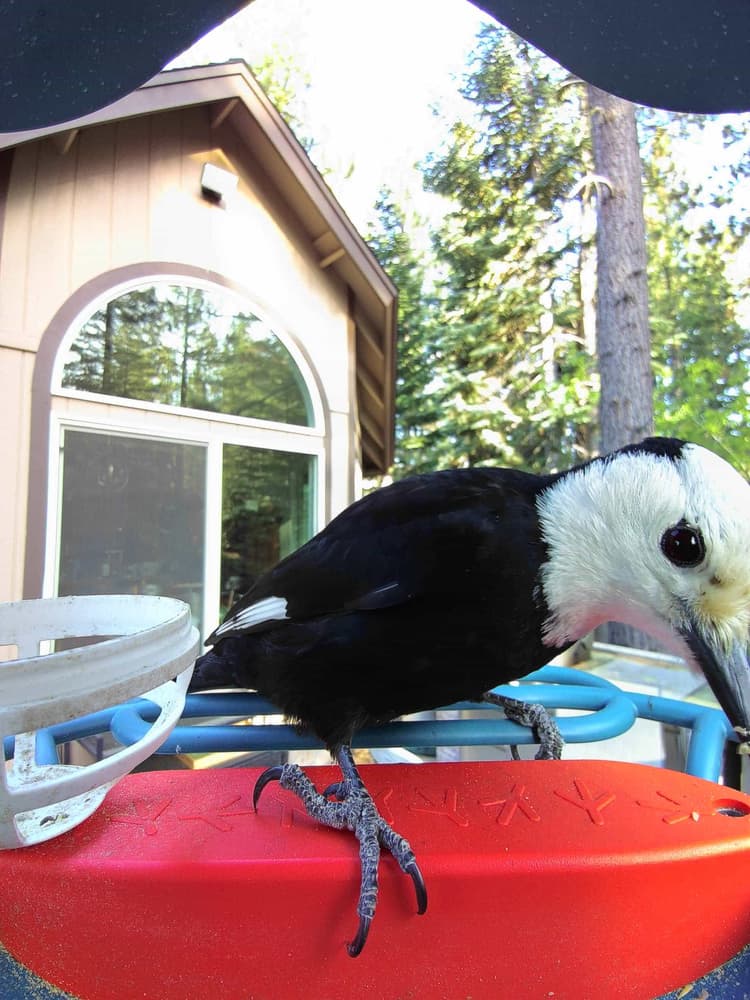
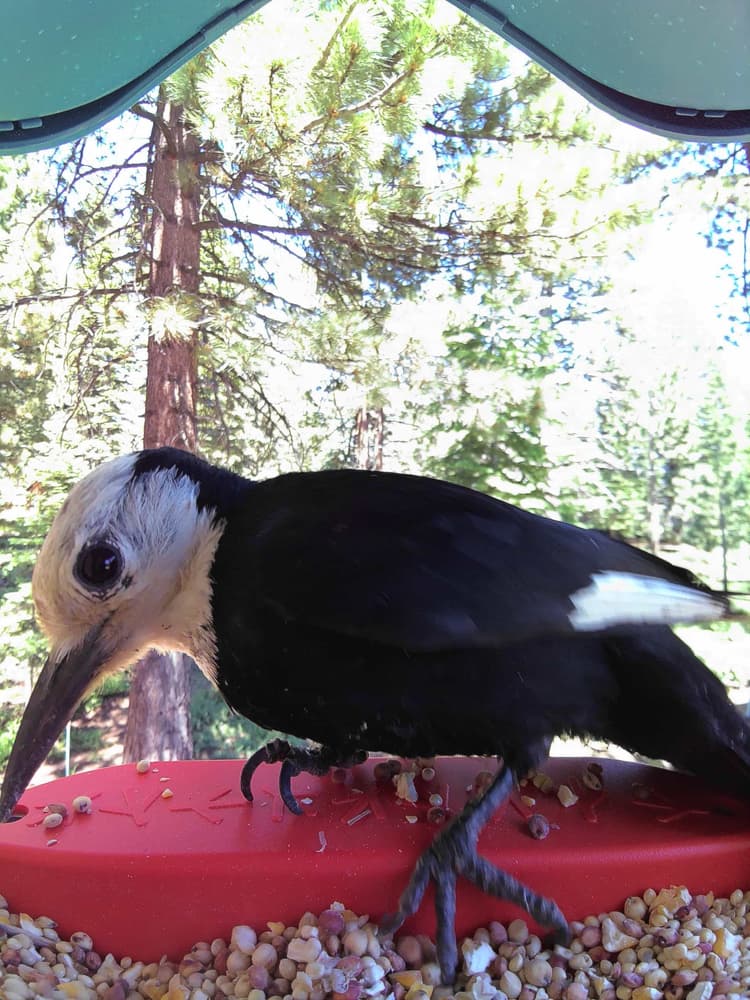
Identified by its distinctive white head, contrasting sharply with its black body and wings
- •
Features a short, stout bill that is well adapted for pecking into wood surfaces
- •
Displays pure black upperparts and wings with white primary feather patches, providing a unique pattern in flight
What does a white-headed woodpecker sound like?
The white-headed woodpecker produces low, sharp “pik” or “peek” sounds as its call, often repeated or delivered in series. The call can become more raucous under stress or during territorial disputes. Its song is a rapid, rhythmic drumming noise created by pecking at hollow wood or metal surfaces, functioning in communication and territory establishment. The species is relatively quieter compared to other woodpeckers.


Description
White-headed woodpeckers are loving parents and partners. Both males and females incubate, with males taking charge of the night shift. When on opposite sides of the nest cavity, they will drum to each other! Because opening pine cones can get messy, they cling to them in a way that manages to keep their feathers nice and clean.
The white-headed woodpecker can weigh between 53to68grams and be from21to23centimeters tall.
The white-headed woodpecker has an average lifespan of about 5-6 years in the wild. This is shorter when compared to related species such as the downy woodpecker, which can live up to 11-12 years or the red-bellied woodpecker with a lifespan of about 12 years. However, longevity can vary depending on habitat conditions and predators.
Did you know?
Most popular questions about white-headed woodpecker
How to recognise a white-headed woodpecker?
General appearance
The white-headed woodpecker is a distinctive bird species known for its mostly black body and stark white head. Measuring approximately 8-9 inches long, they also feature bright white wing patches, and a sturdy, chisel-like bill perfect for drilling into wood. Overall, it's their contrasting monochromatic color profile that makes them easily identifiable.
Male vs female
Males and females of this species are generally similar in appearance. However, a key difference is that males feature a small, red patch or 'cap' on the back of their head. This is absent in females, making them a little less striking but equally as fascinating.
Juvenile
Juvenile white-headed woodpeckers do not greatly differ from adults in terms of their coloration. Both adolescents and adults have the same black and white coloration. However, their plumage is somewhat duller and lacks the sheen seen in mature birds. Interestingly, juvenile males already possess the red cap of the adults.
Breeding and nesting habits of the white-headed woodpecker
Mating behaviors
White-headed woodpeckers engage in drumming and vocal calls during courtship. Pairs form lifelong bonds, often performing displays of mutual preening to strengthen the relationship.
Nesting details
They typically nest in dead or decaying trees. Both sexes excavate the nest cavity, usually at a height of 4-15 meters. The cavity is lined with wood chips for insulation and protection.
Eggs and chick-rearing
The female lays 3-7 white eggs, which both parents incubate for about two weeks. After hatching, both parents actively feed and care for the chicks until they fledge, which takes about 3-4 weeks.
What does a white-headed woodpecker like to eat?
Insects
Sap
Seeds
Suet
Natural diet
The white-headed woodpecker primarily feeds on insects, especially beetle larvae found under bark. During the breeding season, they increase their intake of insects for protein. In fall and winter, their diet shifts more towards plant-based foods, including pine seeds which are a major part of their diet throughout the year. They may also consume fruits and berries occasionally, depending on availability.
Bird feeders
At bird feeders, white-headed woodpeckers are attracted to suet, sunflower seeds, and occasionally peanuts. They prefer feeders that can hold larger seeds or suet blocks, allowing them to peck and extract the food more easily. Providing a consistent supply of these items can encourage woodpeckers to visit feeders regularly.
White-headed woodpecker favorite snacks
White-headed woodpeckers are particularly fond of insects but also enjoy nuts and seeds. An excellent option are Bird Buddy seeds, which are expertly selected for the current season, offering optimal nutrition for these birds. Placing these seeds in your feeder can help attract these lovely visitors to your yard.
Ideal feeder types for white-headed woodpeckers
When it comes to feeders, white-headed woodpeckers prefer ones that provide easy access to the seeds or nuts. Suet feeders or seed feeders with large openings are good choices. Placing these in a quiet and safe spot in your yard will help to make them more appealing to these curious birds.
Fun tricks to attract white-headed woodpeckers
To add some excitement and encourage the woodpeckers to stick around, consider adding a bird bath or a nesting box near the feeder. These birds are also attracted to the sound of water, so a small fountain or water feature could be a great addition to your yard. And who knows? You might just get them to stay for a sing-along!
Where can you find white-headed woodpeckers?

Primary habitat
The white-headed woodpecker primarily resides in the pine forests of the western United States and southern British Columbia.
Additional range
It prefers cool, mountainous regions, but may also inhabit burned forests or areas affected by beetle infestations.
Do they migrate?
The white-headed woodpecker (Leuconotopicus albolarvatus) is primarily a non-migratory bird, meaning it typically stays in the same region year-round. This woodpecker is found predominantly in the mountainous coniferous forests of the western United States, specifically in areas like California, Oregon, Washington, Idaho, and parts of Nevada. These birds inhabit regions dominated by pine trees, such as ponderosa and sugar pine forests, but they do not follow the typical migratory patterns seen in many other bird species. Instead, they exhibit a more localized movement which may include short-distance dispersal or altitudinal shifts within their home range in response to food availability, primarily related to the seed crops of pine. During periods of poor seed production or harsh winter conditions, some individuals might descend to lower elevations. While they generally remain within their established territories, the white-headed woodpecker’s focus is on exploiting the resources of its native habitat without undertaking extensive seasonal migrations. This adaptability allows them to thrive where coniferous forests provide the necessary food and shelter throughout the year.
What is the role of white-headed woodpeckers in nature and how to protect them?
Conservation status
The white-headed woodpecker is considered a species of Least Concern. It is relatively common in its range, primarily in the pine forests of the western United States. Key conservation efforts focus on habitat preservation, particularly maintaining mature forests and preventing logging in critical areas. Significant threats include habitat loss due to logging, wildfires, and forest management practices that reduce large tree snags and downed wood, which are crucial for nesting and foraging. Awareness and management initiatives aim to balance forestry practices with habitat needs to ensure this woodpecker's continued abundance.
Ecological role of white-headed woodpeckers
Its role in the ecosystem
The White-headed Woodpecker plays a major role in controlling pests by feeding on insects such as beetles, ants, and larvae, thus maintaining the health of the forest ecosystem. They also contribute significantly to seed dispersal. White-headed Woodpeckers obtain much of their food by drilling holes in tree bark and extracting hidden insects or sap. The holes they create often become habitats for other small species. During non-breeding seasons, these woodpeckers spend a great deal of time extracting and storing seeds in crevices and holes, unintentionally aiding in the spread and germination of many tree species. White-headed Woodpeckers also serve an indicator species role; their presence often suggests a healthy, mature forest ecosystem. Hence, they are vital to biodiversity and the functioning of an ecosystem.
How to help protect white-headed woodpeckers
Preservation tips
Habitat preservation strategies
Support the preservation of old-growth forest ecosystems, as white-headed woodpeckers prefer mature, pine-dominated forests. Advocate for responsible land use policies and forest management practices that protect these habitats. Promote the retention and restoration of dead or dying trees, which are important for nesting and foraging.
Community science initiatives
Participate in bird monitoring programs like the Christmas Bird Count or eBird to contribute to our understanding of white-headed woodpecker populations. Report sightings and nest locations to help track their distribution and breeding success. Encourage community awareness and education about the white-headed woodpecker and its conservation significance.