
Yellow Bishop
Yellow Bishop
Also known as: Cape Bishop, Cape Widow, Yellow-Rumped Widow
Euplectes capensis
Quick Identification guide
Quick Identification guide
- •
Displaying a vibrant yellow plumage during the breeding season, males stand out strikingly in their environment
- •
Characterized by a stocky body and a short tail, providing a compact appearance
- •
Features a thick, conical beak that is well-suited for a diet of seeds and grains
Description
Did you manage to ID a female or juvenile yellow bishop? Then you deserve your Expert Birder badge! They’re notoriously difficult to identify in the field because they look like, well, a whole bunch of other birds. During breeding season, they have only one thing on their mind – babies – which is why they’re usually solitary. However, when that part of the year is done the party can officially start. and they become incredibly sociable!
The yellow bishop can weigh between 18to38grams and be from15to17centimeters tall.
The Yellow Bishop is a species of bird typically living for 5 years. The lifespan is relatively short compared to other related species, such as the Northern Red Bishop which can live up to 8 years. Environments, natural predators, and availability of resources can affect these birds' longevity.
Did you know?
Most popular questions about yellow bishop
How to recognise a yellow bishop?
General appearance
The yellow bishop is a small bird species known for its vibrant, predominantly yellow coloration. This bird's beak is short and conical, typical of seed-eaters, and the wings are rounded.
Male vs female
Male yellow bishops boast a striking black-and-yellow plumage during the breeding season, contrasting with their duller brown colors in non-breeding periods. The head, breast, back, and tail are black, while the rest of the body glows yellow. Females, on the other hand, display a less vibrant color palette, predominantly brown and cream with fine streaking, allowing them to blend in while nesting.
Juvenile
Juvenile yellow bishops mimic the appearance of the adult females, albeit with more muted colors. They have a primarily streaky brown plumage, which gradually shifts towards the adult patterns as they mature.
Breeding and nesting habits of the yellow bishop
Mating behaviors
The yellow bishop engages in elaborate courtship displays. Males display bright plumage and perform flight patterns to attract females. Vocalizations and physical displays are used to establish territory and appeal to potential mates.
Nesting details
Yellow bishops build cup-shaped nests close to the ground, usually in tall grasses or shrubs. The nests are woven from grass, leaves, and plant fibers. They sometimes nest in gardens where vegetation is dense, providing shelter and camouflage.
Eggs and chick-rearing
Females lay 2 to 4 eggs, which are incubated for approximately two weeks. Both parents participate in feeding and protecting the chicks. Young birds fledge the nest about two weeks after hatching, but parents continue to feed them until they are self-sufficient.
What does a yellow bishop like to eat?
Insects
Seeds
Natural diet
The yellow bishop primarily feeds on seeds, which make up a significant portion of its diet. It forages for seeds from grasses and other small plants. In addition to seeds, it consumes insects, particularly during the breeding season, when protein is essential for chick development. The insect portion of their diet includes small beetles and caterpillars. This dietary flexibility aids in their survival across various habitats, including grasslands and savannas.
Bird feeders
At bird feeders, yellow bishops are commonly attracted to seed mixes and can be seen consuming millet, sunflower seeds, and other small seeds. They may also be drawn to feeders that offer mealworms, reflecting their natural inclination to include insects in their diet.
Making your yard inviting for the yellow bishop
Create an inviting space for the yellow bishop by maintaining a healthy, diverse garden. Incorporate native plants which provide a rich source of insects, their favorite food. Install a birdbath as these birds are attracted to water. Keep your yard safe for birds by keeping your pet cats indoors, and institute bird-friendly window modifications to prevent bird collisions.
Feeding yellow bishops: feeder types and snacks
Setting up a bird feeder can help in attracting the yellow bishop to your yard. This bird species prefer platform feeders or bird tables where they can easily spot their food. For snacks, yellow bishops love seeds, especially from grasses. Bird Buddy seeds are highly recommended because these seeds are specifically chosen by experts for different seasons, improving your chances of attracting these birds to your yard.
Fun tricks to encourage yellow bishop visits
For some fun tricks to encourage yellow bishops to visit more often, try changing up the seeds in your feeder frequently. This keeps their diet varied and interesting. You can also try bird calls to pique their interest. As social creatures, they likely can't resist the opportunity for a 'sing-along.'
Where can you find yellow bishops?
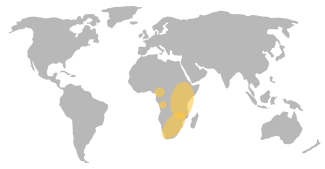
Primary habitat
The Yellow Bishop primarily resides in sub-Saharan Africa's open habitats, including grasslands, wetlands, and cultivated areas.
Additional range
unnaturally, it occupies farmlands and gardens in dense populations. It prefers climates with high rainfall.
Do they migrate?
The yellow bishop (Euplectes capensis), also known as the yellow-rumped widowbird, is generally a resident bird that does not migrate over long distances. Native to sub-Saharan Africa, this species usually stays within its range throughout the year, although it may engage in some local movements depending on seasonal changes in food availability and breeding requirements. These movements are typically altitudinal or within short distances to exploit different habitats. During the breeding season, which coincides with the rainy season, yellow bishops favor wetlands, grasslands, and areas with tall vegetation that provide cover and nesting sites. Outside of the breeding season, they might move to more open habitats, including cultivated land or stubble fields where they can forage for seeds. Ultimately, because they do not undergo long-distance migrations, the yellow bishop’s route, timing, and key locations are largely influenced by local environmental conditions rather than a traditional migratory pattern.
What is the role of yellow bishops in nature and how to protect them?
Conservation status
The yellow bishop is currently classified as "Least Concern" on the IUCN Red List, indicating it is relatively common and not facing immediate threats of extinction. However, habitat loss due to agricultural expansion and urban development poses significant threats. Conservation efforts focus on habitat preservation and management to maintain their populations. The species benefits from residing in a variety of grassland habitats, which somewhat mitigates their vulnerability. Monitoring and sustainable land-use practices are essential to ensuring their continued stability.
Ecological role of yellow bishops
Its role in the ecosystem
The Yellow Bishop is a species of bird belonging to the family Ploceidae, found in South Africa. Its ecological role is paramount, particularly in pest control and seed dispersal. For pest control, Yellow Bishops feed on insects, especially during their breeding season, thus naturally controlling pest populations. In addition to insects, their diet includes seeds, contributing to seed dispersal. This can indirectly lead to benevolent effects on the vegetation, aiding the distribution and propagation of different plant species. They also play an important role in pollination by feeding on nectar. Moreover, their nest-building activity influences vegetation structure while promoting plant diversity. Their nests, usually built low in shrubs, also provide habitats for other bird species, increasing the biodiversity of their habitats. Overall, Yellow Bishops' activities positively impact the ecosystem's balance and biodiversity.
How to help protect yellow bishops
Preservation tips
Habitat preservation strategies
Support the preservation of the Yellow Bishop's habitat by protecting and restoring grasslands and marsh areas. Avoid agricultural activities that degrade these environments. Plant native vegetation to improve their breeding and feeding grounds. Limit urban development close to these areas to reduce habitat fragmentation. Support policies that prioritize the preservation of natural habitats.
Community science initiatives
Involve the local community in Yellow Bishop conservation through citizen science programs. Have volunteers help in data collection and monitoring of Yellow Bishop populations. Organize educational programs to raise awareness about the importance of species conservation. Nurture an active community of bird watchers and conservation enthusiasts who can help in spotting and protecting the bird. Encourage adoption of environmental-friendly behaviors in the community, such as limiting pesticide usage which harms these birds.