
Yellow-Crowned Bishop
Yellow-Crowned Bishop
Also known as: Golden Bishop, Napoleon Weaver, Black-Winged Golden Bishop, Napoelon Bishop
Euplectes afer
Quick Identification guide
Quick Identification guide
- •
Males in breeding plumage are easily recognized by their bright yellow body contrasted with a rich black face, chest, and wings
- •
A small size and compact body with a rounded appearance makes this bird stand out
- •
Features a short, conical beak well-suited for seed consumption
What does a yellow-crowned bishop sound like?
The yellow-crowned bishop's flagship vocalization has a repetitive, distinctive character, described as "tsit-tsit-tsit". Its call, heard mainly during flight, is a sharp, high-pitched "see" sound. Its song comprises a "ksew" or buzzing "zizzizz", followed by a few "tsit" notes. The song duration and amplitude may vary between male individuals. Their vocalizations, primarily willing during breeding season, play a crucial role in defending territory and attracting mates. Despite its vibrant plumage, the bird is often heard before being seen due to its loud calling.
Description
Buzz, buzz, no, that's not a bee, it's just a yellow-crowned bishop. These brightly-coloured birds are famous for their high-pitched, bee-like song, which pairs great with their black-and-yellow plumage! They like to show off the brightness of their feathers when wooing a female... or two: males build more than one nest and perform to attract a female to each one.
The yellow-crowned bishop can weigh between 11to20grams and be from10to11centimeters tall.
The typical lifespan of a Yellow-Crowned Bishop in the wild is unknown, but in captivity, they live up to 10 years. This is similar to other Euplectes species like the Northern Red Bishop or the Yellow Bishop. These small African weaver birds generally have a similar lifespan across species.
Did you know?
Most popular questions about yellow-crowned bishop
How to recognise a yellow-crowned bishop?
General appearance
The yellow-crowned bishop (Euplectes afer) is a vivacious small bird, measuring around 10 centimeters in length. They have short, conical beaks suited for seed eating and are best known for their stunning yellow and black plumage.
Male vs female
Male bishops exhibit a vibrant yellow crown, back, and underparts, juxtaposed with pitch-black wings, tail, and belly during breeding seasons. Outside this period, males don similar, more subdued hues as females. Females are generally smaller and have entirely brown-feathered bodies, making them hard to distinguish from other female weavers.
Juvenile
Juvenile yellow-crowned bishops resemble the females, with a dusky-brown appearance. However, the coloration starts to change to either vibrant (in males) or a bit intense brown (in females) as they hit adolescence. Seasonal molting introduces more of the striking yellow and black colors in the males.
Breeding and nesting habits of the yellow-crowned bishop
Mating behaviors
The yellow-crowned bishop displays elaborate courtship rituals, with males performing a variety of displays to attract females, including vibrant plumage flaring and energetic flight patterns.
Nesting details
These birds typically build globe-shaped nests close to water bodies, using grasses and reeds. They prefer marshes, swamps, and in some cases, garden areas with tall, dense vegetation.
Eggs and chick-rearing
Females lay 2-4 eggs per clutch, incubating them alone. After hatching, chicks are fed by the female primarily, with the male occasionally helping. The chicks fledge about two weeks after hatching.
What does a yellow-crowned bishop like to eat?
Insects
Seeds
Natural diet
The yellow-crowned bishop primarily feeds on a variety of seeds from grasses and other small plants. It also consumes insects and other small invertebrates, especially during the breeding season to provide additional protein for chicks.
Bird feeders
At bird feeders, yellow-crowned bishops are known to consume millet, black oil sunflower seeds, and cracked corn. They may also enjoy small bits of suet and are attracted to feeders that offer a mix of grains.
Choose the right seeds
The yellow-crowned bishop loves seeds, especially those selected by experts. Consider using Bird Buddy seeds. They are specially selected for the season and are proven to yield the best results in attracting this beautiful bird.
Use tube feeders
Consider utilizing tube feeders to offer your seeds. These feeders are perfect for small birds like the yellow-crowned bishop as they are easily accessible and provide a safe place for them to feed.
Add some water features
Yellow-crowned bishops are attracted to water, so consider adding a bird bath or a water feature to your yard. This will not only attract them but also provide a place for them to cool off and freshen up.
Provide safe nesting sites
Yellow-crowned bishops love building their nests in tall grasses or bushes. If you have such vegetation in your yard, leave it undisturbed to encourage nesting. If not, consider adding some natural or even artificial nesting sites.
Keep predators away
Keep your yard safe from predators. This includes other larger birds, cats, and humans too. A safe and peaceful environment will encourage the yellow-crowned bishops to visit more often and maybe even stay.
Where can you find yellow-crowned bishops?
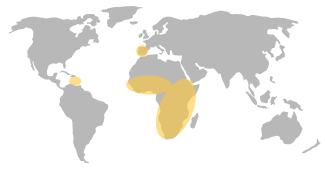
Grassy plains of africa
In the sun-dappled, emerald grasslands of sub-Saharan Africa, the Yellow-Crowned Bishop flits playfully. Amidst the rustling tall grasses, this chirpy avian architect constructs intricate nests, edging out the shimmering dewdrops.
Unexpected urban escapade
Straying from its natural habitat, this feathery globe-trotter has found solace in warmer climes of California and Hawaii. A tropical surprise indeed, as it darts about between city's manicured parks and suburban flowerbeds!
Do they migrate?
The yellow-crowned bishop (Euplectes afer) is primarily a resident bird, meaning it does not engage in long-distance migration. Native to sub-Saharan Africa, it is commonly found in a range of countries, including Senegal, Ethiopia, Angola, and parts of South Africa. While it is generally sedentary, some local movements may occur in response to environmental conditions, such as shifts in water availability or breeding requirements. During the breeding season, which coincides with the wet season, yellow-crowned bishops may move short distances to exploit optimal breeding habitats, such as wetlands and grasslands with tall grasses. These local movements are usually not extensive, and the birds remain within a relatively limited geographic range. Outside of the breeding season, they may disperse slightly to find food, but this does not constitute migration in the traditional sense. Overall, the yellow-crowned bishop's movements are more accurately described as local dispersal rather than true migration, with no established migratory routes or key locations that they travel to and from on a seasonal basis.
What is the role of yellow-crowned bishops in nature and how to protect them?
Conservation status
The yellow-crowned bishop is classified as "Least Concern" by the IUCN, indicating it is relatively common and not currently at risk of extinction. This bird thrives in a variety of habitats including wetlands and grasslands across sub-Saharan Africa. While it faces threats like habitat loss due to agricultural expansion and urbanization, its adaptability helps maintain stable populations. Conservation efforts focus on habitat preservation and monitoring population trends to prevent future decline. Generally, it does not require urgent conservation actions compared to more vulnerable species.
Ecological role of yellow-crowned bishops
Its role in the ecosystem
The Yellow-Crowned Bishop, also known as Euplectes afer, a vibrant weaver bird, does an pivotal role in different ecological processes, including seed dispersal and pest control. These birds often forage on a diverse range of seeds and fruits. The undigested seeds they excrete helps in dispersing plant seeds into different geographical regions, thereby encouraging plant diversification and growth in those areas. This process significantly contributes to the vitality of local ecosystems and the expansion of plant species. On the other hand, these birds also feed on numerous insects, which makes them essential in pest control. By consuming insects, the yellow-crowned bishop naturally restricts the population of these potential pests, alleviating damage to crops and preventing the spread of insect-borne diseases. Such behavioral aspects underline the importance of yellow-crowned bishop in maintaining the ecological balance.
How to help protect yellow-crowned bishops
Preservation tips
Habitat preservation strategies for yellow-crowned bishop
To help conserve the yellow-crowned Bishop, focus on preserving its natural habitat, which includes reed beds, marshes, and grasslands. Support measures to protect these environments from pollution, land reclamation, and urban development. Encourage sustainable agricultural practices as the bird also thrives in cultivated areas. Promote reforestation in areas affected by deforestation.
Community science initiatives
Community involvement in conservation efforts can significantly contribute to the survival of the yellow-crowned Bishop. Promote citizen science programs where individuals can report sightings, enabling tracking of population changes. Organize educational workshops about the importance of this species and how to protect it. Encourage local schools to implement conservation-themed programs, fostering a generation more aware of the need for conservation.