
Yellow-Headed Blackbird
Yellow-Headed Blackbird
Xanthocephalus xanthocephalus


Quick Identification guide
Quick Identification guide
- •
Features a bright yellow head contrasting sharply with its sleek black body
- •
Displays a white wing patch visible in flight and perched
- •
Has a sturdy, pointed bill suitable for its varied diet
What does a yellow-headed blackbird sound like?
The yellow-headed blackbird's vocalizations can be described as harsh and incessant, characterized by distinctive oka-wee-wee and kruck calls. These calls emerge from numerous individuals within a colony, coalescing into a vivid, fluctuating chorus. Their range of call types encompasses a flat to rising pattern and spans across buzzes, chatters, chirps, screams, and whistles.


Description
Yellow-headed blackbirds have a call that has been described as the opening of a rusty farm gate. These birds always build their nests on reedbeds. Males will secure a nesting territory and defend it and females will come to him. Females, multiple, but he will only help out at the first nest; the rest are on their own. They share territory with red-winged blackbirds and are none too happy about it, which is why they bully them until they drive them away.
The yellow-headed blackbird can weigh between 44to100grams and be from21to26centimeters tall.
The average lifespan of a Yellow-headed Blackbird is around 11 years, though some have been known to live up to 16 years in the wild. This is comparable to other blackbird species, such as the Red-winged Blackbird, which typically lives for 15 years, and the Common Grackle, with a life expectancy of about 14 years.
Did you know?
Most popular questions about yellow-headed blackbird
How to recognise a yellow-headed blackbird?
General appearance
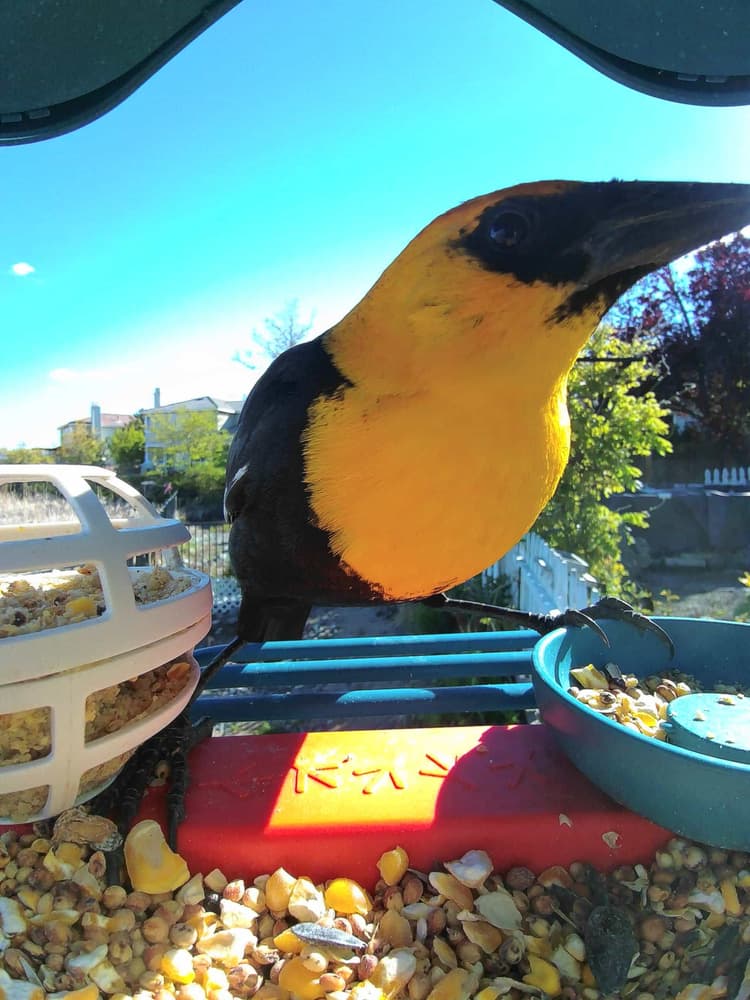
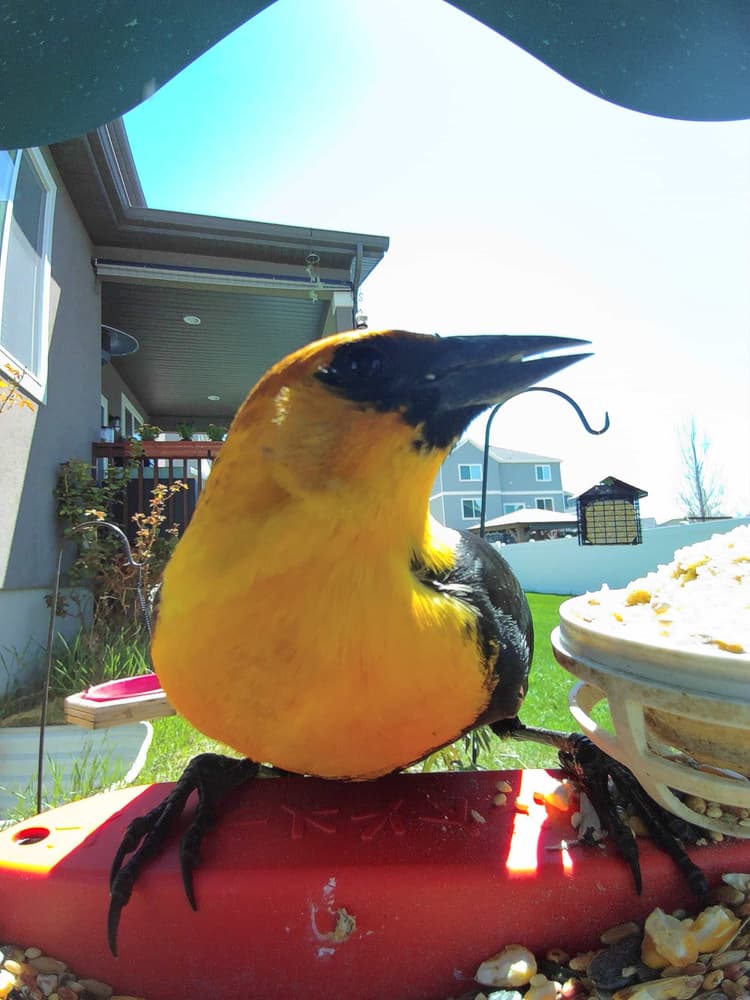
The Yellow-headed Blackbird is about the size of a Robin, ranging from 20-28 cm in size. It possesses broad, rounded wings with a rounded, square-tipped tail. Coloration includes black, brown, white, and yellow. Notably, wing patches, which are obvious in flight, are white.
Male vs female
Males and females of this species exhibit distinct differences. Males are predominately black, but their heads stand out due to their bright yellow coloring, a feature not seen in any other species. Females, a bit smaller than males, are generally of a sooty brown color, with the exception of yellow areas on the face and chest. They also have white streaks on their belly, but do not possess the male's white wing patches.
Juvenile
Immature Yellow-headed Blackbirds, or juveniles, share some similarities with adults but lack the striking differentiation between black and yellow seen in adults. They have some yellow coloring on their heads, and their wing patches, whilst present, are smaller or altogether absent compared to the adults.
Often mistaken for
Red-Winged Blackbird vs Yellow-Headed Blackbird
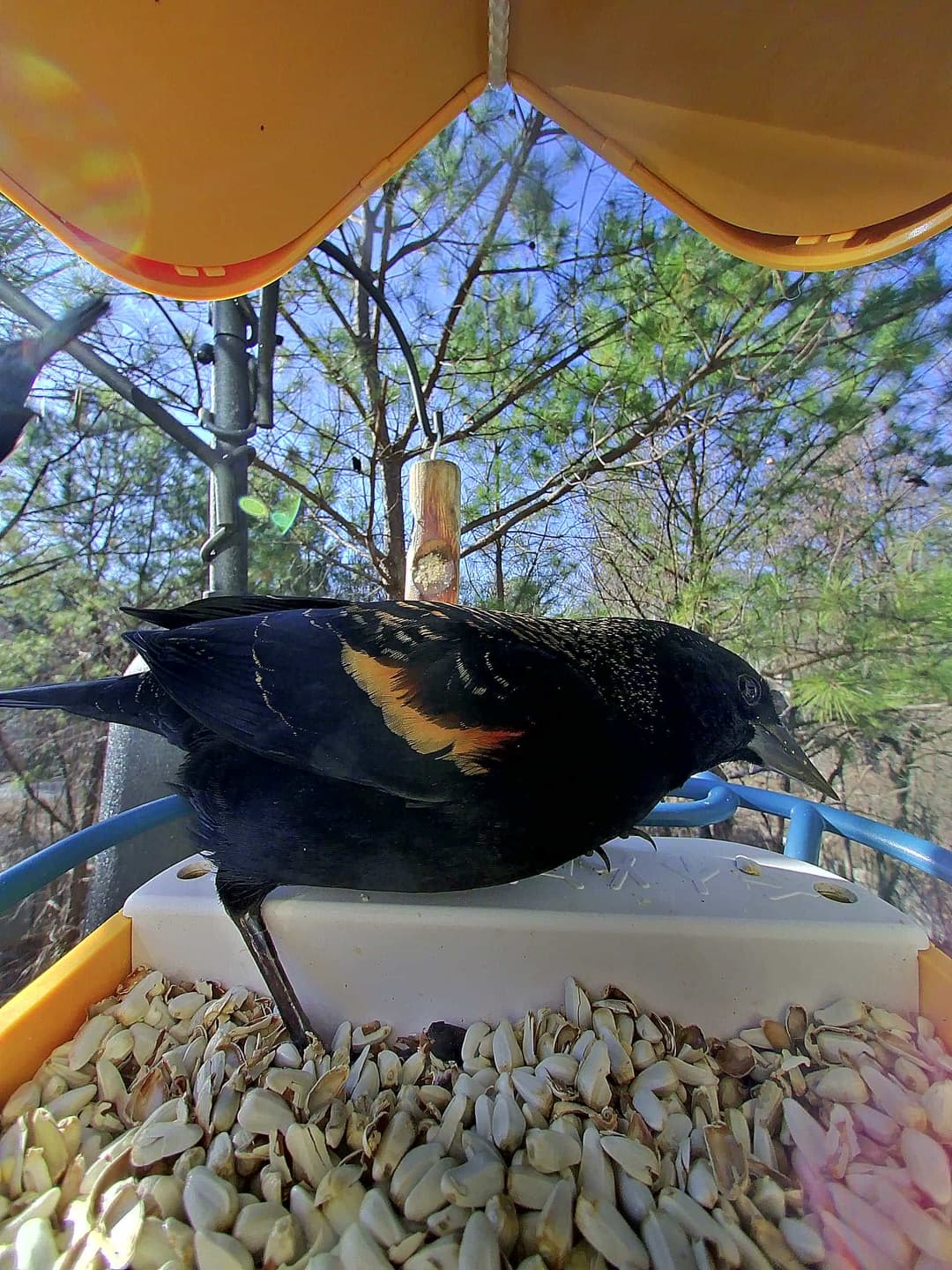
The Yellow-Headed Blackbird features a striking bright yellow head and chest, which contrasts with its predominantly black body. In comparison, the Red-Winged Blackbird has a mostly black body with distinct red and yellow shoulder patches on its wings. The yellow head of the Yellow-Headed Blackbird is unmistakable and can serve as the primary identifying feature. Additionally, Yellow-Headed Blackbirds tend to have a more robust, larger body compared to the slimmer Red-Winged Blackbird. The call of the Yellow-Headed Blackbird is raspier and more mechanical, differing from the more musical notes of the Red-Winged Blackbird. When in doubt, focus on head coloration and call differences.
Breeding and nesting habits of the yellow-headed blackbird
Mating behaviors
Yellow-headed blackbirds typically nest in colonies in marshes. Each male selects and defends a territory against rivals by singing. A male may have up to 5 mates within his territory.
Nesting details
The nest is placed in a marsh, firmly lashed to standing vegetation like cattails, bulrushes, or reeds, and usually no more than 3 feet above the water's surface. The female builds a bulky, deep cup nest woven with aquatic plants and lined with fine, dry marsh plants.
Eggs and chick-rearing
The female predominantly takes care of egg incubation and chick-rearing. Detailed information on the number of eggs and care process for chicks wasn't provided but typically involves the female feeding and nurturing the young until they are fledged.
What does a yellow-headed blackbird like to eat?
Insects
Seeds
Spiders
Natural diet
The yellow-headed blackbird's diet predominantly consists of insects and seeds. During summer months, it feeds heavily on insects such as beetles, caterpillars, grasshoppers, ants, and wasps, along with a few spiders and snails. Roughly two-thirds of its diet comprises of seeds from grasses, weeds, and waste grain. Young birds are primarily fed insects, as they are crucial for their development.
Bird feeders
The yellow-headed blackbird may occasionally visit bird feeders, especially if they offer seeds or grains that are similar to those found in its natural diet, such as sunflower seeds or millet. However, it is not as commonly observed at feeders compared to other blackbird species.
Creating the perfect feeding spot
Tempting yellow-headed blackbirds into your yard is as simple as providing them with their favorite snacks. Bird Buddy seeds are especially effective as they are chosen by experts for the specific season. Ensure to set up a platform or tray feeder, which are the preferred feeder types for these types of blackbirds. Fill the feeder with these seeds and place it in a quiet part of your garden.
Building an inviting environment
In addition to providing the right food, creating a soothing environment is key. An open yard with sparse trees or large shrubs is attractive for these birds. Have birdbaths or small fountains for clean water and keep the yard safe from cats and other predators. With a peaceful and safe environment, along with tasty snacks, these melodious birds may frequently visit your yard and stay for a sing-along.
Where can you find yellow-headed blackbirds?
Primary habitat
The yellow-headed blackbird primarily inhabits fresh marshes, freshwater sloughs, and marshy lake borders with tall cattails that grow in water up to 3-4' deep.
Additional range
In addition to marshy areas, it also forages in open fields, pastures, cattle pens, plowed fields, and feedlots.
Do they migrate?
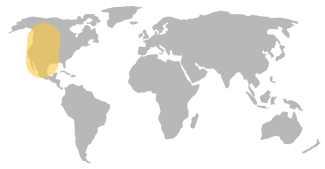
The yellow-headed blackbird is a migratory bird. It typically migrates in flocks, often forming large, conspicuous groups during this time. Their migration route primarily takes them across the western and central parts of North America. In the spring, yellow-headed blackbirds migrate north to their breeding grounds, which are located in marshes and wetlands throughout the northwestern United States, as well as parts of Canada, including British Columbia, Alberta, and Manitoba. The timing of their northward migration usually peaks in late March through May. In the fall, around September and October, they head south to wintering areas. The winter range predominantly covers the southwestern United States and northern Mexico. Interestingly, males may tend to winter farther north than females on average, reflecting a partial sex-based geographic segregation in their wintering habits. During fall migration, some strays can reach the Atlantic Coast. Key stopover locations for yellow-headed blackbirds during migration include the Great Plains and the southwestern deserts, where they can find suitable roosting and feeding sites. Overall, their migratory behavior is characterized by a search for optimal breeding, stopover, and wintering habitats.
What is the role of yellow-headed blackbirds in nature and how to protect them?
Conservation status
The yellow-headed blackbird is not considered endangered or vulnerable; it remains widespread and very common despite declines in some areas due to marsh drainage. The primary threat to its population is habitat loss through wetland draining. Conservation efforts focus on preserving and restoring marsh habitats to support its population. Although it faces certain local declines, its overall conservation status is stable, reflecting its adaptability and resilience in various habitats. Continued protections of wetland ecosystems are crucial for maintaining its abundance and preventing future vulnerability.
Ecological role of yellow-headed blackbirds
Its role in the ecosystem
The Yellow-headed Blackbird plays a significant ecological role, particularly in pest control and seed dispersal. Their diet heavily consists of insects, including beetles, caterpillars, grasshoppers, ants, wasps, and others, thus, they help to control the population of these pests, particularly in summertime. This can be particularly beneficial in agricultural areas, where they may help to reduce the impact of insect pests on crop yields. In addition, Yellow-headed Blackbirds consume a substantial amount of seeds, including grass, weed seeds, and waste grain. Through their feeding and defecation, they contribute to the dispersal of these seeds, aiding in plant proliferation. The seed dispersal by these birds can be significant for the dispersal of plants to new areas, which is vital for plant biodiversity and ecosystem function. As they typically nest in marshes and feed on insects and seeds turned up by farm machinery, their presence and feeding habits also indicate a healthy ecosystem, making them a potential indicator species.
How to help protect yellow-headed blackbirds
Preservation tips
Habitat preservation strategies for yellow-headed blackbird conservation
Preserve and protect wetland habitats where these birds breed and nest, especially in North America. Avoid disturbing breeding areas during nesting seasons. Support nature conservation organizations in their activities such as the creation of wetland reserves. Advocate for policies that regulate the use of pesticides and other agricultural practices that harm their habitats.
Community science initiatives for yellow-headed blackbird conservation
Get involved in citizen science projects such as the Cornell Lab of Ornithology’s eBird, which tracks bird sightings globally. Submit sightings of Yellow-Headed Blackbirds to contribute to their population monitoring. Organize educational workshops in your community to increase awareness about the need to conserve this species and its habitats. Encourage local schools to include it in their science and environmental curriculum.