Common Wood Pigeon or Mourning Dove?
Here's how to tell the difference
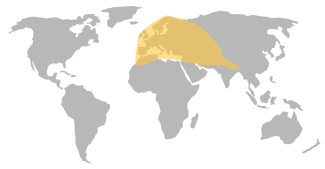


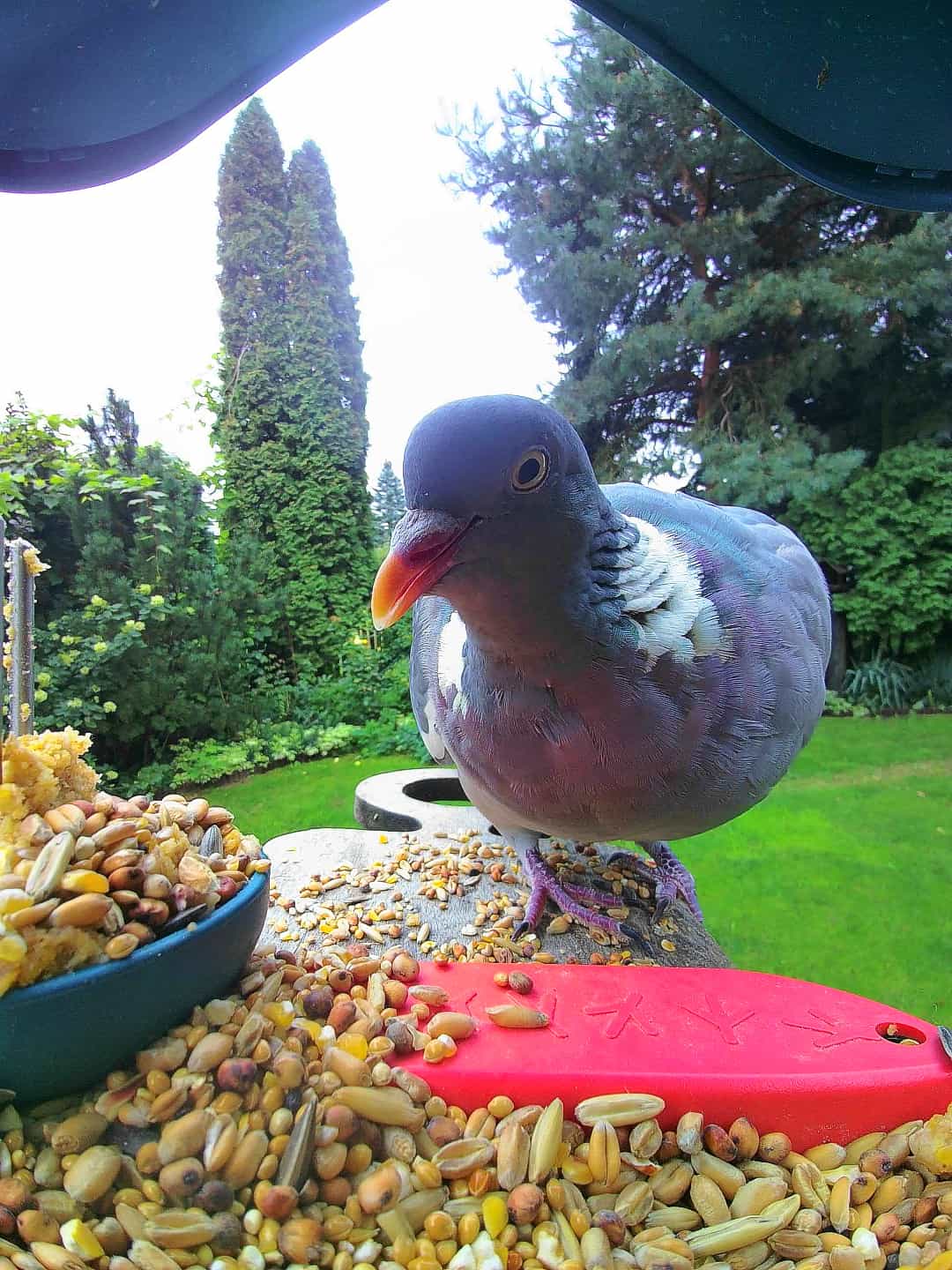
Common Wood Pigeon
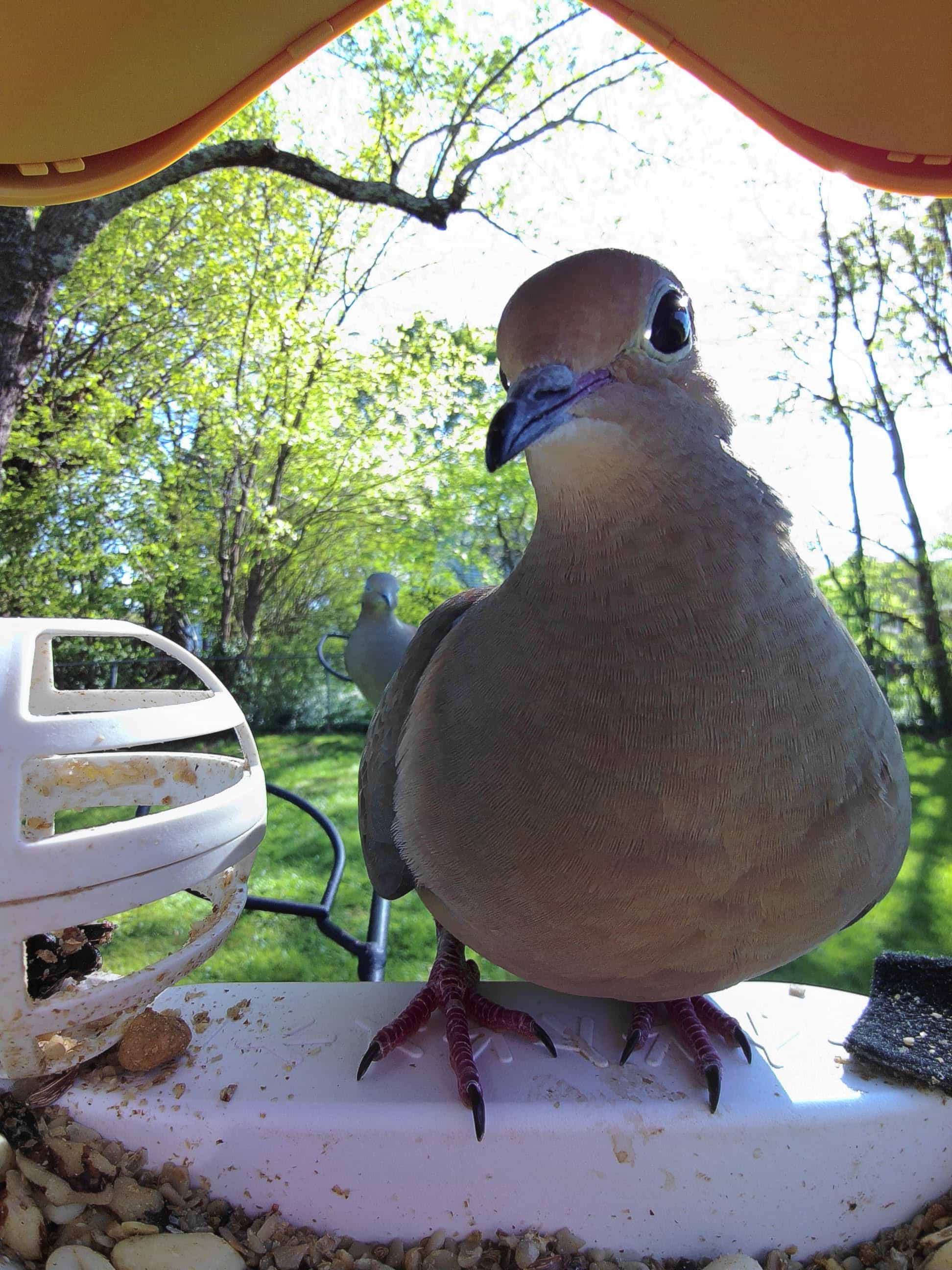


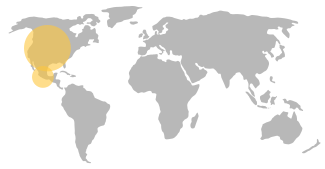
Mourning Dove
Common Wood Pigeon
Columba palumbus
Also known as: Wood Pigeon, Cushat
General appearance
The Common Wood-Pigeon is a large, robust bird with a low, growling song. Its coloration is primarily subtle shades of lilac and gray. However, adults also have noticeable white or tan neck patches that are trimmed with green iridescence. A key identifying feature is the broad white bands in the wing that become evident in flight.
Male vs female
The text does not provide specific distinctions between male and female Common Wood-Pigeons. In many bird species, males are often more brightly colored or larger than females. However, precise differences in this species would require further research and observation.
Juvenile
Information on juvenile Common Wood-Pigeons isn't provided in the text. However, in common with many bird species, juveniles may lack the full adult coloration and distinctive markings, such as the white neck patches and wing bands. Further detail on these young birds would need more study.
Size
16.1 - 17.7 in/10.0 - 24.3 oz
There's more to learn about Common Wood Pigeon
View full detailsMourning Dove
Zenaida macroura
Also known as: American Mourning Dove, Rain Dove, Turtle Dove, Carolina Pigeon, Carolina Turtledove
General appearance
The mourning dove is roughly the size of a crow, bearing characteristics of a long, pointed tail which is about 12', or 30 cm long. This tail displays white spots along its edge while in flight. The bird’s wings are adorned with black spots and its overall coloration exhibits hues of black, brown, gray, pink, tan, and white. The dove has a pointed, wedge-shaped tail.
Male vs female
The sexes of mourning doves can be distinguished by their coloration. Adult males generally have a pinkish tinge on their chests and a blue-gray tone on their crowns. However, the female doves are more dull and plain, predominantly appearing in a shade of brown.
Juvenile
Young mourning doves have a unique scaly appearance that can lead them to be confused with the Inca Dove or the Common Ground Dove. They do not possess the vivid coloring of the adults and generally appear more muted in color.
Size
9.1 - 13.4 in/3.0 - 6.0 oz
There's more to learn about Mourning Dove
View full detailsHow to tell the Common Wood Pigeon from the Mourning Dove
Visual differences
The Common Wood Pigeon is larger, weighing 10-24 oz and measuring 16-18 inches long, whereas the Mourning Dove weighs 3-6 oz and is 9-13 inches long. The Wood Pigeon features gray and lilac plumage with white neck patches and broad white wing bands. In contrast, the Mourning Dove shows pinkish-brown tones, black wing spots, and a long, pointed tail with white edges. The Mourning Dove's beak is smaller and more slender compared to the robust bill of the Wood Pigeon.
Key differences and behavior
The Common Wood Pigeon (Columba palumbus) and Mourning Dove (Zenaida macroura) exhibit distinct behavioral traits. Wood Pigeons, weighing 10-24 oz, favor woodlands, parks, and urban areas across Europe and Asia, foraging mainly on seeds, grains, and berries from ground and trees. Their courtship involves head-bobbing and wing-clapping, with nests made 6 feet high in trees. Conversely, Mourning Doves, at 3-6 oz, thrive in open or semi-open North American habitats, like farms and grasslands. They pursue a seed-heavy diet, storing seeds in their crop. Their courtship includes a male flight display, and they build flimsy nests below 40 feet. Both species feed young on 'pigeon milk,' but Wood Pigeons are noted agricultural pests, often observed enjoying urban feeder offerings, unlike the more secluded Mourning Dove.
Still not sure? Here are more lookalikes!
Common Wood Pigeon vs White-Winged Dove
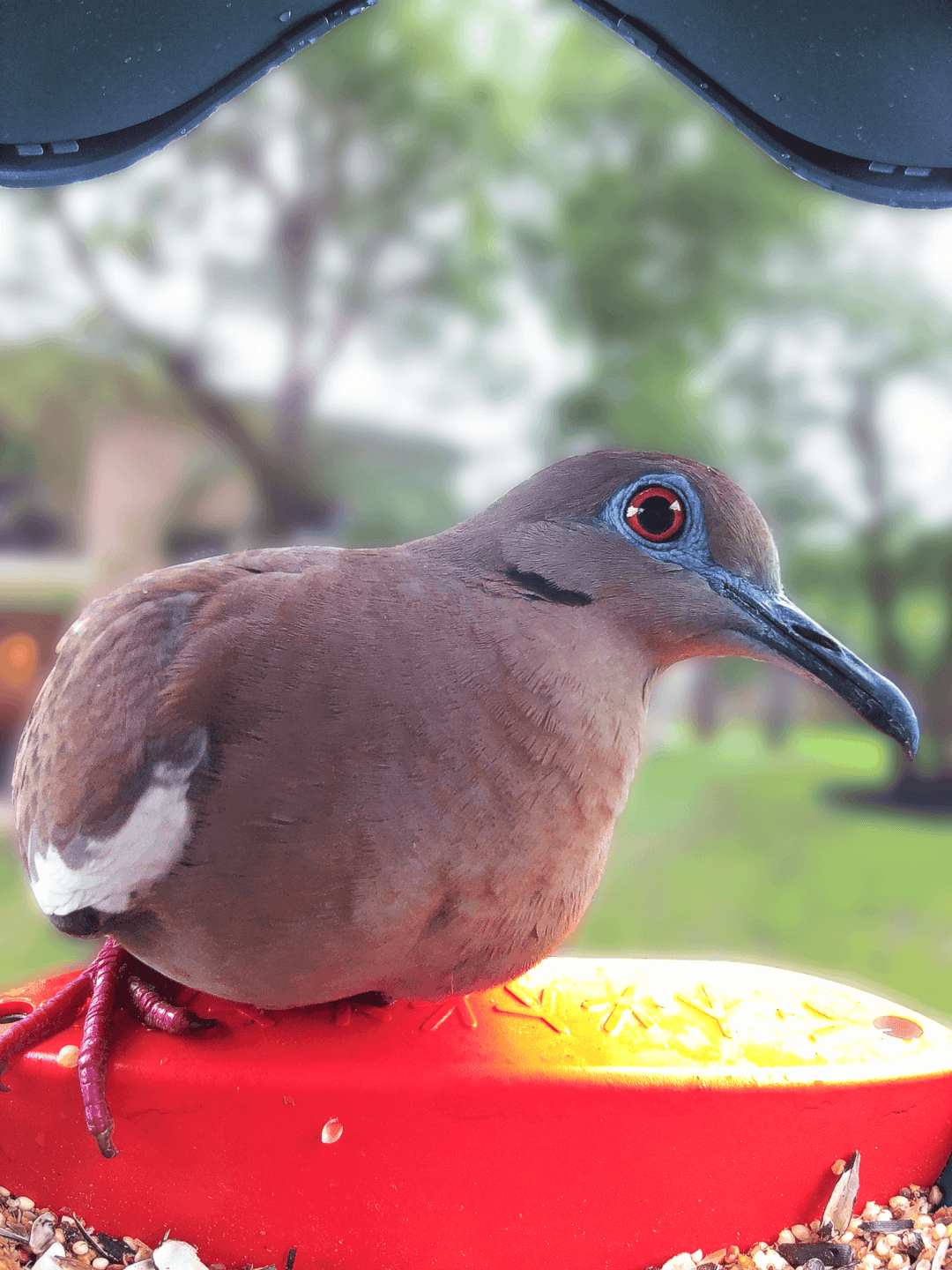
Common Wood Pigeon vs Eurasian Collared Dove
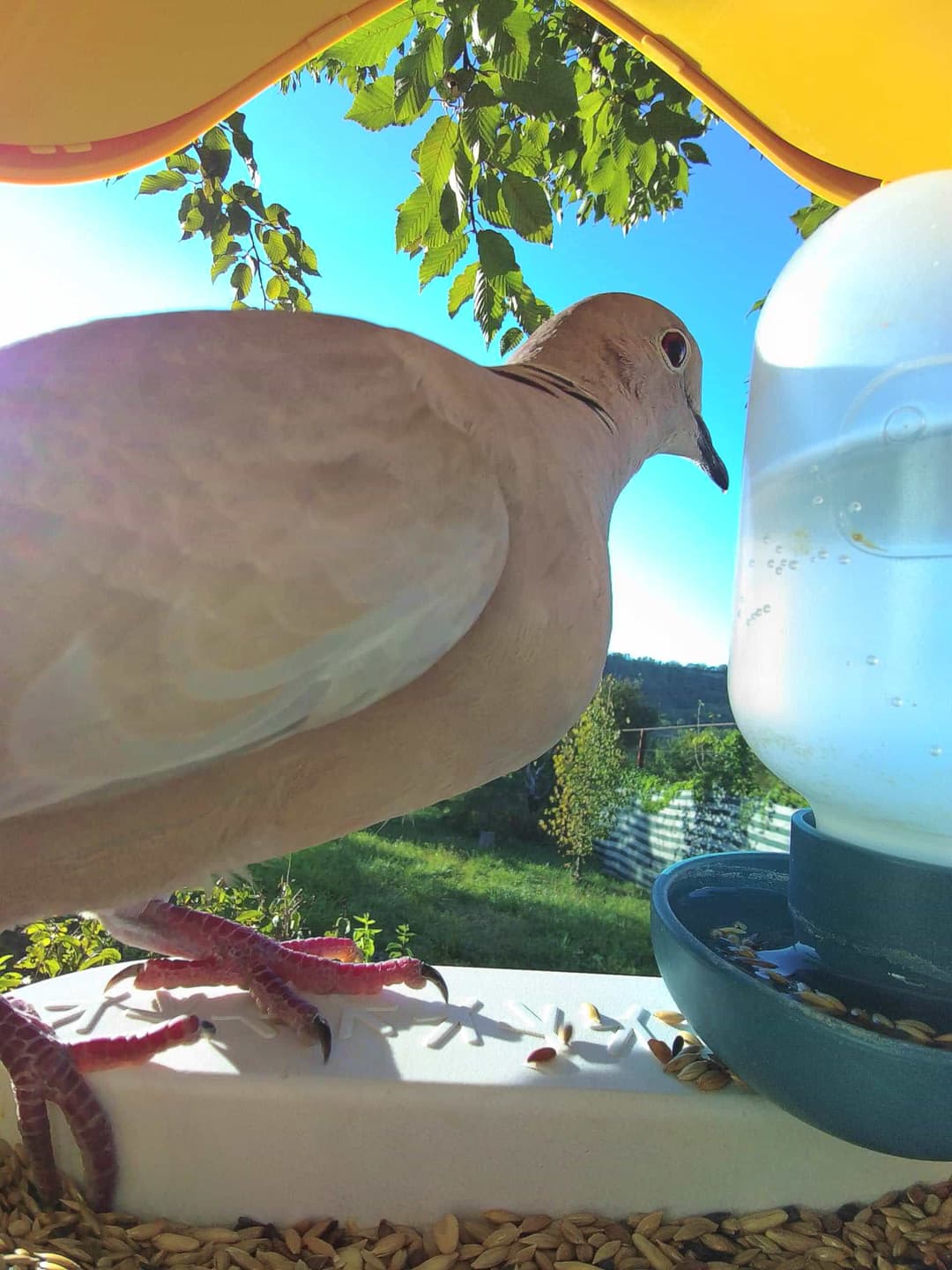
Mourning Dove vs Eurasian Collared Dove
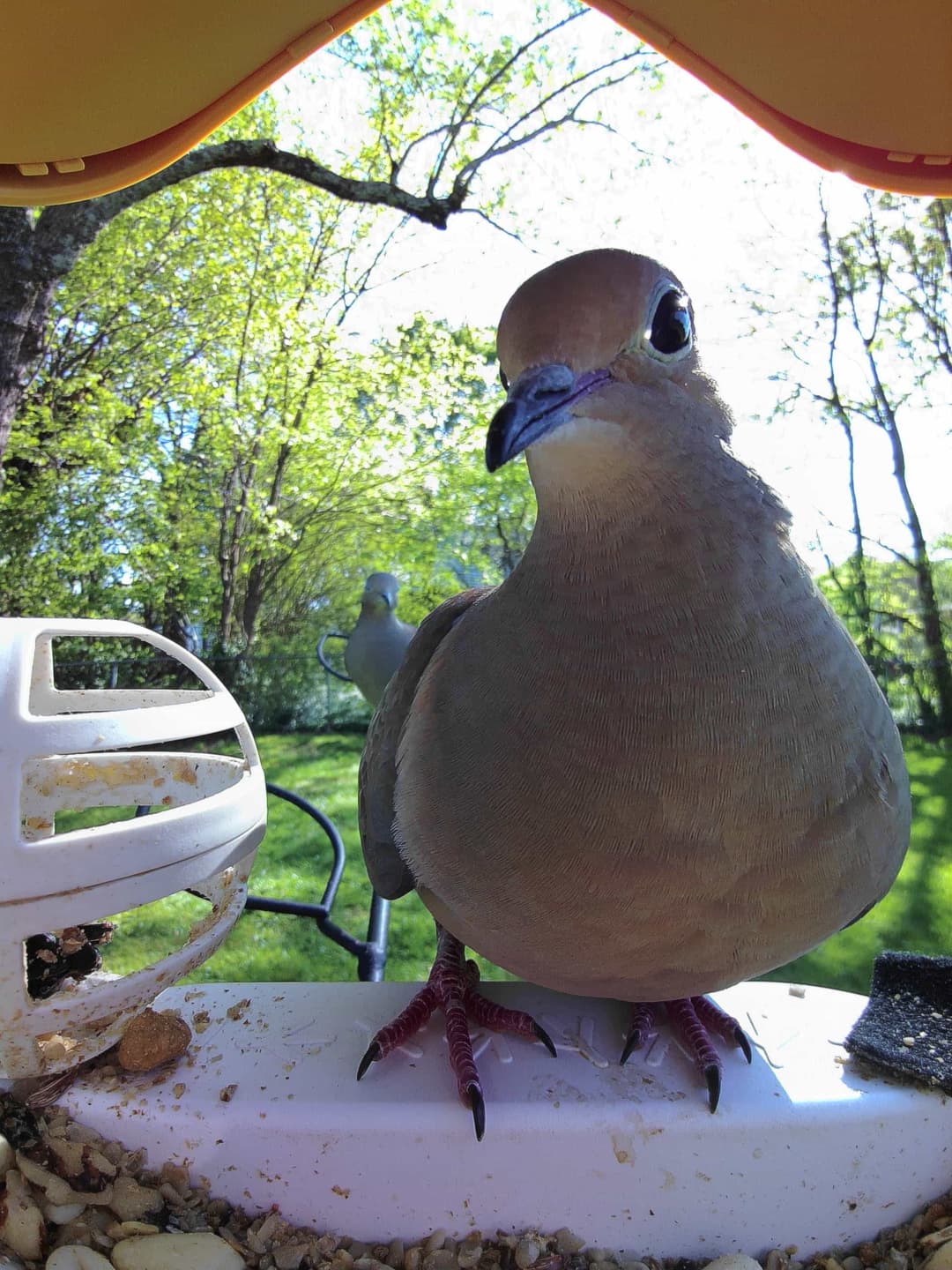
Mourning Dove vs White-Winged Dove
Mourning Dove vs Band-Tailed Pigeon
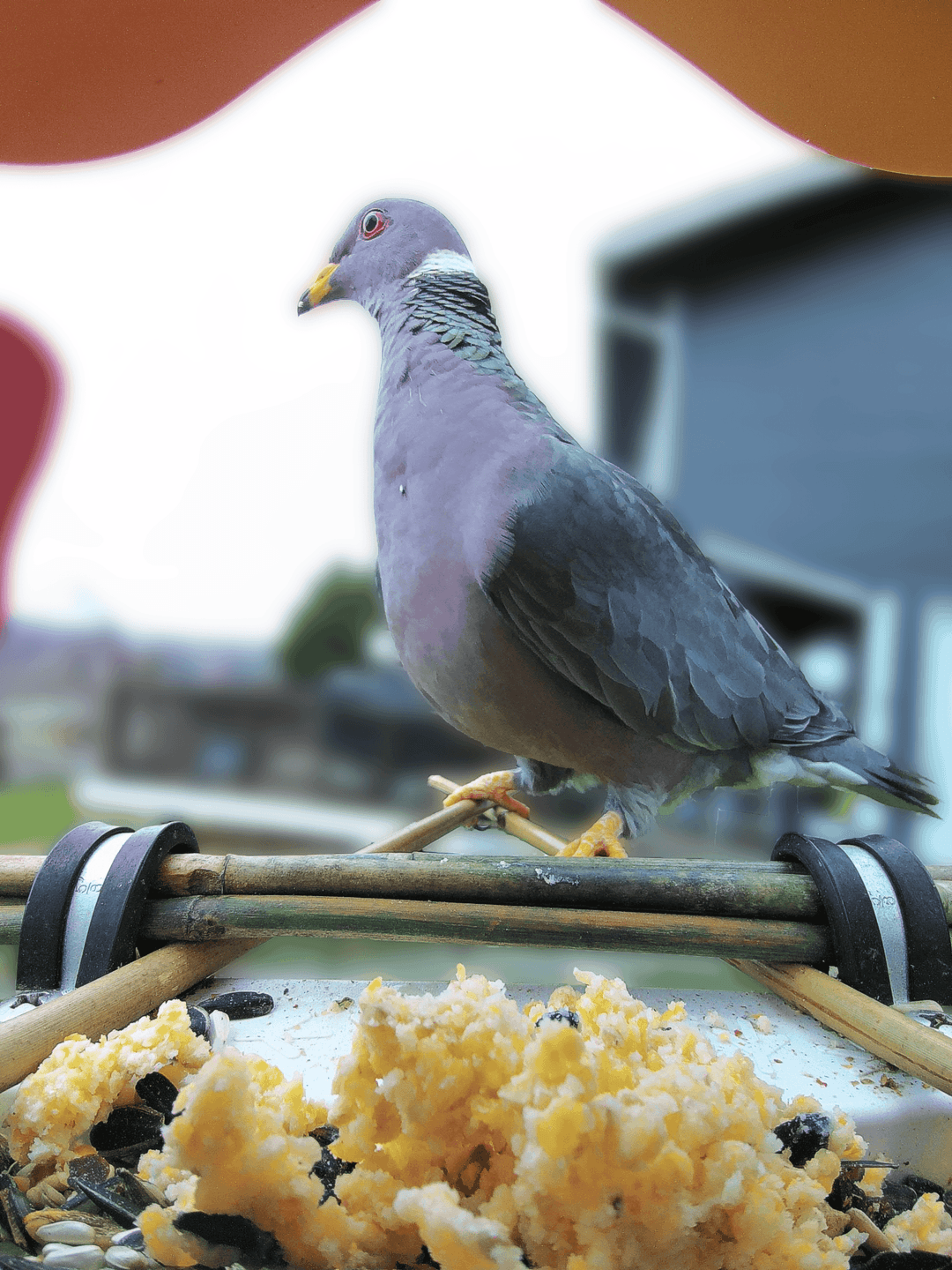
Mourning Dove vs White-Tipped Dove
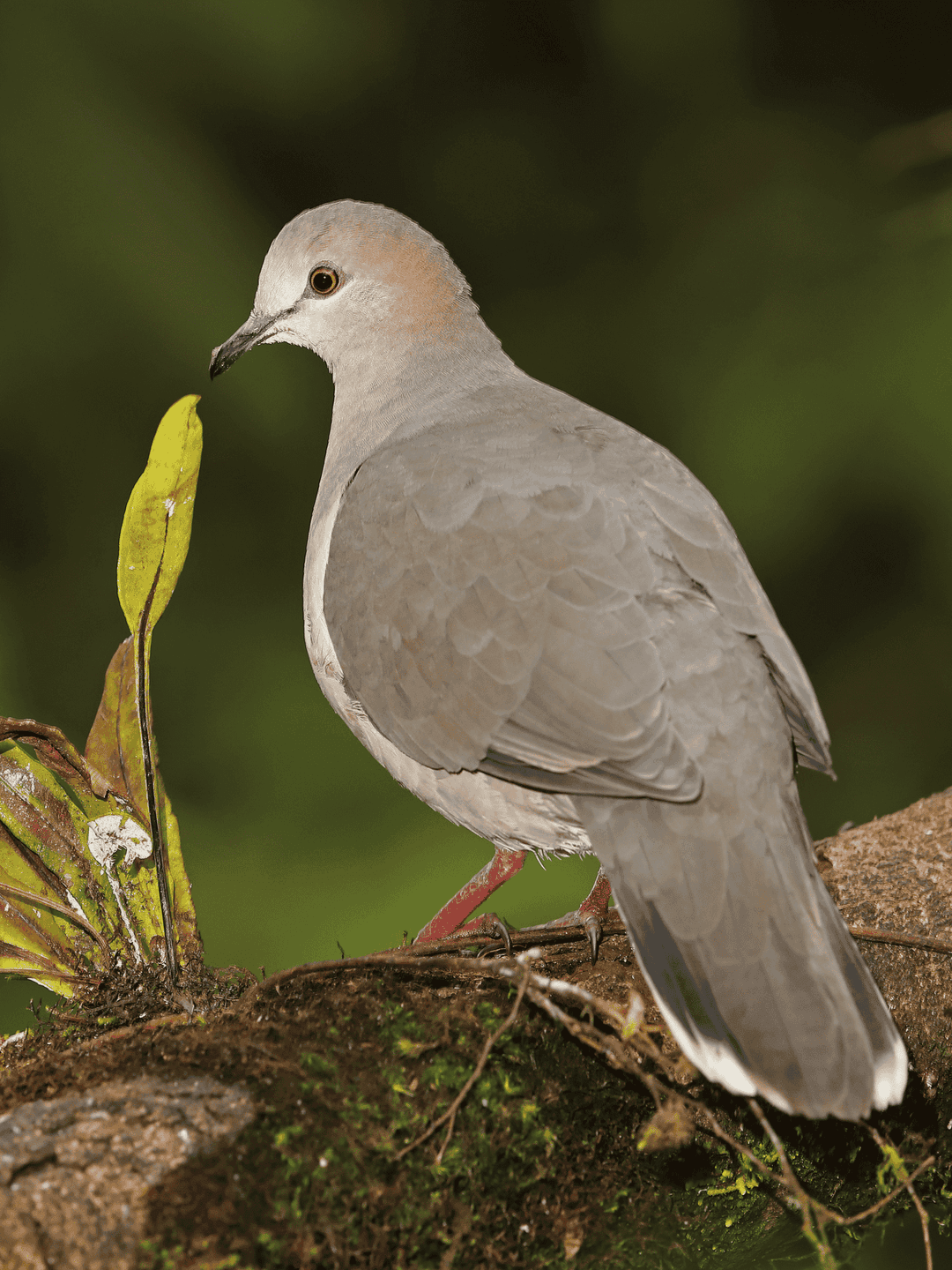
Mourning Dove vs Common Ground-Dove
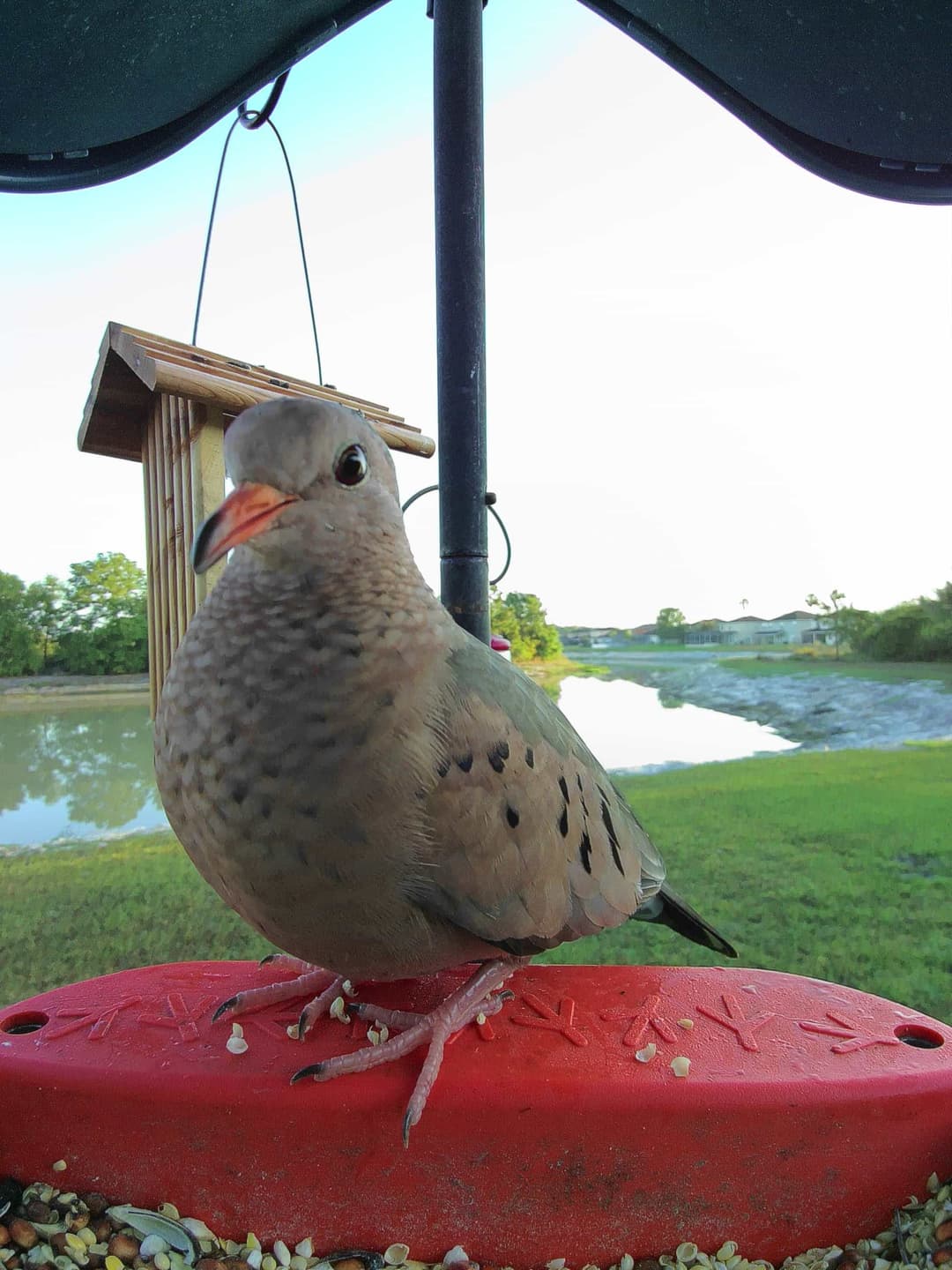
Mourning Dove vs Inca Dove
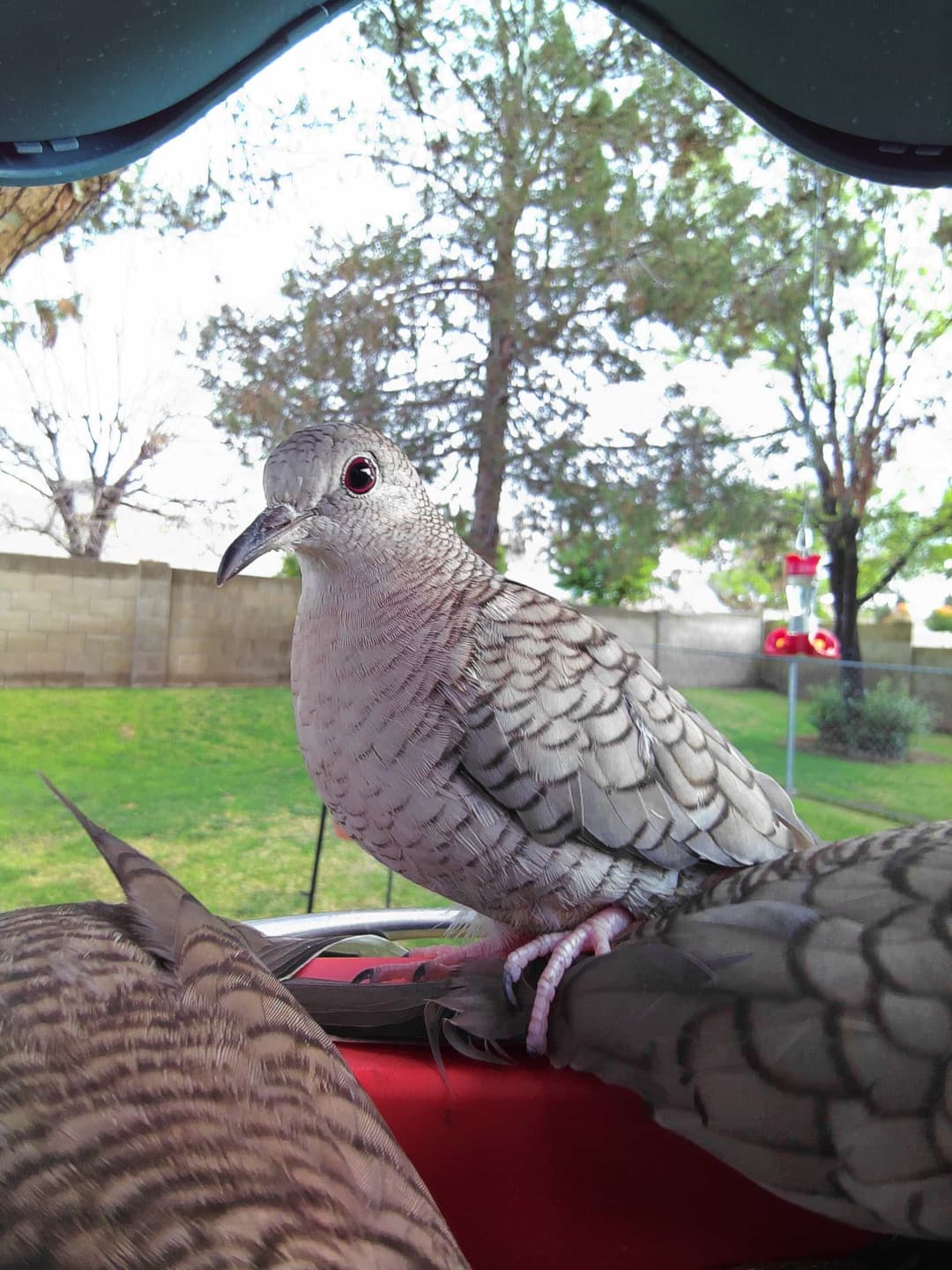
Common Wood Pigeon vs [Select a bird]

[Select a bird]
Pick a bird to compare
Mourning Dove vs [Select a bird]
[Select a bird]
Pick a bird to compare