Violet-Crowned Hummingbird or Ruby-Throated Hummingbird?
Here's how to tell the difference



Violet-Crowned Hummingbird


Ruby-Throated Hummingbird
Violet-Crowned Hummingbird
Leucolia violiceps
General appearance
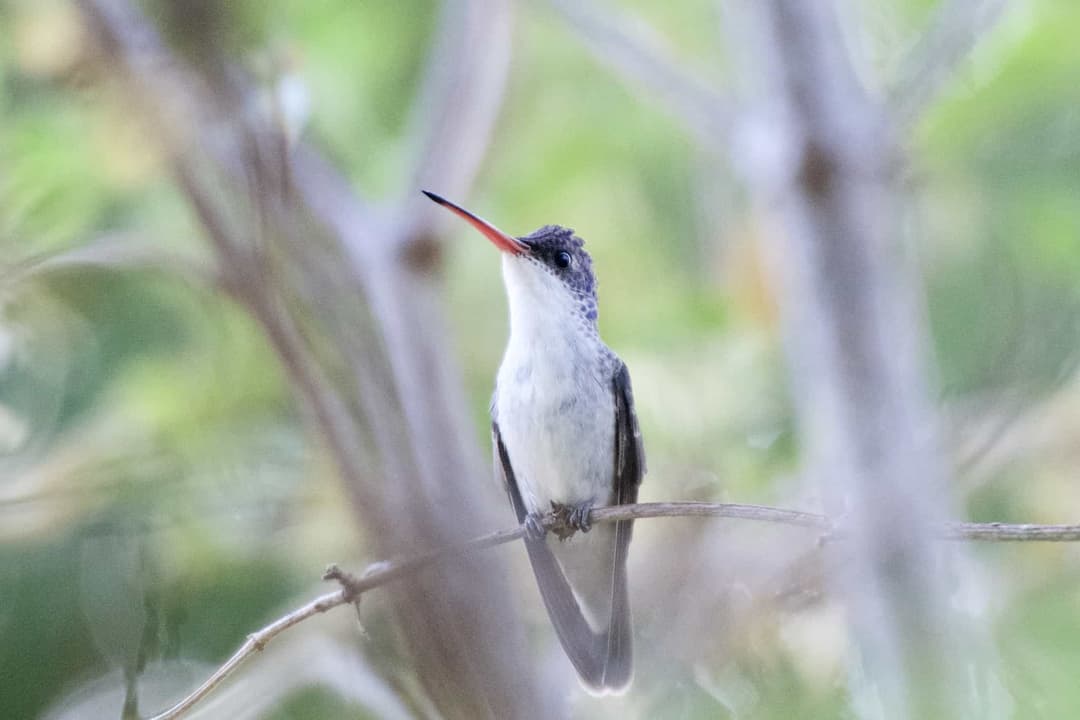
The violet-crowned hummingbird stands out for its vibrant violet-blue crown which contrasts brightly with its white underparts. Its back and tail are a shiny green, and its straight, slender bill is predominantly reddish with a black tip.
Male vs female
Both male and female violet-crowned hummingbirds share similar plumage, a rarity among hummingbirds. The main difference lies in size, with females being slightly larger, and in tail shape, with females having rounded tail feathers and males having forked ones.
Juvenile
Juvenile violet-crowned hummingbirds are similar to adults but their plumage is duller. Their crowns might not possess the distinctive violet hue until they mature. They can be recognized by the presence of buffy feather tips on their back and wing coverts.
Size
3.9 - 4.5 in/0.2 oz
There's more to learn about Violet-Crowned Hummingbird
View full detailsRuby-Throated Hummingbird
Archilochus colubris
General appearance
The ruby-throated hummingbird is a small bird with iridescent green plumage on its back and head, and white underparts. It has a slender, straight bill designed for feeding on nectar. Its wings are narrow and enable rapid, agile flight, making a buzzing sound that is often the first indicator of its presence in the wild.
Male vs female
Males are distinguished by their striking ruby-red throat patch, known as a gorget, which can appear black in poor lighting. Their tail feathers are forked with a dark, iridescent blue-green. Females lack the bright throat patch and instead have white underparts with a light spotting or streaking. Their tail feathers are rounded and edged with white.
Juvenile
Juveniles resemble adult females with similar green and white coloring. They lack the distinctive gorget of adult males. As they mature, young males begin to develop the red throat feathers that gradually replace the white of their juvenile plumage. Juveniles have buffy edges to their plumage, especially noticeable on the breast.
Size
2.8 - 3.9 in/0.1 - 0.2 oz
There's more to learn about Ruby-Throated Hummingbird
View full detailsHow to tell the Violet-Crowned Hummingbird from the Ruby-Throated Hummingbird
Visual differences
The Violet-Crowned Hummingbird is larger (4-4.5 inches) with white underparts and a distinctive violet-blue crown. It sports a long red bill with a black tip and lacks a colorful gorget. In contrast, the Ruby-Throated Hummingbird is smaller (2.75-4 inches) and features iridescent green on its back and head. The male has a signature ruby-red throat patch, whereas the female displays lighter, spotted white underparts. Both species have green backs, but the Violet-Crowned Hummingbird lacks the Ruby-Throated male's striking throat coloration.
Key differences and behavior
The Violet-Crowned and Ruby-Throated Hummingbirds exhibit distinct behaviors and habitat preferences. The Violet-Crowned prefers mid-elevation canyons and broadleaf forests in the southwestern U.S. and Mexico, often near sycamores. They are partial migrants and frequent feeders. Ruby-Throated Hummingbirds, residing across North America during summer, favor semi-open habitats and migrate to tropical areas in winter. Both species consume nectar and insects, but Violet-Crowned may also eat spiders. Their courtship involves active aerial displays, with Violet-Crowned males diving and Ruby-Throated males performing U-shaped pendulum arcs. Nesting is similar; females handle all care. Significant diet and migration habits highlight these species' adaptability.
Still not sure? Here are more lookalikes!
Violet-Crowned Hummingbird vs Anna's Hummingbird

Violet-Crowned Hummingbird vs Black-Chinned Hummingbird
Violet-Crowned Hummingbird vs Allen's Hummingbird
Violet-Crowned Hummingbird vs Rufous Hummingbird
Ruby-Throated Hummingbird vs Black-Chinned Hummingbird
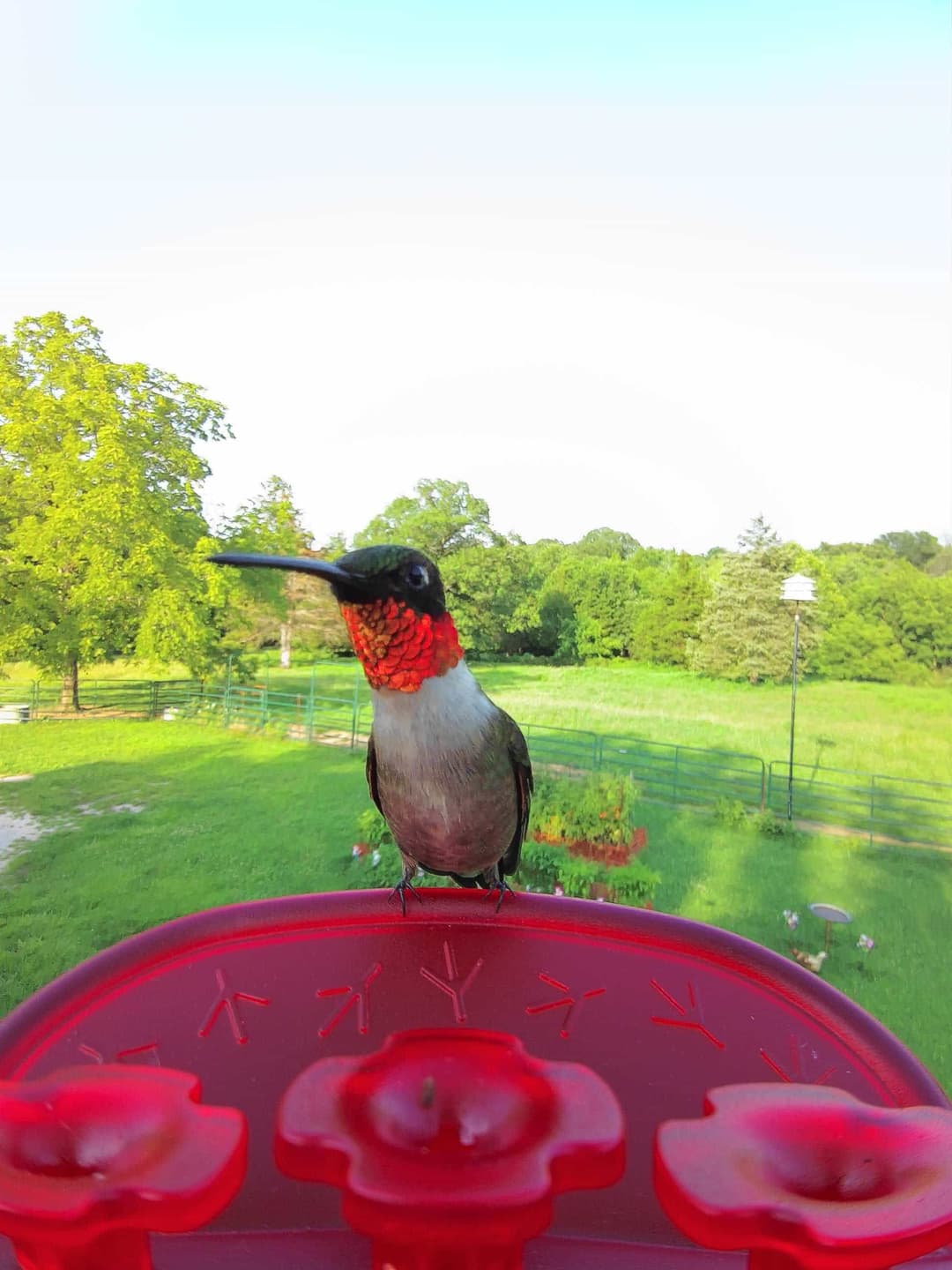
Ruby-Throated Hummingbird vs Broad-Tailed Hummingbird
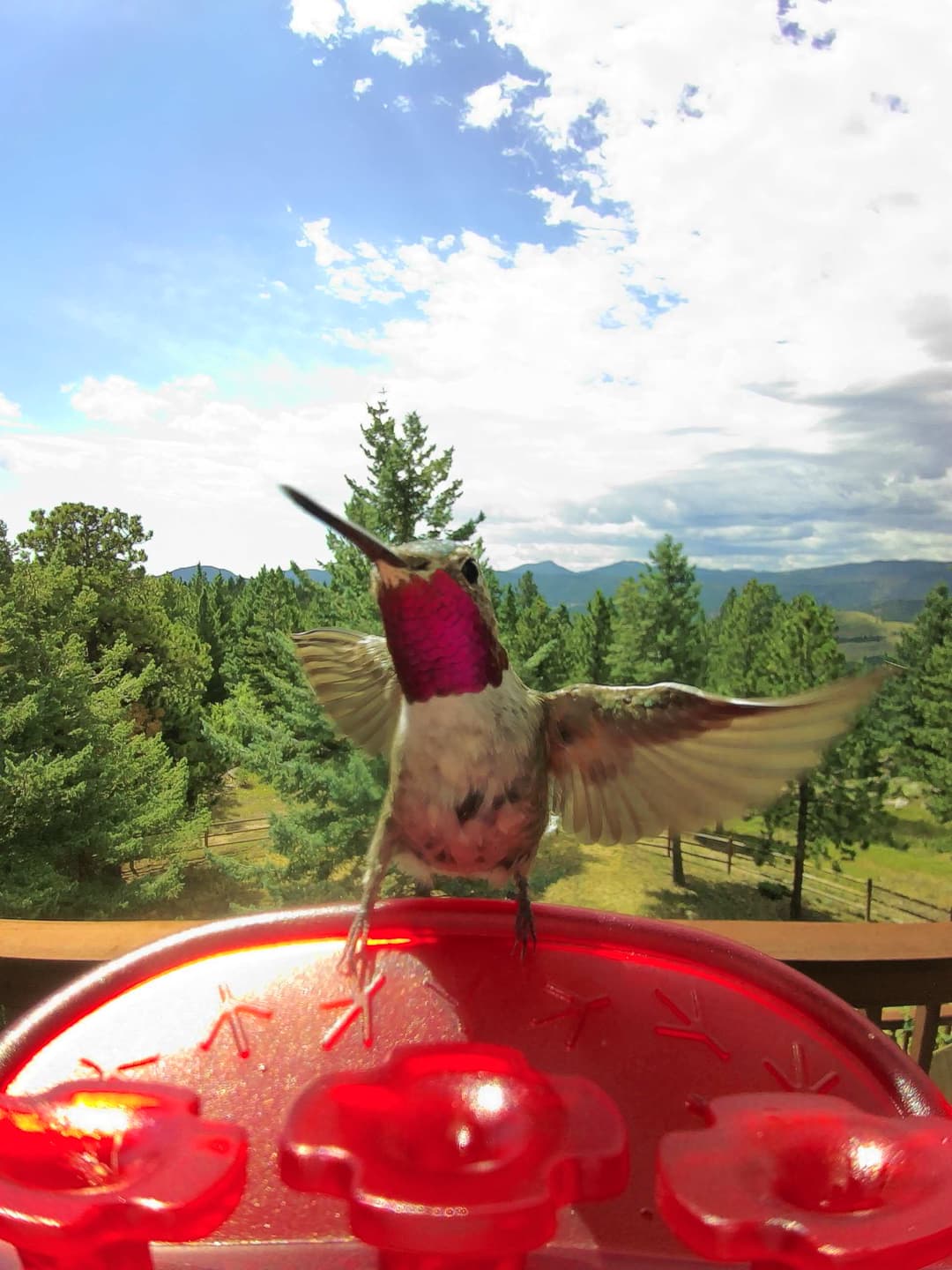
Ruby-Throated Hummingbird vs Anna's Hummingbird
Ruby-Throated Hummingbird vs Rufous Hummingbird
Violet-Crowned Hummingbird vs [Select a bird]

[Select a bird]
Pick a bird to compare
Ruby-Throated Hummingbird vs [Select a bird]
[Select a bird]
Pick a bird to compare