
African Collared Dove
African Collared Dove
Streptopelia roseogrisea
Quick Identification guide
Quick Identification guide
- •
Displays a pale pinkish-gray body with a distinctive black collar around the back of the neck
- •
Features dark wingtips that contrast with its lighter body, adding to its elegant appearance
- •
Possesses a slim, medium-length tail with white edges that highlight its graceful movements
Description
Scared of humans? Not these birds! And where there is one, there are bound to be many, as African collared doves are extremely sociable. They live and travel in groups; one big, happy family! They are typically found near water sources. Gotta stay hydrated!
The African collared dove can weigh between 130to166grams and be from25to27centimeters tall.
The African collared dove typically lives up to 25 years. Compared to other related species like the Ring-necked dove which has a lifespan of 10 to 15 years, the African collared dove has a long lifespan. Meanwhile, the Eurasian collared dove, a closely related species, has a similar lifespan of around 20 years.
Did you know?
Most popular questions about African collared dove
How to recognise an African collared dove?
General appearance
The African Collared-Dove is slightly smaller than the Eurasian Collared-Dove. They generally possess a light grey feather coat with distinctive black semi-circular line on the back of their neck, giving them their collared name. It is difficult to distinguish them from the Eurasian variety as their appearance in the wild is rare.
Male vs female
Males and females are similar in appearance, making it difficult to differentiate between sexes based on visual features. Both genders strut the same light grey coloration with contrasting black neck collars. Size and behavior patterns may sometimes provide clues, but visual identification remains challenging.
Juvenile
Juvenile African Collared-Doves resemble adults but lack the characteristic black collar. Their plumage is slightly duller than adults and they feature less distinct markings. With age, they develop the collar and their feather coloring shifts towards the grey hue distinctive of the species.
Often mistaken for
Eurasian Collared Dove vs African Collared Dove
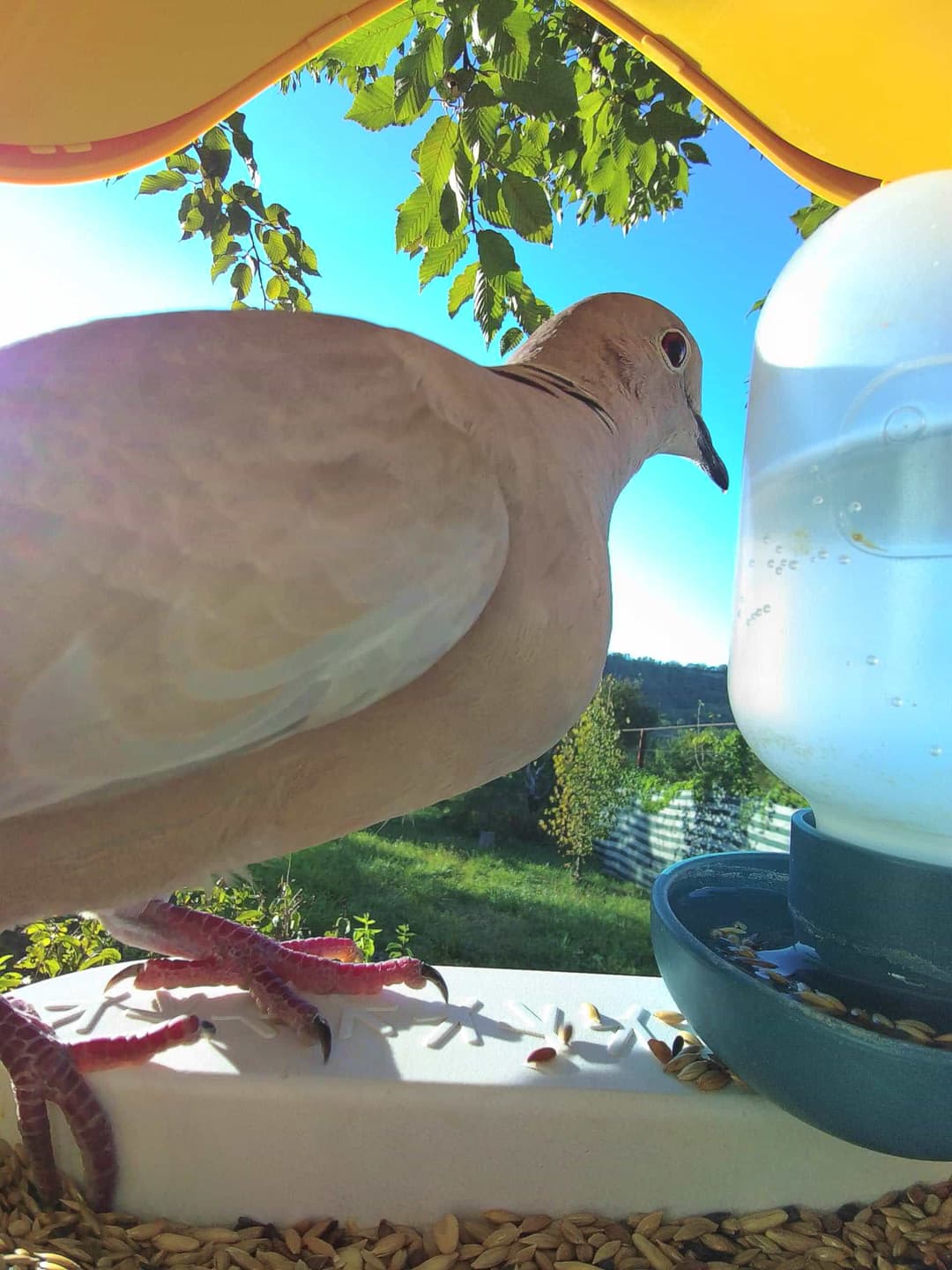
The African Collared Dove has a paler plumage compared to the Eurasian Collared Dove, which exhibits a grayer tone. Look for the distinct black neck collar; the African version's collar is slightly less pronounced. African Collared Doves also tend to have a warmer pinkish-brown tint on their feathers.
Mourning Dove vs African Collared Dove
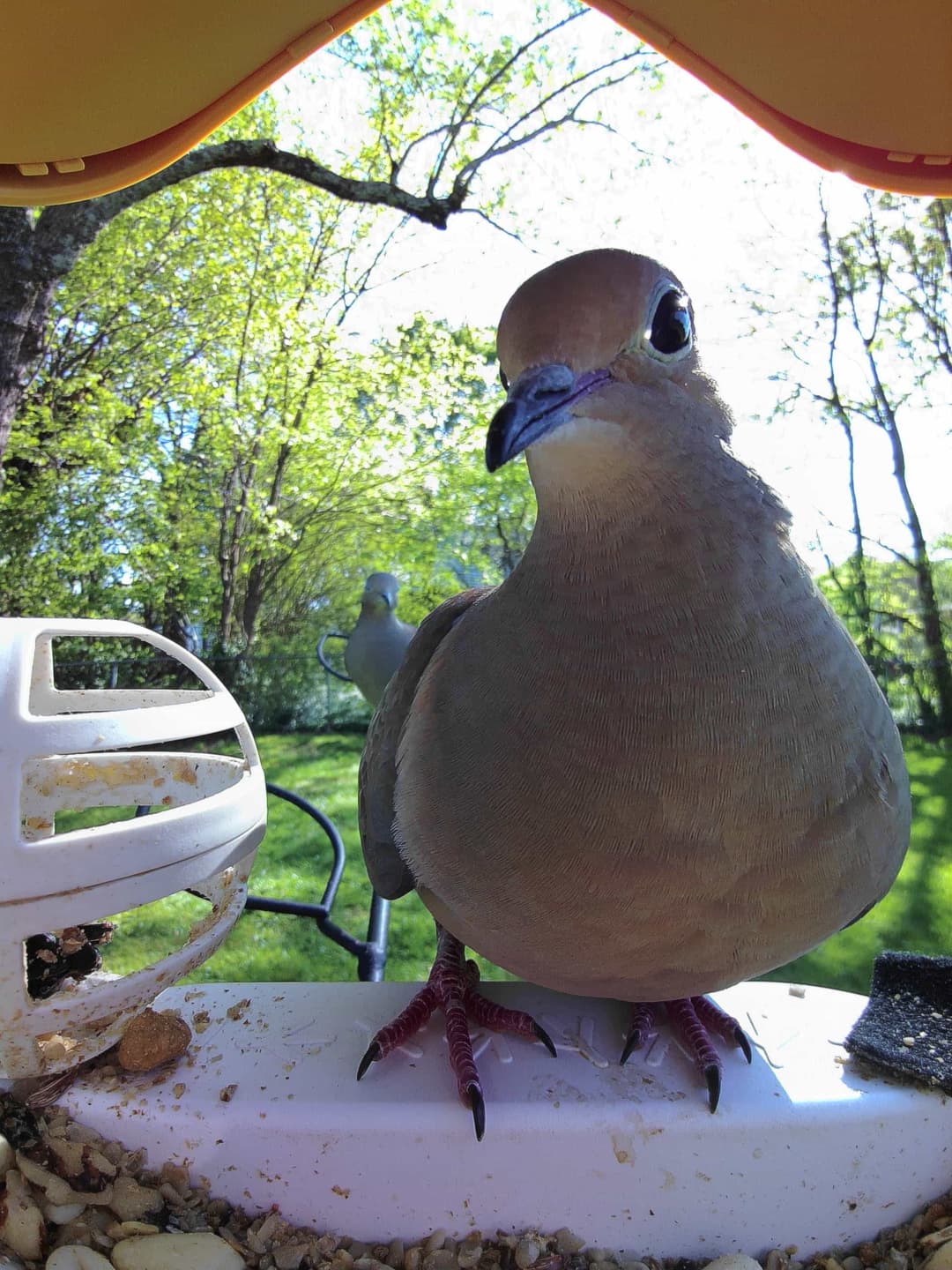
The African Collared Dove is bulkier and less streamlined than the Mourning Dove, which has a more pointed tail. Mourning Doves have black spots on their wings and lack the distinctive neck collar. The cooing calls between the two are also notably different.
White-Winged Dove vs African Collared Dove
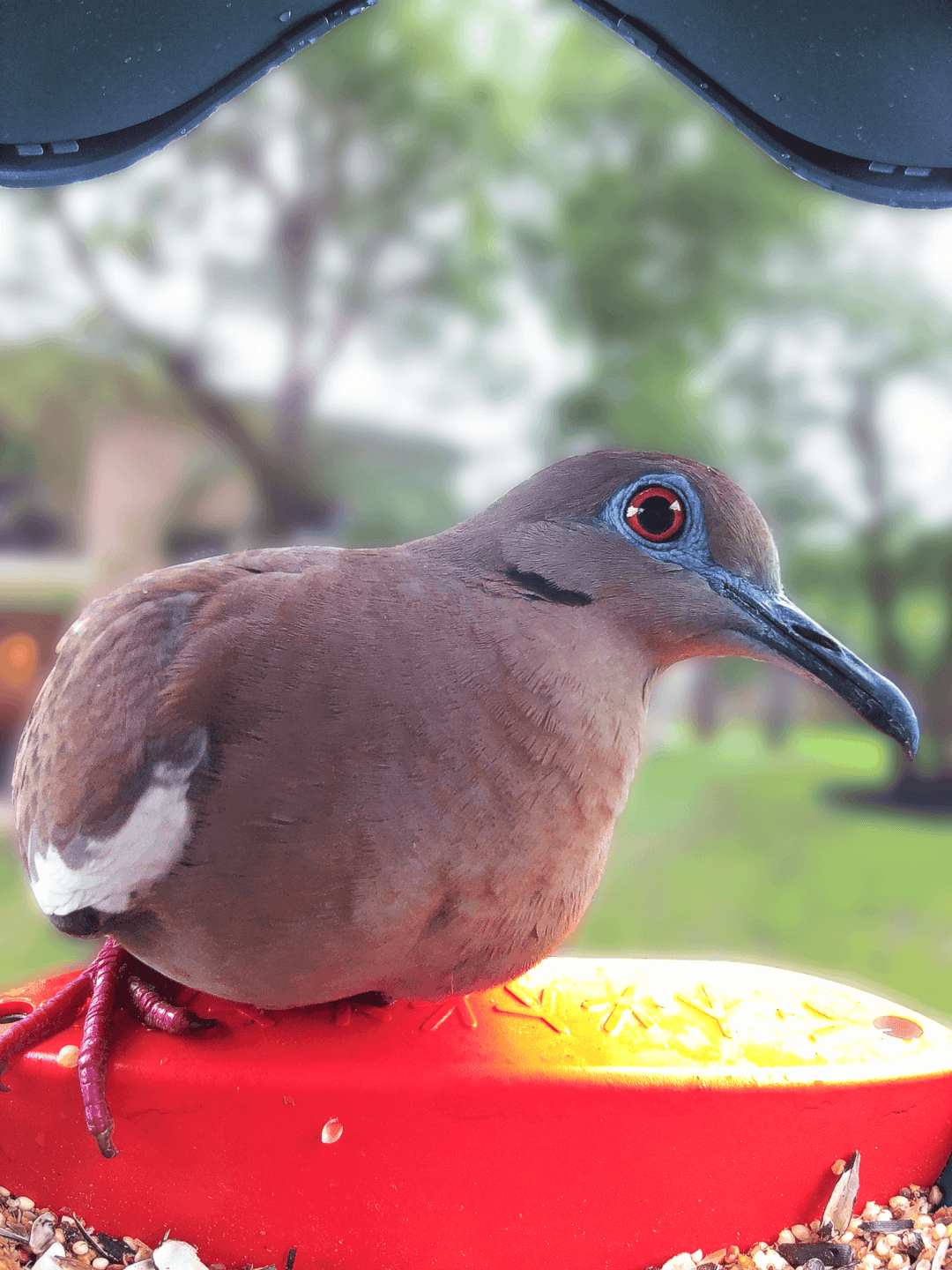
Identifying an African Collared Dove involves noting its uniform appearance, while the White-Winged Dove shows prominent white edging on its wings. The African variety also displays a lighter, more subtle shade. Listen for their calls, as their vocalizations differ significantly.
Breeding and nesting habits of the African collared dove
Mating behaviors
The African collared dove engages in a series of cooing calls and aerial displays during courtship. Males may perform flight displays, looping in the air, then descending with wings and tail spread.
Nesting details
Nests are flimsy platforms of twigs, often found in trees or bushes. They are built in a variety of locations, including open wooded areas and occasionally gardens. To encourage nesting, provide dense trees and shrubs that offer protection.
Eggs and chick-rearing
The typical clutch consists of two white eggs. Both parents share incubation duties over 14 to 16 days. After hatching, both parents feed the chicks 'pigeon milk', a nutrient-rich substance. Fledging occurs about 15 to 18 days post-hatching.
What does an African collared dove like to eat?
Fruits
Insects
Plants
Seeds
Snails
Natural diet
The African collared dove primarily feeds on a variety of seeds, which constitute the main component of its natural diet. It is known to forage on the ground, seeking out seeds from grasses and other plants. They may also consume small quantities of insects and other invertebrates, especially during the breeding season when protein requirements are higher. Fruits and berries are occasionally part of their diet, providing essential vitamins and minerals.
Bird feeders
At bird feeders, African collared doves are attracted to a range of seeds commonly provided, such as millet, sunflower seeds, and cracked corn. These birds are also adaptive and may consume commercially available birdseed mixes. They may visit feeders frequently, especially in urban and suburban areas where such food sources are regularly replenished by humans.
Attracting african collared dove with suitable feeders
The African collared dove prefers feeders that are platform or tray-like in nature. Providing these will increase the chances of them visiting your yard. Add a water source like a bird bath too, as these doves are attracted to places where they can drink and bathe.
Using the perfect bird food
The African collared dove is particularly fond of seeds. We recommend Bird Buddy seeds, which are chosen by experts for all seasons. They provide the necessary nutrition that the birds need, they are tasty and will tempt the doves into visiting frequently.
Creating an ideal environment
African collared doves appreciate an environment with trees or large shrubs, which provide nesting sites and safety from predators. Planting such flora can attract these birds. Also, limiting cat and dog access in the yard can help the doves feel safer and more likely to visit.
Fun tricks to engage your feathered friends
Playing soft music or bird songs can occasionally attract these doves. Once they get accustomed to your yard being a reliable and safe source of food, water, and comfort, they're likely to come around for a sing-along. Remember, patience and consistency are key!
Where can you find African collared doves?
Primary habitat
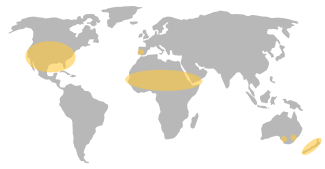
The African collared dove prefers semi-arid regions, savannas, and open woodlands. It thrives in areas with access to water and sparse tree cover.
Additional range
Though primarily found in Sub-Saharan Africa, it occasionally occupies urban gardens and agricultural lands, demonstrating adaptability to human-altered landscapes.
Do they migrate?
The African collared dove generally does not migrate and tends to stay in one place throughout the year. It is a resident bird species found predominantly in sub-Saharan Africa, including regions such as the Sahel, East Africa, and parts of southern Africa. This dove inhabits arid and semi-arid areas, including savannas and scrublands, where it finds ample food supply and nesting opportunities. Unlike many species that undertake long-distance migrations, the African collared dove remains relatively sedentary. Its movement is largely localized and usually involves short-distance dispersal in search of resources like water and food, particularly during dry periods. This behavior helps them adapt to varying environmental conditions within their habitual range. Since the African collared dove does not engage in significant migratory patterns, there is no specific migration route, timing, or set of key locations associated with seasonal movement. Their stability in one region makes them a constant presence in their natural habitats throughout the year.
What is the role of African collared doves in nature and how to protect them?
Conservation status
The African collared dove is generally considered to be a common species and does not currently have a vulnerable or endangered conservation status. There are no specific significant threats to its population in the wild. However, feral populations in some areas reportedly struggle to sustain themselves without human-provided food, implying some level of dependence on humans in those environments. Conservation efforts are minimal due to the species' stability in its native range, with no major initiatives needed to maintain its populations.
Ecological role of African collared doves
Its role in the ecosystem
The African collared dove, predominantly a ground feeder, plays multiple ecological roles. To begin with, it contributes significantly to pest control. By feeding on various harmful insects, it helps reduce their populations, in turn maintaining agricultural health and vitality. Secondly, the dove acts as an effective seed disperser. As it feeds on a wide range of seeds, some of these are inadvertently distributed in their droppings, aiding plant propagation. This activity not only helps in the growth of flora but also effectively maintains the survival and diversity of plants species in the ecosystem through natural selection. Lastly, the African collared dove also serves as a food source for various predators, making it a key link in the ecosystem food chain. Its role in the ecosystem, therefore, cannot be underestimated, underscoring its ecological importance.
How to help protect African collared doves
Preservation tips
Habitat preservation strategies for the african collared dove
Safeguard the African collared dove's habitat by advocating for ecosystem conservation, battling deforestation, and promoting sustainable farming practices. These birds thrive in open forests and farmlands, so preserving these areas is crucial. Additionally, supporting policies that fight against habitat destruction, and participating in tree planting programs could help reinstate their natural habitats.
Community science initiatives
Engage in community science initiatives to track and monitor the African collared dove's populations, migrations, and overall health. Use apps or online platforms to document sightings and share data with scientists. Participate in local bird-watching groups to foster increased awareness and understanding of these birds. Educating the local community about the need for dove conservation is another effective strategy.