
Boreal Chickadee
Boreal Chickadee
Poecile hudsonicus


Quick Identification guide
Quick Identification guide
- •
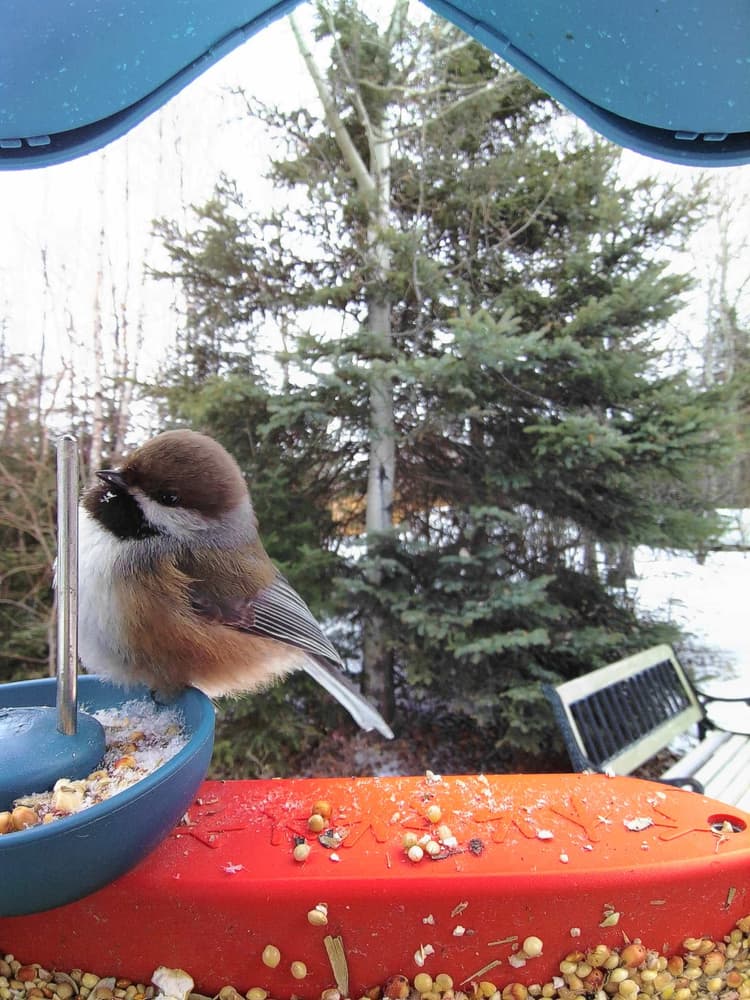
Features a grayish-brown cap and warm brownish flanks contrasting with its overall gray plumage
- •
Displays a distinctive gray back and wings with white edges on the feathers providing subtle highlights
- •
Has a small, dark, stubby beak and a black throat patch that is smaller than other chickadees
What does a boreal chickadee sound like?
The vocalizations of the boreal chickadee are notably deeper and more lethargic compared to the Black-capped chickadee, bearing a distinctive husky and nasal quality. Its call patterns typically display a falling or flat rhythm. The types of calls this bird produces encompass a range of sounds, including a buzzing noise, chirps or chips, a trill, and a whistle.


Description
Boreal chickadees and humans go way back. These little birds evolved in Eurasia and crossed the Bering land bridge from what is now Russia to the Americas thousands of years ago. Just like us! They are regulars at feeders, which has earned them a bunch of folk names like tom-tit, chick chick and fillady.
The boreal chickadee can weigh between 7to12.4grams and be from12.5to14.5centimeters tall.
The Boreal Chickadee typically lives up to 8 years, a lifespan relatively shorter compared to its close cousin the Black-capped Chickadee, which can live up to 12 years. However, due to the harsher conditions of its far-northern habitat, the Boreal Chickadee tends to live slightly shorter lives than its southern relatives. Like all songbirds, its lifespan can greatly vary depending on factors such as disease, predation, and food availability.
Did you know?
Most popular questions about boreal chickadee
How to recognise a boreal chickadee?
General appearance
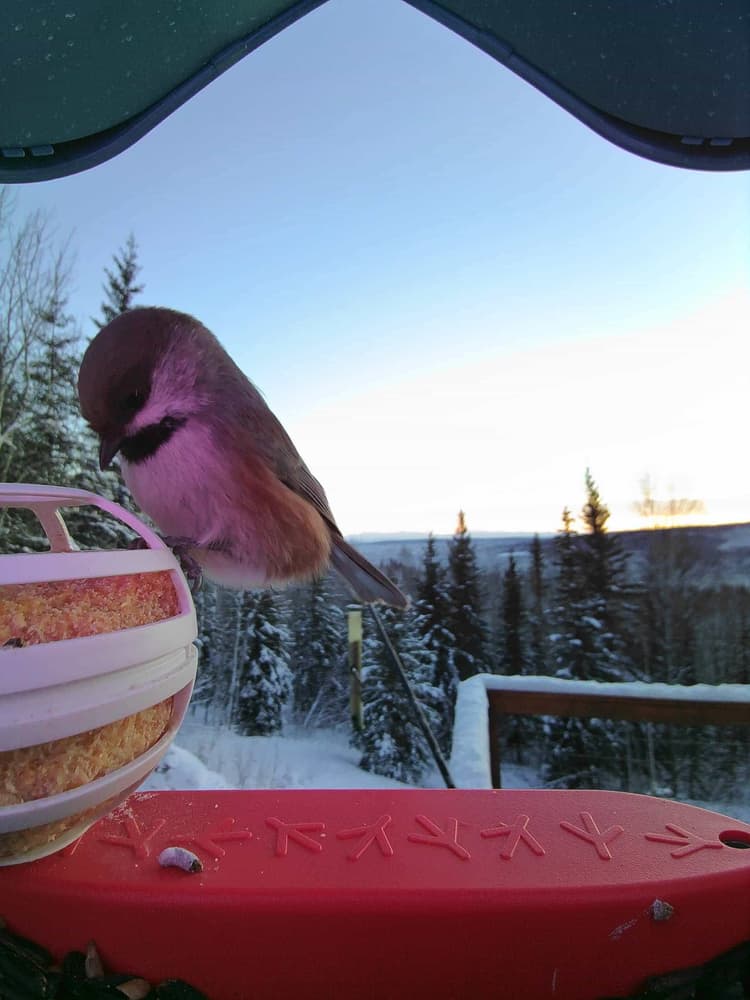
The boreal chickadee is a small passerine bird characterized by its plump body, long tail, and large head. It has a distinctive appearance with a brown cap that extends to the neck, beige cheeks, and a black bib. Its back is grayish-brown, while its underparts are pale with buff flanks. The wings and tail feathers are dark gray with white edging. This chickadee inhabits boreal forests, making it an essential species to identify in these regions.
Male vs female
There is minimal visible sexual dimorphism between male and female boreal chickadees. Both sexes share similar plumage patterns and coloration, which can make it challenging to distinguish them in the field based solely on appearance. Behavioral observation is often necessary for determining sex.
Juvenile
Juvenile boreal chickadees resemble adults but have more diffuse and duller plumage. Their brown caps and bibs are less distinctly defined, and their overall coloration can appear somewhat washed out. These young birds gradually acquire their adult plumage as they mature. There are no significant seasonal variations in their appearance, although plumage may wear over time.
Often mistaken for
Black-Capped Chickadee vs Boreal Chickadee
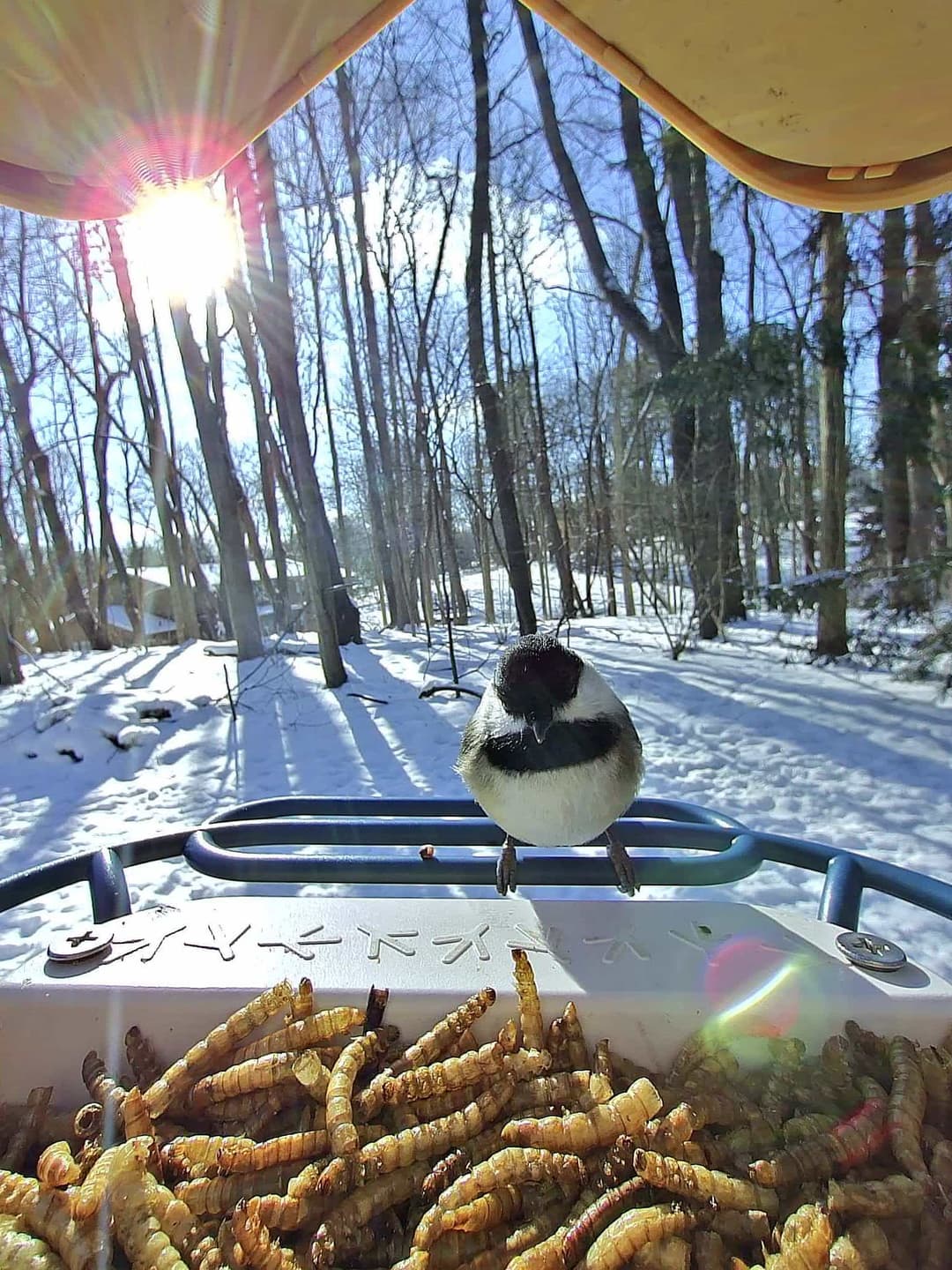
The Boreal Chickadee has a brown cap, while the Black-Capped Chickadee sports a black cap. The Boreal's sides are more brownish than the buff sides of the Black-Capped. Listen for the Boreal's harsh 'chick-a-dee' call, contrasted with the Black-Capped's clearer, sweeter call.
Mountain Chickadee vs Boreal Chickadee
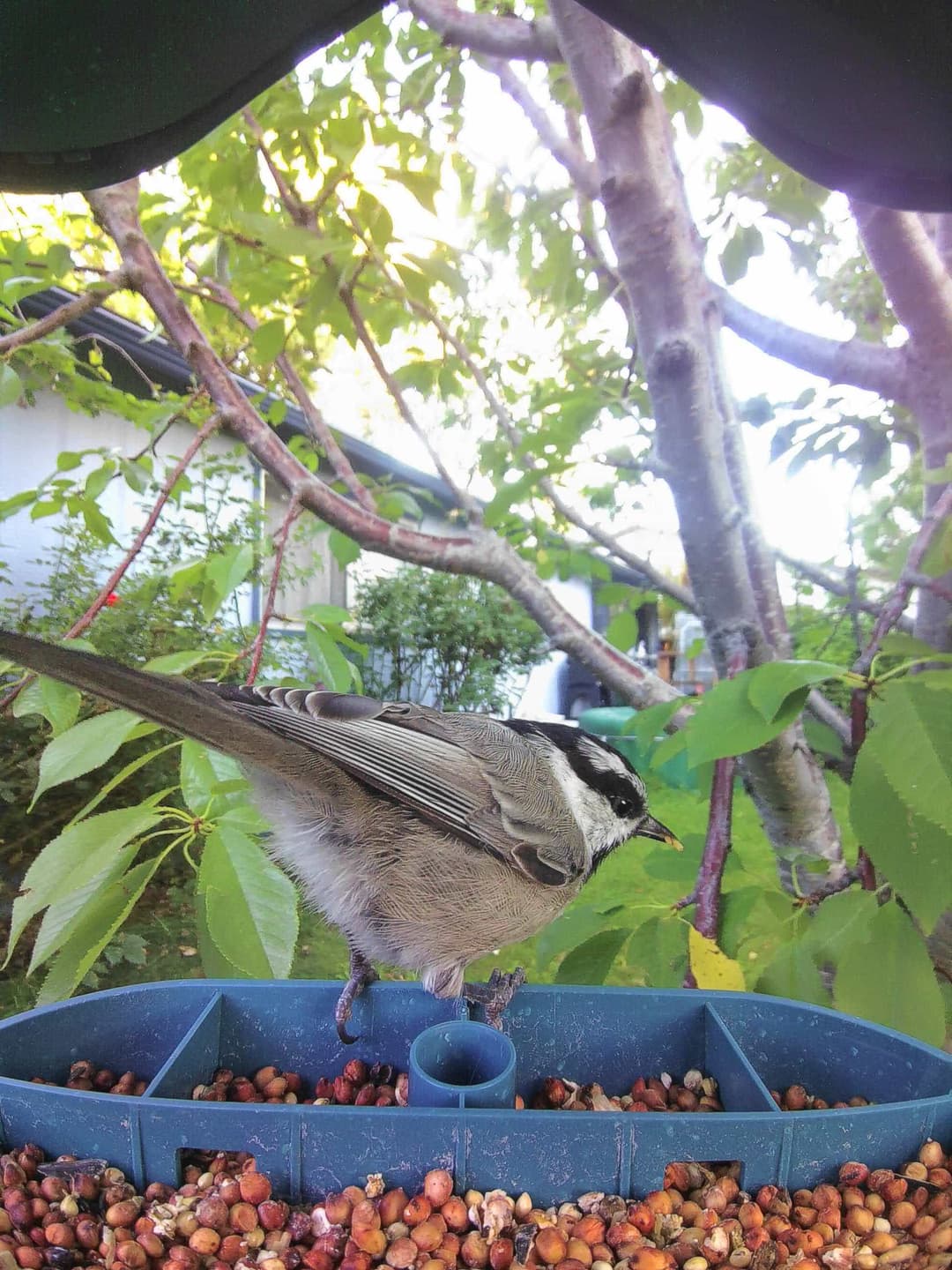
The Boreal Chickadee has a more uniform grayish body with a brown cap, while the Mountain Chickadee shows a striking white eyebrow above the eye and a black cap. The Boreal's call is rougher and less whistled than the Mountain Chickadee's clear call.
Breeding and nesting habits of the boreal chickadee
Mating behaviors
Boreal chickadees typically mate for life, with pairs remaining together throughout the year. This long-term partnership reflects their monogamous nature and the stable bonds they form.
Nesting details
Boreal chickadees choose nesting sites in tree holes, which may be natural cavities or old woodpecker holes. They can also excavate their own site or modify existing ones. Nests are usually found 1-12 feet above the ground. Both sexes partake in excavation, with the female building the nest using materials like moss, bark strips, lichens, feathers, and lining it with animal hair and plant down.
Eggs and chick-rearing
After the nest is complete, the female typically lays eggs and is primarily responsible for incubation. Details on the number of eggs and duration of chick-rearing require further factual information. To encourage nesting in gardens, provide trees with potential nesting cavities and maintain a habitat rich in natural nesting materials.
What does a boreal chickadee like to eat?
Insects
Seeds
Spiders
Natural diet
The boreal chickadee primarily feeds on insects and seeds. In the summer, its diet consists mainly of various insects, such as caterpillars, moths, beetles, and spiders. During winter, the bird consumes a significant amount of insect eggs and pupae. It also eats seeds from various trees, providing a diverse and adaptive diet depending on the season.
Bird feeders
At bird feeders, boreal chickadees are often attracted to suet, sunflower seeds, and peanuts. They are known to adapt well to these human-provided food sources, especially during the colder months when natural food might be less accessible.
Food attraction
Boreal Chickadees love seeds, especially sunflower seeds and peanuts. These little critters are also fans of suet, which you can get from any bird-supply store. To make your yard super attractive to them, We recommend Bird Buddy seeds; their variety is expertly chosen to fit the season and are a hit amongst chickadees.
Feeder types
Tube feeders are a great option as they provide plenty of perching space. Boreal chickadees also appreciate hopper style feeders as they are spacious enough to cater to their natural foraging habit. Remember to keep the feeders clean and free of mould.
Garden tips
Boreal Chickadees tend to prefer areas with a lot of trees, specifically coniferous or evergreens. Having these in your garden will definitely attract a few chickadees. It’s even better if you have a water source like a birdbath or even a small fountain.
Keeping them around
Although they don't typically sing, boreal chickadees do have a very sweet, soft call. Play some chickadee calls to pique their interest and make them feel at home. These species do not typically migrate if they have an abundant source of food and water, so providing these will encourage them to stick around.
Where can you find boreal chickadees?

Primary habitat
The boreal chickadee prefers conifer forests, especially spruces. Its habitats extent from low stunted spruces at northern treeline to spruce bogs and high mountain forests at the southern edge.
Additional range
At the southern portion of its range, the bird is found in the east and west, barely south of the Canadian border. It is noted to occupy diverse habitats from mixed forests to spruce bogs and high mountain forests.
Do they migrate?
The Boreal Chickadee is generally considered a permanent resident, meaning it typically remains in its breeding areas throughout the year rather than undertaking long migrations. However, this bird species can engage in occasional small-scale southward movements during the fall. These movements, known as southward invasions, occur sporadically and are not regular migrations. During these invasions, some Boreal Chickadees may travel south of their usual breeding range. This behavior can coincide with similar patterns observed in Black-capped Chickadees, although it doesn't follow a specific route or reach particular key locations. The movements are variable and depend on factors such as food availability and environmental conditions, particularly during harsh winters. Overall, while the Boreal Chickadee does not generally partake in long-distance or seasonal migrations, it can exhibit limited local movements to more southerly locations outside its core range during certain seasons. This is more an adaptive response to fluctuating conditions than a structured migratory pattern.
What is the role of boreal chickadees in nature and how to protect them?
Conservation status
The boreal chickadee is considered common and not currently vulnerable or endangered. Its wide range across remote northern forests likely provides a secure future, reducing immediate conservation concerns. However, habitat loss due to logging and climate change could pose future threats. Conservation efforts focus on monitoring population trends and preserving their forest habitats to ensure long-term stability. The chickadee's adaptability to various forested environments further supports its current secure status.
Ecological role of boreal chickadees
Its role in the ecosystem
The boreal chickadee contributes to the ecosystem primarily through pest control and seed dispersal which make it ecologically significant. By feasting on a variety of insects such as caterpillars, moths, beetles, and spiders, it helps maintain a balance in insect populations, thereby acting as an effective biocontrol agent. The consumption of insect eggs and pupae, especially in winter, further aids in insect population control. In addition, the bird's feeding behavior of extracting seeds from cones and deciduous trees such as birches, contributes to seed dispersal. It even has a habit of storing food and retrieving it later which might lead to unintentional spreading of seeds over a wide area. Also, its nesting habits of utilizing natural cavities, old woodpecker holes, or excavating its own site, might promote a healthy tree ecosystem by aiding in the decomposition of dead or dying trees.
How to help protect boreal chickadees
Preservation tips
Habitat preservation strategies
Preserve the boreal forest ecosystem. This is the primary habitat of the boreal chickadee, and its survival depends on mature and healthy forests. Encourage sustainable forestry practices that spare old growth trees and enable regrowth. Protect their habitat by restricting logging, mining and other industrial activities that lead to fragmentation and loss of these forests. Promote the use of buffer zones around boreal chickadee habitat to minimize human disturbance.
Community science initiatives
Engage citizens in monitoring boreal chickadee populations. Encourage birdwatching groups to include this species in their observations and report sightings to a centralized database. Support research projects studying the boreal chickadee and contribute data whenever possible. Participate in programs such as the Christmas Bird Count or Project FeederWatch to track movement and population trends. Promote educational initiatives to raise awareness about the boreal chickadee and the importance of its boreal forest habitat.