
Bridled Titmouse
Bridled Titmouse
Baeolophus wollweberi


Quick Identification guide
Quick Identification guide
Male
- •
Gray body with black and white facial pattern resembling a bridle
- •
Small, pointed crest on top of the head
- •
Dark eyes with a prominent white eye ring around them
Female
- •
Gray plumage overall with less pronounced black facial markings
- •
Subtle crest atop head, similar to the male
- •
Dark eyes with a less distinct white eye ring, similar body shape as the male
What does a bridled titmouse sound like?
The Bridled Titmouse vocalizes similarly to other chickadees and titmice but on a higher pitch and with more rapidity. Its song typically consists of a 2-syllable phrase, repeated numerous times. A common call of it resembles a variant of the familiar "chick-a-dee". Its call patterns can be described as falling, flat, and undulating, with types including buzz, chirp/chip, and rattle.


Description
Did you know that bridled titmice are the only North American member of their family where the entire family helps out in raising the young? This is called cooperative breeding. At first glance, you might mistake them for a Eurasian crested tit, but the two aren't that closely related. They were named wollweberi after the collector of the specimen. Curiously, no historian has ever been able to figure out who this Wollweber character was!
The bridled titmouse can weigh between 8to12grams and be from11.5to12.7centimeters tall.
The bridled titmouse typically lives for about 2-3 years. Relative to other titmouse species, like the tufted titmouse which lives for 13 years on average, and the oak titmouse with a lifespan of 11.3 years, the bridled titmouse has a considerably shorter lifespan. A great number of reported titmouse species, including black-crested and juniper titmice, have average lifespans of over 6 years.
Did you know?
Most popular questions about bridled titmouse
How to recognise a bridled titmouse?
General appearance
The bridled titmouse is a small bird with a distinctive black and white pattern. It features a prominent black crest and black face with contrasting white cheeks. Its back is a dusky gray, while the underparts are lighter gray. The wings possess a subtle white edging, and the tail is relatively short.


Male vs female
Males and females of the bridled titmouse look alike, both exhibiting the same black and white facial pattern and gray body. There are no significant differences in size or coloration between the sexes, making it difficult to distinguish between them based purely on appearance.
Juvenile
Juvenile bridled titmice resemble adults but often have less-defined markings. Their colors may appear duller, and their crests are typically shorter. As they mature, their plumage becomes clearer and more contrasting, akin to adult birds.
Often mistaken for
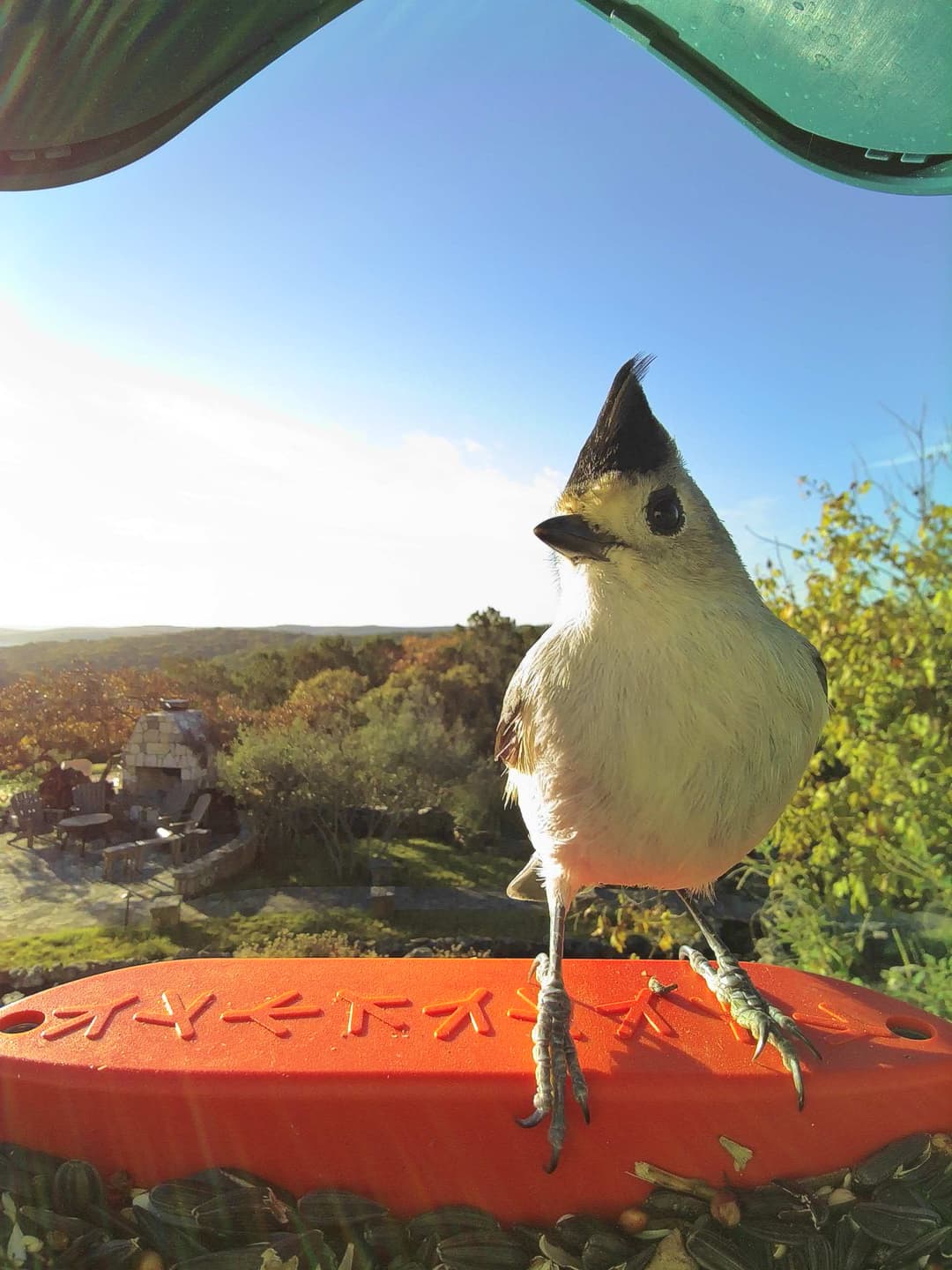
Black-Crested Titmouse vs Bridled Titmouse
The Bridled Titmouse has distinguishable facial markings with a black-and-white pattern and a more defined black crest. In contrast, the Black-Crested Titmouse features a predominantly gray body, a black forehead, and a less distinct facial pattern. Check for the bold, 'bridle-like' facial features in the Bridled Titmouse to help differentiate them.
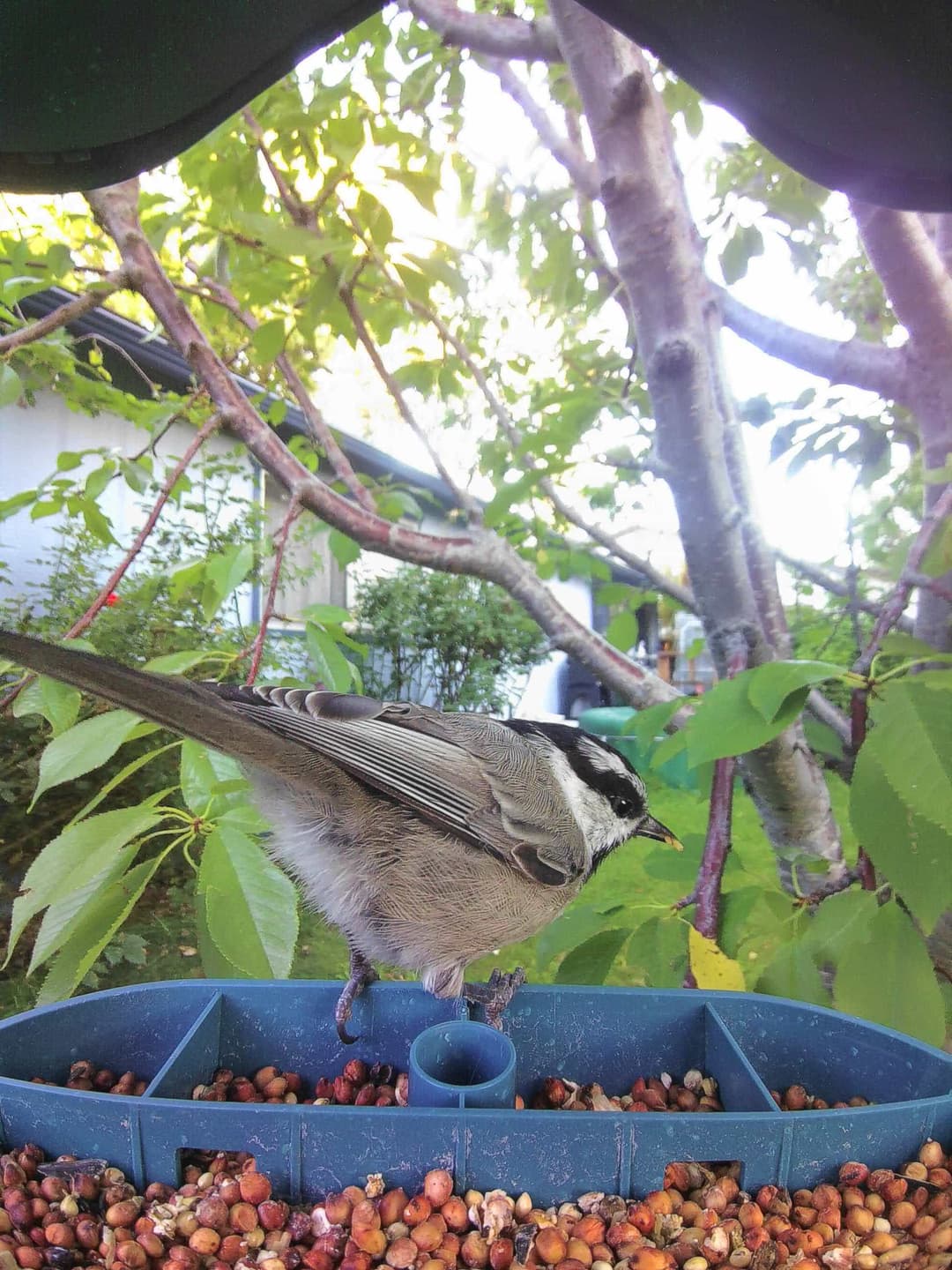
Mountain Chickadee vs Bridled Titmouse
While the Bridled Titmouse exhibits striking black-and-white facial markings resembling a mask, the Mountain Chickadee sports a subtle white stripe over its eye and lacks the dramatic 'bridle' pattern. Additionally, the Titmouse has a more prominent crest and distinct vocalizations. Look for the characteristic black throat and loud, piercing calls of the Bridled Titmouse.
Breeding and nesting habits of the bridled titmouse
Mating behaviors
The mating behavior of the bridled titmouse is not well documented. Pairs may stay together throughout the year, forming a nesting territory after flocks disperse in late winter, primarily in regions like Arizona and New Mexico.
Nesting details
Bridled titmice nest from April to June, usually in tree cavities or old woodpecker holes, ranging 4-30 feet above ground. They often nest in dead limbs or stumps and may use artificial nest boxes. Nest structures are lined extensively with soft materials, including grass, leaves, spiderwebs, lichens, plant down, catkins, and animal hair.
Eggs and chick-rearing
While specific details about their eggs and chick-rearing practices are not provided, known nesting periods indicate that chicks are likely reared during the spring and early summer. Providing a safe, well-lined nest site is crucial for their successful development.
What does a bridled titmouse like to eat?
Insects
Nuts
Spiders
Natural diet
The diet of the bridled titmouse is not well-documented, but it primarily consists of insects and seeds. In the wild, it mostly feeds on various insects, including caterpillars, beetles, and likely others, such as insect eggs and pupae. The bird also consumes a variety of seeds as part of its diet.
Bird feeders
Common foods for bridled titmouse at bird feeders include sunflower seeds, suet, and peanut pieces. These supplemental foods can attract the titmouse to backyard feeders, providing a source of energy particularly when natural food sources are scarce.
Feeding bridled titmouse
Bridled Titmice are fond of variety in their diet. Offering a mixed menu of suet, mealworms, sunflower seeds and peanuts in your feeder could attract these birds to your yard. For the best results, use Bird Buddy seeds. These seeds are expertly chosen for the season and are loved by Bridled Titmice.
Choosing the right feeder
Bridled Titmice will visit most types of feeders, including trays, tube feeders, and hopper feeders. However, these birds feel more comfortable at a feeder when there's some cover. Place your feeder in or near trees or shrubs to provide natural cover and increase your chances of attracting Bridled Titmice.
Attracting bridled titmice tricks
Bridled Titmice are naturally inquisitive and will often investigate new food sources. Changing or adding new food items periodically may help attract these birds. They are also flock birds during non-breeding season, meaning if you attract one, the entire gang is likely to follow. And with their lively singing habits, you might just find yourself hosting an unexpected serenade!
Where can you find bridled titmouses?

Primary habitat
The bridled titmouse primarily breeds in areas with an abundance of live oaks, frequently in pine-oak woodlands, specifically in Oak and Sycamore canyons.
Additional range
Occasionally, this bird will breed in middle elevation groves of cottonwoods and willows near streams. In winter, it can be found in smaller numbers in these cottonwood-willow groves.
Do they migrate?
The bridled titmouse is mostly a permanent resident, meaning it does not undertake typical long-distance migrations like some other bird species. However, it exhibits a form of altitudinal migration. This involves small flocks moving from higher to lower elevations during the winter months. These movements are not extensive; rather, they reflect local adjustments to seasonal changes in habitat or food availability. In winter, the bridled titmouse may descend from mountainous areas to lower elevation zones. During these times, they sometimes travel further afield and can be found in streamside groves that are not necessarily within their usual mountainous habitat. Key locations for these winter movements include forested areas adjacent to streams in the lower elevations surrounding their primary highland habitats. Overall, while the bridled titmouse does not migrate long distances like some bird species, its local altitudinal movements in response to seasonal changes reflect a strategic adaptation rather than typical seasonal migration. This pattern helps the titmouse maintain access to resources year-round without needing to leave the general regional area where they are primarily established.
What is the role of bridled titmouses in nature and how to protect them?
Conservation status
The bridled titmouse is considered very common within its limited range in the United States, with its population numbers apparently stable. It is not classified as vulnerable or endangered. Key conservation efforts are not prominently highlighted due to its stable numbers, but habitat preservation remains essential to maintain its population. Significant threats to the species are minimal at present, though habitat loss could impact future stability. Monitoring its habitat and ensuring it remains protected are important for ongoing conservation.
Ecological role of bridled titmouses
Its role in the ecosystem
The Bridled Titmouse plays a vital role in the ecosystem, serving as a natural method for insect control. Its dietary preference includes various insects such as beetles, caterpillars and insect eggs, effectively keeping their populations in check. By feeding on insect eggs and pupae, it also prevents the occurrence of potential insect outbreaks. Its method of foraging, hopping among various trees and bushes, encourages pollination and seed dispersal, thus maintaining the diversity and health of plant life. The Bridled Titmouse is an active tree-dweller that utilizes cavities often left by woodpeckers as nesting sites, indicating symbiosis and potentially moderating the woodpecker populations. By using artificial nest boxes, they can play an essential role in bio-surveillance and monitoring activities. Their feeding habits might offer insights on insect population trends in the environment, thereby providing important ecological indicators.
How to help protect bridled titmouses
Preservation tips
Habitat preservation strategies
Preserve and restore the bridled titmouse's natural habitat of mature pine-oak and oak-juniper woodlands. This includes safeguarding against deforestation, promoting responsible building and development practices, and supporting reforestation initiatives. Implement fire management strategies to maintain forest health.
Community science initiatives
Encourage community involvement in birdwatching and data collection efforts to track population trends. Promote citizen science initiatives like the Audubon Society's Christmas Bird Count and the Great Backyard Bird Count. Provide resources and information to educate the public on the importance of bird conservation, and encourage safe practices for interacting with wildlife.