
Crissal Thrasher
Crissal Thrasher
Toxostoma crissale
Quick Identification guide
Quick Identification guide
- •
Features a long, slightly curved beak and a uniform brownish-gray plumage, providing excellent camouflage in arid environments
- •
Displays a distinctive cinnamon-colored undertail which is easily noticeable during flight
- •
Possesses a slender body and a long tail that aids in balance and agility
Description
Though these midsize birds have a pretty menacing-looking curved beak, they are incredibly soft-spoken, and known for having a sweeter voice than other thrashers. They love hanging out in the vicinity of desert streams, and you will rarely spot them flying in the open. In fact, you will rarely spot them flying, period. Their preferred method of transportation is walking or, when threatened, running.
The crissal thrasher can weigh between 53.2to70grams and be from28.5to29.5centimeters tall.
The typical lifespan of the Crissal Thrasher, a desert-dwelling bird species, is not well-documented but close relatives like the Brown Thrasher can live up to 12 years. Compared to other members of the Mimidae family like the Northern Mockingbird which can live up to 20 years, the Crissal Thrasher's potential lifespan might be significantly shorter. The harsh desert conditions that Crissal Thrashers inhabit likely contribute to a potentially shorter life expectancy. More studies are needed to ascertain the Crissal Thrasher's lifespan accurately.
Did you know?
Most popular questions about crissal thrasher
How to recognise a crissal thrasher?
General appearance
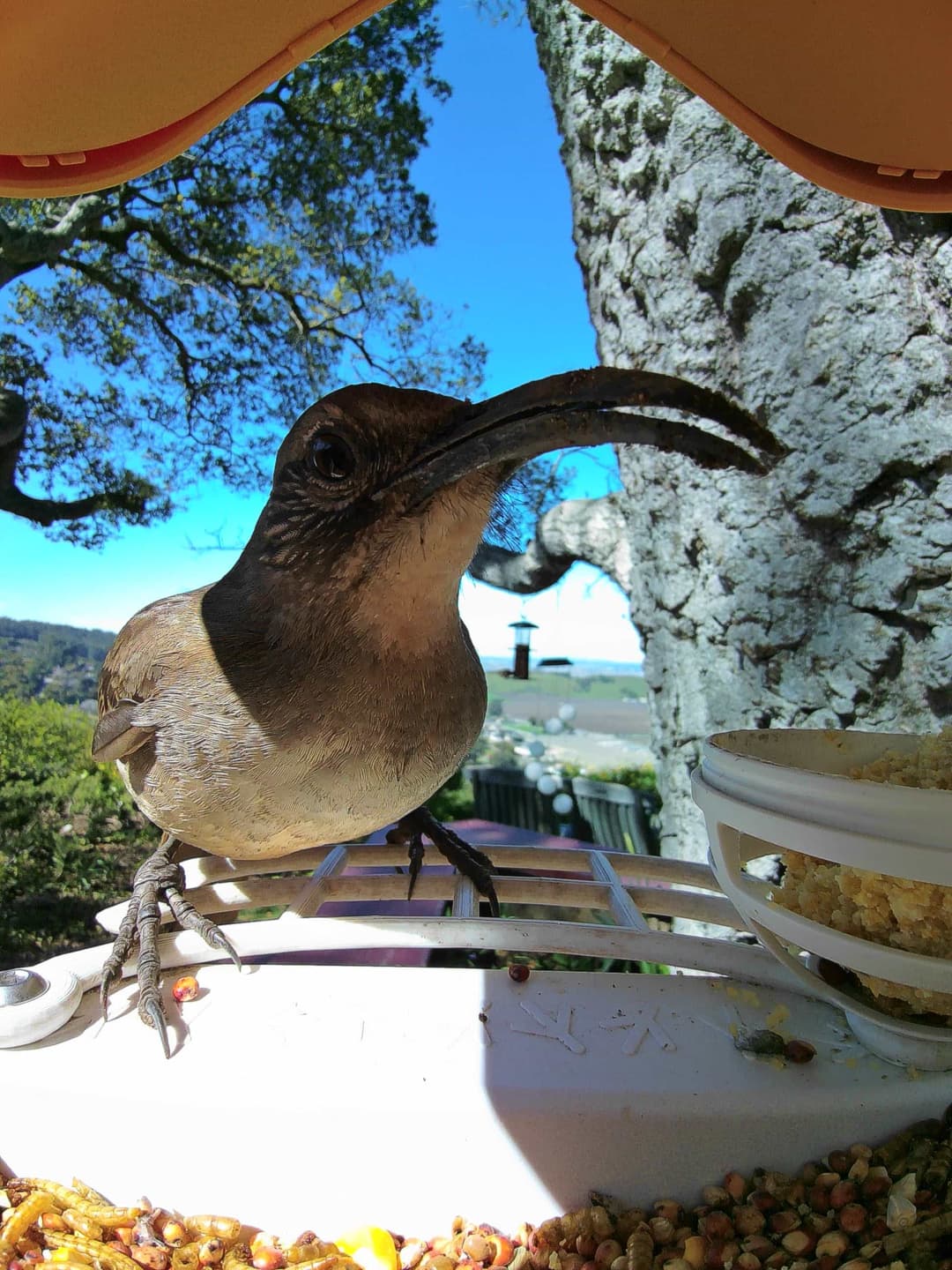
The crissal thrasher is a medium-sized bird, approximately the size of a Crow or Robin, ranging from 27 to 32 cm in length. The unmistakable part is its chestnut-colored undertail coverts which is highlighted by its black, gray, red, and white body. The bird has a strongly curved bill, a long, rounded and wedge-shaped tail. Its breast is plain, and it features a dark whisker mark. Eyes come in hues from dull gold to brown.
Male vs female
In the case of the crissal thrasher, both males and females have similar physical characteristics, with no significant observed differences between them in terms of coloration, size or other physical traits.
Juvenile
Juvenile crissal thrashers generally resemble adults, but they may have slightly less distinctive markings. The coloration of their undertail coverts may be a less vibrant chestnut and their eyes aren’t fully colored yet. They also have a slightly smaller and lesser curved bill.
Often mistaken for
California Thrasher vs Crissal Thrasher
Crissal Thrasher has a distinct reddish undertail and a more subtle grayish-brown body, while the California Thrasher exhibits a darker, more uniform brown body with a prominent breast streak. The Crissal has a shorter, less curved bill compared to the California Thrasher's distinctly downcurved bill. The Crissal's song is also more varied with whistles and phrases.
Curve-Billed Thrasher vs Crissal Thrasher
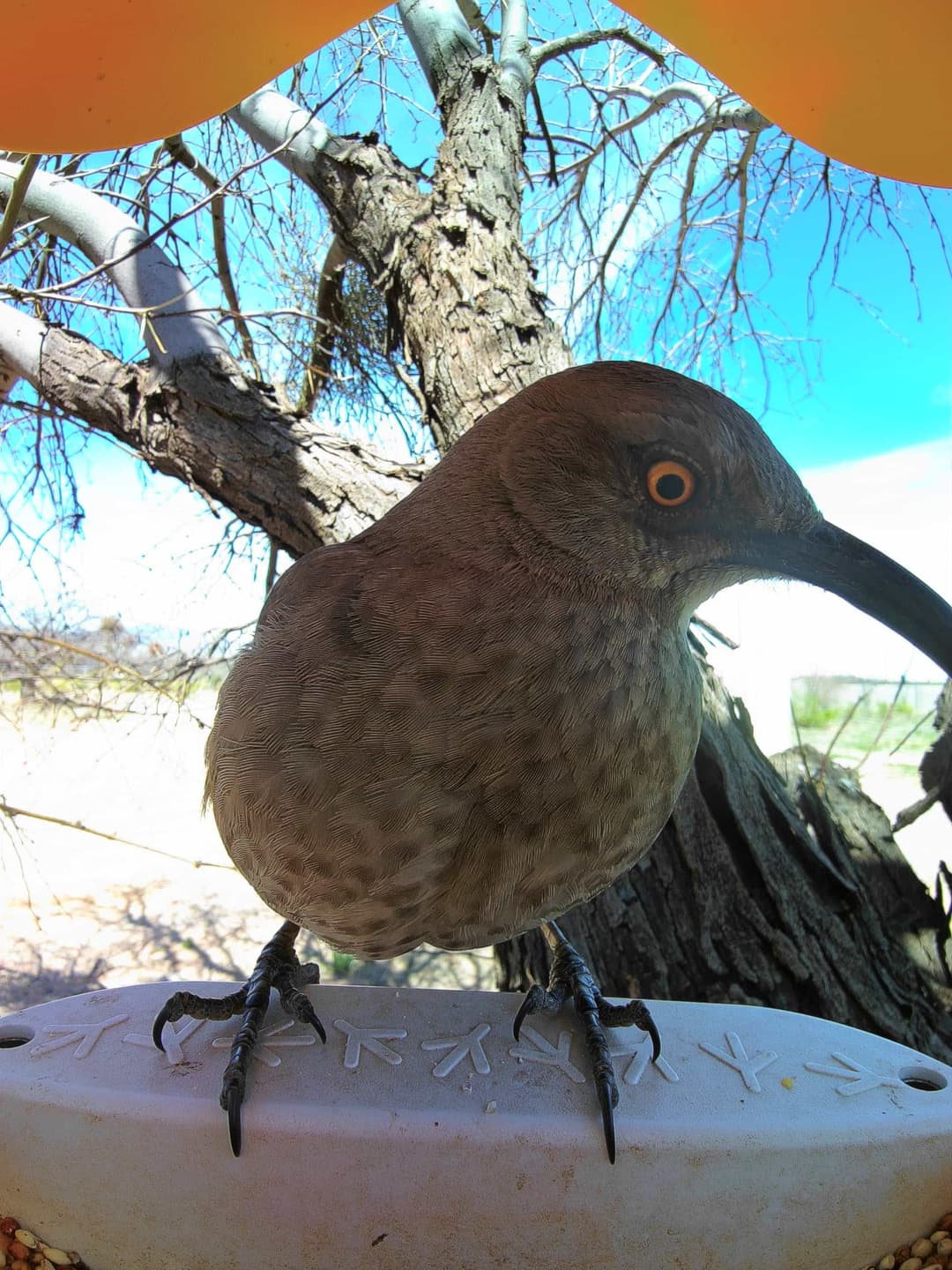
The Crissal Thrasher features a unique darker eye, contrasting with the orange-yellow eye of the Curve-Billed Thrasher. Crissal Thrashers possess a longer tail with reddish undertones and a more uniformly grayish crown, while Curve-Billed Thrashers have a gray to brown body and a less pronounced tail contrast. Their calls differ, with Crissal being more melodic and less harsh.
Breeding and nesting habits of the crissal thrasher
Mating behaviors
Crissal thrashers form pairs that may stay together on their territory throughout the year. The males sing in the spring to defend their nesting territory.
Nesting details
The crissal thrasher nests in dense low growth, often in mesquite shrubs, and sometimes in willows, greasewood, saltbush, and exotic saltcedar, usually placed 2-8 feet above the ground. The nest is a bulky open cup constructed by both parents with thorny twigs and lined with finer materials like grass, weeds, bark fibers, and occasionally feathers.
Eggs and chick-rearing
When cowbirds lay eggs in their nests, crissal thrashers are known to remove these eggs quickly. This suggests a strong defense mechanism to protect their own offspring.
What does a crissal thrasher like to eat?
Fruits
Insects
Seeds
Small animals
Natural diet
The crissal thrasher primarily feeds on a wide variety of insects, such as beetles, grasshoppers, ants, and caterpillars. It also consumes other arthropods like spiders and centipedes. Occasionally, it eats small lizards. Additionally, berries and small fruits constitute a significant portion of its diet.
Bird feeders
While crissal thrashers mainly thrive on a natural diet, they may occasionally visit bird feeders. They could be attracted to dried fruits or insects provided at feeders but are not frequent visitors compared to other bird species.
Feeding preferences
Crissal Thrashers are omnivores, enjoying a mix of seeds, fruits, and insects. Luckily for us, they're not picky eaters! It's recommended to use Bird Buddy seeds since these are chosen by experts for the season. Thus, ensuring that the thrashers get the nutrients they need. Dried fruits and mealworms can supplement their diet, too.
Feeder types and placement
Choose a larger feeder which allows crissal thrashers room to perch. Place the feeder in a location with some cover – thrashers, like many birds, prefer to have a bit of protection while they eat. A feeder placed near some shrubs or a tree can be very tempting for these birds.
Making your yard thrasher-friendly
Thrashers love foraging on the ground. If you scatter some seeds or mealworms under bushes or shrubs, they would feel right at home. Also, giving them a water source for drinking and bathing can make your yard more attractive.
Staying for a sing-along
Crissal Thrashers are known for their lovely songs. If you want them to stay longer, providing a safe and abundant environment is key. Sufficient food, water, and shelter will not only tempt them to visit but also encourage them to stay and delight you with their songs.
Where can you find crissal thrashers?

Primary habitat
The crissal thrasher primarily inhabits dense brush along desert streams and mesquite thickets. In the Sonoran desert, it is found in the densest mesquite areas along washes.
Additional range
Beyond the desert, the thrasher also resides in the Chihuahuan Desert's sparse brush. Furthermore, it can be found in dense chaparral, among manzanita and other scrub in southwestern mountains.
Do they migrate?
The crissal thrasher is mostly a permanent resident, implying it generally stays in one place throughout the year. However, the presence of a few individuals away from their breeding areas during the fall and winter suggests some limited migratory behavior. These movements are not extensive migrations but rather short dispersals from their primary habitats. The crissal thrasher primarily inhabits desert scrub and dense brush areas in the southwestern United States and northern Mexico. A small number of them may venture slightly away from these breeding areas during the fall and winter months, possibly in search of food or due to environmental changes. The dispersal is typically regional, involving movements within their usual range rather than long-distance migrations. Specific routes, timing, and key locations of these dispersals are not well-documented due to the limited number of individuals involved. Therefore, the crissal thrasher is predominantly a non-migratory bird species with mostly sedentary behavior, except for this minor seasonal movement of a few individuals.
What is the role of crissal thrashers in nature and how to protect them?
Conservation status
The crissal thrasher is still reasonably common, although detecting population trends is challenging. It is not currently classified as vulnerable or endangered. However, habitat loss and degradation, primarily due to urban development and agriculture, pose significant threats. Conservation efforts focus on habitat preservation and monitoring population trends to ensure stability. These measures aim to maintain the species’ population levels and mitigate the impact of environmental changes. Conservationists and birdwatching communities play a crucial role in raising awareness and promoting protection strategies for the crissal thrasher’s natural habitats.
Ecological role of crissal thrashers
Its role in the ecosystem
The Crissal Thrasher, known for its digging and foraging behavior, plays a significant role in pest control within its ecosystem. With a diet mainly comprising of a wide variety of insects such as beetles, grasshoppers, ants, caterpillars, and many others, as well as spiders and centipedes, this bird helps control the population of these insects and arthropods. It also occasionally consumes small lizards. Additionally, since the bird also enjoys a diet of berries and small fruits, it potentially contributes to seed dispersal, aiding in plant propagation and diversity. However, its contribution does not stop here. Through its interesting behavior of rejecting cowbird eggs laid in its nest, it serves as a natural regulating force for cowbird populations. The crissal thrasher's preference for building nests in a variety of shrubs, including mesquites, willows, greasewood, saltbush, and saltcedar, could also impact local vegetation patterns. Its overall behavior and dietary preferences provide a multifaceted contribution to its surrounding ecosystem.
How to help protect crissal thrashers
Preservation tips
Habitat preservation strategies
To support the conservation of the crissal thrasher, preserve critical habitats like desert riparian areas and scrublands. This involves strict enforcement of laws against deforestation and land degradation. Funding for the restoration of degraded habitats should be allocated. Promote the establishment of protected wildlife zones where human activities are limited.
Community science initiatives
Engage the community in monitoring the population trends of crissal thrashers. Encourage citizens to report sightings, which can contribute to the knowledge about their current distribution and movement. School-based campaigns can raise awareness about the importance of the species and ways to protect it. At the same time, citizen science projects can help collect data for research and conservation planning.