Curve-Billed Thrasher or Crissal Thrasher?
Here's how to tell the difference


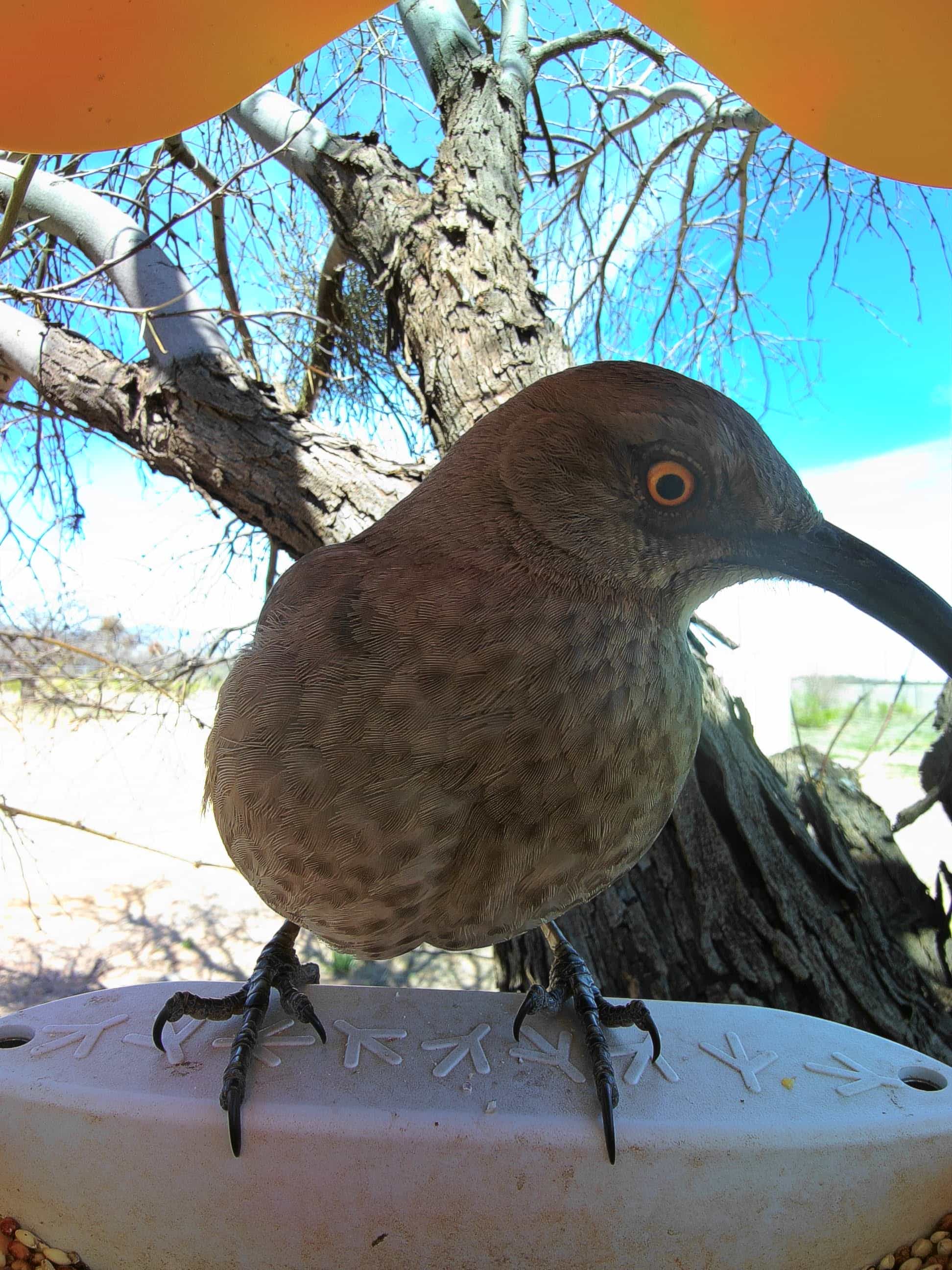


Curve-Billed Thrasher

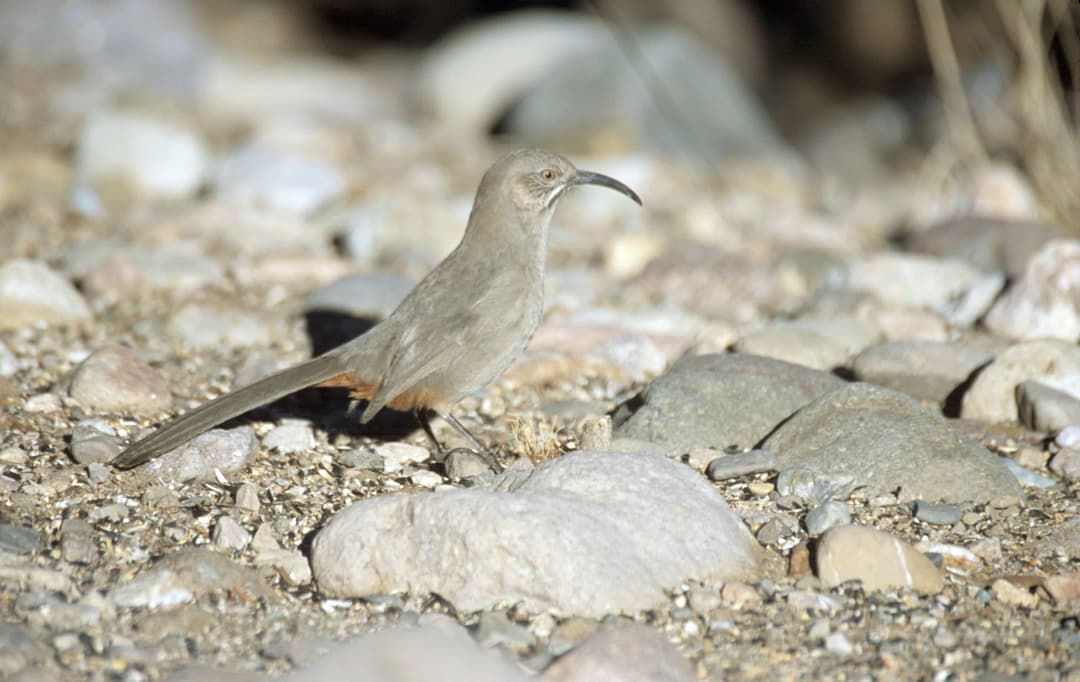
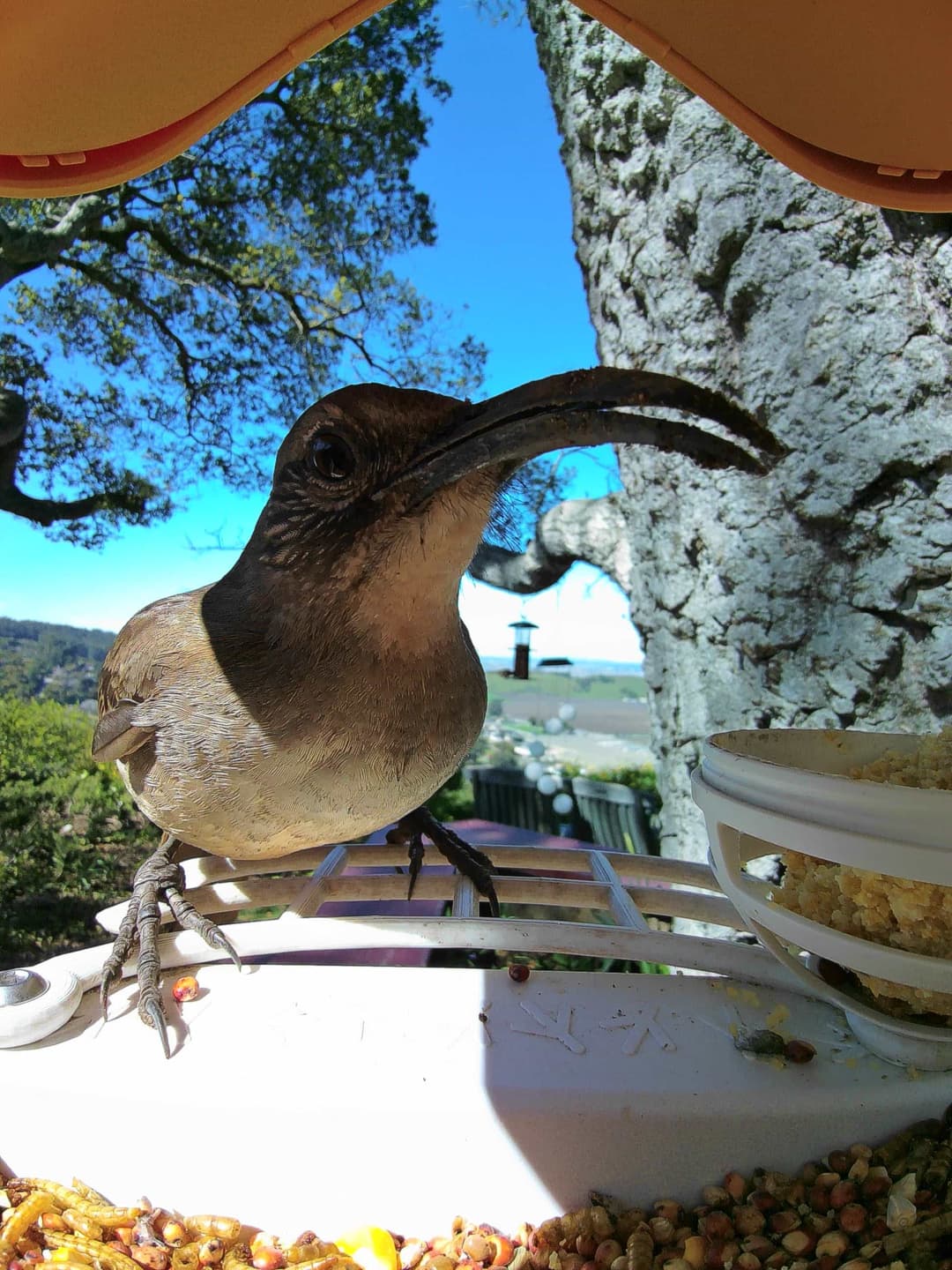
Crissal Thrasher
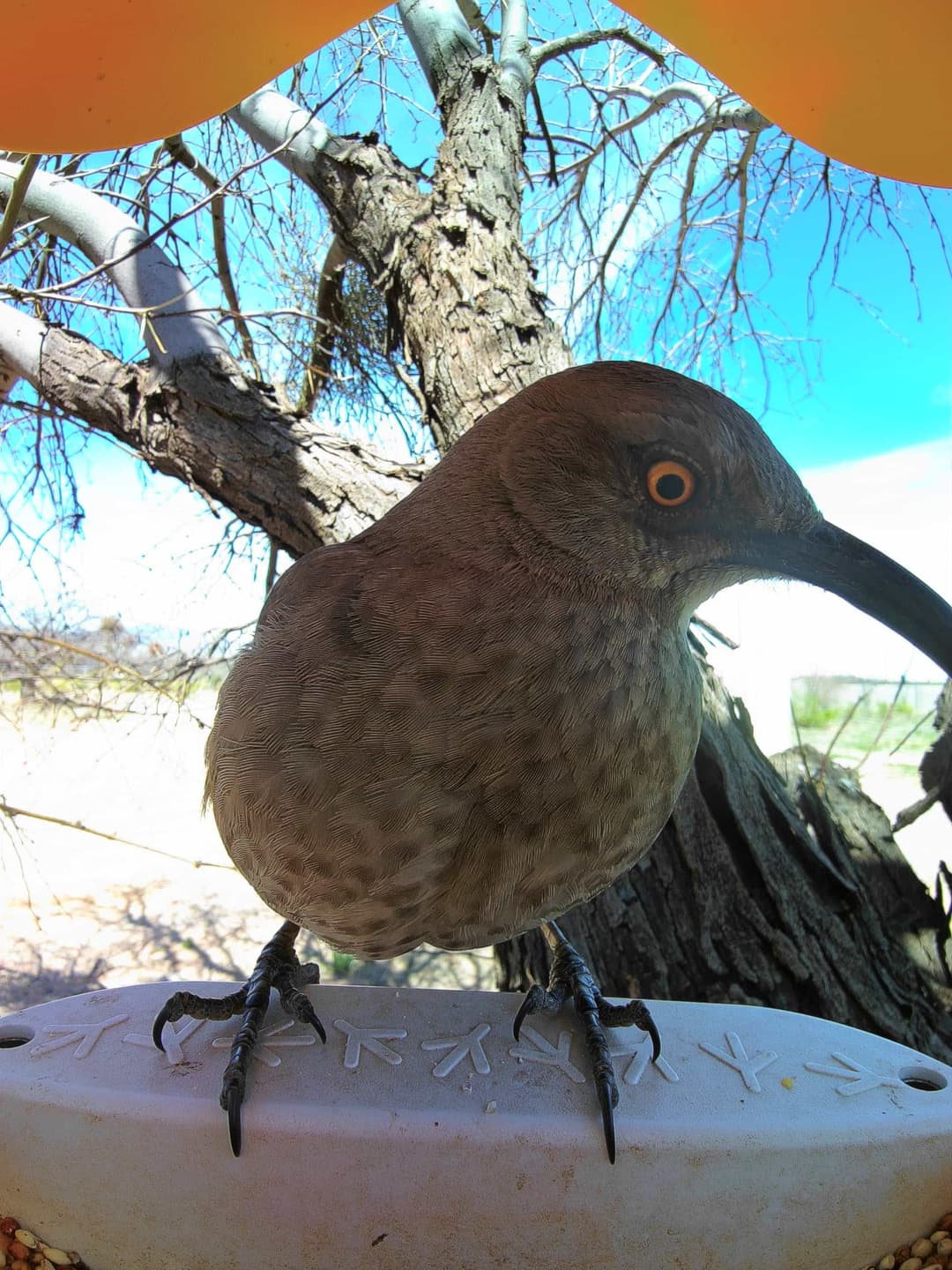
Curve-Billed Thrasher
Toxostoma curvirostre
General appearance
The Curve-billed Thrasher measures between 9.5 to 11.5 inches, equivalent to 24-29 cm, with similar sizes of a Crow. It has a broad wing shape and a long, rounded, and wedge-shaped tail. The overall color profile is a dull gray-brown featuring a black, moderately curved bill. Its eyes are distinctive with a yellow-orange coloration. In Texas specifically, they have more visible chest spots.
Male vs female
Unlike some bird species, the male and female Curve-billed Thrashers do not exhibit any noticeable physical differences in coloration, size, or marking. Both sexes possess the same dull gray-brown coloration, yellow-orange eyes, and the distinctive moderately curved black bill.
Juvenile
The juvenile Curve-billed Thrasher has a shorter bill compared to adults. Their upper chest carries sharper and more pronounced spots. Similar to their adult counterparts, they present with the same general color profile of gray-brown, though the coloring may slightly vary by season.
Size
10.6 - 11.0 in/2.0 - 3.3 oz
There's more to learn about Curve-Billed Thrasher
View full detailsCrissal Thrasher
Toxostoma crissale
General appearance
The crissal thrasher is a medium-sized bird, approximately the size of a Crow or Robin, ranging from 27 to 32 cm in length. The unmistakable part is its chestnut-colored undertail coverts which is highlighted by its black, gray, red, and white body. The bird has a strongly curved bill, a long, rounded and wedge-shaped tail. Its breast is plain, and it features a dark whisker mark. Eyes come in hues from dull gold to brown.
Male vs female
In the case of the crissal thrasher, both males and females have similar physical characteristics, with no significant observed differences between them in terms of coloration, size or other physical traits.
Juvenile
Juvenile crissal thrashers generally resemble adults, but they may have slightly less distinctive markings. The coloration of their undertail coverts may be a less vibrant chestnut and their eyes aren’t fully colored yet. They also have a slightly smaller and lesser curved bill.
Size
11.2 - 11.6 in/1.9 - 2.5 oz
There's more to learn about Crissal Thrasher
View full detailsHow to tell the Curve-Billed Thrasher from the Crissal Thrasher
Visual differences
The Curve-Billed Thrasher is 9.5-11.5 inches long, with dull gray-brown plumage, yellow-orange eyes, and a moderately curved black bill. It features broad wings and a less distinct chest pattern. In contrast, the Crissal Thrasher is slightly larger, 10.6-12.6 inches long, with a strongly curved bill, plain breast, dark whisker marks, and chestnut undertail coverts. Its eyes range from dull gold to brown. Both species have a long, rounded tail, but the Crissal's tail stands out with its red, black, and gray body coloration.
Key differences and behavior
The Curve-Billed Thrasher and Crissal Thrasher exhibit distinct behavioral and habitat preferences. The Curve-Billed Thrasher inhabits suburban areas and lowland deserts, often found seeking insects in urban gardens. In contrast, the Crissal Thrasher prefers dense brush near desert streams, rarely flying and instead running when threatened. Curve-Bills are more vocal, delivering strong, whistle-like calls, while Crissals have a softer, more melodic song. Both species exhibit similar nesting habits, although Crissals are noted for their pair bonding year-round and defensive removal of cowbird eggs. The Curve-Bill's diet focuses heavily on insects and cactus fruits, while the Crissal also includes small lizards and is less inclined towards suburban feeders.
Still not sure? Here are more lookalikes!
Curve-Billed Thrasher vs [Select a bird]

[Select a bird]
Pick a bird to compare
Crissal Thrasher vs [Select a bird]
[Select a bird]
Pick a bird to compare