
Eastern Kingbird
Eastern Kingbird
Tyrannus tyrannus


Quick Identification guide
Quick Identification guide
- •
Features a dark slate-gray head and back contrasting sharply with its clean white underparts
- •
Displays a bold white-tipped tail that is easy to spot during flight
- •
Has a sturdy, straight black beak and a subtle white band across the tip of its tail
What does a eastern kingbird sound like?
The eastern kingbird possesses a flat, rising call with a sharp "dzee" or "dzeet" sound, punctuated by a series of harsh, fast vocalizations similar to the words "kit" and "kitter." Accompanying these distinct sounds are various types of calls which include a buzz, chirp or chip, and even a high-pitched whistle. Each unique utterance contributes to the bird's multi-faceted vocal repertoire, used for communication and territorial display.


Description
King is right, and woe to anybody who is out of line, no matter their size! Imagine you're sitting in a tree and get knocked out of it by a bird half your size... That's what blue jays have to deal with on a regular basis. Eastern kingbirds are no strangers to punching above their weight, and are known to harass much, much larger birds, like hawks and herons. This aggression earned them their scientific name, Tyrannus, which means despot!
The eastern kingbird can weigh between 30to54grams and be from19.5to23centimeters tall.
The eastern kingbird typically lives up to 10 years. This is a relatively long lifespan compared to related species like the western kingbird which lives for about 5-6 years. Banded kingbirds, another related species, have a shorter lifespan, averaging around 2 years. The longevity of the eastern kingbird can be attributed to its aggressive defense mechanisms against predators.
Did you know?
Most popular questions about eastern kingbird
How to recognise a eastern kingbird?
General appearance
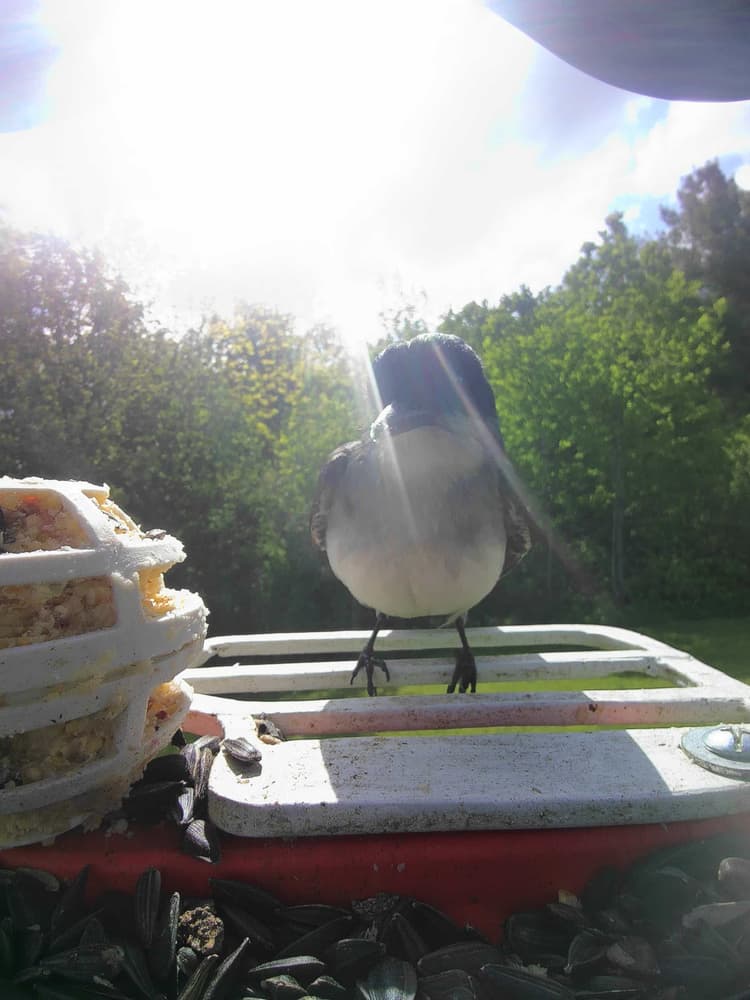
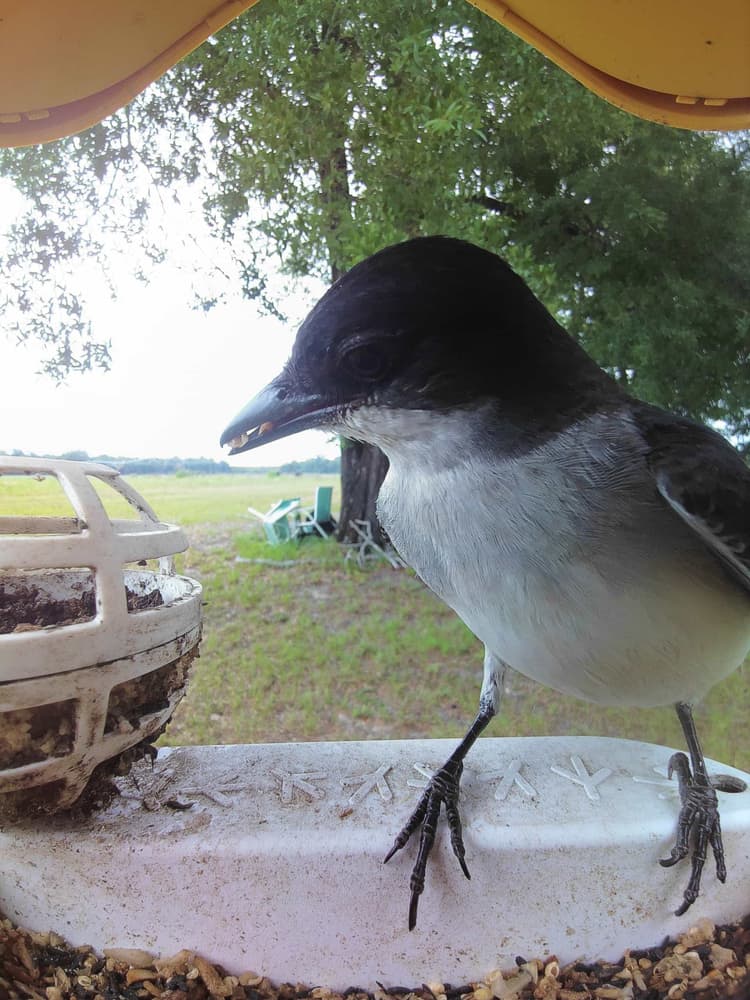
The eastern kingbird is a bird of medium size, similar to a Robin, with a length of 8 to 9 inches or 20 to 23 centimeters. Its coloration is blackish on the top and white underneath, with a wash of gray across the chest providing contrast. The most distinct characteristic is the broad white band at the tip of its otherwise black tail. Additionally, it has a pointed wing shape and a tail rounded or square-tipped.
Male vs female
There is not much sexual dimorphism in the Eastern Kingbird species. Both genders display same physical characteristics including the diagnostic white tail band and the hidden strip of red feathers on the crown. Identification through gender based differentiation is therefore difficult.
Juvenile
Similar to adults, Juvenile Eastern Kingbirds also present similar coloration. However, their colors may not be as vibrant, and the white bands on their tails could be less defined.
Often mistaken for
Eastern Phoebe vs Eastern Kingbird
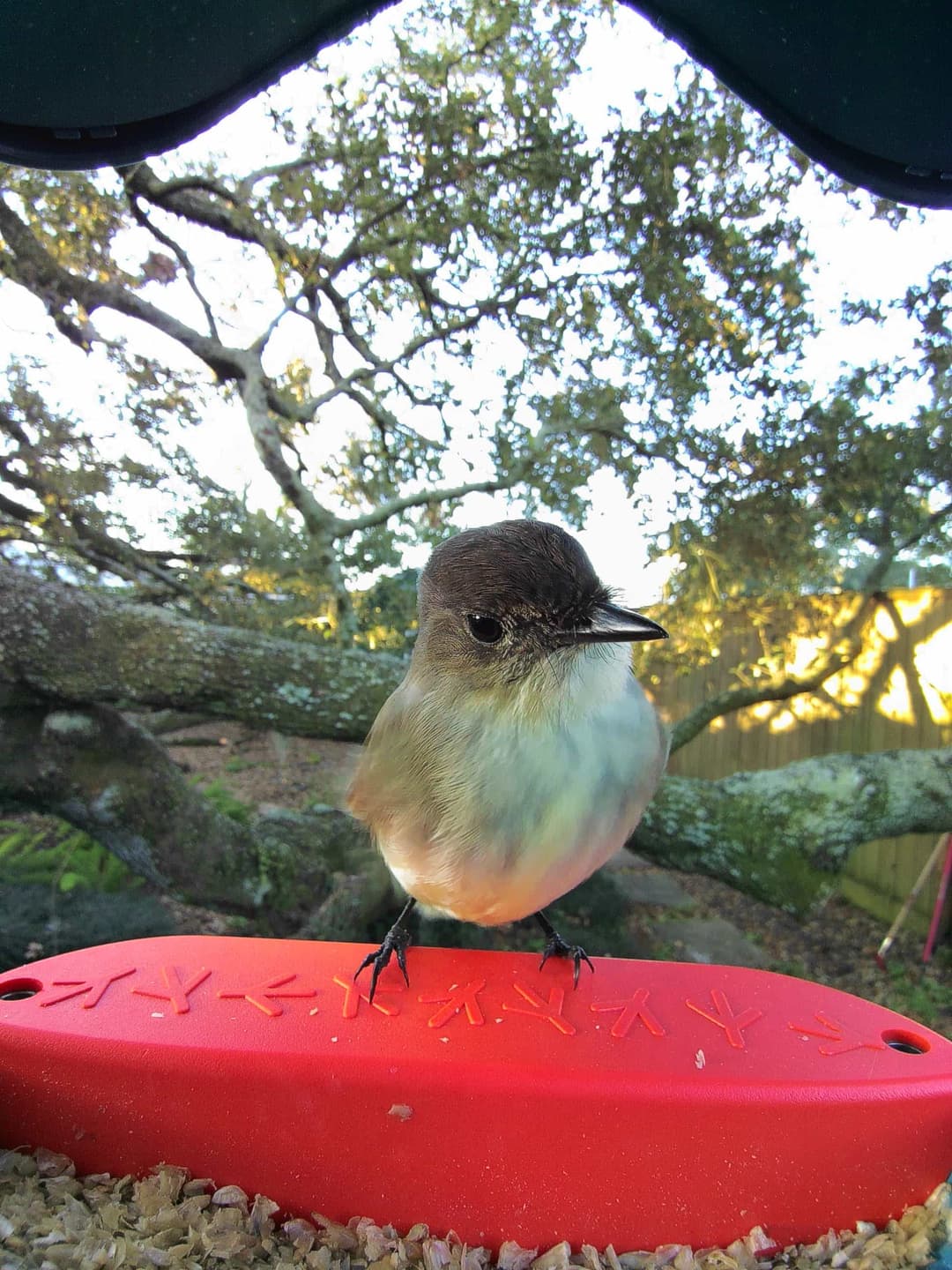
The Eastern Kingbird and Eastern Phoebe can look similar, but key differences can help distinguish them. The Eastern Kingbird has a bold white tail tip and a more striking white underpart contrast, whereas the Eastern Phoebe lacks the white tail tip and is grayer overall. Eastern Kingbirds are often found in open fields and perches, sporting a more aggressive demeanor. In contrast, Eastern Phoebes are less bold, frequently found near wooded areas, wagging their tails gently. Look for the Eastern Kingbird's concealed orange-red crown patch which is a telling feature not found in the Phoebe.
Breeding and nesting habits of the eastern kingbird
Mating behaviors
During courtship, the male eastern kingbird performs aerial acrobatics such as rapid up-and-down flights, zigzags, and backwards somersaults. The display may reveal the typically concealed red patch of crown feathers.
Nesting details
Eastern kingbirds build their nests in deciduous trees or large shrubs, usually 7-30 feet above the ground, but sometimes lower or higher. They may also nest on powerline towers, dead snags in water, fence posts, or other unconventional sites. The female, occasionally assisted by the male, constructs a bulky cup-shaped nest from weed stalks, twigs, and grass, lined with fine grass and sometimes animal hair.
Eggs and chick-rearing
Eastern kingbirds lay eggs in the nests they construct. Both parents are typically involved in feeding and rearing the chicks, ensuring their survival and growth until they are capable of leaving the nest.
What does a eastern kingbird like to eat?
Aquatic animals
Berries
Fruits
Insects
Seeds
Small animals
Natural diet
The eastern kingbird primarily feeds on insects, which constitute the majority of its diet during the summer months. It consumes a variety of insects such as beetles, wasps, bees, winged ants, grasshoppers, flies, and leafhoppers. Although sometimes thought to be a predator of honeybees, evidence supporting this is minimal. In addition to insects, the eastern kingbird also eats many berries and wild fruits. Its winter diet is less well-known, but it is known to feed heavily on berries found in tropical forests.
Bird feeders
The eastern kingbird is not commonly associated with visiting bird feeders as it primarily feeds on insects and wild fruits in its natural habitat.
Attracting the eastern kingbird
Tempting an Eastern Kingbird to visit your yard is not as hard as one might think. These birds favor open habitats, so maintaining a spacious and inviting yard is a start. Also, placing some perches for these birds will surely catch their attention.
Feeder type and snacks
Eastern Kingbirds typically feed on insects and fruits. Hence, a bird feeder stocked with Bird Buddy seeds, which are expert-chosen for the season, can attract them. These birds also enjoy berry bushes, so planting some in your yard could further entice them.
Fun tricks to keep them coming
Try adding a birdbath or a shallow body of water in your yard. Eastern Kingbirds love water and sometimes take baths in shallow pools. These tactics, combined with a quiet, peaceful environment, might not only bring these beautiful birds to your yard for a bite, but also encourage them to stay for a lovely sing-along.
Where can you find eastern kingbirds?

Primary habitat
The eastern kingbird prefers habitats with open spaces for hunting and trees for nesting. These include wood edges, river groves, farms, shelterbelts, orchards and roadsides. It is often found around the edges of marshes and in farmlands and native tallgrass prairie.
Additional range
In winter, the eastern kingbird migrates to tropical forests, particularly around forest edges and along rivers. Its habitat also ranges from clearings within forests to open grasslands with few scattered trees.
Do they migrate?
The eastern kingbird is a migratory bird that travels long distances between its breeding and wintering grounds. It breeds across North America, from the east of the Rocky Mountains to the Atlantic Coast, and south to Florida and the Gulf Coast. During the fall, the eastern kingbird begins its migration southward to its wintering grounds in South America. The migration typically starts in late summer, with the birds forming flocks and traveling mostly by day. These flocks move through Central America and along the eastern Andes before reaching their winter habitats, which range from Colombia to Peru, and as far south as southern Brazil and northern Argentina. The eastern kingbird's migration route is distinct in that it stays mostly overland, as opposed to flying over open water, like some other migratory birds. In spring, the eastern kingbird embarks on its return journey to North America, generally arriving back at its breeding grounds between April and early June. During migration, the birds rely on stopover sites that provide abundant food to refuel. This annual migration is critical for avoiding the harsh winter conditions of the northern latitudes and taking advantage of the insect-rich environments of the tropics.
What is the role of eastern kingbirds in nature and how to protect them?
Conservation status
The eastern kingbird is considered widespread and common, despite surveys indicating a gradual decrease in numbers since the 1960s. Its conservation status is not classified as vulnerable or endangered. Key threats include habitat loss and pesticide use, which may affect their food sources. Conservation efforts focus on protecting their breeding and feeding habitats, particularly through habitat restoration and pesticide regulation. Continued monitoring is essential to ensure their population remains stable and to address any emerging threats.
Ecological role of eastern kingbirds
Its role in the ecosystem
Eastern kingbirds hold considerable significance in the ecosystem they inhabit. Firstly, their diet primarily consists of insects, including beetles, wasps, bees, winged ants, grasshoppers, flies, leafhoppers, and others. Through their feeding behavior, they aid in controlling the population of these insects, many of which are regarded as pests. Their diet of insects makes them an important biological control agent, maintaining healthy ecosystem balance. They consume many insects potentially detrimental to agriculture, hence playing a crucial role in natural pest control. The winter diet of eastern kingbirds isn't well-documented, but they are known to feed heavily on wild fruits and berries during their wintering period in the tropical forest. This suggests their potential role in seed dispersal, aiding in plant propagation. Additionally, their nesting behavior utilizes many natural materials, which could reduce substrates for potential pests and diseases. Thus, eastern kingbirds play a critical role in the functioning of their ecosystems, from pest control to seed dispersal.
How to help protect eastern kingbirds
Preservation tips
Habitat preservation strategies for eastern kingbird
To support the eastern kingbird, conservation efforts should be directed towards preserving their habitats - riparian woodlands, open fields and wetlands. Encourage farmers to maintain ecological inclusive farming practices such as limiting pesticide use and preserving border plants. Efforts should be made to safeguard nesting sites and promote the planting of native trees that are conducive to their habitats.
Community science initiatives
Community involvement is crucial in the conservation of the eastern kingbird. Conduct bird monitoring and habitat assessment activities using citizen science strategies. Engage the community in initiatives like 'NestWatch' to record bird breeding behaviour. Promotion of educational outreach activities can raise awareness of the importance of bird conservations. Collaborations with local schools, colleges and community groups can also offer invaluable support in conservation efforts.