
Eastern Phoebe
Eastern Phoebe
Sayornis phoebe


Quick Identification guide
Quick Identification guide
Male
- •
olive-brown upperparts with faint fringes of gray-brown
- •
Underparts are white with a yellowish tinge on the belly
- •
A medium-length square tail and straight, thin beak
Female
- •
Similar to male with olive-brown upperparts
- •
Pale underparts with a yellowish wash on the lower belly
- •
Straight, thin beak and medium-length square tail
What does an eastern phoebe sound like?
The Eastern Phoebe has a distinctive vocalization pattern. Its clear call, "phoe-be," is often repeated, with the pitch of the second syllable alternating between higher and lower than the first. The call note is a unique, short chip. It exhibits a mixed call pattern that is both falling and flat, featuring buzz, chirp, hi, and whistle types. Overall, its call repertoire renders this bird species easily identifiable by its unique, melodious expressions.


Description
Of all the phoebes, the Eastern phoebe's call most resembles its name. This bird was the first to be banded in North America – in 1804 by John James Audubon himself. These birds have music in their very bones! If raised in isolation, they will still sing a perfect tune. That's pretty uncommon, as most songbirds have to hear other birds sing first.
The eastern phoebe can weigh between 16to21grams and be from14to17centimeters tall.
The eastern phoebe typically lives up to seven years, although some have survived as long as ten years in the wild. Compared to the other flycatcher species, such as the alder flycatcher that lives for only four years, the eastern phoebe has a longer lifespan. However, it falls short of the lifespan of larger, closely related birds like crows and jays, which can live for more than 15 years.
Did you know?
Most popular questions about eastern phoebe
How to recognise an eastern phoebe?
General appearance
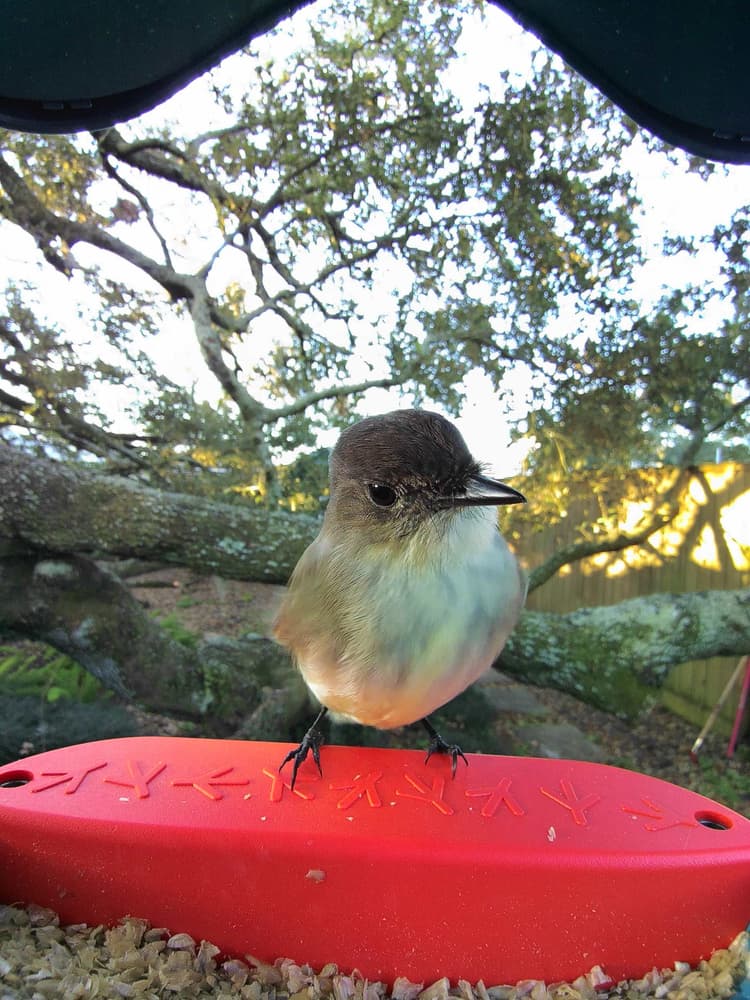
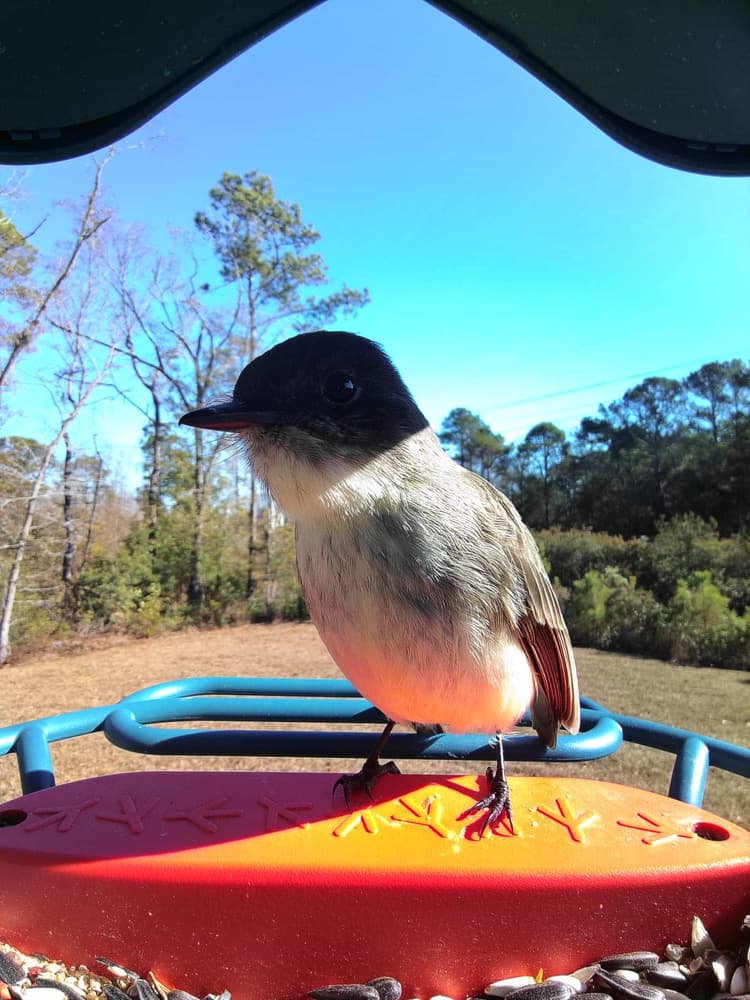
The eastern phoebe is a medium-sized bird with a length of around 18 cm. It resembles the size of a Robin or Sparrow. It showcases a sharp contrast between its whitish throat and sooty brown head, appearing gray-brown above and off-white below with no noticeable marks. The bird has a rounded wing shape with a notched, rounded, or square-tipped tail.
Male vs female
Both male and female eastern phoebes have identical physical attributes and coloration, making them difficult to distinguish. They both share a sooty brown head, off-white underside, and gray-brown upper body.
Juvenile
Juvenile eastern phoebes look similar to their adult counterparts but are often seen with faint wing-bars. In the fall, their plumage has a yellow wash below.
Often mistaken for
Say's Phoebe vs Eastern Phoebe
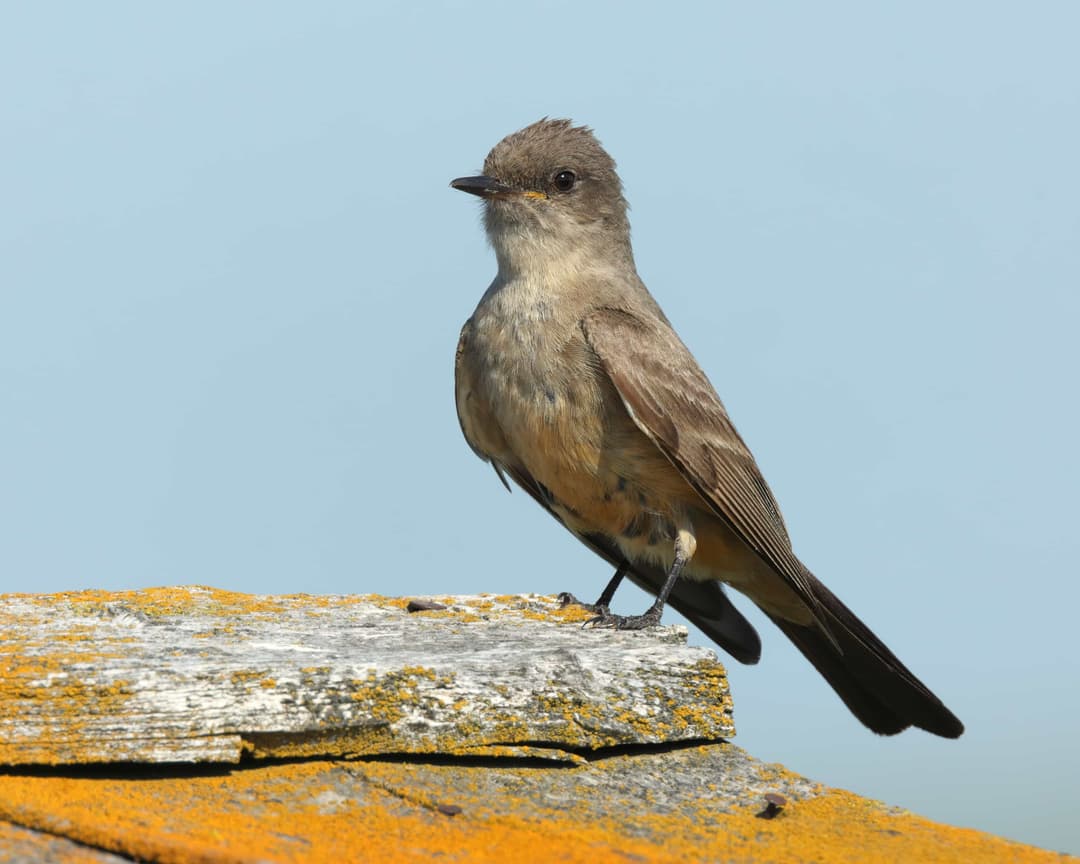
Say's Phoebe is similar in size and shape to the Eastern Phoebe, but it can be distinguished by its more vibrant color. Say's Phoebe usually has a grayish-brown upper body, a light cinnamon belly, and a black tail.
Black Phoebe vs Eastern Phoebe
The Black Phoebe resembles the Eastern Phoebe but can be distinguished by its black plumage and white belly. It also tends to have a shorter tail and a more pointed bill.

Breeding and nesting habits of the eastern phoebe
Mating behaviors
The male defends nesting territory by singing, particularly at dawn. Occasionally, a male may have two mates simultaneously and assist in feeding the young in both nests.
Nesting details
Original nesting sites include vertical streambanks or small rock outcrops in the woods. Currently, they often nest under bridges, in barns, and other artificial structures. The female builds an open cup nest with a solid base of mud, moss, leaves, and grass, lined with fine grass and animal hair. The same site may be reused, building on top of the old nest.
Eggs and chick-rearing
Males may aid females in feeding the chicks. The dual nesting practice allows a male to assist rearing young in two nests simultaneously, helping increase survival rates of the offspring.
What does an eastern phoebe like to eat?
Berries
Insects
Seeds
Spiders
Natural diet
The eastern phoebe primarily consumes insects, especially during the summer months. These include small wasps, bees, beetles, flies, true bugs, grasshoppers, and other similar insects. Additionally, it eats arachnids like spiders, as well as other small creatures such as ticks and millipedes. During the cooler months, the eastern phoebe's diet shifts to include more vegetation, particularly small fruits and berries, which are likely crucial for its winter nutrition.
Bird feeders
Eastern phoebes are not typically attracted to bird feeders, as their diet mainly consists of insects and natural fruits rather than common birdseed or suet found at feeders. They might be observed near feeders if insects or berries are available naturally in the area.
Attracting eastern phoebe: food matters
Eastern Phoebes mainly feed on insects but they also appreciate berries. Offering them Bird Buddy seeds could be very attractive because these seeds are expertly selected for the season. You'll likely increase your chances of hosting these lovely birds in your yard if you set out these seeds for them.
Choosing the right feeder
Eastern Phoebes prefer open, platform feeders. These allow them ample space to move around and also provide a clear line of sight to spot potential predators. Placing these feeders near trees or shrubs can provide a quick escape route for the birds should they feel threatened, hence making your yard more inviting.
Creating an eastern phoebe-friendly landscape
Establishing a bird-friendly yard is about more than just food. Planting native plants that attract insects can also invite Eastern Phoebes. Adding a birdbath or water source can also make your yard more appealing. If possible, install nesting boxes to encourage these birds to raise their young in your yard.
Keeping the atmosphere serene
Phoebes are generally shy birds. A quiet, serene environment can go a long way in attracting them. Also, consider reducing activities around the feeders, at least for the initial few days until they get comfortable.
Where can you find eastern phoebes?

Primary habitat
The eastern phoebe typically occupies streamsides, farms, and woodland edges. During breeding season, it is found near water in woodland or semi-open country.
Additional range
Its habitat may be restricted by nest site availability, often along streams. In migration and winter, the bird is found around woodland edges, brushy areas, typically near water.
Do they migrate?
The Eastern Phoebe is a migratory bird. It migrates earlier in the spring and later in the fall compared to other flycatchers, making it one of the first to appear in its breeding range and one of the last to leave. Typically, Eastern Phoebes breed in eastern North America, spanning from Canada down through the United States. In the fall, they migrate south to wintering grounds in the southeastern United States and as far as southern Mexico. The timing of their migration often starts in late August and can extend into October. Conversely, the spring migration begins in February, with the birds reaching their breeding territories by late March or early April. Key locations during migration include wooded areas, open fields near water, and rural landscapes that offer perch sites for hunting insects. The route mainly follows a north-south pattern, with migratory paths aligning with the Mississippi Flyway and other eastern migratory corridors. These birds are particularly adaptive, often utilizing human structures like barn eaves and bridges for roosting during their journey. This early migration pattern allows Eastern Phoebes to take advantage of early spring insect emergence and establish territories before many other insectivorous birds arrive.
What is the role of eastern phoebes in nature and how to protect them?
Conservation status
The eastern phoebe is currently considered common and stable, not vulnerable or endangered. The population likely increased due to the availability of additional nesting sites on buildings and bridges. Although the species appears stable, ongoing conservation efforts include maintaining and protecting suitable habitats and nesting sites. Ensuring that urban development and renovation projects consider the bird’s nesting requirements can help prevent future declines. There are no significant immediate threats, but habitat loss and environmental changes remain potential concerns over time.
Ecological role of eastern phoebes
Its role in the ecosystem
The Eastern Phoebe plays a critical role in maintaining the ecological balance of its habitat. As a primary consumer, it controls the population of insects, including many small wasps, bees, beetles, flies, true bugs, grasshoppers, and more. By feeding on these insects, which can sometimes be pests, the Eastern Phoebe contributes significantly to pest control in its environment. Moreover, the bird's consumption of small fruits and berries aids in the process of seed dispersal, as it expels the seeds of these fruits in different locations. This behavior indirectly supports plant diversity and regeneration. Furthermore, by choosing a variety of nesting sites, such as vertical streambanks, rock outcrops and artificial structures, the Eastern Phoebe also indirectly aids in the decomposition of organic matter. Overall, the bird's foraging, feeding and nesting habits contribute to ecological equilibrium, making it an important part of the ecosystem.
How to help protect eastern phoebes
Preservation tips
Habitat preservation strategies
Preserve and restore natural habitats, especially near water bodies, as the Eastern Phoebe prefers such spaces for nesting. Avoid overdevelopment or fragmentation of these habitats, maintaining a balance between human activities and nature. Encourage the growth of native vegetation to attract insects which these birds feed on. Restrict the use of pesticides that can diminish their food source.
Community science initiatives
Engage in local bird watching or survey groups to monitor the Eastern Phoebe's population and migration patterns. Citizen science programs like Cornell Lab of Ornithology’s Project Nestwatch encourages people to report nesting activity. Support fundraising initiatives for their conservation. Organize and participate in educational campaigns to increase public awareness about the importance of conserving this species. Lobby for stronger wildlife protection laws and ordinances.