
Hooded Warbler
Hooded Warbler
Setophaga citrina
Quick Identification guide
Quick Identification guide
- •
Features a bright yellow face with a distinctive black hood covering the head and throat
- •
Has a slender body with olive-green upperparts complementing its vibrant face and hood
- •
Displays white underparts and two conspicuous white tail spots visible in flight
What does a hooded warbler sound like?
The hooded warbler's vocalization is characterized by a clear, melodious sound that follows a 'tawee-tawee-tawee-tee-o' pattern. The pattern of the call tends to fall, flattening out, and then undulating, exhibiting unique and rhythmic changes in the pitch. The bird employs a fusion of chirps, chips, and whistles to communicate, thus providing a medley of sound that is unmistakably distinct to this species.
Description
Did you know hooded warblers aren't born with their telltale hood? It starts to develop 25 days after they leave the warmth of their egg and remains unchanged for the rest of their life. They are tiny but active, constantly flicking their tail open when on the hunt for food. This isn't just to be sassy: it startles potential prey, especially flying insects, that flies directly into their beak.
The hooded warbler can weigh between 9.5to12grams and be from12.5to13.5centimeters tall.
The hooded warbler typically lives for about 7 years, although some can live up to 10 years. This is similar to other warbler species such as the black-and-white warbler, which also has a lifespan of around 10 years. Like many other small songbirds, the life expectancy of the hooded warbler can be significantly shortened by factors such as predation and habitat loss.
Did you know?
Most popular questions about hooded warbler
How to recognise a hooded warbler?
General appearance
The hooded warbler measures around 5 1/2 inches or 14 cm. It's characterized by having a black, green, white, and yellow color scheme. They have rounded wings and a rounded, square-tipped tail. Their white outer tail feathers are often flashed conspicuously.
Male vs female
Male hooded warblers display a unique black hood surrounding their yellow face, a diagnostic characteristic. This coloration contrasts with the greenish tinge to their feathers. Many female warblers mimic this coloration by showing shadows of the hood, although other females can have plainer appearances.
Juvenile
Juvenile hooded warblers may not have developed the black hood characteristic of adults yet, making identification more challenging. Juveniles would share other general appearance traits like size and tail feather details with adults, but specific coloration would depend on their sex and age.
Often mistaken for
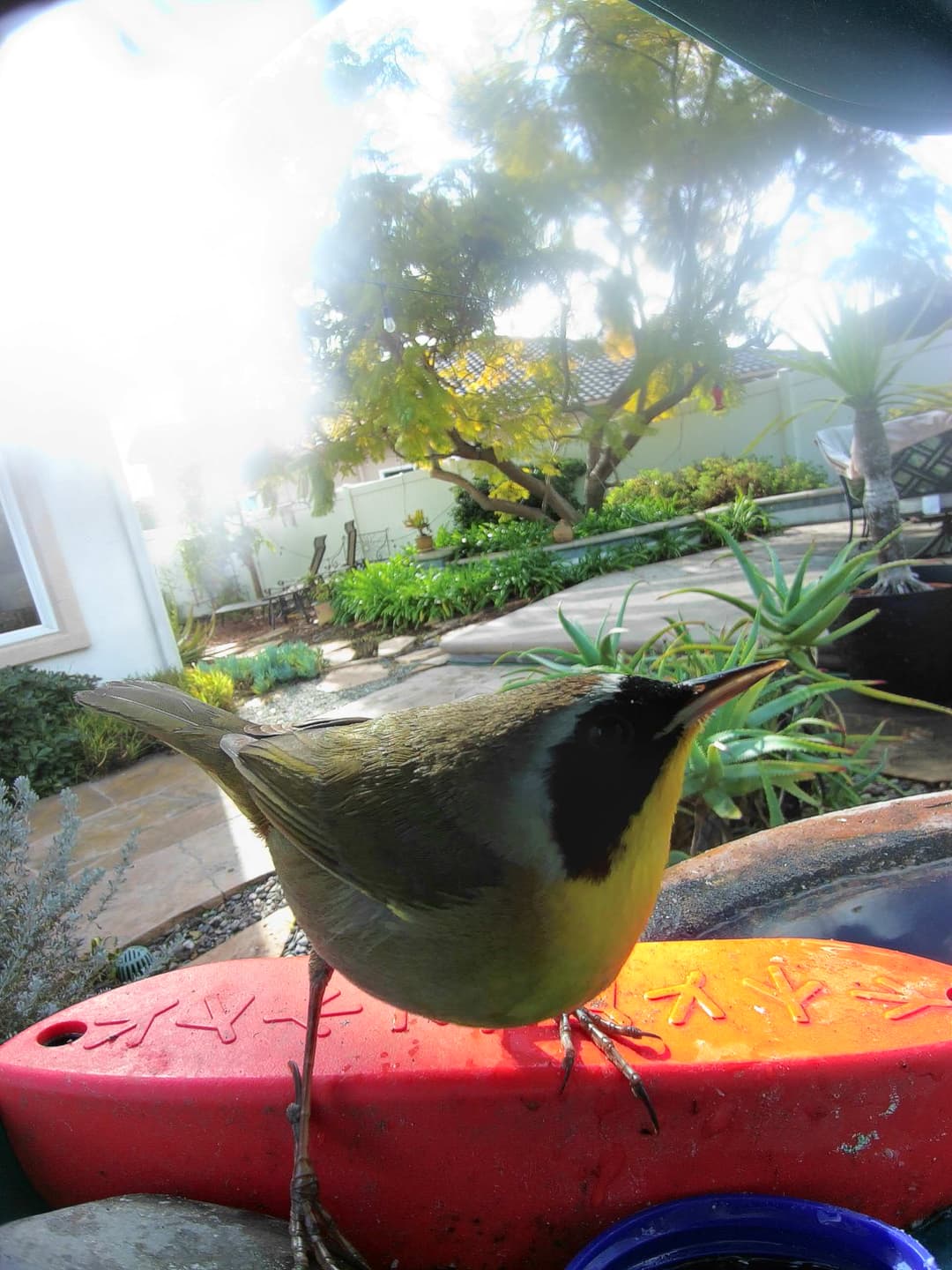
Common Yellowthroat vs Hooded Warbler
The Hooded Warbler and Common Yellowthroat can be confused due to their yellow coloring. However, the Hooded Warbler is easily distinguished by its distinctive black hood and throat, which the Common Yellowthroat lacks. Instead, the Common Yellowthroat has a black mask across its eyes and a yellow throat. The Hooded Warbler also has a more pronounced yellow face and chest. Look for the Hooded Warbler's habit of flicking its tail to reveal white tail corners when foraging. In terms of habitat, the Hooded Warbler prefers mature forests with dense understories, while the Common Yellowthroat is often found in marshes and grassy areas. Listen for the Hooded Warbler's melodic song compared to the Common Yellowthroat's 'witchety-witchety-witch' call.
Breeding and nesting habits of the hooded warbler
Mating behaviors
Hooded warblers exhibit site fidelity where males return to previous nesting territories. Females, however, often select new territories. This behavior influences pair formations annually, with males likely partnering with different females each breeding season.
Nesting details
The female selects the nesting site, typically found in patches of deciduous shrubs within forests or along edges. Nests are constructed 1-4 feet above ground. Made primarily by the female, the nests are open cups comprising dead leaves, bark, grasses, spiderwebs, hair, and plant down.
Eggs and chick-rearing
The female incubates the eggs and tends to perform the majority of chick-rearing duties. Nurturing involves feeding and protecting the chicks until they fledge. Suitable habitats that mimic natural shrubs, with reduced human disturbance, enhance breeding success.
What does a hooded warbler like to eat?
Insects
Spiders
Natural diet
The hooded warbler primarily feeds on insects and other arthropods. Its diet includes a wide variety of insects such as caterpillars, moths, grasshoppers, beetles, and flies. Additionally, it consumes many small spiders.
Bird feeders
Hooded warblers are not typical visitors to bird feeders and generally prefer to forage for insects in their natural habitat.
Selecting the right feeders
To attract Hooded Warblers to your yard, choose feeders that are open and easily accessible as these birds prefer to fly in and out quickly. Tube feeders are a good choice. However, ensure they are placed near foliage or shrubs, making them feel safe and protected.
Providing favorite foods
Hooded Warblers are insectivorous, so it's a good idea to offer mealworms or other insect-based foods. Bird Buddy seeds could be an excellent supplement to their diet as they are seasonally appropriate and loved by various bird species.
Creating the perfect environment
It's important to recreate a hooded warbler's natural habitat in your backyard. These birds prefer thickets and understory so provide plenty of shrubs and small tress. They also like to drink from ground water sources, so consider adding a birdbath or shallow water dish on the ground.
Attracting with songs
Playing recorded songs of Hooded Warblers can be an effective way to attract these birds into your yard. Their curiosity might bring them in to see who's 'singing'. Just be sure not to overdo it to prevent causing stress to the birds.
Where can you find hooded warblers?

Primary habitat
The hooded warbler's primary habitat includes mixed hardwood forests in the north and cypress-gum swamps in the south. Males prefer humid lowland forests, while females favor disturbed scrub or secondary forests.
Additional range
During migration, the hooded warbler is found in deciduous and mixed eastern forests. This bird is especially adaptable, able to occupy a range of climates from the forest undergrowth to lowland marsh environments.
Do they migrate?
The hooded warbler is a migratory bird, primarily migrating at night. During its migration, many hooded warblers undertake a significant journey across the Gulf of Mexico. Their route involves flying north for breeding in the spring and summer months, reaching as far as the eastern and central United States. These breeding grounds include deciduous forests in areas such as the Ohio and Mississippi River valleys, extending into the northeastern United States and parts of Canada. In the fall, the hooded warbler migrates southward to its wintering grounds, primarily located in Central America and the southern tip of the United States, such as Florida and along the Gulf Coast. During migration, they can be rare strays in the Southwestern United States, with sightings mostly reported in spring or summer, likely due to navigational deviations. The timing of their migration is crucial, with most individuals departing from their breeding grounds in late summer to early fall. They return to their breeding sites in spring, timing their arrival to coincide with the availability of abundant insect food sources that emerge with the warming weather.
What is the role of hooded warblers in nature and how to protect them?
Conservation status
The hooded warbler is considered vulnerable primarily due to parasitism by cowbirds, particularly in fragmented forests. This parasitism affects their breeding success. They also face habitat loss, as they rely on the undergrowth of tropical forests for wintering. While not currently endangered, their fragmented habitats make them susceptible to population declines. Conservation efforts focus on preserving large, contiguous forest areas and managing cowbird populations to improve breeding success and ensure suitable wintering environments for the species.
Ecological role of hooded warblers
Its role in the ecosystem
The Hooded Warbler plays a significant role in maintaining the ecological balance of its ecosystem. As an insectivore, this bird feeds on a wide range of insects including caterpillars, moths, grasshoppers, beetles, and flies, making it an essential player in natural pest control within its environment. This aids in preventing overpopulation of these insects, which could otherwise cause detrimental effects on plant and tree populations. Another contribution is its feeding behavior, which includes foraging in low shrubs and gleaning insects from leaf surfaces. This encourages a healthier understory by controlling insect populations and promoting decomposition of leaf litter. Lastly, the Hooded Warbler indirectly aids seed dispersal. By consuming spiders, they reduce predation on other insects such as beetles, which are crucial for dung-rolling and seed dispersal.
How to help protect hooded warblers
Preservation tips
Habitat preservation strategies
Promote the conservation of mature lowland forests, which are the preferred breeding habitats of the Hooded Warbler. Encourage the maintenance of dense understories, which these birds use for nesting and foraging. Avoid deforestation and control forest fragmentation, which tends to increase nest predation and brood parasitism. Implementing forest management practices like selective logging could also help in maintaining their habitat.
Community science initiatives
Engage local communities in birdwatching and count surveys, which helps in gathering data about Hooded Warbler populations, their breeding successes, and habitat preferences. Promote programs such as the 'NestWatch' and the 'North American Breeding Bird Survey' . Use this data to inform forest management practices. Raise awareness about the importance of these birds and their conservation status, enabling community members to actively participate in their protection.