
Common Yellowthroat
Common Yellowthroat
Also known as: Yellow Bandit
Geothlypis trichas


Quick Identification guide
Quick Identification guide
- •
Features a bright yellow throat contrasted with an olive back and wings, offering a striking color combination
- •
Males have a distinctive black mask across the face, bordered by white above, giving them a bandit-like appearance
- •
Exhibits a small, rounded body with a relatively short tail that contributes to its compact look
What does a common yellowthroat sound like?
The common yellowthroat is known for its distinctive vocalizations, primarily a loud and fast "witchity-witchity-witchity-witchity-wit" or "which-is-it, which-is-it, which-is-it." Additionally, it also uses a sharp "chip" call. The call pattern of this species is usually flat and undulating, with the type of calls being mostly chirp/chip and whistle sounds. The common yellowthroat song is typically marked by these unique calls and songs.


Description
Common yellowthroats are monogamous, meaning that each male has one mate. Females, however, aren't that terribly bothered by that rule. Their calls attract other males, and they might even breed with them on the sly. These birds also sometimes fall victim to the brown headed cowbird that likes to sneak their eggs into other birds' nests! If they discover one, they will either desert the nest or just build a fresh one on top of it.
The common yellowthroat can weigh between 9to10grams and be from11to13centimeters tall.
The common yellowthroat typically lives about 11 years, with the highest recorded lifespan being 11 years and 7 months. In comparison, similar species such as the northern waterthrush can live up to 11 years as well. Another related species, the yellow warbler, has a lifespan of approximately 10 years.
Did you know?
Most popular questions about common yellowthroat
How to recognise a common yellowthroat?
General appearance
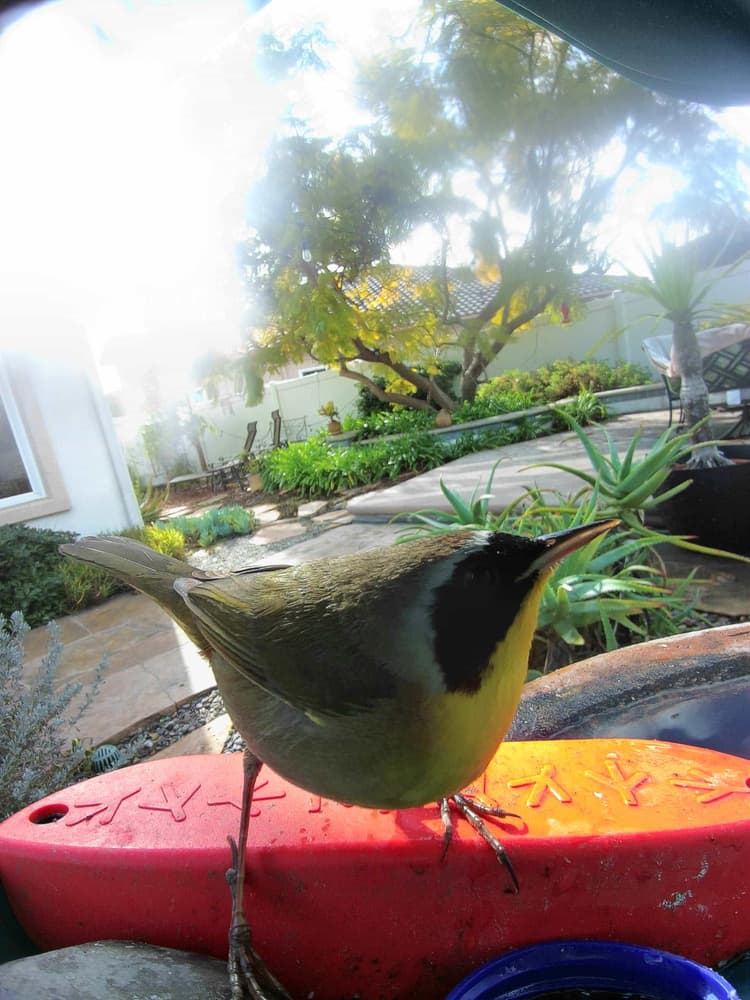
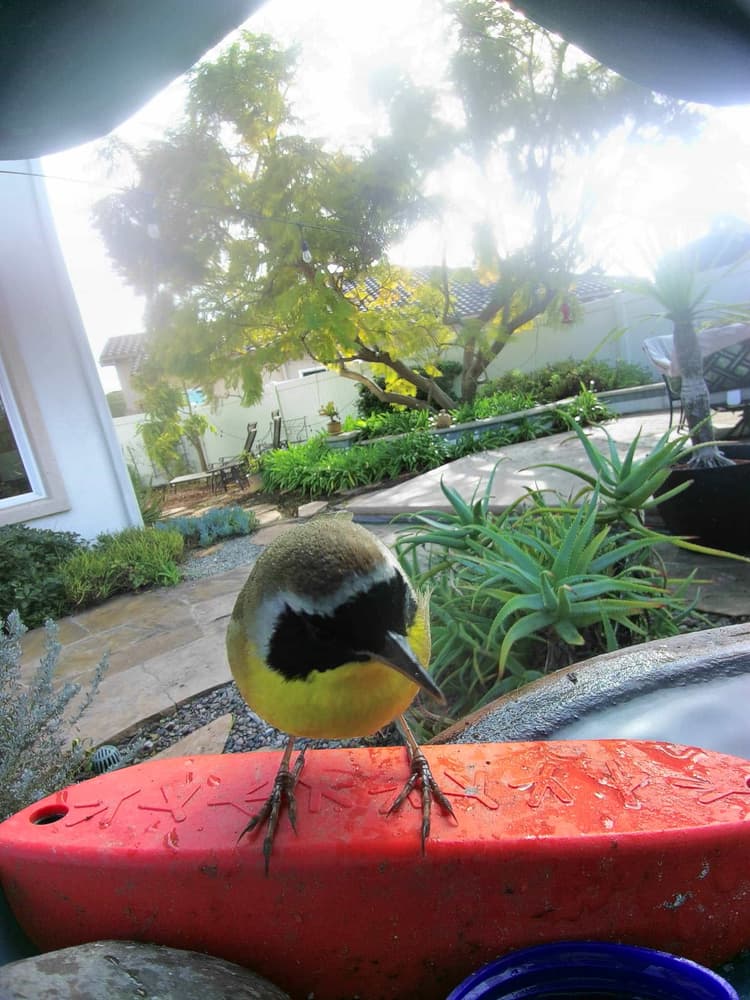
The common yellowthroat is a small warbler with a round body and a short, sleek tail. Overall plumage is olive-brown with a bright yellow throat and breast, and white underparts. It has a distinctive black face mask across the eyes, bordered by a thin white or gray line.
Male vs female
Males are easily identified by their vibrant black face masks and brighter yellow throats, while females lack the black mask and have duller olive tones. Females may also show a less vivid yellow throat and a more uniformly olive-brown appearance.
Juvenile
Juvenile common yellowthroats resemble adult females but appear even duller, with more muted tones and a less pronounced yellow on the throat. They lack the black mask seen in adult males.
Often mistaken for
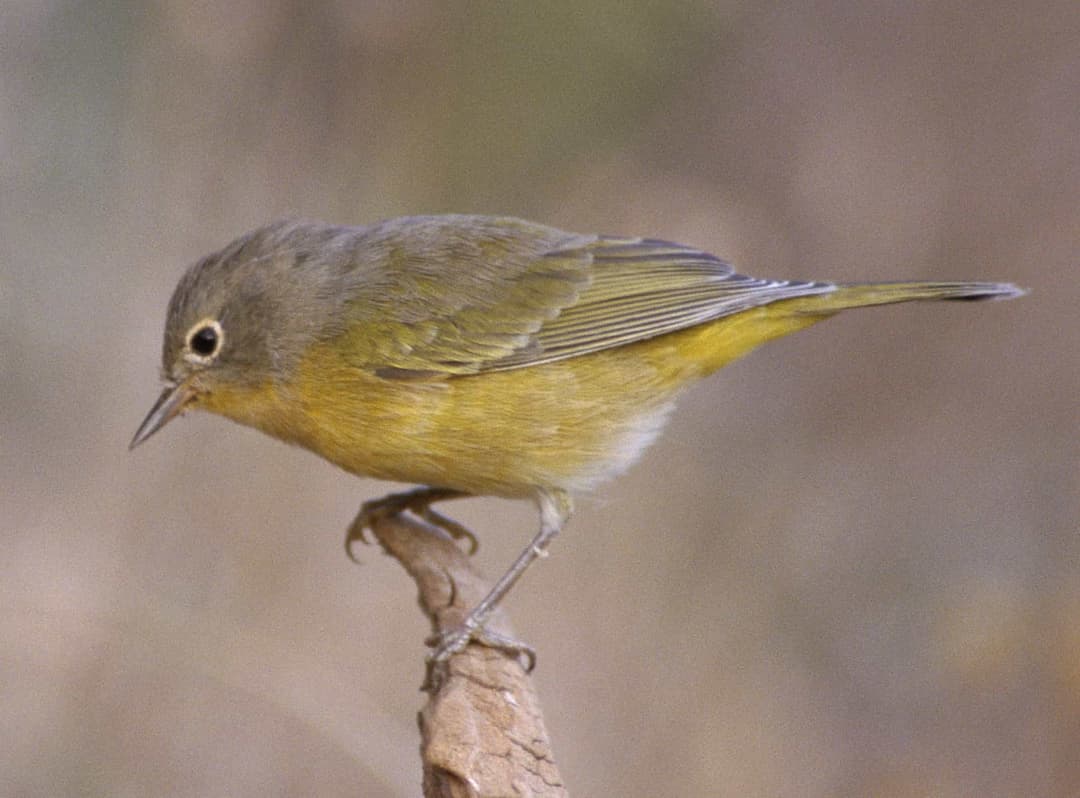
Nashville Warbler vs Common Yellowthroat
Common Yellowthroat males have a distinctive black mask, while Nashville Warblers lack this feature and have an eye-ring. Yellowthroats are more vividly yellow below than Nashville Warblers.
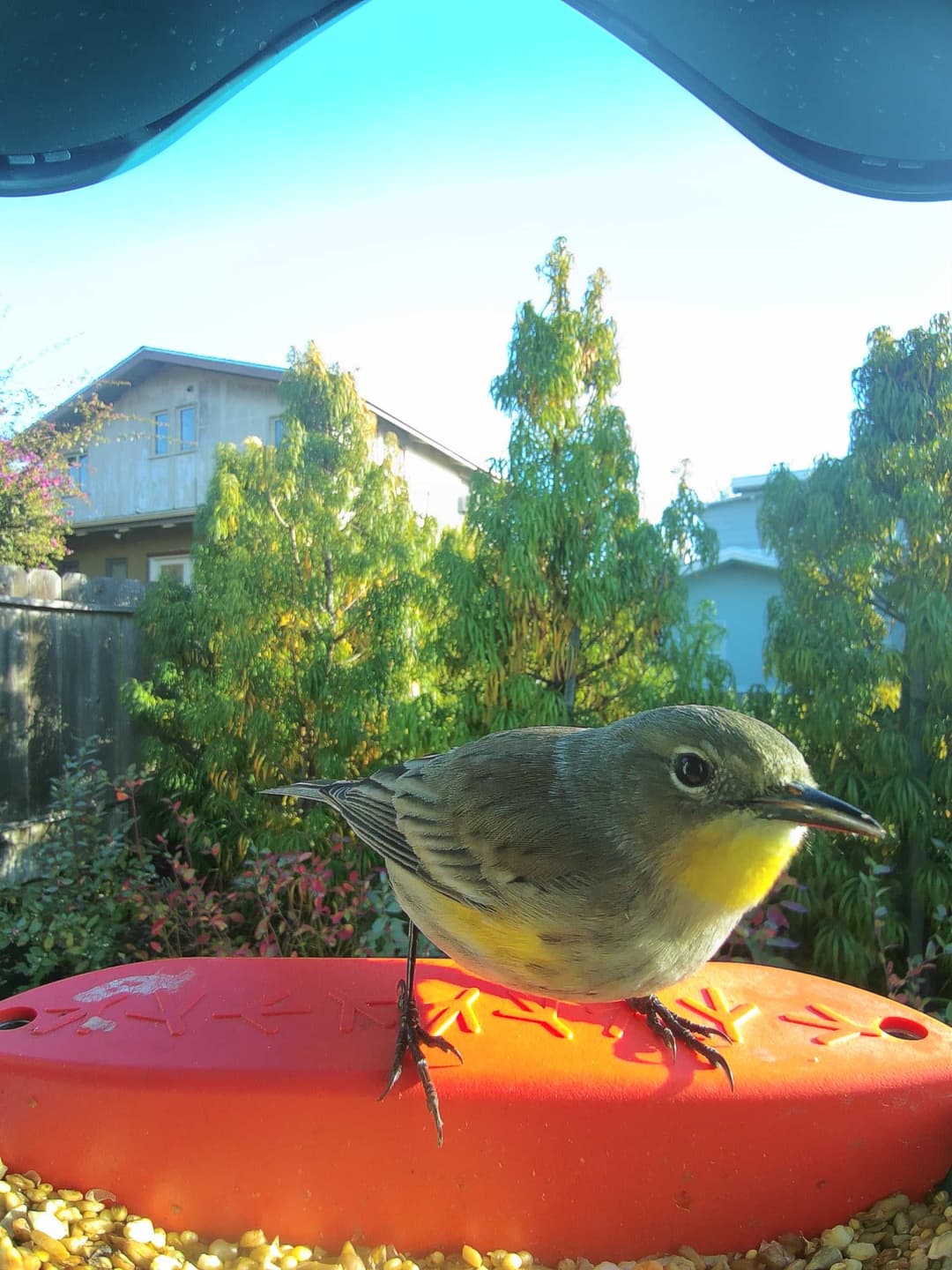
Orange-Crowned Warbler vs Common Yellowthroat
Orange-Crowned Warblers often appear more olive with a yellowish undertone compared to the bright yellow of Common Yellowthroat. They also lack the male Yellowthroat’s black mask.
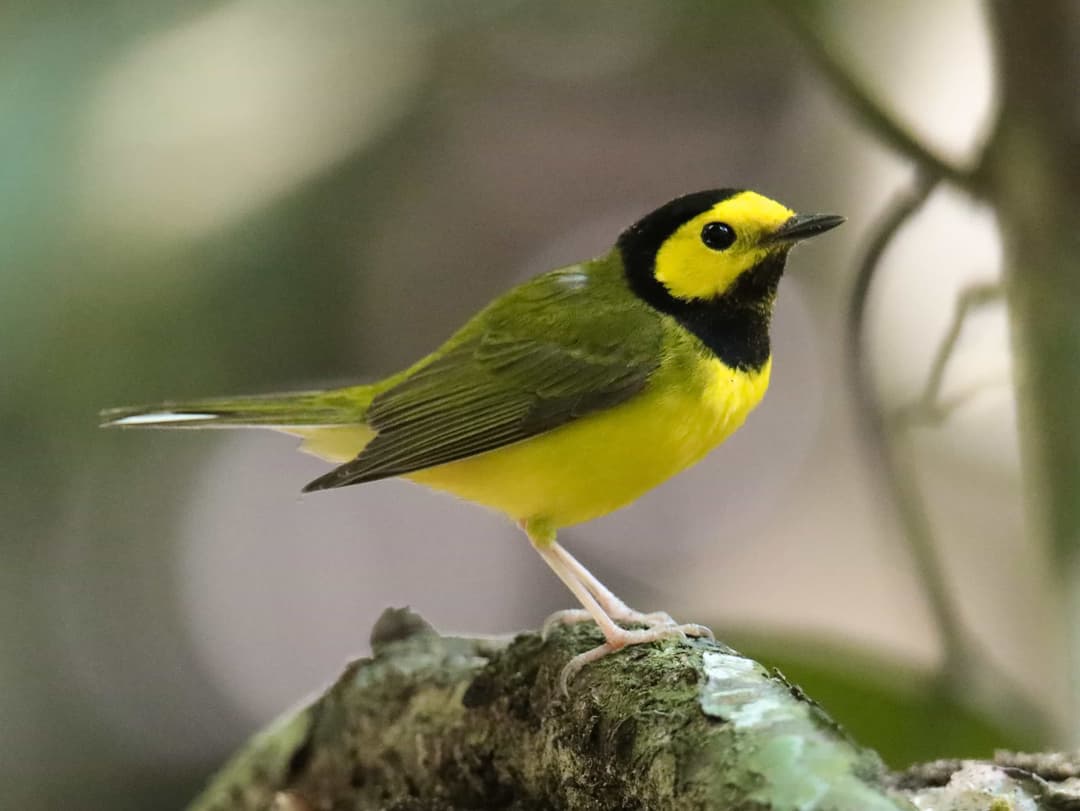
Hooded Warbler vs Common Yellowthroat
Hooded Warblers show a full hood of black on males, unlike the patchy mask in Common Yellowthroat males. Also, Hooded Warblers have a distinct white patch in the tail.
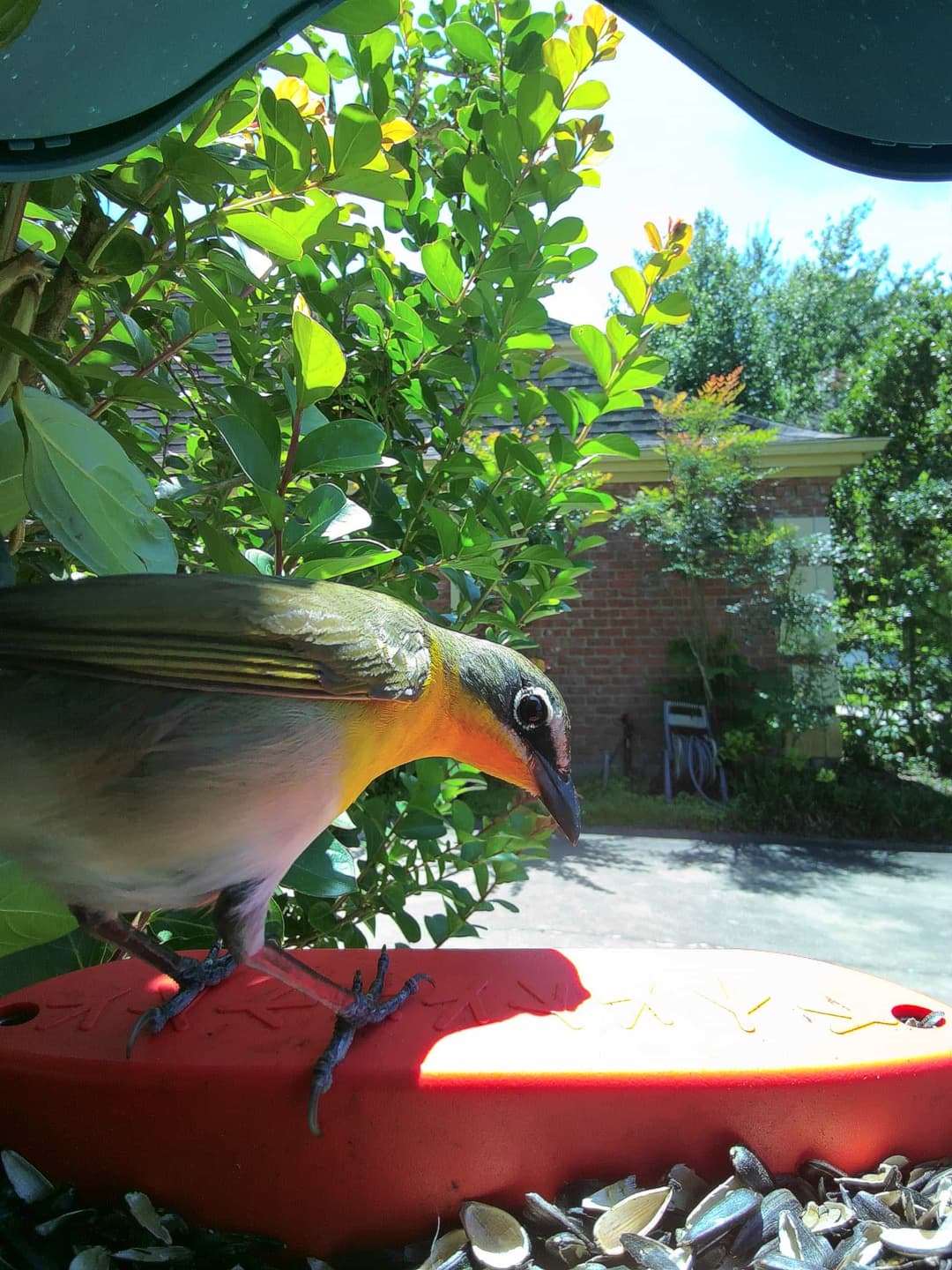
Yellow-Breasted Chat vs Common Yellowthroat
Yellow-Breasted Chats are larger and have a more robust appearance than Common Yellowthroats, with additional white spectacles and a larger bill.
Breeding and nesting habits of the common yellowthroat
Mating behaviors
The male common yellowthroat engages in courtship by flicking its wings and tail and closely following the female. It performs a spectacular flight display by flying up to 25-100 feet in the air before returning to a perch while calling and singing.
Nesting details
Common yellowthroats prefer to nest less than three feet above the ground on tussocks of briars, weeds, grasses, shrubs, or in marshes among cattails, bulrushes, and sedges. The female builds a bulky open cup nest, sometimes with a partial roof, using materials like weeds, grass stems, sedges, dead leaves, bark, and ferns, and lines it with fine grass, bark fibers, and hair.
Eggs and chick-rearing
The female lays and incubates the eggs in the nest she has constructed, maintaining the site to ensure the hatchlings are safe and nurtured. There is no specific mention of rearing practices beyond nest construction.
What does a common yellowthroat like to eat?
Insects
Seeds
Spiders
Natural diet
The common yellowthroat primarily feeds on a wide variety of insects, including small grasshoppers, dragonflies, damselflies, mayflies, beetles, grubs, cankerworms and other caterpillars, moths, flies, ants, aphids, and leafhoppers. It also consumes spiders and a few seeds.
Bird feeders
Common yellowthroats are infrequent visitors to bird feeders, as their diet mostly consists of insects and they prefer foraging for food in natural habitats like marshes, wetlands, and dense vegetation.
Attracting common yellowthroats
To bring common yellowthroats to your yard or feeder, create an inviting environment with heaps of ground cover and dense shrubs. Plus, consider planting native vegetation, which attracts insects, the yellowthroat's preferred meal. These tiny birds also enjoy berries and fruit, so feel free to add these to your bird-friendly garden.
Ideal feeders for common yellowthroat
Common Yellowthroats are not typically feeder birds, preferring to scour ground-level habitats for food. However, if you want to tempt them closer to your home, a ground feeder filled with mealworms, suet, sunflower seeds, or cracked corn could do the trick. Nectar feeders are also a good option as they can attract insects for these birds to snack on.
Fun tricks to keep them engaged
Bird baths can be a big hit with common yellowthroats, offering them a place to drink and bathe. Keep the water fresh and watch as they splash around! Offering nesting materials such as twigs, leaves or small branches can also help attract these birds. They tend to enjoy quiet and safe environments, so keep your garden area serene and predator-free.
Bird buddy seeds recommendation
Bird Buddy seeds have shown to attract common yellowthroats successfully. Chosen by experts in line with the season, these specialized seeds can help ensure your feathered friends keep coming back to your yard or feeder. Spread them around your yard or put them in your bird feeder for best results.
Where can you find common yellowthroats?

Primary habitat
The common yellowthroat primarily thrives in swamps, marshes, wet thickets, and other extremely wet habitats with dense low growth.
Additional range
While they breed most abundantly in marshes, yellowthroats can also be found in moist brushy places, overgrown fields, and shrubbery along streams. In migration and winter, they can occur in any brushy or wooded area, though these are less preferred environments.
Do they migrate?
The common yellowthroat is a migratory bird species, primarily active during nighttime migration. In North America, this warbler undertakes extensive seasonal migrations, traveling from its breeding grounds to wintering locations and back. During the spring migration, common yellowthroats typically move northward from their wintering habitats, which span across the southern United States, Mexico, Central America, and the Caribbean, to their breeding territories in the United States and southern Canada. This migration period is usually spread over several weeks, starting as early as March and extending into June in some areas. In the fall, the migration is again a prolonged process occurring from August through November. During this time, common yellowthroats travel south to return to their wintering areas. They are known for using a variety of habitats during migration, including marshes, wet meadows, and shrubby areas, which provide adequate cover and foraging opportunities. Key resting and feeding stops along their route can occur at various wetland and coastal locations, as these sites offer essential resources for their journey. The long migration periods ensure that these birds can take advantage of favorable weather conditions and food availability throughout their route.
What is the role of common yellowthroats in nature and how to protect them?
Conservation status
The common yellowthroat is still widespread and very common, though its population has undoubtedly declined in many regions due to marsh draining. In some areas, even with good habitat, numbers may have decreased. It is not categorized as vulnerable or endangered, but habitat loss poses a threat. Key conservation efforts should focus on preserving and restoring wetland habitats to support population stability and growth. Despite regional declines, the species maintains a strong presence in numerous areas, indicating that strategic conservation measures could mitigate further decline.
Ecological role of common yellowthroats
Its role in the ecosystem
The Common Yellowthroat contributes significantly to the ecosystem by acting as a natural pest controller. It predominantly feeds on various insects such as grasshoppers, beetles, caterpillars, moths, flies, ants, aphids, and leafhoppers. Its feeding habits help control the population of these insects, some of which are pests for crops and other plants. The Common Yellowthroat also consumes spiders and a few seeds, helping in seed dispersal. In terms of nesting, the bird prefers low-lying areas, using materials like weeds, grass stems, dead leaves, bark, and ferns to build its nest. This behavior further contributes to the ecosystem's natural cycle, as they assist in the decomposition of plant matter and provide grounds for other organisms to thrive. Furthermore, their nests, usually built among cattails, bulrushes, and sedges in marshes, supports the marsh's biodiversity by providing habitats for other species.
How to help protect common yellowthroats
Preservation tips
Habitat preservation strategies
To support the conservation of the common yellowthroat, preserve habitats such as wetlands, thickets, and marshes which they inhabit. Avoid use of pesticides and implement strategies to improve water quality in these areas. Advocate for protection of such habitats at local and national levels.
Community science initiatives
Encourage community participation in conservation efforts. This can include bird counting initiatives, habitat restoration projects, and environmental education outreach. Promote the use of platforms that allow individuals to record and submit their bird sightings, such as eBird. These data can drive research and conservation action.