
Purple Martin
Purple Martin
Progne subis
Quick Identification guide
Quick Identification guide
- •
Exhibits solid blue-black plumage that shimmers with a slight purple iridescence in males, while females display a more muted gray-brown tone on the underparts
- •
Shows a sleek, streamlined body with long, pointed wings contributing to an elegant flight silhouette
- •
Features a stout, slightly hooked beak suited for capturing insects on the wing
What does a purple martin sound like?
The Purple Martin has a distinctive vocalization characterized by a liquid gurgling warble and a piercing tee-tee-tee sound. Its call pattern varies, often falling, flat, or undulating in nature. It features a range of call types including the buzz, chirp or chip, hi, trill, and whistle. Whether in simple chirps or complex songs, the Purple Martin's vocalization is unique and identifiable.
Description
Purple martins take the saying "the more the merrier" to heart! These songbirds can be extremely social; the largest recorded roost was made up of 700,000 individuals! Parents feed chicks up to 300 times a day, with mum and dad taking turns. Purple martins are highly sought-after backyard birds and have been since time immemorial. Native Americans would hang gourds for them to nest in, and in exchange these guys would keep insects away.
The purple martin can weigh between 44to58grams and be from19.5to20.5centimeters tall.
Purple martins typically live up to 7 years, though some have been recorded to live up to 13 years in the wild. This lifespan is notably longer than many other related bird species. However, high nestling mortality can occur due to starvation and predation, and few adult birds actually reach their maximum lifespan.
Did you know?
Most popular questions about purple martin
How to recognise a purple martin?
General appearance
The purple martin is our largest swallow, measuring approximately 7-8 1/2 inches (18-22 cm). The bird features angular, pointed wings and a distinctive forked or notched tail. Its size is comparable to a robin or sparrow, and it sports various colors including black, blue, grey, purple, and white.
Male vs female
Sexual dimorphism is present in purple martins. Males exhibit a glossy blue-black coloration all over their bodies. Females, on the other hand, are relatively greyer, especially on the bottom part, and they have a white belly. So, if you spot a martin with a white belly, it is most likely a female.
Juvenile
Young purple martins share the same features with the adult females, they are grayer below and have white bellies. As they mature, males will develop their glossy blue-black plumage.
Often mistaken for
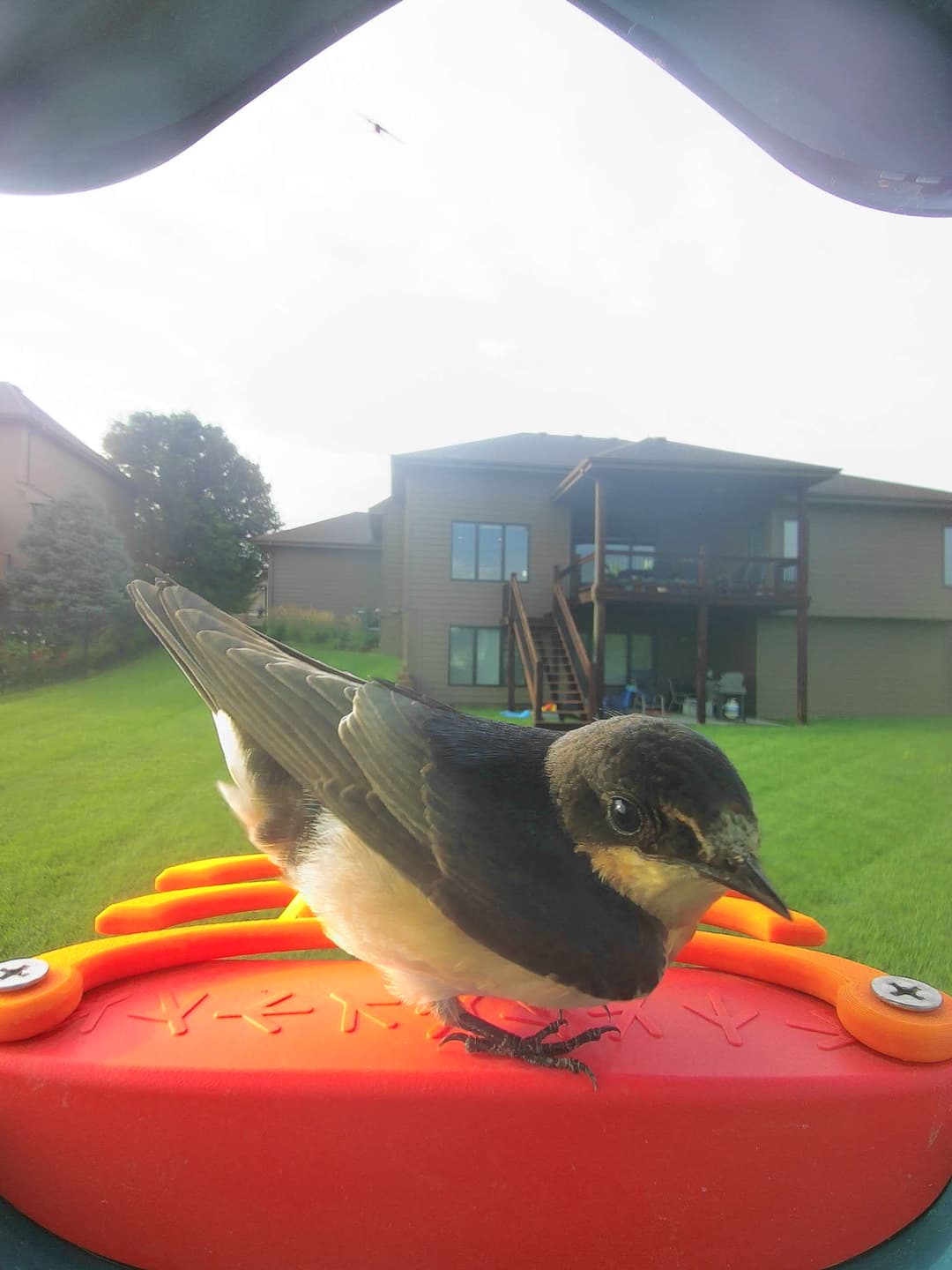
Barn Swallow vs Purple Martin
The Purple Martin is larger with a more robust body compared to the slimmer Barn Swallow. Barn Swallows have a distinct forked tail and orange underparts, while Purple Martins have a broader, forked tail and are uniformly dark purplish-blue. Listen for the richer, musical chattering of the Purple Martin as opposed to the Barn Swallow's twittering call.
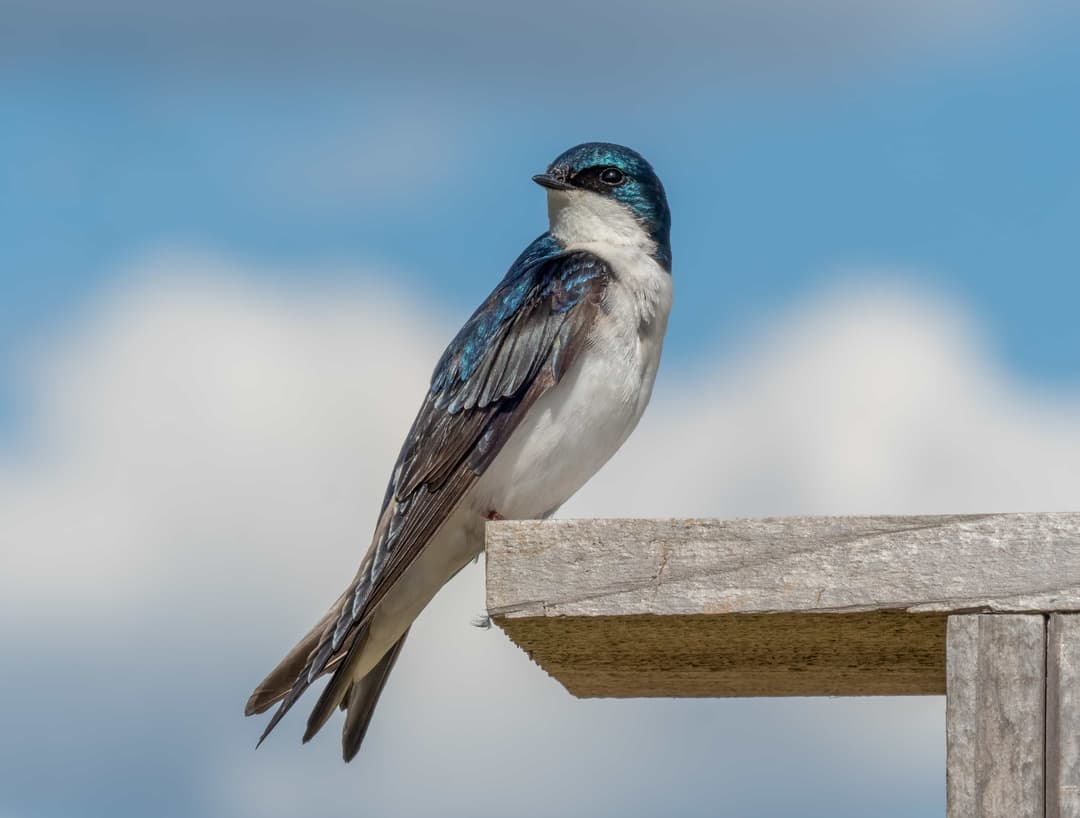
Tree Swallow vs Purple Martin
Tree Swallows are smaller, with a shorter, more streamlined body compared to the Purple Martin. They have a blue-green iridescent back and white underparts, while adult male Purple Martins are a uniform dark, glossy purple. The Purple Martin has a louder, more varied song compared to the Tree Swallow's twittering.
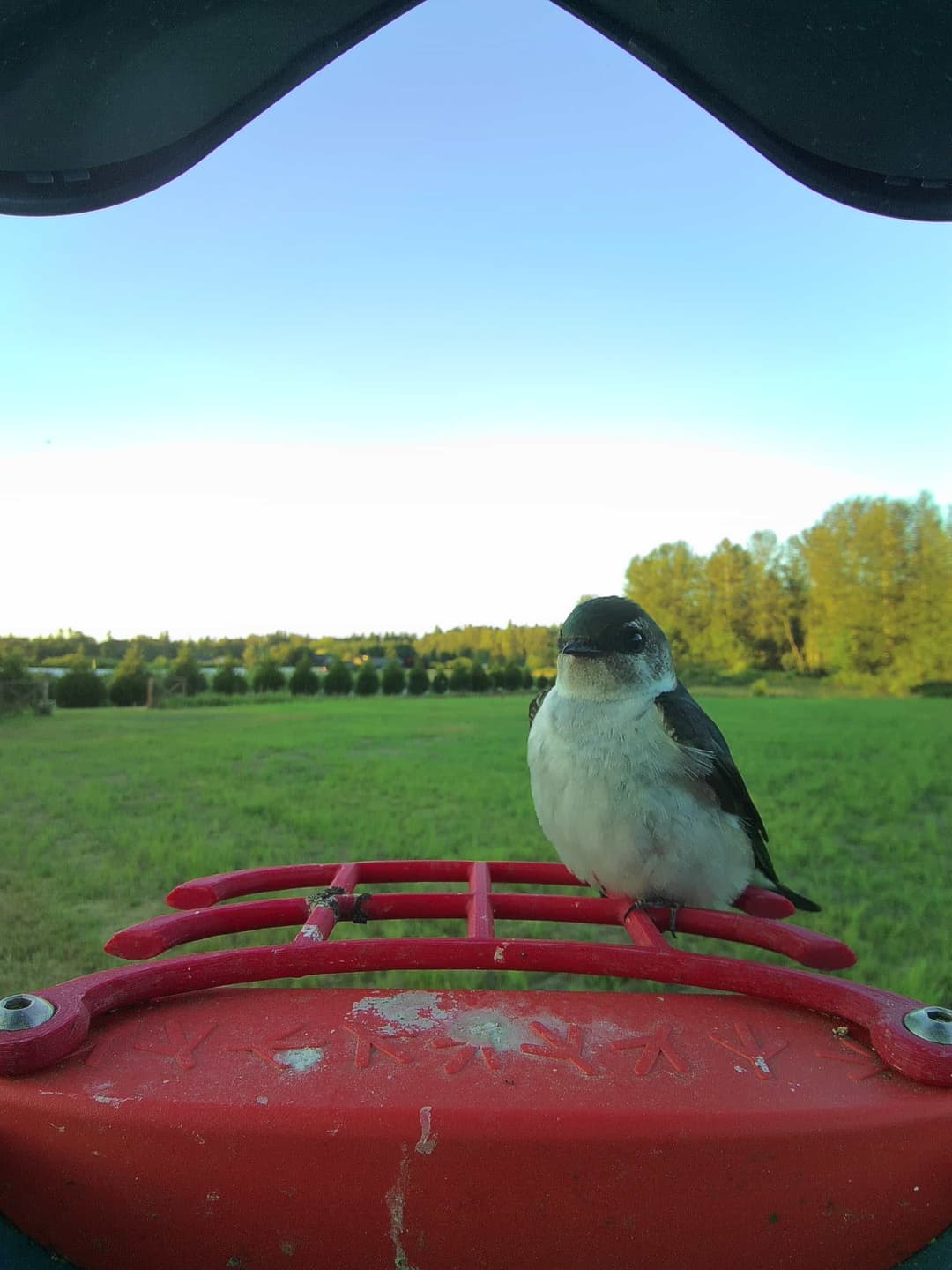
Violet-Green Swallow vs Purple Martin
Violet-Green Swallows are smaller and have a more greenish tint on their backs compared to the uniformly deep purple of the Purple Martin. They also have distinctive white patches on their sides and a shorter, squared tail. The Purple Martin's call is richer and more varied than the Violet-Green Swallow's musical twittering.
Breeding and nesting habits of the purple martin
Mating behaviors
Males return to nesting areas first in spring to establish territories. They often attract multiple mates, particularly in eastern colonies, and mating typically takes place within these communal settings or as isolated pairs in the west.
Nesting details
Purple martins prefer to nest in colonies, using human-provided multiple-roomed nest boxes in the east. Western populations may nest in natural cavities like old woodpecker holes, giant cacti, or occasionally buildings and cliffs. Nests are constructed by both sexes, composed of leaves, grass, twigs, debris, and mud, often featuring a raised dirt rim at the entrance.
Eggs and chick-rearing
Eggs are laid and incubated in these prepared nests. The raised dirt rim helps prevent eggs from rolling out. Both parents are involved in chick-rearing, with consistent feeding and protection until fledging.
What does a purple martin like to eat?
Insects
Spiders
Natural diet
Purple martins primarily feed on a wide variety of flying insects. Their diet includes many wasps, winged ants, some bees, true bugs, flies such as house flies and crane flies, beetles, moths, butterflies, and notably dragonflies, which may form an important part of their diet. They also consume some spiders. Despite common misconceptions, there is no evidence to support the claim that purple martins eat '2,000 mosquitoes a day'.
Bird feeders
While the natural diet of purple martins is mainly composed of flying insects, they generally do not eat from bird feeders. Typically, bird feeders provide seeds or other non-insect food items that do not align with the dietary preferences of purple martins.
Attracting purple martins to your yard
One of the best ways to attract Purple Martins to your yard is to make it a bird-friendly sanctuary with the right habitat setup, a variety of food sources, and comfortable nesting spaces. They are highly social birds so consider installing a Purple Martin house which sports multiple compartments. Choose houses with large compartments, entrance holes on the lower side, and a lot of clearance surrounding the house as they prefer open spaces over forests or bushes.
Feeding the purple martins
Purple Martins predominantly feed on flying insects, but in the absence of their preferred food, they won't shy away from a feeder. The feeder should be at some height from the ground and in a place safe from predators like cats. Purple Martins appreciate cracked corn, mealworms, or even bread crumbs. It's essential to remember that the quality of seeds matters. We recommend Bird Buddy seeds because they are chosen by experts for the season and have shown the best results.
Creating a bird-friendly environment
Keeping a steady supply of clean water for drinking and bathing nearby can encourage them to visit your yard. Avoid using pesticides in your yard as they eliminate the insects the martins feed on. Playing recorded Purple Martin calls can also help as they're very social birds and get attracted by hearing others of their kind. But remember not to overdo it as it might disturb them instead of attracting.
Where can you find purple martins?
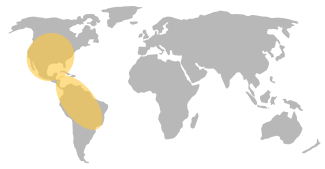
Primary habitat
The purple martin prefers towns, farms, and semi-open areas near water sources such as ponds or rivers. These birds are found in any semi-open space that provides nesting sites in the eastern regions.
Additional range
In the west, they inhabit mountain forests, saguaro deserts, and isolated colonies located in woodland edges, mountain forest clearings, and lowland deserts with saguaro cactus.
Do they migrate?
The purple martin is a migratory bird species known for its long-distance travel patterns. During winter, it primarily resides in the Amazon Basin, utilizing the ample resources and favorable climate of this region to sustain itself during the colder months. As spring approaches, the purple martin embarks on a northward journey back to North America to breed. The timing of this migration varies geographically. In the eastern regions of North America, purple martins are noted for their early return, often arriving as early as February in southern states such as Florida and Texas. This early arrival is strategic, allowing them to establish breeding territories and take advantage of emerging food supplies before competition heightens. In contrast, the migration to western North America occurs later in the spring season, with most birds returning around April and May. This staggered arrival aligns with regional climatic differences and ecological conditions, ensuring the birds reach their breeding grounds when environmental conditions are optimal. Thus, the purple martin's migratory route includes a substantial journey from the Amazon Basin in South America to various parts of North America, with timing adapted to local environmental conditions to maximize breeding success.
What is the role of purple martins in nature and how to protect them?
Conservation status
The purple martin is currently facing a decline in its population, particularly in the western regions where it has declined seriously, and in the eastern regions where it continues to decline. Although not yet classified as endangered, its status is concerning. A significant threat to the species is competition with starlings for nesting sites. Conservation efforts focus on providing artificial nesting houses to mitigate this competition. Increased awareness and habitat support are vital to stabilizing and potentially reversing the population decline of this once-common bird.
Ecological role of purple martins
Its role in the ecosystem
The Purple Martin is ecologically significant due to its feeding behavior and diet, which is highly adaptive. It forages almost exclusively in the air, eating an extensive range of flying insects such as many types of wasps, winged ants, and true bugs, as well as flies, beetles, moths, butterflies, and dragonflies. This diet might include a considerable quantity of pests, enhancing their role in natural pest control. Though the claim that they eat 2,000 mosquitoes daily has been disputed, their insectivorous feeding habits undoubtedly contribute to the control of insect populations. Furthermore, their nesting behavior in colonies, especially where nesting boxes are provided, could play a role in the local ecosystem by providing habitats for other species. Despite the Purple Martin not being a seed disperser, its ecological contributions are still essential for ecosystem balance.
How to help protect purple martins
Preservation tips
Habitat preservation strategies
To support the conservation of Purple Martins, focus on preserving their habitats. Specifically, they need open areas with nearby water sources for nesting. Nest boxes can be set up in such environments, and existing nests should be protected. Monitoring and adjusting the height of nest boxes can deter predators and competitors. Use non-toxic materials for nest box creation and cleaning, to ensure bird health.
Community science initiatives
Community involvement is crucial for Purple Martin conservation. Encourage local communities to participate in birdwatching programmes and citizen science initiatives such as 'Project Martin Watch', which collects and submits data on Purple Martin breeding biology. 'Scout-arrival Study' helps track their migration pattern. Encourage area schools to incorporate these efforts into their curricula for hands-on learning and increased awareness.