
Violet-Green Swallow
Violet-Green Swallow
Tachycineta thalassina


Quick Identification guide
Quick Identification guide
- •
Shows off iridescent green upperparts and a distinctive violet rump, creating a striking color contrast
- •
Features white underparts that sharply contrast with its dark upperparts and a bold, clean look
- •
Displays a short, notched tail and a sleek, streamlined body ideal for swift flight
What does a violet-green swallow sound like?
The vocalizations of the violet-green swallow include a high dee-chip given in flight and a varying series of tweet notes. Its call pattern is diverse, ranging from falling to flat or rising. The type of call can take on a chirp or chip sound, or even a whistle. These sounds present a distinctive auditory profile for the species.


Description
These little birds have a need for speed! They have been recorded casually flying at speeds of 28 mph; not bad, considering peregrine falcons, the fastest of them all, travel at 11–14 mph. They are sociable when it comes to nesting... Sometimes. They nest alone or in colonies numbering up to 25 pairs, and often come back to breed at the same site for consecutive years.
The violet-green swallow can weigh between 13to15grams and be from12to14centimeters tall.
The violet-green swallow typically lives for 4 to 5 years. This lifespan is quite short compared to similar swallow species; for instance, cliff swallows often live up to 10-11 years. Factors affecting the violet-green swallow's lifespan include predation, accidents, disease, and shortage of food, particularly insects.
Did you know?
Most popular questions about violet-green swallow
How to recognise a violet-green swallow?
General appearance
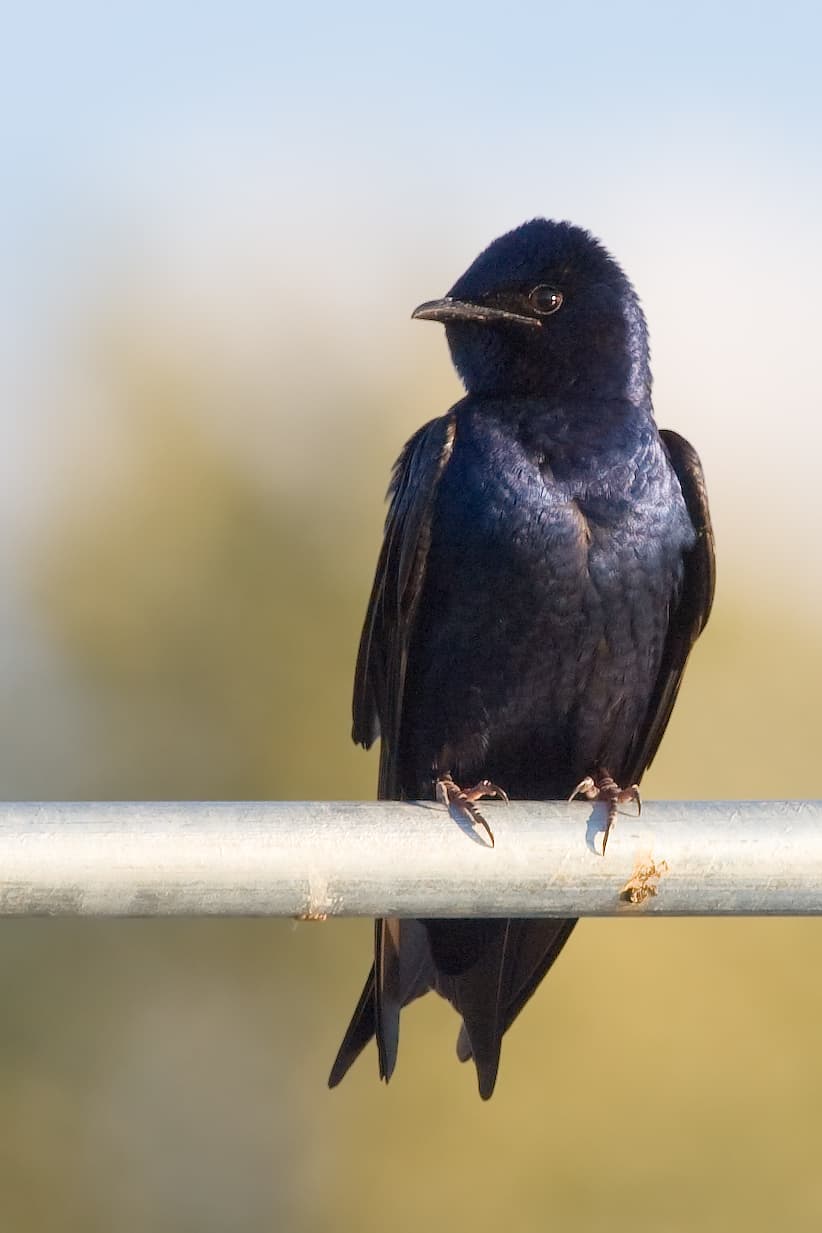
The violet-green swallow is about 5 1/2 inches in size and a bit smaller than a Tree Swallow. It shows faster wingbeats with less gliding. It is dark from above, with a color glossed in violet and green when viewed in good light. It has white rump patches that almost meet above the tail, and white circling up on its face. Its wings are long, narrow, pointed, and tapered. The tail is notched and square-tipped.
Male vs female
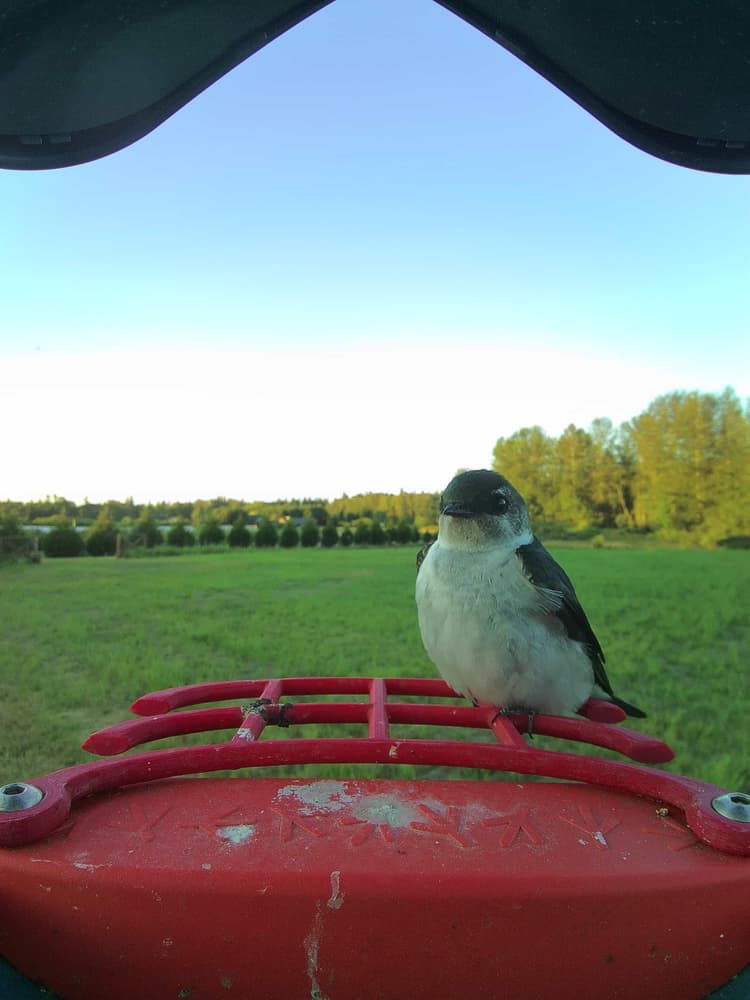
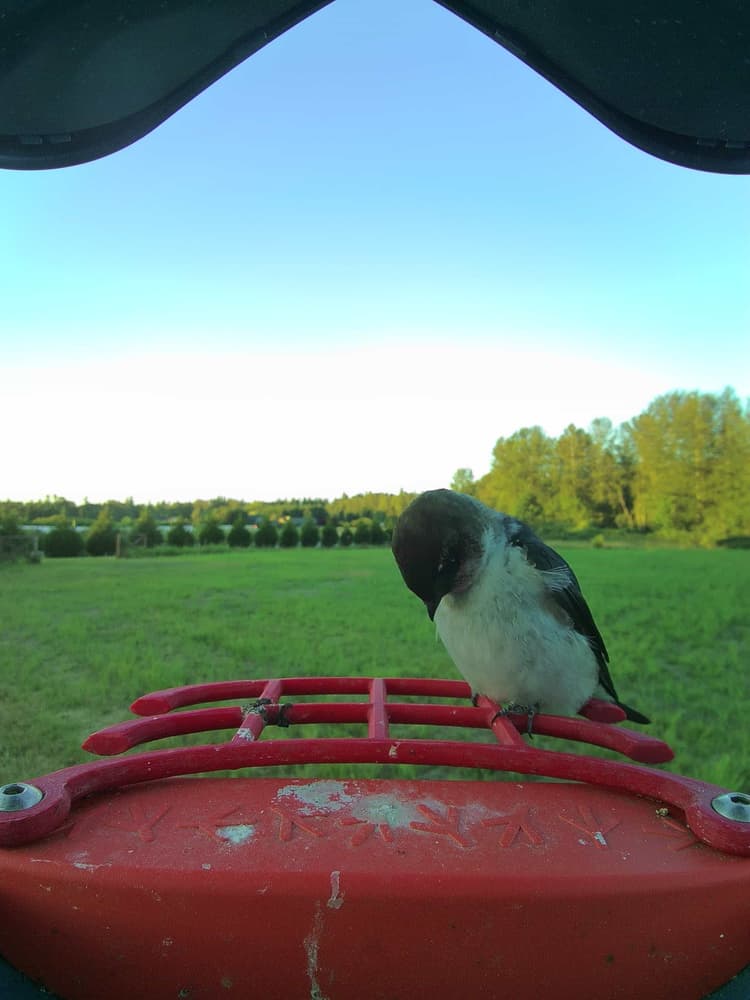
In terms of differentiation, the females appear to be duller than the males. A significant distinction can be seen on the face, which appears smudged in the case of females.
Juvenile
Juvenile violet-green swallows possess a gray-brown hue from above. The face appears dingy, and it can sometimes be hard to discern such young swallows from their Tree Swallow counterparts.
Often mistaken for
Tree Swallow vs Violet-Green Swallow
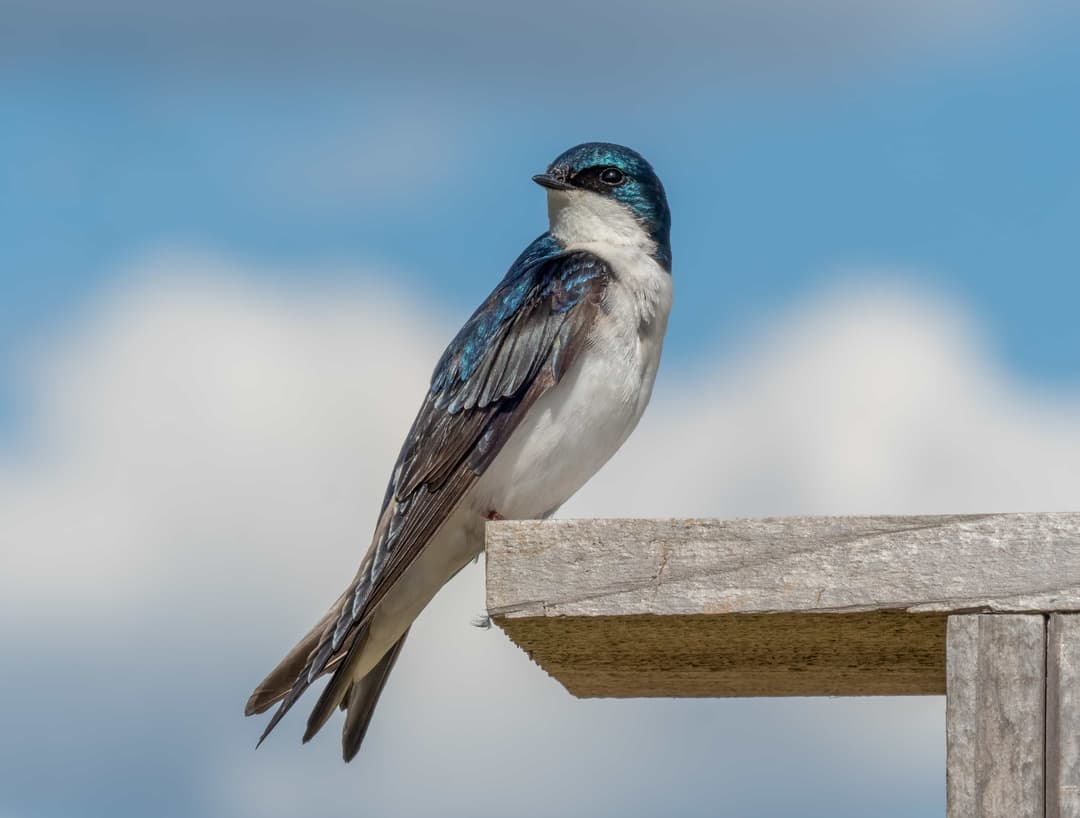
Violet-Green Swallows have a distinct white face that curves behind the eye, unlike Tree Swallows. Their backs shimmer with a more vibrant green, whereas Tree Swallows appear iridescent blue. Look for the violet cap in distinctive light.
Barn Swallow vs Violet-Green Swallow
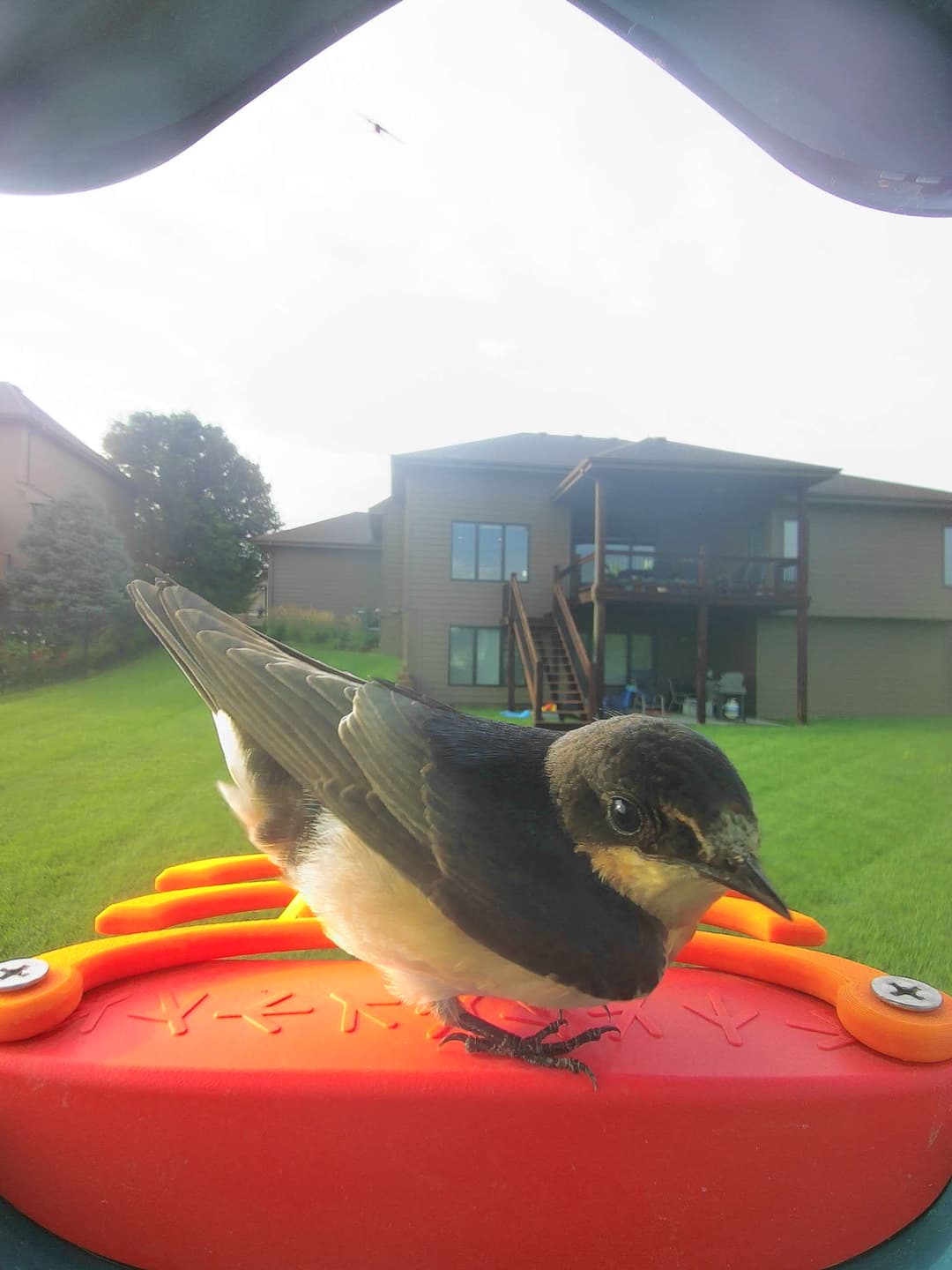
Barn Swallows have long, deeply forked tails and cinnamon-colored underparts, while Violet-Green Swallows have more square tails and white underparts. The Violet-Green Swallow's back feathers reflect green and purple hues.
Purple Martin vs Violet-Green Swallow
Purple Martins are significantly larger and show a uniform dark blue-purple color throughout, lacking the bright white underparts of the Violet-Green Swallow. Note the lighter, fluffy appearance in Violet-Greens during flight.
Breeding and nesting habits of the violet-green swallow
Mating behaviors
The violet-green swallow is known to form pairs during the breeding season. The courtship display often involves aerial chases and synchronized flight patterns to strengthen the pair bond.
Nesting details
Violet-green swallows may nest in isolated pairs or small colonies. They select cavities for nesting, often using old woodpecker holes or natural tree cavities, and will also utilize birdhouses. In northwestern Mexico, they may nest in holes in giant cacti. The nest, constructed mainly by the female, is lined with grass, twigs, rootlets, and many feathers.
Eggs and chick-rearing
Both parents care for the eggs and chicks. After laying, the female incubates the eggs, and once they hatch, both parents are involved in feeding and nurturing the young until they fledge.
What does a violet-green swallow like to eat?
Insects
Natural diet
The violet-green swallow's diet primarily consists of a wide variety of flying insects. It feeds on flies, true bugs, wasps, winged ants, wild bees, beetles, moths, and many other types of insects. This bird is adept at catching its prey while in flight, utilizing its agility and speed to effectively hunt in the air. The diversity of its insect diet helps it adapt to different environments where these food sources are available.
Bird feeders
Violet-green swallows generally do not frequent bird feeders as their diet depends largely on live flying insects which are not typically found in feeder offerings. Therefore, bird feeders are not a usual source of food for them. Instead, they rely on their hunting skills to catch insects in natural habitats.
Attracting violet-green swallow: feeders and seeds
To welcome violet-green swallows to your yard, installing a bird feeder is a great first step. They are partial to platform feeders, so consider one if it fits your yard setup. As for the food, Bird Buddy seeds are your best choice. These seeds are expertly chosen according to the season, ensuring they are the most tempting for our feathered friends.
Keeping violet-green swallows around: snacks and tricks
Having lured them with great food, you need to plan to keep them around. As for snacks, violet-green swallows love insects, so if your yard is a natural habitat for bugs, it will be quite appealing. Additionally, consider installing a birdhouse or nesting box, as swallows often return to a good nesting site. And for a bit of fun? Try playing some bird songs on your outdoor speakers, they might stay for a sing-along!
Where can you find violet-green swallows?
Primary habitat
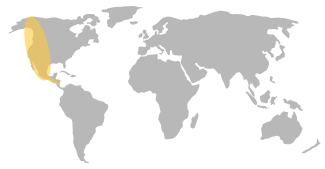
The violet-green swallow mainly nests in open forests, mountains, by rivers, lakes or coastlines, or towns. It prefers semi-open habitats like aspen groves, pine forests, and canyon walls.
Additional range
They also occupy unexpected environments like open prairies if nest sites are available. In Mexico, they reside in low desert areas, typically nesting in holes in giant cacti.
Do they migrate?
The violet-green swallow is a migratory bird species. It primarily migrates in flocks and tends to spend its winter months in regions south of the United States, particularly in Mexico. However, a few populations may overwinter along the California coast. During the spring migration, these swallows are known for their early return, arriving in the southwestern United States in large numbers by February. The migration route of the violet-green swallow generally involves moving north from its winter habitats in Mexico to its breeding grounds in the western parts of North America, ranging from British Columbia in Canada down through the United States. The timing of this migration is notably early compared to many other bird species, as they start their journey towards the northern breeding sites as early as February. Key stopover locations for these birds include various habitats along the western coast and interior regions where they find suitable conditions to rest and feed before continuing their journey north. The swallows typically favor open areas with abundant insects, as these provide optimal foraging opportunities during their migration and breeding seasons.
What is the role of violet-green swallows in nature and how to protect them?
Conservation status
The violet-green swallow is considered a stable species, suggesting it is not currently vulnerable or endangered. Key conservation efforts include the provision of artificial nest sites, such as nest boxes, which have been beneficial in certain areas. However, the species faces competition for nesting sites from introduced starlings and house sparrows, which poses a potential threat to their numbers in some regions. Overall, targeted conservation actions, like the continued installation of nest boxes, are essential for maintaining their population stability.
Ecological role of violet-green swallows
Its role in the ecosystem
The violet-green swallow (Tachycineta thalassina) plays a vital role in ecosystems through its insectivorous diet, contributing significantly to pest control. These birds consume large quantities of insects, including mosquitoes, flies, beetles, and other agricultural pests, thus helping to maintain the balance of local ecosystems and reduce the need for chemical pesticides. Their feeding habits can lead to improved crop yields and healthier plant communities. Additionally, violet-green swallows serve as prey for larger predators, making them integral components of the food web. While they do not directly contribute to seed dispersal due to their diet, they indirectly support plant growth by controlling insect populations that could otherwise damage vegetation. Furthermore, the presence of these swallows indicates a healthy ecosystem, as they require clean air and water to thrive. Through their nesting habits, they also support biodiversity by using natural cavities or old woodpecker nests, promoting habitat diversity. Overall, the violet-green swallow is an important ecological player, balancing insect populations and contributing to ecosystem health and biodiversity.
How to help protect violet-green swallows
Preservation tips
Habitat preservation strategies
To conserve the violet-green swallow, preserving its natural habitat is crucial. This involves restricting deforestation and urbanization in areas where the bird species flourish. Encourage restoration of native vegetation around streams, rivers, and other bodies of water to provide a comfortable breeding ground. Providing nesting boxes can also encourage population growth in areas where habitat loss is a concern.
Community science initiatives
Community cooperation is key to preserving the violet-green swallow. Local community members can participate in bird monitoring programs to track the populations of the violet-green swallow and report any shifts in their locations. Using bird-friendly building materials can greatly reduce the instances of birds colliding with windows and buildings. Public awareness campaigns on the importance of the swallow’s preservation can also be beneficial. Educating the public about the bird’s role in controlling insects and other pests can further encourage conservation support.