
Say's Phoebe
Say's Phoebe
Sayornis saya
Quick Identification guide
Quick Identification guide
- •
Features a slim, slender body with long wings and tail, providing elegance and agility
- •
Exhibits a dusky brown back and pale orange-brown belly, often with a subtle gradation
- •
Possesses a dark, slightly hooked beak and a blackish head, adding to its distinctive look
What does a Say's phoebe sound like?
The Say's phoebe vocalizes with a mellow, plaintive whistle, often described as a "pee-ur" sound. The bird’s characteristic call patterns features a falling and undulating tone which emits a variety of sounds including buzzes, chirps, or chips, and whistles, enriching its vocal portfolios. The bird's sonic expressions are reminiscent of sentimental melodies, bearing a unique, perhaps melancholy, quality.
Description
Did you know that the Say's phoebe was named after Thomas Say, the father of American entomology? These birds have a gentle expression and no fear whatsoever; often landing on all kinds of surfaces like people or buildings, and building nests in odd places, too. Speaking of nests, they have been known to reuse old ones year after year.
The Say's phoebe can weigh between 21to23grams and be from16to18centimeters tall.
The Say's phoebe, a bird of the tyrant flycatcher family, typically has a lifespan of 7-8 years. Compared to a closely related species, the eastern phoebe, which lives up to 10 years, the Say's phoebe has a shorter life expectancy. Both species, however, exhibit similar longevity to other small birds of their type.
Did you know?
Most popular questions about Say's phoebe
How to recognise a Say's phoebe?
General appearance
The Say's phoebe is a medium-sized passerine bird with a slim body and a long tail. Its upperparts are primarily grayish-brown, while the underparts are a soft cinnamon or buffy color, extending from the breast to the belly. It has a black tail and faintly darker wings. The head is slightly darker than the back, with a darker crown and face. There is no significant seasonal variation in the appearance of this bird.
Male vs female
There is little to no sexual dimorphism between males and females in Say's phoebes. Both sexes share similar markings and coloration, making it challenging to differentiate them based on appearance alone. Observational behaviors or vocalizations during breeding may offer clues, but visually they are almost indistinguishable.
Juvenile
Juvenile Say's phoebes resemble adults but tend to have a slightly duller coloration. The cinnamon or buffy color on the underparts is paler, and the plumage overall may appear more subdued. The wings and back might show some indistinct pale edging on feathers, giving them a slightly streaked appearance. As the juveniles mature, they gradually develop the more pronounced and crisp coloring of adults.
Often mistaken for
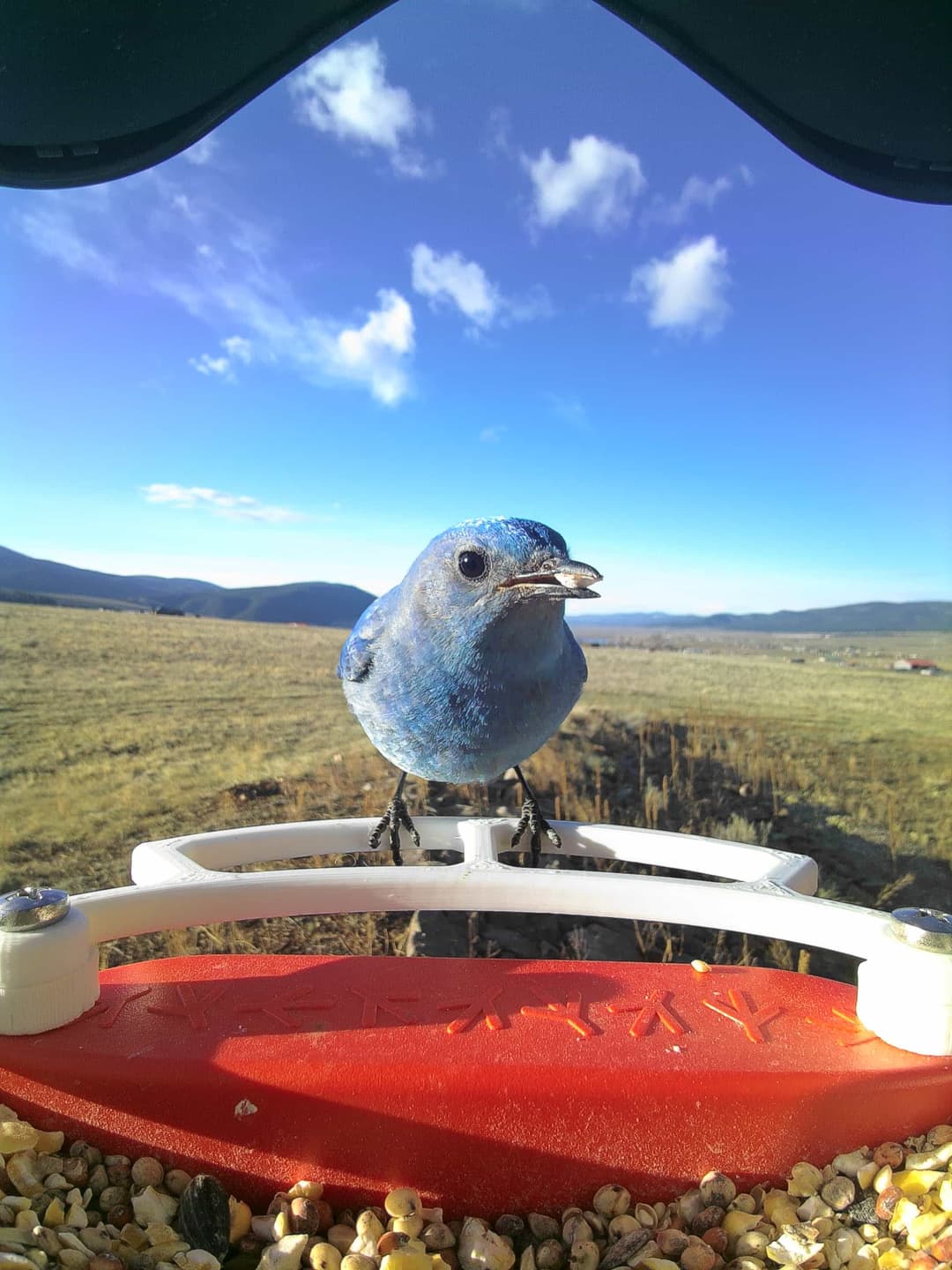
Mountain Bluebird vs Say's Phoebe
Say's Phoebe is generally brownish-grey with a cinnamon belly, unlike the bright blue of a Mountain Bluebird. Say's Phoebe has a more slender build and a longer tail compared to the stout Mountain Bluebird. Look for the long, thin bill of the Say's Phoebe versus the thicker bill of the Bluebird.
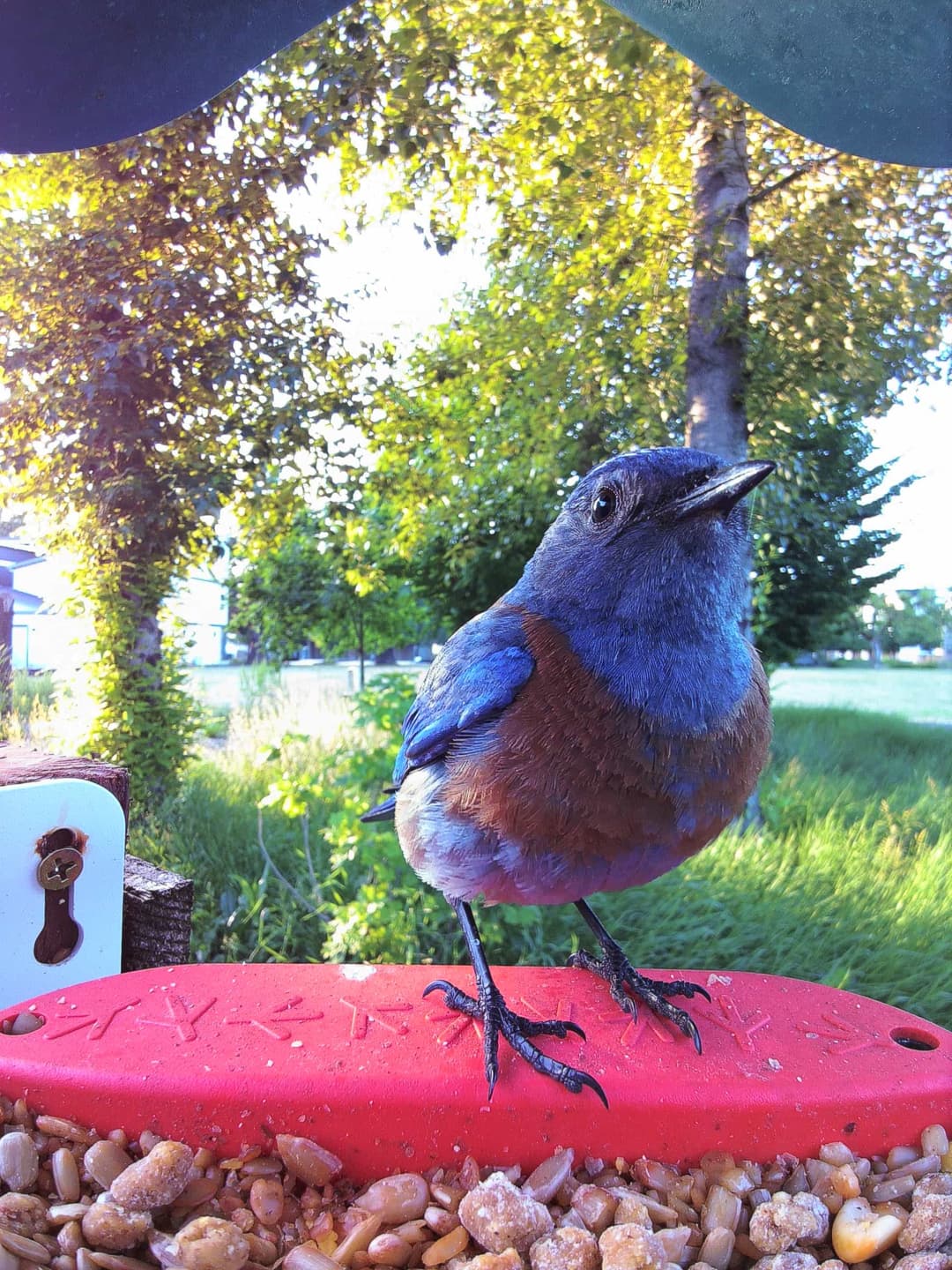
Western Bluebird vs Say's Phoebe
The Western Bluebird shows more vibrant blue and rust-orange coloring compared to the muted brown and orange of Say's Phoebe. The Phoebe has a black tail and a slender appearance, whereas the Bluebird has a more rounded body and a shorter tail.
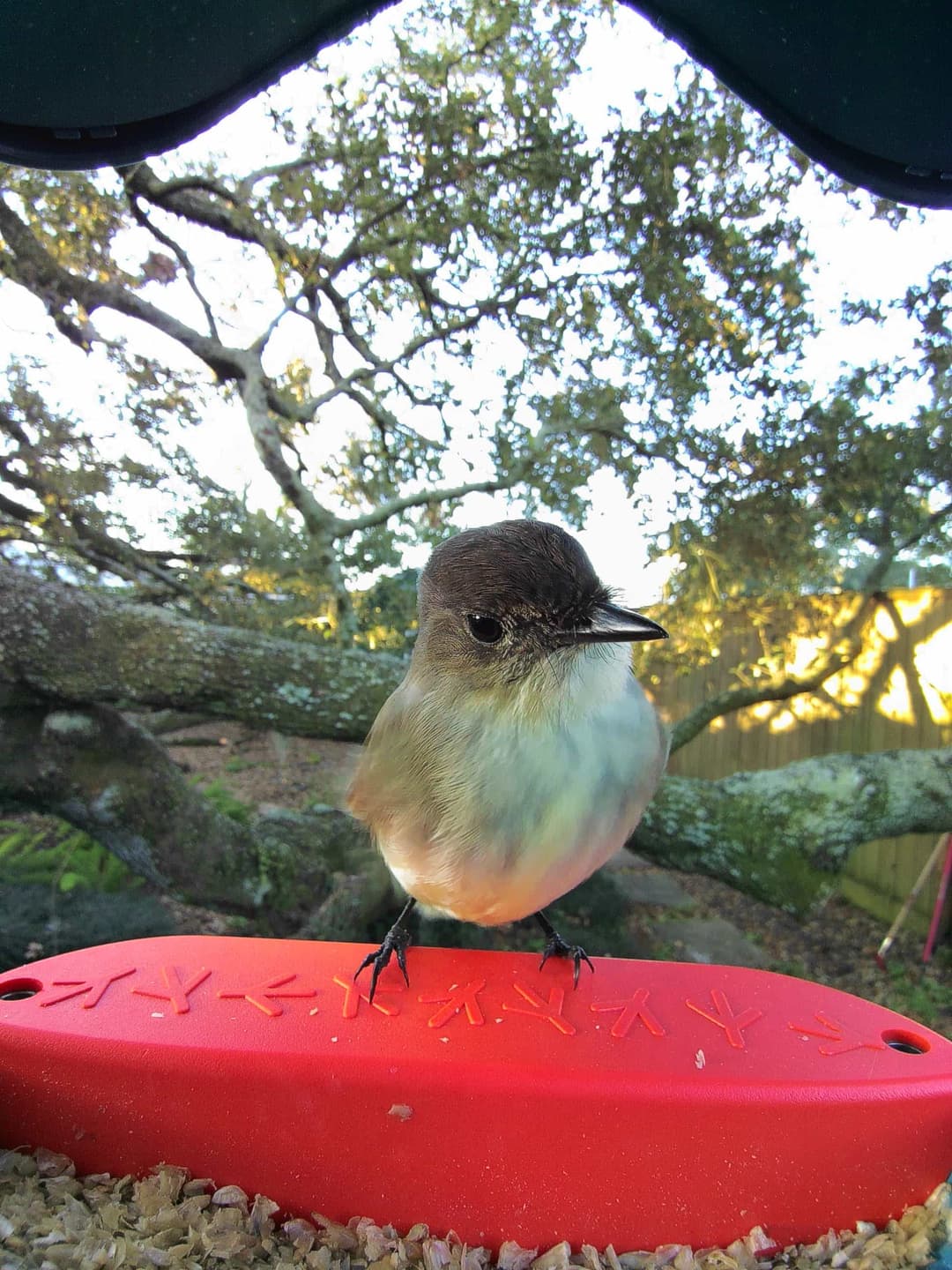
Eastern Phoebe vs Say's Phoebe
Say's Phoebe displays a buffy-orange belly and tail, while the Eastern Phoebe is more uniformly grayish-brown. Say's Phoebe has a longer tail and the two-tone bill (dark above, pale below) is a distinguishing feature absent in the Eastern Phoebe.
Breeding and nesting habits of the Say's phoebe
Mating behaviors
Males arrive on breeding grounds before females and sing to defend nesting territory. They perform this behavior from exposed perches or via flight-song displays to assert dominance and attract females.
Nesting details
The Say's phoebe nests on rocky ledges, in crevices on cliffs or caves, wells, mine shafts, under bridges, eaves, or on occasion in natural tree cavities. They may also take over old swallow nests. The nest, likely built by the female, is a flat cup composed of grass, weeds, moss, spiderwebs, wool, and other materials, notably avoiding the use of mud unlike other phoebe species.
Eggs and chick-rearing
Information specific to egg incubation and chick-rearing by Say's phoebe is limited; however, like many passerines, incubation is likely performed by the female with both parents involved in feeding the chicks post-hatching. Creating a suitable habitat involves retaining natural features such as ledges and avoiding disturbance to natural nesting sites.
What does a Say's phoebe like to eat?
Berries
Insects
Spiders
Natural diet
The Say's phoebe primarily consumes insects, focusing heavily on wild bees, wasps, and winged ants. Its diet also includes beetles, moths, grasshoppers, crickets, and dragonflies. In addition, it occasionally eats spiders and millipedes. While insects form the major part of its diet, the Say's phoebe will sometimes consume berries.
Bird feeders
The Say's phoebe is not commonly attracted to bird feeders. Its preference for wild insects and occasional berries suggests limited interest in typical bird feeder offerings.
Tempt say's phoebe with special snacks
One effective way to attract the Say's phoebe to your yard is by offering their favorite snacks. This bird species mainly feeds on insects, so providing a continuous grub supply will indeed lure them in. Apart from insects, they also snack on berries occasionally. A specialized bird feeder filled with a mixture of Bird Buddy seeds, chosen for the current season by experts, will help attract these flighty guests.
Choose the right feeder
When it comes to feeders, Say's phoebes prefer those that provide a clear view of their surroundings. It allows them to keep an eye out for predators while they snack. Choose a feeder with an open design and place it at a safe height, secluded from busy human activity but also not too camouflaged for the bird to notice.
Make your yard bird-friendly
Mimic the Say's phoebe's natural habitat to make them feel at home. Plant native plants or trees that these birds usually perch onto. Also, a source of fresh water like a birdbath can be beneficial.
Sing-along to attract say's phoebe
Say's phoebes are known for their distinct song. Playing recorded calls or sounds of their species can pique their interest and offer a warm welcome. However, use it sparingly as overdoing this can distress the bird.
Where can you find Say's phoebes?

Primary habitat
The Say's phoebe predominantly favors open or semi-open terrain like scrub, canyons, and ranches. It usually occupies dry regions and actively avoids forested areas.
Additional range
Extended range for the Say's phoebe includes farmland, savannah, and prairie in the south and dry upland tundra in the north. Despite being a bird species, it surprisingly exhibits no particular attachment to water bodies.
Do they migrate?
The Say's Phoebe is a migratory bird that exhibits a northward movement relatively early in the spring. This flycatcher species, native to western North America, typically breeds from Alaska and western Canada down to Mexico. During spring migration, Say's Phoebes move northward from their wintering grounds, which are mostly located in the southern United States and Mexico, to their breeding territories in the northern parts of their range, including the Rocky Mountains and Great Basin. This migration occurs relatively early in the season as they take advantage of early springs in the expansive open habitats they prefer. In the fall, Say's Phoebes migrate southward back to their wintering areas. During this period, it is not uncommon for them to stray from their typical route occasionally. Some individuals have been known to wander eastward to the Atlantic Coast and have even been recorded as far as Bermuda, indicating a rare extension beyond their usual range. Overall, the Say's Phoebe's migratory pattern involves a north-south movement with some individuals occasionally veering off to unexpected locations during the fall migration period.
What is the role of Say's phoebes in nature and how to protect them?
Conservation status
The Say's phoebe is considered common, with a stable population. It adapts well to changes in the landscape and often nests in residential areas, indicating resilience to habitat modifications. While it currently faces no significant threats leading to vulnerability or endangerment, continued monitoring is essential to ensure its habitats remain safe. There are no specific conservation efforts highlighted, but maintaining urban and rural environments that support nesting opportunities will help sustain its population.
Ecological role of Say's phoebes
Its role in the ecosystem
The Say's phoebe, a bird species, plays a significant ecological role in pest control and maintaining biodiversity. Its diet consists primarily of insects, including bees, wasps, winged ants, beetles, moths, grasshoppers, crickets, and dragonflies. By preying on these insects, the Say's phoebe helps control their populations, indirectly protecting plant species that insects might otherwise damage. Similarly, the bird's feeding behavior of coughing up indigestible insect parts contributes to decomposition and nutrient cycling in the ecosystem. Additionally, by occasionally consuming berries, the Say's phoebe aids in seed dispersal which can facilitate plant species diversity. Its nesting habits can also influence local ecosystems. The selection of various nest sites, from rocky ledges to shafts and under bridges, suggests a role in influencing the spatial distribution of other species in these habitats.
How to help protect Say's phoebes
Preservation tips
Habitat preservation strategies for say's phoebe
Preserving the natural habitat of the Say's Phoebe is crucial. Focus should be on the protection of open landscapes favored by this species, such as shortgrass prairies and shrublands. Avoid land development or agricultural conversion in such areas. Conservation easements with landowners can be pursued. Restore degraded habitats by planting native vegetation.
Community science initiatives to protect say's phoebe
Engage community members in monitoring populations of Say's Phoebe, noting any changes in distribution and nesting sites. Promote citizen science efforts, such as annual bird counts or online reporting platforms like eBird. Local workshops can educate about the species, emphasizing its ecological role and conservation needs. Community involvement fosters public awareness and advocacy for preserving this bird species.