
Scaled Quail
Scaled Quail
Also known as: Blue Quail, Cotton-Top
Callipepla squamata

Quick Identification guide
Quick Identification guide
- •
The distinctive scaly pattern on the bluish-gray chest and back sets it apart from other quails
- •
Features a creamy white crest that contrasts with the scaled body, giving a unique appearance
- •
Compact and round body with a short tail and stout legs completes its recognizable shape
What does a scaled quail sound like?
The scaled quail typically produces a distinct, low nasal call referred to as "pe-cos" along with harsh clucking sounds. Its call pattern is characteristically flat and undulating, giving it a sense of rhythm and variation. Additionally, an occasional scream-type call can also be heard from this species, adding to the ensemble of sounds it can create. These calls often carry a unique signature, making the vocalizations of the scaled quail unmistakable for bird watchers and enthusiasts.

Description
Did you know that scaled quails travel around in groups of 15 to 150 birds known as coveys? They can be composed of several families, and birds will call to each other as they move around to stay in contact. At night, they will huddle together in a tight circle – who doesn't love a good night-time cuddle? – and sleep facing outwards.
The scaled quail can weigh between 130to180grams and be from25.5to30.5centimeters tall.
The typical lifespan of scaled quail, also known as blue quail, is approximately 1.5 to 3 years in the wild. This is similar to the lifespan of related quail species like the Northern Bobwhite and Gambel's Quail. Factors such as predation, disease, and harsh environmental conditions may influence this average lifespan.
Did you know?
Most popular questions about scaled quail
How to recognise a scaled quail?
General appearance
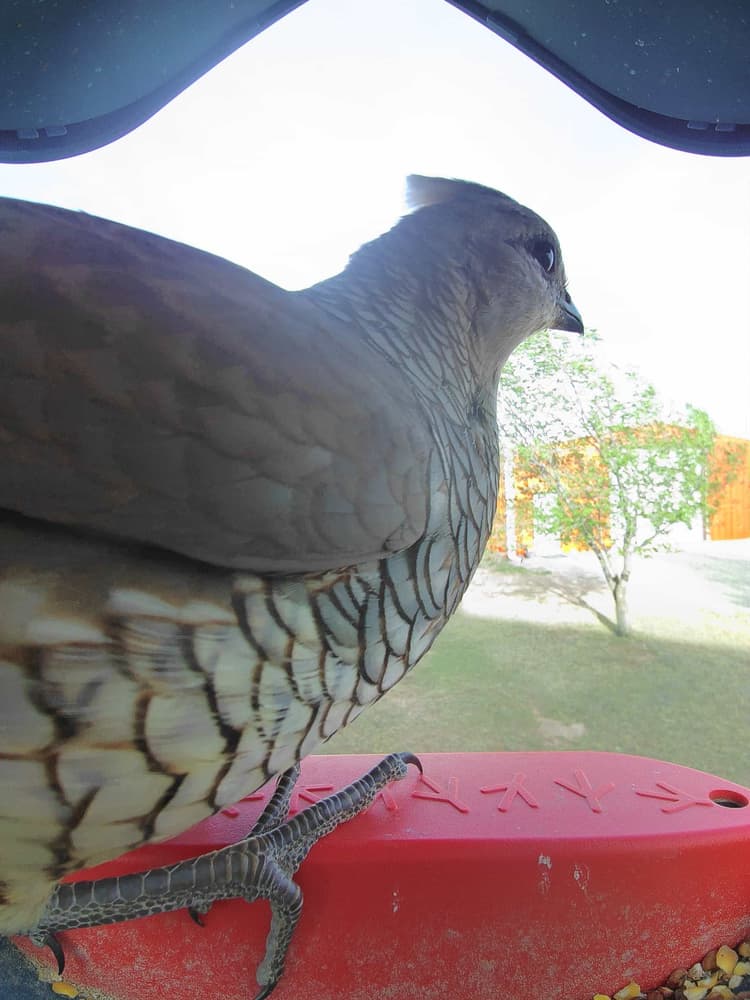
Scaled quail, or Callipepla squamata, are medium-sized birds noted for their bluish-gray plumage with distinctive scaly patterns on their chest and neck. They have a bushy white crest on their heads that resembles a tuft, which is prominent year-round. Their wings are brown with white and black markings, and they possess stout bills and short tails. Typically, they inhabit arid and semi-arid regions, making them well-adapted to desert environments.
Male vs female
Males and females are similar in coloration, making it difficult to distinguish between genders based on plumage alone. However, males can sometimes have slightly more pronounced patterns and may be marginally larger in size. Both sexes exhibit the characteristic scaled appearance and white crest, which remain relatively consistent throughout the year.
Juvenile
Juvenile scaled quails are generally duller than adults, with grayish-brown feathers and less distinct scaling on their chests. Their crest is less developed, appearing shorter and less prominent compared to adults. As they mature, juveniles gradually acquire the defining scaly pattern and coloration of adults.
Often mistaken for
Gambel’s Quail vs Scaled Quail
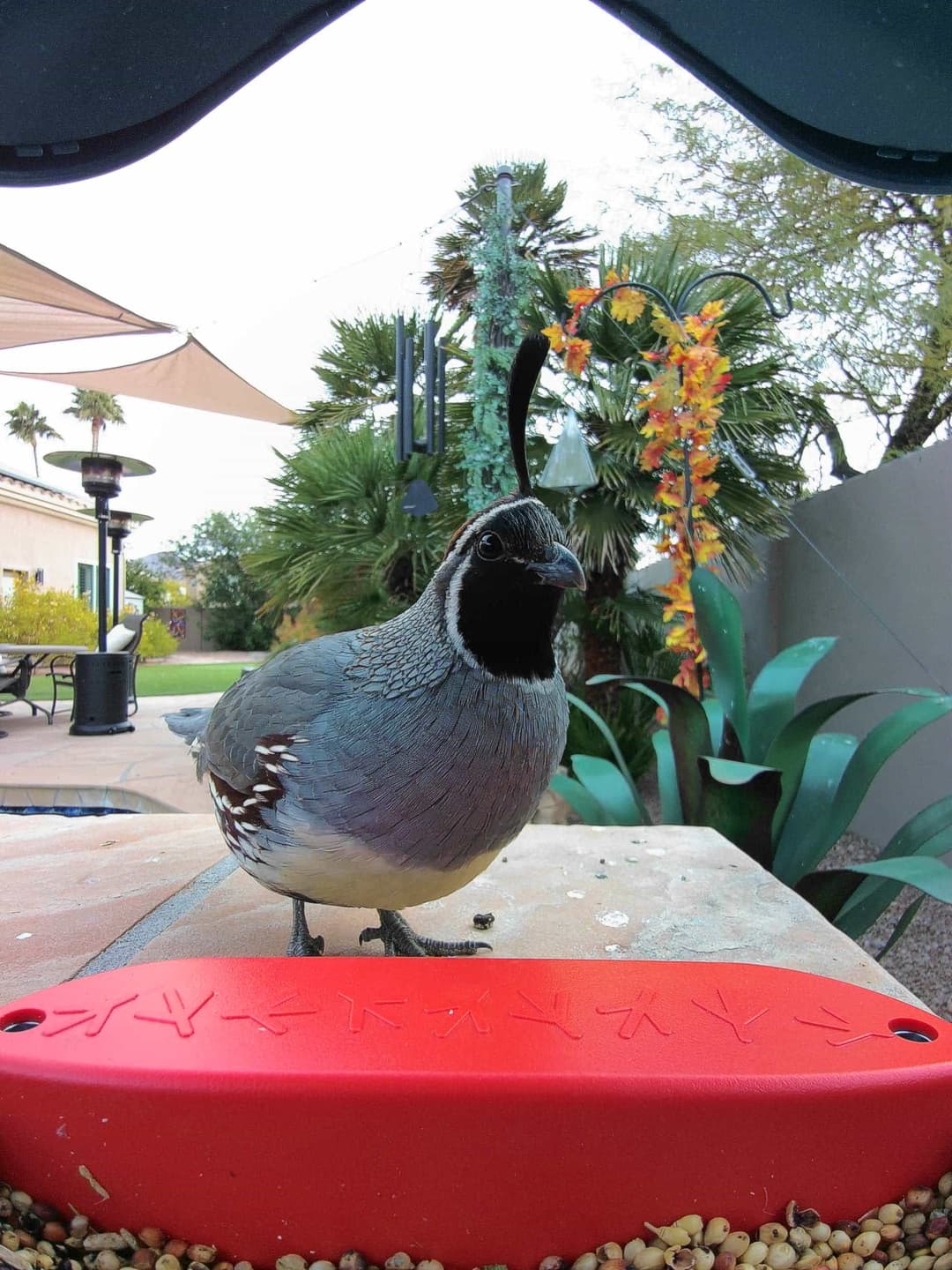
The Scaled Quail and Gambel’s Quail have distinct differences. The Scaled Quail features bluish-gray plumage with a distinctive scaled pattern on its breast and neck, giving it a scaly appearance. In contrast, Gambel’s Quail displays a more brownish body with a prominent black belly patch and a striking black topknot on the head. The Scaled Quail lacks this topknot, having a plain crown. Additionally, the Scaled Quail tends to prefer arid grasslands, while Gambel’s Quail is commonly found in desert regions and scrublands.
Breeding and nesting habits of the scaled quail
Mating behaviors
During the breeding season, unmated male scaled quails perch on elevated sites like shrubs, rocks, or posts. They emit a hoarse single-note call to establish territory and attract females.
Nesting details
Scaled quail nests are typically located on the ground, discreetly hidden under vegetation such as shrubs, tumbleweed, or cactus. The nest is a shallow depression likely constructed by the female and lined with grass and leaves, with an arch of standing grass over it for added concealment.
Eggs and chick-rearing
Details about the eggs and chick-rearing behaviors of the scaled quail are not provided. To promote nesting in gardens, offer ground cover with shrubs or tall grasses that can shelter their nests.
What does a scaled quail like to eat?
Fruits
Insects
Plants
Seeds
Natural diet
The scaled quail primarily consumes seeds from both annual and perennial weeds, such as snakeweed, Russian thistle, and broomweed. It also eats seeds from woody plants, including mesquite. While it appears to eat relatively few grass seeds, it may still consume more than some other quail species. In addition to seeds, its diet includes green leaves and berries. The scaled quail also eats more insects than most other quail, particularly in the spring and summer seasons.
Bird feeders
The scaled quail may occasionally visit bird feeders, although it is not commonly known to do so. When it does visit, it might consume various seeds available. However, this species primarily relies on its natural habitat for food.
Attracting scaled quail
Creating a backyard habitat that mimics the natural environment of scaled quail is an excellent way to tempt these delightful birds into your yard. Use native plants and shrubs that provide cover and consider installing a bird bath or small pond for drinking water and dust baths.
Favorite snacks and feeder types
Scaled quail are omnivores and are especially fond of seeds. Feed them with Bird Buddy seeds which are optimized for the season by bird feeding experts. For feeders, they prefer ground feeders or low platform feeders. Occasionally, they'll indulge on small insects as well.
Fun tricks to encourage visit
Consider installing a birdhouse or even a sand bath area which can really make your yard more tempting. Play some quiet bird songs from time to time to create a bird-friendly vibe. Remember, patience is key, as it may take time for these shy birds to become familiar and comfortable enough to visit regularly.
Using bird buddy seeds
Bird Buddy seeds are a great option because they are chosen by experts for each season, ensuring you’re providing the most nourishing, and attractive, meals for your visiting scaled quail.
Where can you find scaled quails?
Primary habitat
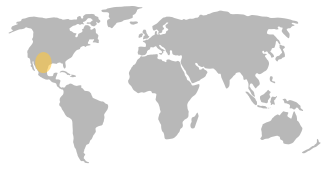
The scaled quail primarily occupies flat open lands and rolling hills, filled with a fusion of grasses, annual weeds, and sporadic shrubs for cover and shade.
Additional range
Apart from its primary habitat, the quail can also be found in areas where grasslands turn into other open habitats like desert, juniper slopes, or arid, dry brush.
Do they migrate?
The scaled quail does not migrate; it is characterized as a permanent resident throughout its range. This means it stays in one place all year round and does not undertake long-distance seasonal movements like some other bird species. Instead, the scaled quail occupies its preferred habitats, such as deserts, scrublands, and grasslands, in southwestern regions of the United States and northern Mexico year-round. Key locations for this species include areas in Texas, New Mexico, Arizona, and parts of Colorado, as well as suitable habitats in Mexican states such as Chihuahua and Coahuila. The scaled quail’s adaptation to its environment allows it to survive the varying seasonal conditions typical of these arid and semi-arid regions without the need to relocate. This behavior contrasts with migratory birds that travel to exploit different climatic conditions or food resources during different times of the year.
What is the role of scaled quails in nature and how to protect them?
Conservation status
The scaled quail is considered common, but its populations can fluctuate due to environmental factors. Reproduction suffers in dry years, indicating vulnerability to drought. Moderate grazing can enhance its habitat, yet overgrazing poses a significant threat by degrading living conditions. Conservation efforts focus on managing grazing practices to maintain optimal habitat conditions. Protection from overgrazing is crucial to ensure stable population levels and prevent future endangerment. The species benefits from habitat management strategies that balance grazing and conservation needs.
Ecological role of scaled quails
Its role in the ecosystem
The Scaled Quail, with its diet comprising both vegetable and insect matter, plays an integral role in its ecosystem. Their feeding behavior aids in pest control, as they consume a substantial number of insects, especially in spring and summer. This diet diversity reduces the adverse impacts of potential insect pests within their habitat, contributing to the balance of their ecosystem. Moreover, they potentially facilitate seed dispersal by feeding on the seeds of multiple annual and perennial weeds and woody plants, aiding in the propagation of these species throughout their range. Through nest-building behavior, they reshape the local environment by modifying the distribution of grass and leaves. They also serve as a food source for predators, thereby contributing to the food chain. Hence, the Scaled Quail's activities have vital implications for ecosystem health, pest control, plant dispersal, and the broader food network.
How to help protect scaled quails
Preservation tips
Habitat preservation for scaled quail
Scale quail thrive in arid areas with sandy soil, grass-cover, and sparsely scattered bushes. As such, strategies for habitat preservation should involve avoiding the overuse of these lands for agriculture or construction, prevent overgrazing by managing livestock numbers and the encroaching brush by controlling the noxious weeds which destroy quail habitat.
Community science initiatives
Promote community science initiatives to monitor the scaled quail population and habitat quality. Encourage local inhabitants, schools, and wildlife enthusiasts to participate in citizen science programs such as the Breeding Bird Survey or eBird. This helps gather valuable data on population trends and could indicate when and where conservation interventions are needed. Educate about the importance of preserving the scaled quail and its habitat through community outreach programs.