
Verdin
Verdin
Auriparus flaviceps


Quick Identification guide
Quick Identification guide
- •
Noted for its striking yellow head that stands out against its more neutral body tones
- •
Exhibits small, round body shape with subtle gray upperparts and white underparts
- •
Features a short, conical beak perfectly adapted for its feeding habits
What does a verdin sound like?
The Verdin, a small songbird, often vocalizes a sharp, frequently repeated "seep!" or "tsilip!" Its infrequent song is a unique 3-note "kleep-er-zee!" with the final note being the highest in pitch. The bird's call pattern is characterised as falling and flat, and can be classified into two call types: a chirp/chip and a whistle. The Verdin's calls and songs serve as a distinguishing trait of this species.


Description
These energetic little birds make strange and amazing spherical nests. What's better than one nest? Multiple nests! They make a bunch of them, which they use to roost throughout the year. Some nests are for breeding and some for roosting; roosting nests are smaller and have thick insulation to stay warm, whereas in summer, their opening faces the wind to keep them cool.
The verdin can weigh between 5to8grams and be from9to11centimeters tall.
The Verdin typically has a lifespan of up to 8 years. This small passerine bird – a member of the family Remizidae – has a similar lifespan to its close relatives, the Penduline Tits, which also live up to 8 years. For comparison, other small passerines, such as American Goldfinches, can live up to 10-11 years, slightly longer than the Verdins.
Did you know?
Most popular questions about verdin
How to recognise a verdin?
General appearance
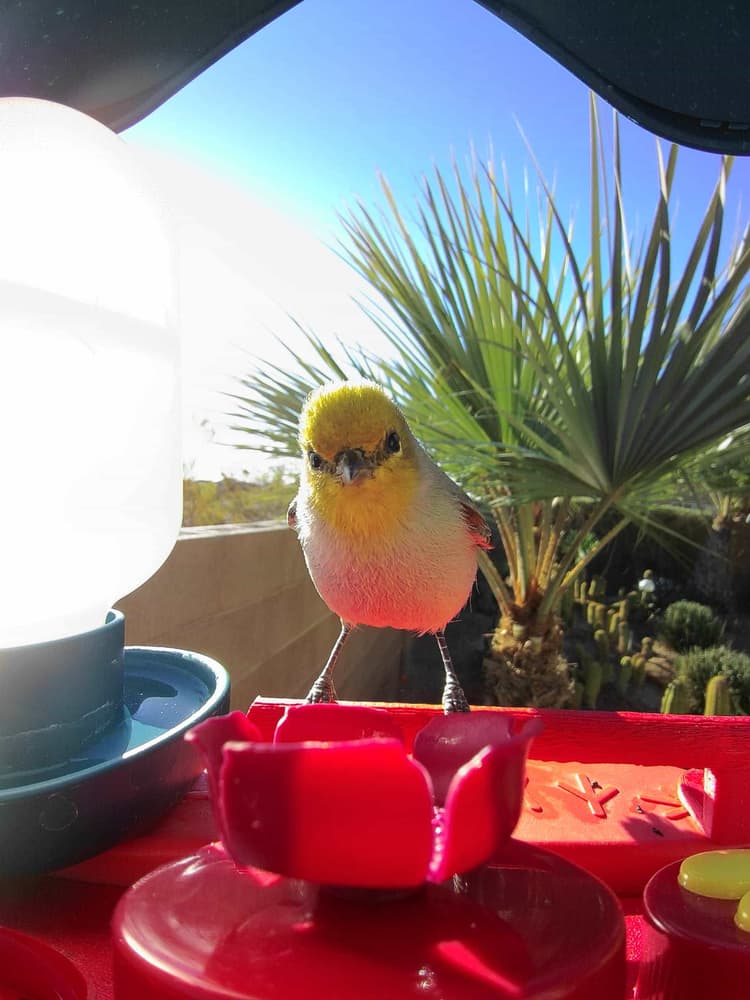
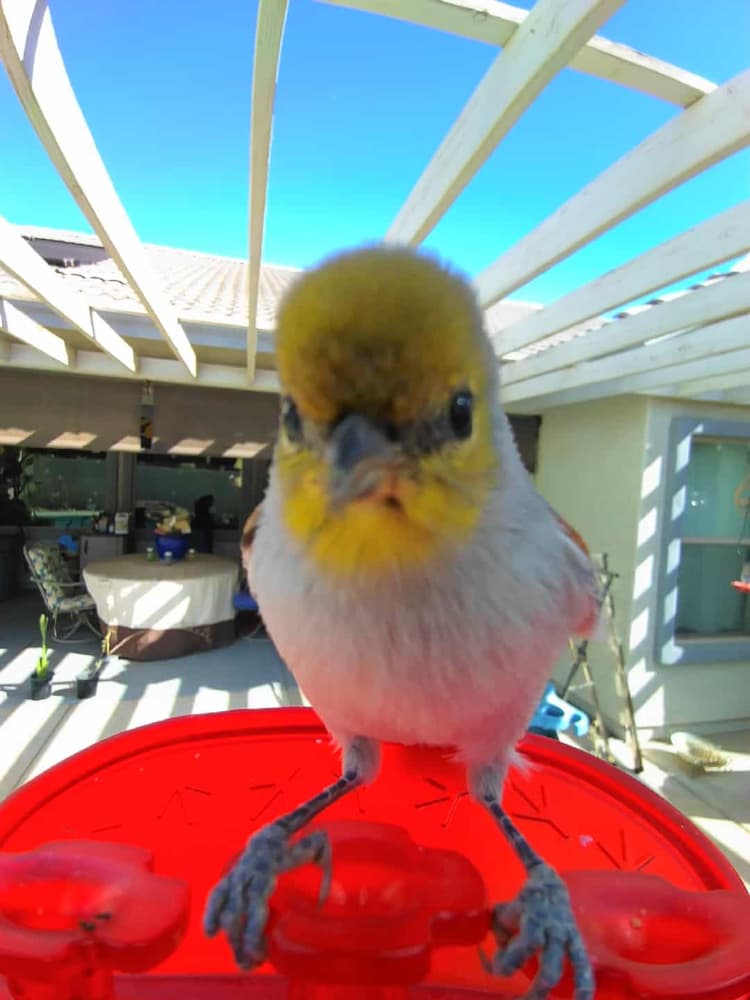
The verdin is a small bird, approximately 4.5 inches in length. Its most distinctive feature is its bright yellow head, contrasting with its pale gray body and chest. The wings and tail have a subtle brownish tinge. Verdins are agile, active birds, often seen flitting rapidly among desert shrubs and trees.
Male vs female
Male and female verdins exhibit similar plumage and coloration, making gender differentiation in the field challenging. Both sexes share the same bright yellow head and gray body, lacking the sexual dimorphism seen in many other bird species.
Juvenile
Juvenile verdins are similar in shape to adults but lack the vibrant yellow on their heads, which appears creamy or muted in young individuals. They have a grayer plumage overall, which gradually transforms as they mature. Juvenile verdins gain their distinctive adult coloring as they progress in age.
Often mistaken for
Bushtit vs Verdin
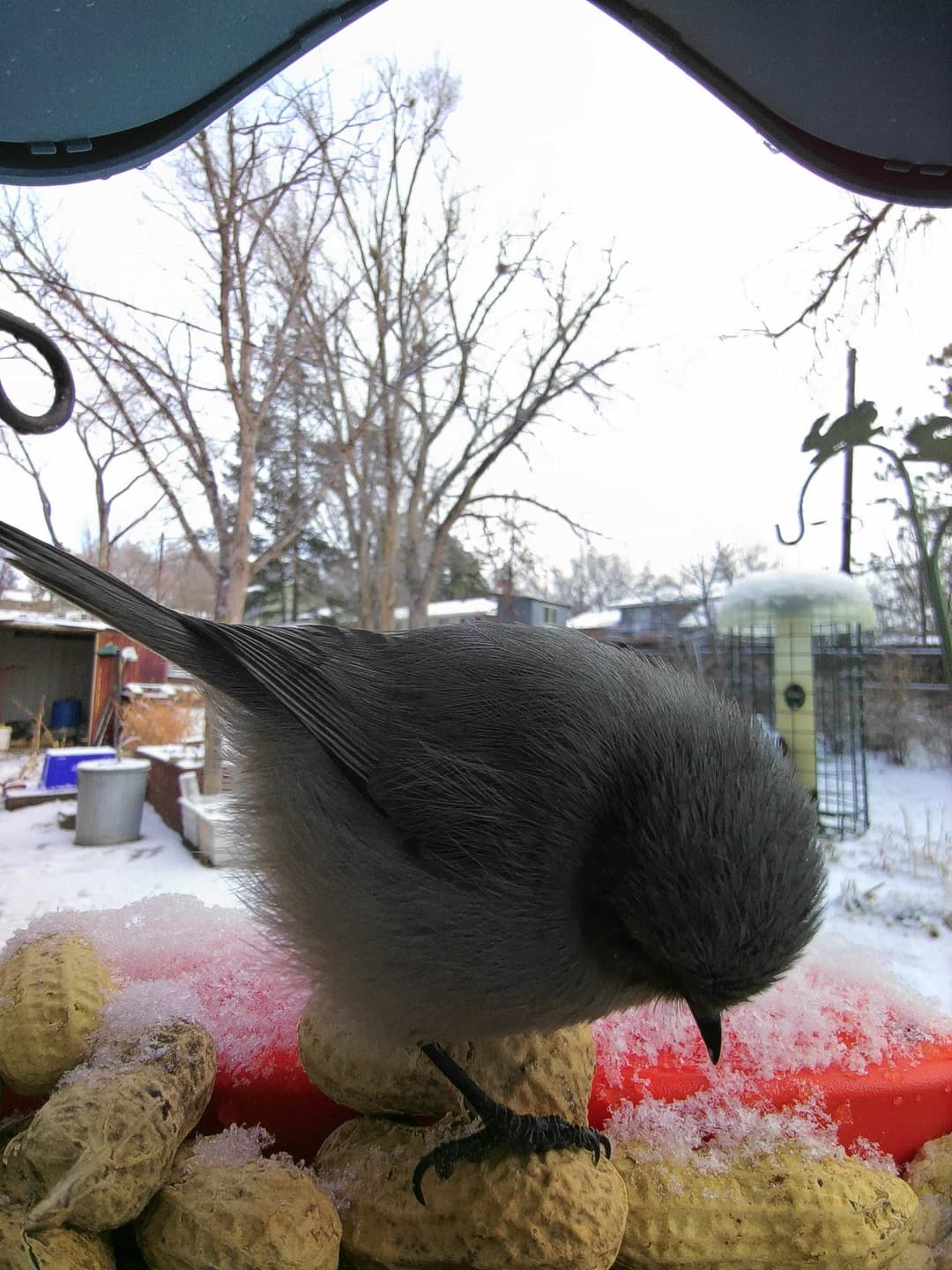
Verdin can be distinguished from Bushtit by its distinct yellow face, whereas Bushtits are generally more uniformly gray-brown. Verdins have a more defined and slightly longer tail compared to the small, stubby tail of a Bushtit. Bushtits are also more likely to travel in flocks, often seen in social, busy groups, while Verdins are typically more solitary.
Blue-Gray Gnatcatcher vs Verdin
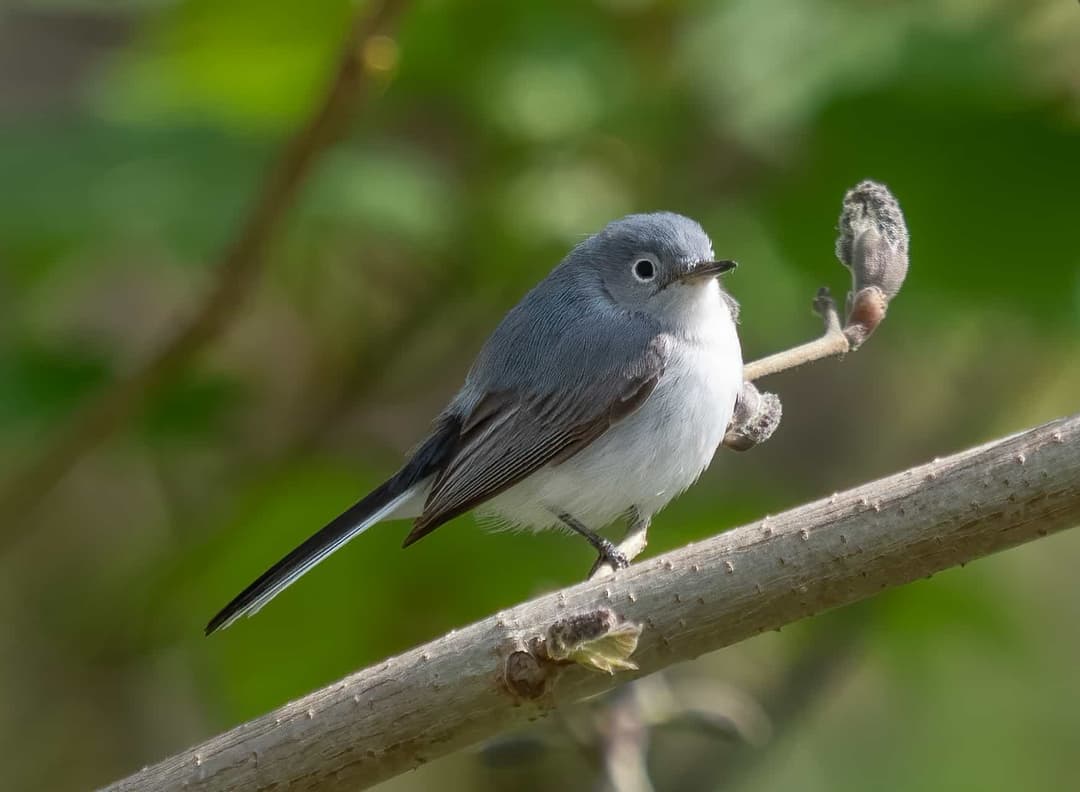
Verdins and Blue-Gray Gnatcatchers can be told apart by the yellow patch on the Verdin's face, absent in the gnatcatcher. Blue-Gray Gnatcatchers have a more slender body and longer tail with white outer edges, whereas Verdins are stockier. The Blue-Gray Gnatcatcher also displays more agile, restless movements compared to the Verdin's generally more deliberate feeding behavior.
Breeding and nesting habits of the verdin
Mating behaviors
Male verdins build multiple nests, allowing the female to select one for raising offspring. This behavior suggests a courtship strategy where males display their nest-building skills to attract mates.
Nesting details
Verdin nests are located on branches of thorny shrubs, low trees, or cholla cacti, typically 4-12 feet above ground. These nests are conspicuous, large hollow ovals or spheres made of thorny twigs. The entrance is on one side and is well-insulated with feathers, grass, leaves, and spiderwebs. Late spring nests often face the prevailing wind for cooling.
Eggs and chick-rearing
Verdins focus on making insulated nests to aid in temperature regulation for eggs and chicks. The strategic positioning of the nest entrance helps maintain a stable nest environment, crucial for chick development and survival.
What does a verdin like to eat?
Fruits
Insects
Nectar
Seeds
Spiders
Natural diet
The verdin primarily feeds on a variety of tiny insects, including aphids, caterpillars, scale insects, leafhoppers, and beetle and wasp larvae. Small spiders are also a significant part of its diet. In addition to insects, the verdin consumes berries, small fruits, and occasionally seeds. It is also known to regularly take nectar from flowers, reflecting its diverse feeding habits in the wild.
Bird feeders
Verdins are not common visitors to traditional bird feeders. However, they may be attracted to feeders offering sugar-water solutions or dishes with fruit bits and berries, especially if other natural food sources are scarce in their habitat.
Attract verdin with favorite foods
Verdins are small birds that love eating a variety of insects and sugary treats. Provide a consistent supply of Bird Buddy seeds in your yard or bird feeder to draw them in. These nutritious seeds are expertly chosen to meet the needs of Verdins every season. Adding extra treats like small fruits or spider webs, which Verdins use for nesting, can also prove irresistible to them.
Choose the right feeder
Verdins prefer feeders where they feel safe and comfortable. Opt for a feeder with small perches and ports that are easily accessible but smaller than larger birds. Positioned the feeder in a quiet, sheltered location; Verdins are shy birds and like to have some cover.
Inviting verdins for a sing-along
Verdins are known for their pleasant songs. To encourage them to stay and sing in your yard, try creating a friendly environment by maintaining a clean feeder, providing fresh water, and growing native plants that they might find attractive. Regularly refresh the feeder with Bird Buddy seeds to keep them returning.
Where can you find verdins?
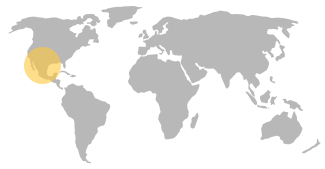
Primary habitat
The verdin primarily thrives in the Sonoran desert and mesquite woods at lower elevations. It prefers brushy desert valleys and mesquite areas.
Additional range
Beyond its typical desert range, the verdin adapts to various low open brush environments such as acacia and paloverde deserts, saltcedar thickets, and low riverside woods. It is even found in the suburbs of some southwestern towns.
Do they migrate?
The verdin (Auriparus flaviceps) is a small bird native to the arid regions of the southwestern United States and northern Mexico. It is a permanent resident, meaning it does not migrate and stays in the same general area throughout the year. Verdins are highly adapted to the desert environment, where they can be found in a variety of habitats including thorn scrub, desert washes, and areas with scattered trees and shrubs. They are primarily found in states like Arizona, Nevada, California, New Mexico, and Texas, as well as the northern parts of Mexico. The verdin's non-migratory behavior is supported by its ability to thrive in dry, hot environments, and its diet of insects and spiders, which remain available year-round. Additionally, verdins are known for constructing roosting nests, which provide them with shelter and support their sedentary lifestyle. This bird's adaptability and resilience allow it to remain in its habitat throughout the changing seasons, without the need to migrate for food or breeding purposes.
What is the role of verdins in nature and how to protect them?
Conservation status
The verdin, known for its adaptability to urban environments, has experienced population declines over recent decades, suggesting a move towards being vulnerable. While not yet classified as endangered, habitat loss and urban development pose significant threats to its survival. Conservation efforts focus on preserving natural desert landscapes and restoring habitat connectivity. Key initiatives include monitoring population trends and promoting urban planning that considers wildlife corridors. Increased awareness and habitat protection are crucial to reversing current decline trends and ensuring the verdin's long-term survival.
Ecological role of verdins
Its role in the ecosystem
The Verdin plays an essential ecological role, primarily acting as a natural pest controller by feeding on many tiny insects such as aphids, caterpillars, scale insects, leafhoppers, beetle, and wasp larvae. This feeding behavior contributes to the control and balance of these insect populations in their ecosystem. Additionally, Verdins also consume small spiders, playing a part in limiting these populations as well. Meanwhile, Verdins aid in plant reproduction and expansion by consuming and dispersing seeds from the berries and small fruits in their diet. They also contribute to pollination when they visit flowers for nectar. Moreover, Verdins' nests, architecturally unique and built in thorny shrubs or low trees, may provide shelter or protection to other smaller species or insects. Thus, through their feeding and nesting behaviors, Verdins significantly contribute to both fauna and flora aspects of their ecosystem.
How to help protect verdins
Preservation tips
Habitat preservation strategies
Preserving the verdin's habitat begins with protecting the shrubby desert areas and woodland edges they inhabit. Avoid land transformation activities including deforestation and overgrazing, which can lead to habitat loss. Support policies that conserve these environments and reduce climate change impacts, as environmental changes can also affect verdin populations.
Community science initiatives
Contribute to community science projects that monitor the verdin's population dynamics and distribution. Data collected aids in identifying trends and threats, key in developing effective conservation strategies. Volunteering for native plant restoration projects helps improve verdin habitats. Educate the community about the importance of the verdin to our ecosystem to gain more allies in verdin conservation efforts.