
Yellow-Billed Magpie
Yellow-Billed Magpie
Pica nuttalli


Quick Identification guide
Quick Identification guide
- •
Identified by its bright yellow bill which contrasts sharply against the black head
- •
Features a glossy black back, tail, and breast with a striking pure white belly and shoulders
- •
Has long black tail feathers with white patches visible in flight, giving a distinctive pattern
What does a yellow-billed magpie sound like?
The yellow-billed magpie's vocalizations are varied and distinctive. Its typical calls include a raucous "qua-qua-qua" and a querulous quack, evoking a lively chatter. This bird's call patterns are characterized by flat or rising tones. Additionally, the magpie also produces chirp or chip sounds. Some of its calls can even escalate to a raucous scream or a piercing whistle, contributing to a diverse sonic repertoire.


Description
Yellow-billed magpies love company; they are the kind of bird that likes to hang around in a flock all day, every day. They are boisterous birds that form long-term monogamous pairs. Good thing, too, because the fancy domelike nests they build require a lot of upkeep and are more of a two-bird job.
The yellow-billed magpie can weigh between 150to170grams and be from43to54centimeters tall.
The yellow-billed magpie, native to California, typically lives up to 8 years in the wild. Compared to related species like the American crow that can live up to 14 years and North American ravens that can live up to 13 years, the yellow-billed magpie has a relatively shorter lifespan.
Did you know?
Most popular questions about yellow-billed magpie
How to recognise a yellow-billed magpie?
General appearance
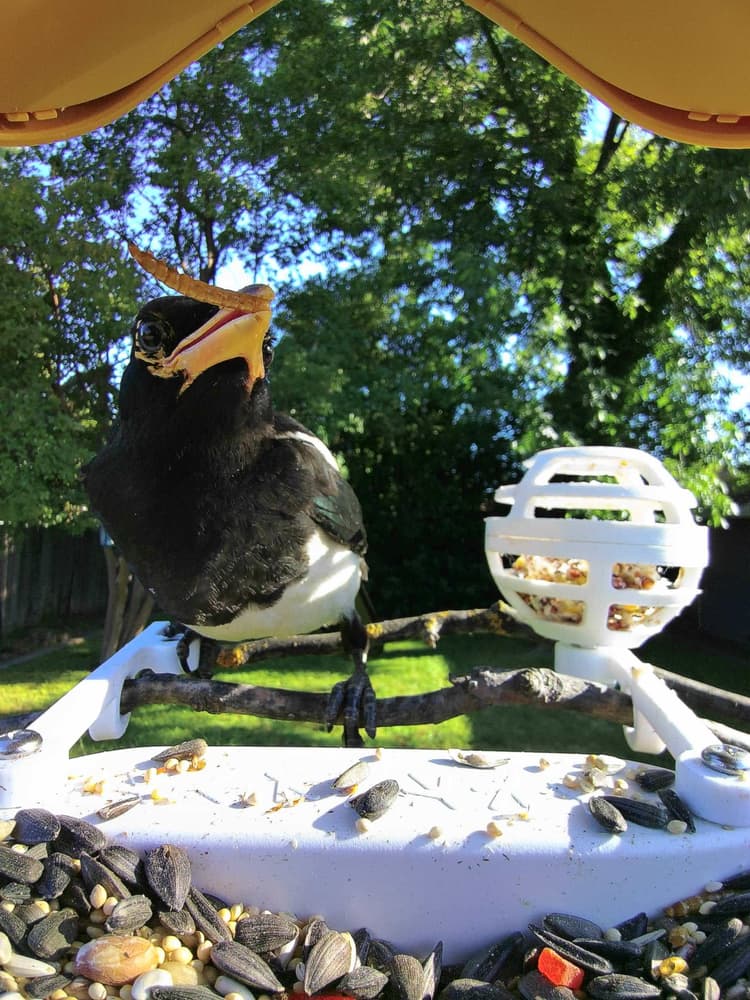
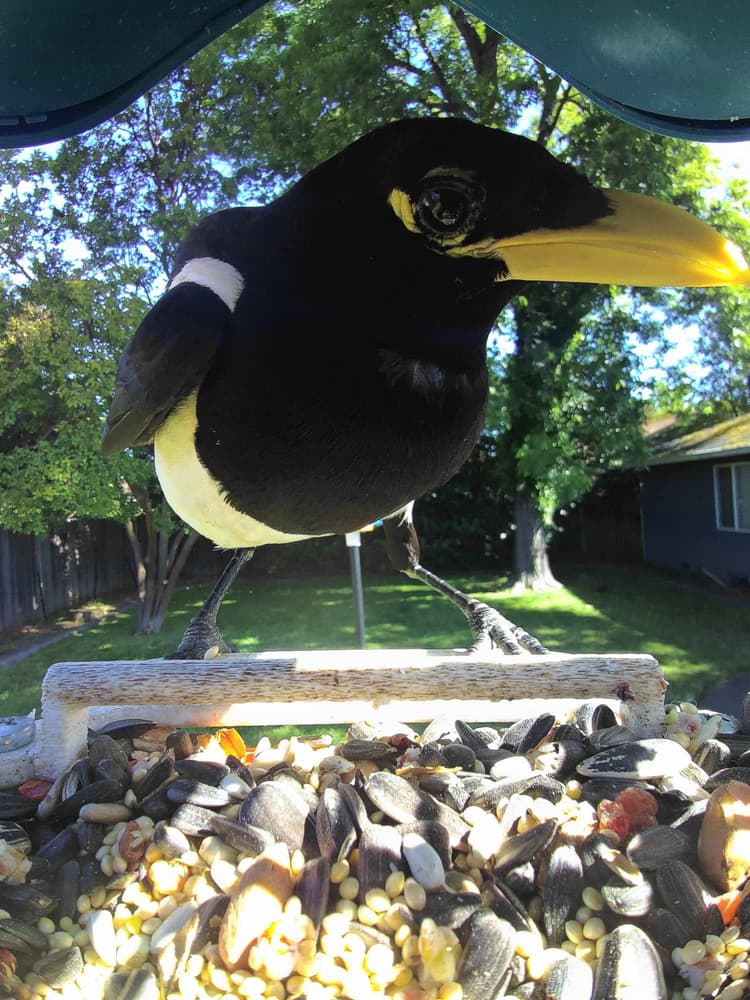
The Yellow-billed Magpie, standing between 16-18 inches (41-46 cm), is about the size of a Crow or Mallard. Colors are predominantly black, blue, green, white, and yellow. Most striking is the bright yellow bill and yellow skin near the eyes. It has a long, wedge-shaped tail, round and broad wings with finger-like extensions.
Male vs female
Both male and female yellow-billed magpies are similar in appearance, with no significant differences in size or coloration to easily distinguish them. Both sexes possess the distinctive yellow bill and surrounding yellow eye skin.
Juvenile
Juvenile Yellow-billed Magpies initially have less vibrant coloration than adults. Beak color gradually changes from initially dark to the characteristic bright yellow as the bird matures. They achieve their adult size and pigmentation at an early age.
Often mistaken for
Black-Billed Magpie vs Yellow-Billed Magpie
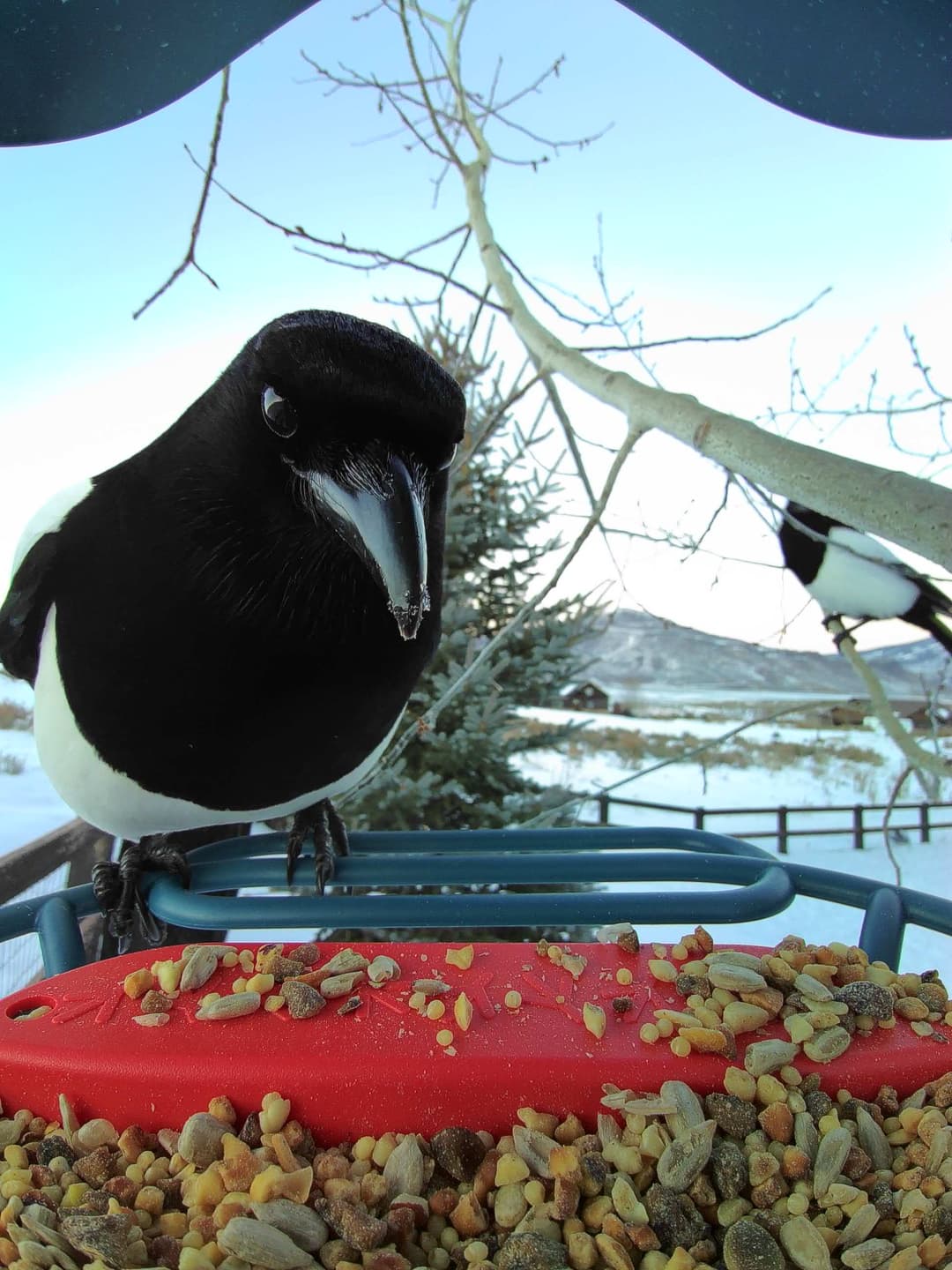
While both magpies boast striking black and white plumage with iridescent blue-green hues, the Yellow-Billed Magpie has a distinctly yellow bill and eye ring compared to the Black-Billed Magpie's black bill and eye ring. The Yellow-Billed Magpie is also geographically limited to California, often found in oak savannas and agricultural areas, whereas the Black-Billed Magpie has a broader range across Western North America. Look for the Yellow-Billed Magpie's more confined habitat and unique coloring for proper identification.
Breeding and nesting habits of the yellow-billed magpie
Mating behaviors
Yellow-billed magpies engage in elaborate courtship displays. Males perform aerial maneuvers and vocal calls to attract females. Pair bonding occurs through mutual preening and feeding, establishing a strong pair bond that lasts through the breeding season.
Nesting details
Nests are typically constructed in the canopy of trees, often in colonies. Magpies build large, dome-shaped nests using sticks, mud, and grass. These nests are lined with softer materials like feathers and wool. Gardens with tall trees can attract magpies by providing nesting sites, ample food sources, and minimal disturbances.
Eggs and chick-rearing
Females lay 5-7 eggs, incubating them for about 16-18 days. Both parents participate in feeding the chicks, which fledge approximately 30 days post-hatching. To support chick-rearing, provide safe garden environments with native plants to attract insects, a crucial food source for growing chicks.
What does a yellow-billed magpie like to eat?
Berries
Bird eggs
Carrion
Insects
Nuts
Scraps
Seeds
Small animals
Snails
Worms
Natural diet
The yellow-billed magpie primarily feeds on a variety of insects, encompassing beetles, grasshoppers, and caterpillars. They are omnivorous and also consume small mammals, carrion, and bird eggs. Their diet extends to fruits, seeds, and grains, harvested from various plants and trees.
Bird feeders
At bird feeders, yellow-billed magpies are known to consume suet, peanuts, sunflower seeds, and corn. They are opportunistic feeders and will take advantage of various birdseed blends available in feeders. Their presence at feeders may vary based on available natural resources.
Setting up the perfect feeder for the yellow-billed magpie
Attracting a yellow-billed magpie begins with setting up the right kind of feeder. This bird species is attuned to platform or tray feeders which allow them to easily scan their surroundings for predators. Ensure the feeder is sturdy enough as magpies are a bit larger than your average backyard bird.
Providing the right snacks
Yellow-billed magpies are primarily omnivorous, meaning they enjoy a diet of both insects and seeds. Insect suet is big hit among magpies. However, for best results, we recommend using Bird Buddy seeds because they are expertly selected for the season.
Turn your yard into a magpie playground
To encourage a visit from the fabulous yellow-billed magpie, make sure your yard is inviting. Higher places to perch like trees or tall shrubs will make your yard more appealing to them. Additionally, they are particularly fond of water elements such as birdbaths.
Playing the magpie melody
Humming their favorite tunes might be a stretch, but playing bird calls could help to attract these vivacious visitors to your yard. They are known for their distinctive chattering calls and might be enticed to join the sing-along!
Where can you find yellow-billed magpies?

Primary habitat
Yellow-billed magpies primarily inhabit open oak savanna, ranches, farms, and riverside groves of oaks, cottonwoods, and sycamores.
Additional range
They are additionally found in unexpected environments bordering open country such as pastures or farmland; particularly where stream groves or scattered oaks are available.
Do they migrate?
The yellow-billed magpie is primarily a permanent resident, meaning it tends to stay in the same place throughout the year rather than migrating. This species is mainly found in California, USA, where it inhabits the Central Valley, coastal ranges, and adjacent foothills. The behavior of staying close to its breeding areas indicates that the yellow-billed magpie does not undertake significant migratory journeys like many other bird species. While it is mostly sedentary, there are rare instances when the yellow-billed magpie might wander slightly from its breeding areas, particularly during the winter months. However, these movements are minimal and do not constitute a true migratory pattern. There is no specific route, timing, or key locations for migration to describe because the species does not engage in long-distance travel. Overall, the yellow-billed magpie is adapted to its local environment and remains within its established range all year, exhibiting only minor dispersal outside of the breeding season.
What is the role of yellow-billed magpies in nature and how to protect them?
Conservation status
The yellow-billed magpie is considered vulnerable due to recent population declines and disappearance from some historical areas. Its limited range and specialized habitat make it particularly susceptible to climate change, posing a significant threat. Conservation efforts focus on habitat preservation and restoration to mitigate climate impact. Efforts also include monitoring populations and promoting awareness about its plight. These actions are crucial to prevent the species from sliding toward a more endangered status.
Ecological role of yellow-billed magpies
Its role in the ecosystem
The yellow-billed magpie is an important part of the ecosystem. As primarily insectivores, they play a vital role in pest control, helping to maintain a balance of insect populations. By feeding heavily on grasshoppers in the late summer, they can help control these potential pests. The magpies also contribute to seed dispersal through their diet which contains around 30% plant material, including acorns. This assists in the propagation of certain plant species. Their habit of caching food in the ground or in tree crevices can lead to the growth of new plants. Moreover, their unique method of foraging, which includes flipping over dung and wood chips, aids in soil turnover, which is crucial for nutrient cycling in the ecosystem. Lastly, the nests of yellow-billed magpies, often built in colonies high in trees, provide significant structures that may be re-used by other species.
How to help protect yellow-billed magpies
Preservation tips
Habitat preservation strategies
Preserve habitats by supporting local land conservation organizations, and encourage policy makers to enforce strict land use regulations. Key habitats, like oak woodlands, need protection from deforestation and urbanization. Encourage responsible agricultural practices, as pesticide usage can harm the yellow-billed magpie.
Community science initiatives
Participate in community science projects, such as bird watching and environmental data collection programs. Report sightings of yellow-billed magpies to local wildlife authorities or through online platforms like eBird. Raising awareness through education can help community members understand the importance of conserving this bird species and its habitats.