Cedar Waxwing or Bohemian Waxwing?
Here's how to tell the difference

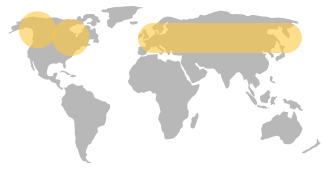


Cedar Waxwing
Bohemian Waxwing
Cedar Waxwing
Bombycilla cedrorum
General appearance
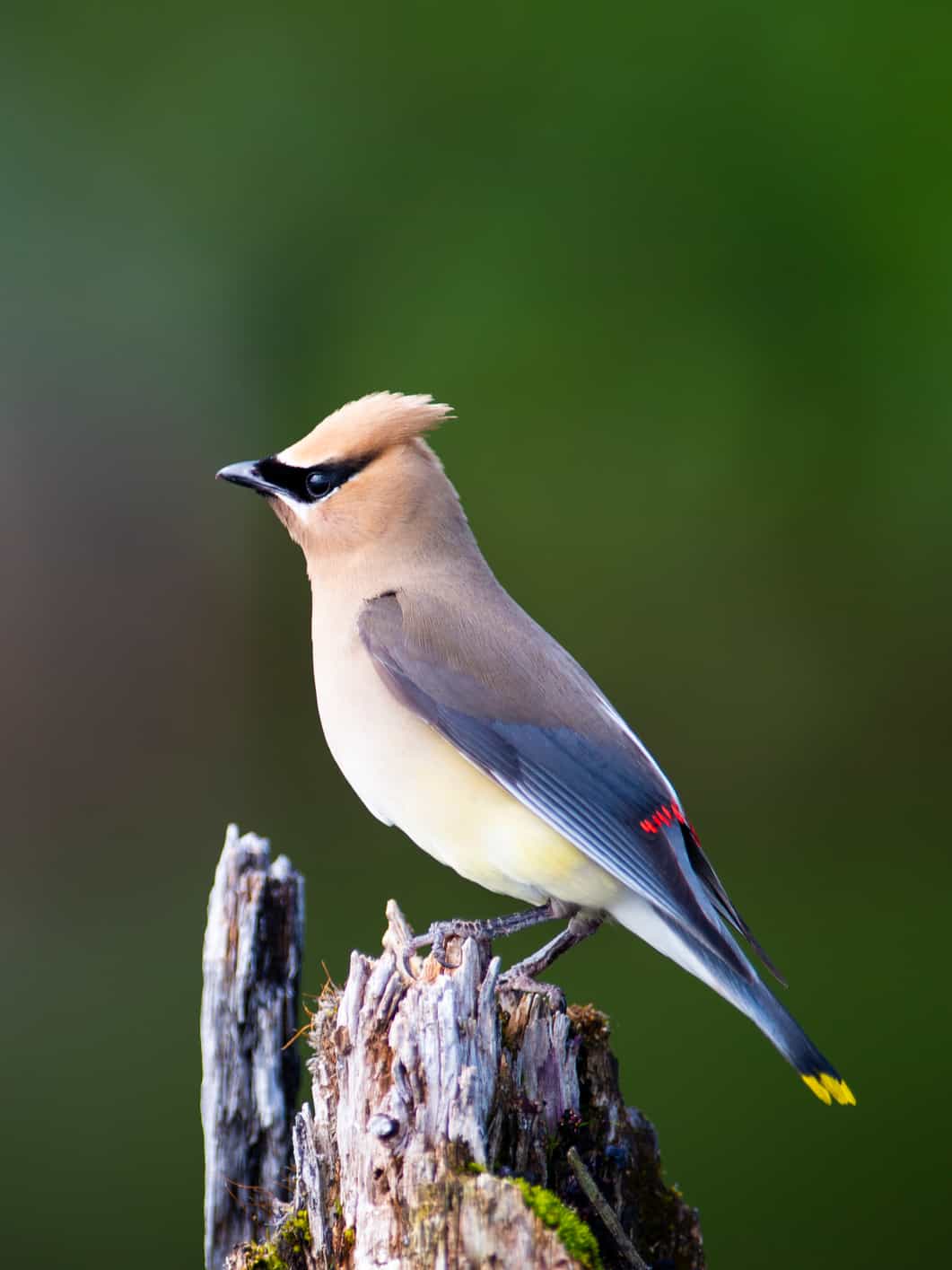
The Cedar Waxwing is bird roughly the size of a Robin or Sparrow, fluctuating between 6 1/2-8 inches or 17-20 cm. The waxwing sports a yellow band on its tail tip and a narrow dark mask on its face which highlights its striking yellow belly. The bird's wings are pointed and its tail has a rounded, short, square shape. The Cedar Waxwing has a short crest atop its head which further accentuates its overall appearance. The bird’s color profile includes shades of black, brown, gray, red, tan, white, and yellow.
Male vs female
The Cedar Waxwing does not exhibit significant sexual dimorphism. This means both male and female individuals share similar coloration and physical traits, making it challenging to distinguish between them based solely on visual appearance. Therefore, the typical characteristics such as the yellow tail band, narrow dark mask, and pointed wings apply to both genders.
Juvenile
In comparison to adults, juvenile Cedar Waxwings have blurry streaks on their plumage. Despite their young age and less defined color patterns, juveniles can still be identified by the diagnostic yellow tail band that is common across all ages and genders of this species. In the far north or in the winter season, their appearance might parallel that of a Bohemian Waxwing.
Size
5.9 - 7.1 in/1.0 - 1.1 oz
There's more to learn about Cedar Waxwing
View full detailsBohemian Waxwing
Bombycilla garrulus
General appearance
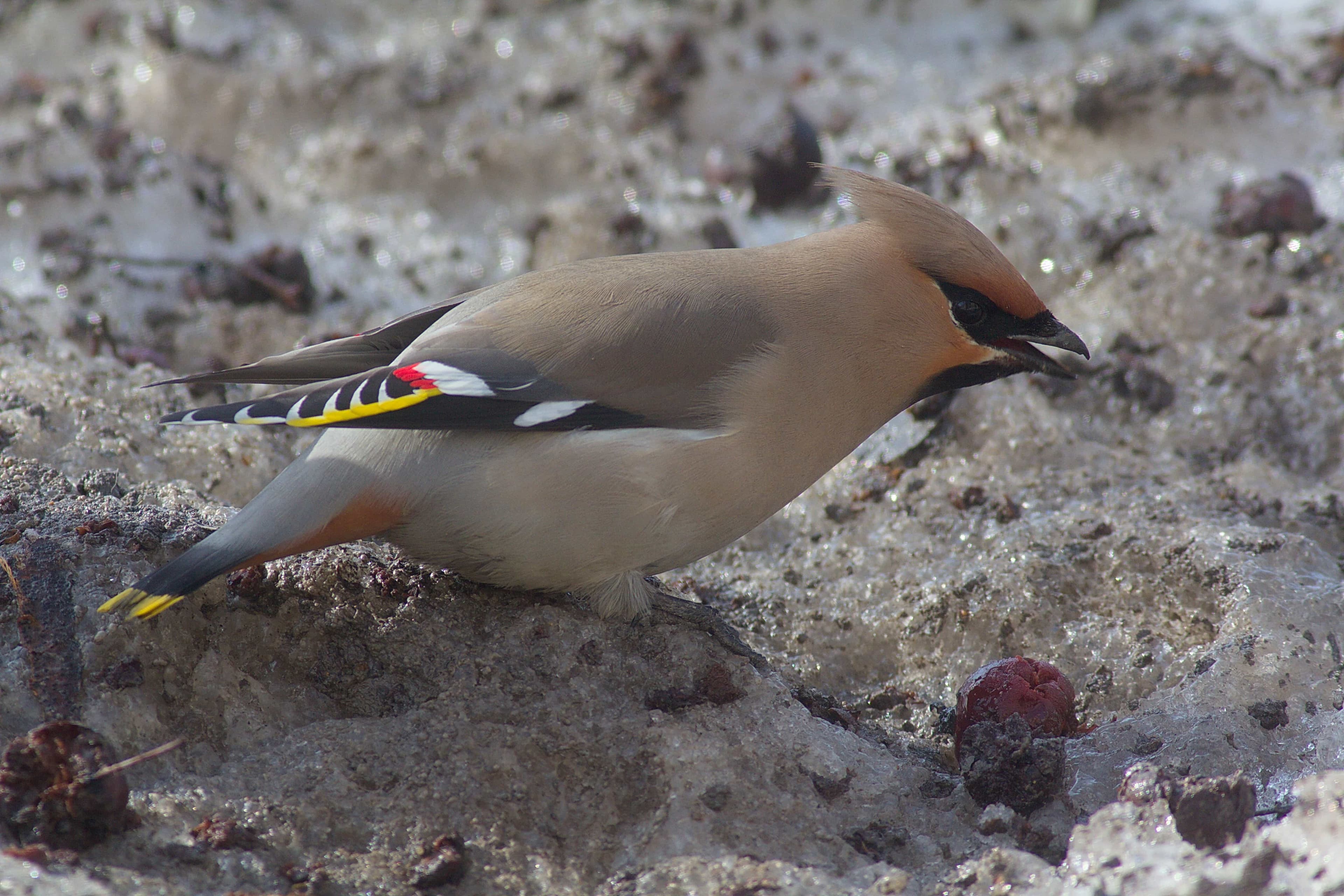
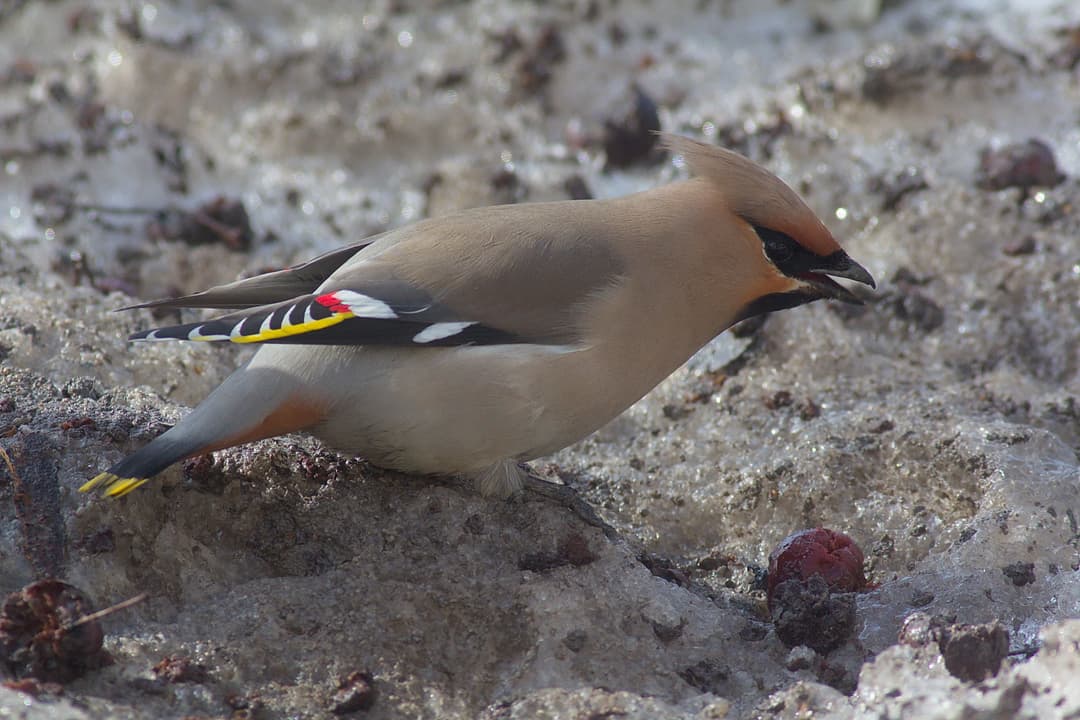
The Bohemian Waxwing is a crested bird that stands between 7 1/2 -8 1/2 inches (19-22 cm) tall, and is larger and grayer than the Cedar Waxwing. It has chestnut undertail coverts and displays a yellow and white pattern in its wings. Other discernable features include a short, square-tipped, rounded tail and black, gray, red, tan, white, and yellow coloration.
Male vs female
There is little difference visually in the physical appearance between males and females in the Bohemian Waxwing species, as both genders share similar traits in size and coloration. Variations, if any, marginal and not easily discernable in the field.
Juvenile
The juvenile Bohemian Waxwing is characterized by a streaky appearance and has different coloration of undertail coverts when compared to young Cedar waxwings. The size of a juvenile is roughly equivalent to a sparrow or robin, before growing to full adult size.
Size
7.5 - 9.1 in/1.2 - 3.0 oz
There's more to learn about Bohemian Waxwing
View full detailsHow to tell the Cedar Waxwing from the Bohemian Waxwing
Visual differences
Cedar Waxwings (6.5-8 inches) are smaller than Bohemian Waxwings (7.5-8.5 inches). Cedars exhibit a yellow belly and tail band, with a narrow dark face mask and a generally black, brown, and gray color palette. They lack the chestnut undertail coverts seen in Bohemians, which are grayer overall, with yellow and white on the wings. Both have crests, but the Bohemian's larger size and distinctive chestnut undertail make it identifiable, despite similar color ranges of black, gray, tan, and yellow among both species.
Key differences and behavior
Cedar and Bohemian Waxwings exhibit distinct behavioral differences. Cedar Waxwings favor open woodlands with readily available berries and are known for social, often clumsy behavior, including intoxication from fermented fruit. Bohemian Waxwings, larger at 7.5-8.5 inches compared to the Cedar's 6.5-8 inches, gravitate towards the northern boreal forests, expanding to towns in winter. Both engage in elaborate courtship; however, Cedars pass objects like fruit, while Bohemians display with calls and movements. Dietarily, Cedars rely heavily on berries year-round, shifting to insects in summer, while Bohemians consume more insects during summer, transitioning to berries like mountain-ash in winter. Nesting preferences differ slightly; Cedars use deciduous or coniferous trees often in open environments, while Bohemians prefer coniferous woods, placing nests on horizontal branches. Neither typically visit feeders, but garden trees might attract them with fruit supply.
Cedar Waxwing vs [Select a bird]

[Select a bird]
Pick a bird to compare
Bohemian Waxwing vs [Select a bird]
[Select a bird]
Pick a bird to compare