Lesser Goldfinch or Pine Siskin?
Here's how to tell the difference
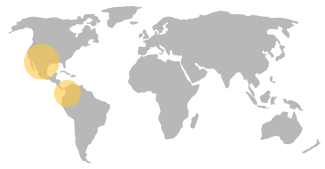
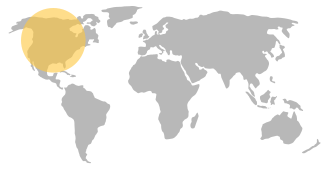
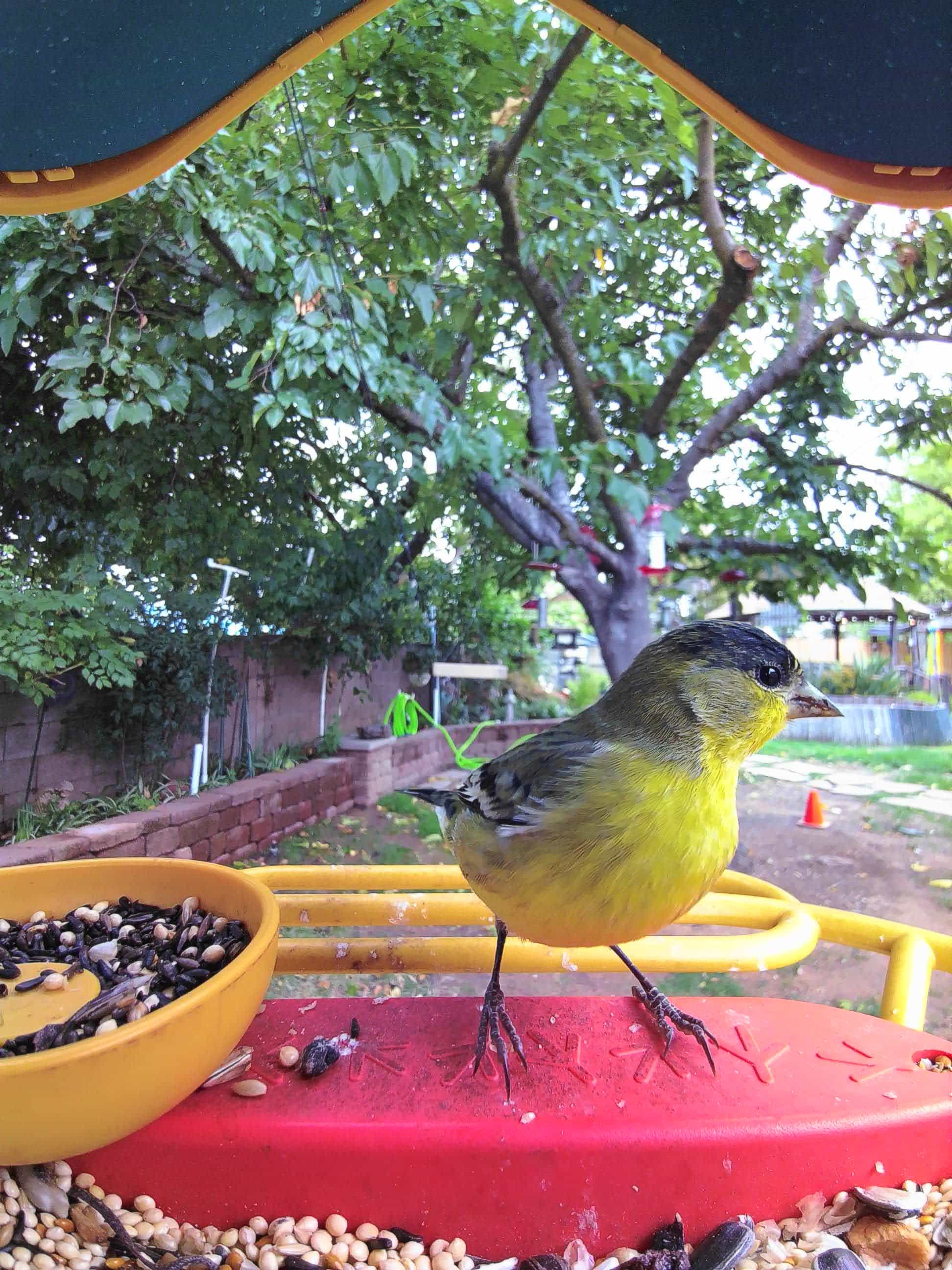


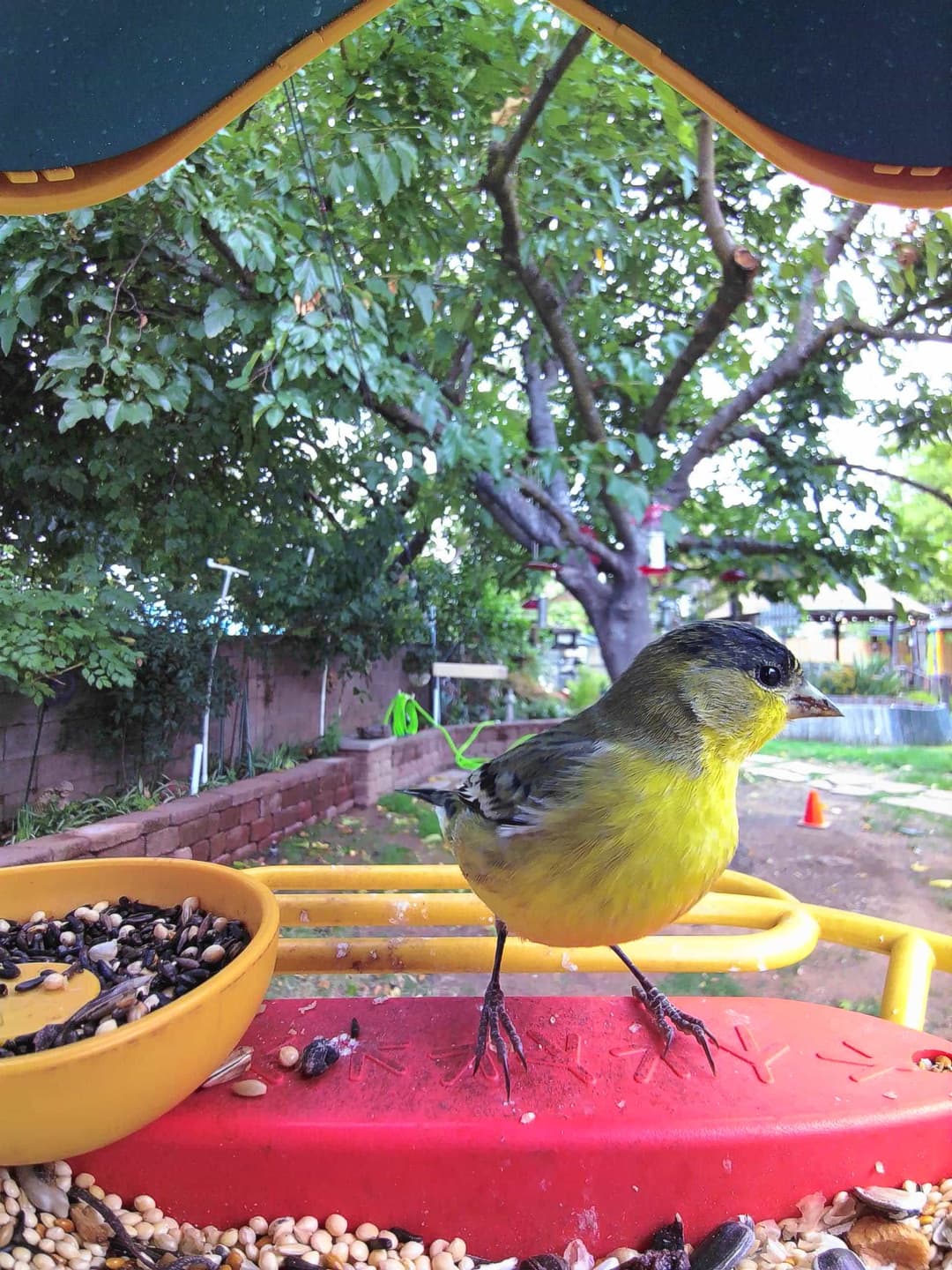
Lesser Goldfinch
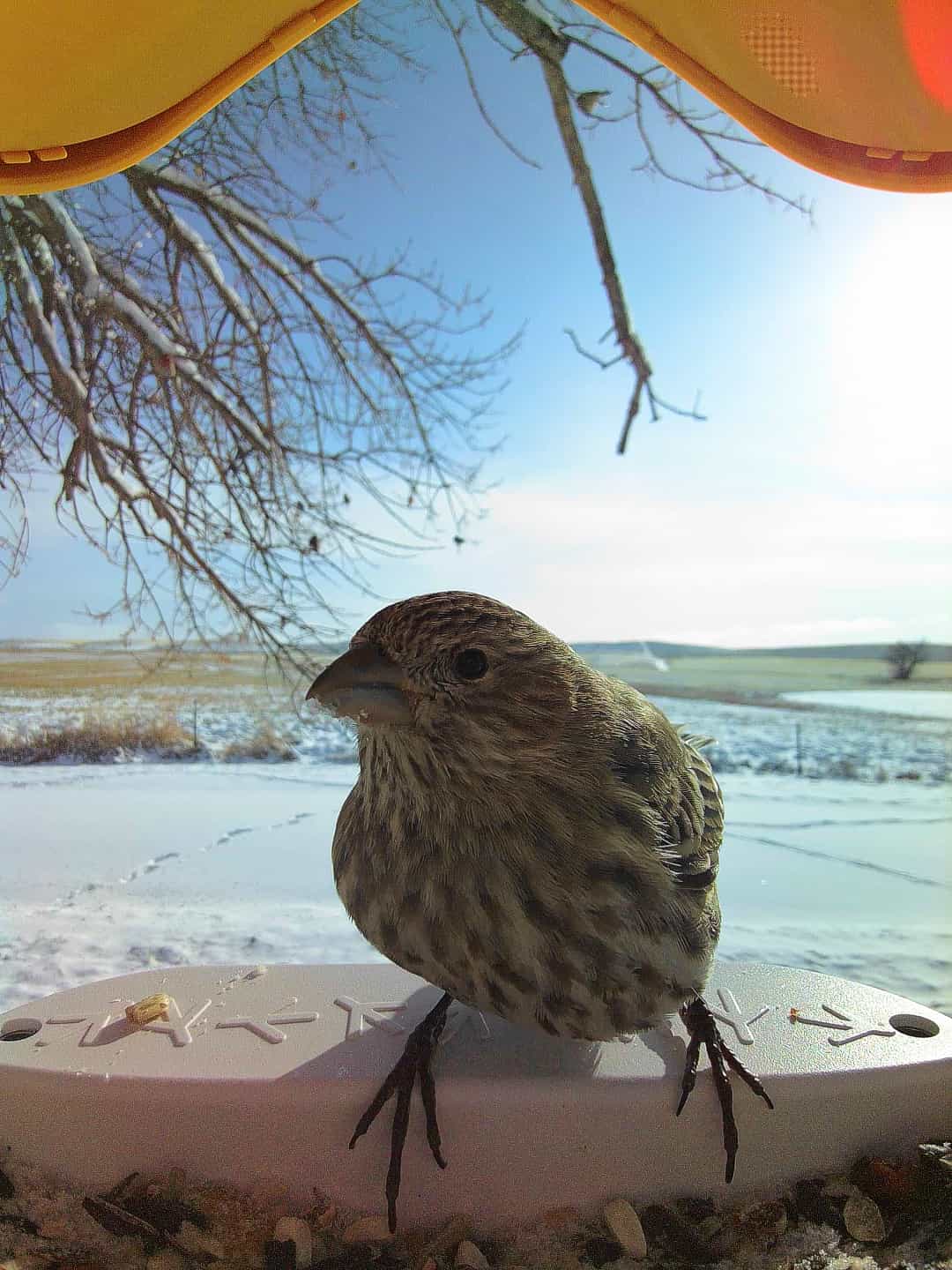


Pine Siskin
Lesser Goldfinch
Spinus psaltria
General appearance
The lesser goldfinch is a small songbird, about 4.5 inches long, with a wingspan of approximately 8 inches. It has a short, conical bill ideal for seed eating. Its tail is notched and relatively short. The species is notable for its bright yellow underparts, contrasting with black or olive-green upperparts. The wings and tail are dark with white wing bars and edges, giving it a distinctive appearance in flight.
Male vs female
Male lesser goldfinches typically display a glossy black cap and upper back. Regionally, their back can also appear olive-green. Females are generally more subdued, with olive-green upperparts and a less distinct cap. Both genders share the yellow underparts, but females have duller shades. During the breeding season, males are brighter with clearer contrast, while females remain consistent year-round.
Juvenile
Juvenile lesser goldfinches resemble adult females, displaying olive-green upperparts and yellowish underparts but with more muted overall tones. They lack the distinct black cap found in adult males. As they mature, male juveniles develop the characteristic coloration and markings of adult males, while females retain their more subdued appearance.
Size
3.5 - 4.3 in/0.3 - 0.4 oz
There's more to learn about Lesser Goldfinch
View full detailsPine Siskin
Spinus pinus
General appearance
The pine siskin, similar to a goldfinch in size, shape, and behavior, ranges between 4 1/2 to 5 inches in size (11-13 cm). It displays a brown color, usually with heavy streaking. Notable features include a narrower, sharp-pointed bill and a plain face. Yellow edging can be observed in its wings and tail, particularly during flight. The wing shape is pointed, and the tail shape is a mixture of notched and square-tipped.
Male vs female
Differences between male and female pine siskins are not well pronounced. Both sexes share the same general appearance including coloration and physical features. However, during the breeding season, males may exhibit more vibrant coloring in an effort to attract females.
Juvenile
Juvenile pine siskins resemble adults but may have heavier streaking on their underparts. The juvenile plumage is usually replaced by an adult-like plumage after the first molt. The yellow edging on the wings and tail may be less noticeable in juveniles compared to adults.
Size
4.3 - 5.5 in/0.4 - 0.6 oz
There's more to learn about Pine Siskin
View full detailsHow to tell the Lesser Goldfinch from the Pine Siskin
Visual differences
The Lesser Goldfinch (4.5 inches) is smaller than the Pine Siskin (4.5 to 5 inches). The Goldfinch boasts bright yellow underparts and a distinctive black or olive-green back, with a short conical bill. In contrast, the Pine Siskin features brown, heavily streaked plumage with subtle yellow wing and tail edges and a pointed bill. The Goldfinch's wing bars are more pronounced, while the Siskin has a plainer face. The visual differences lie mostly in coloration and patterning between the two birds.
Key differences and behavior
The Lesser Goldfinch and Pine Siskin differ notably in their behaviors and habitats. Lesser Goldfinches are versatile seed eaters commonly found in semi-open areas and gardens, favoring lower elevations near water. They have an extended breeding season, with males performing fluttery displays and courtship feeding. Pine Siskins, exhibiting irruptive migration, usually inhabit northern coniferous or mixed woods, adapting to various open areas in winter. They construct nests high in trees and exhibit aerial courtship displays. Diet-wise, while both favor seeds, Pine Siskins prefer alder and spruce seeds, while Lesser Goldfinches favor thistle and sunflower. At feeders, both species enjoy thistle seeds. Lesser Goldfinches are more settled, while Pine Siskins' presence fluctuates, driven by food availability and climate.
Still not sure? Here are more lookalikes!
Lesser Goldfinch vs American Goldfinch
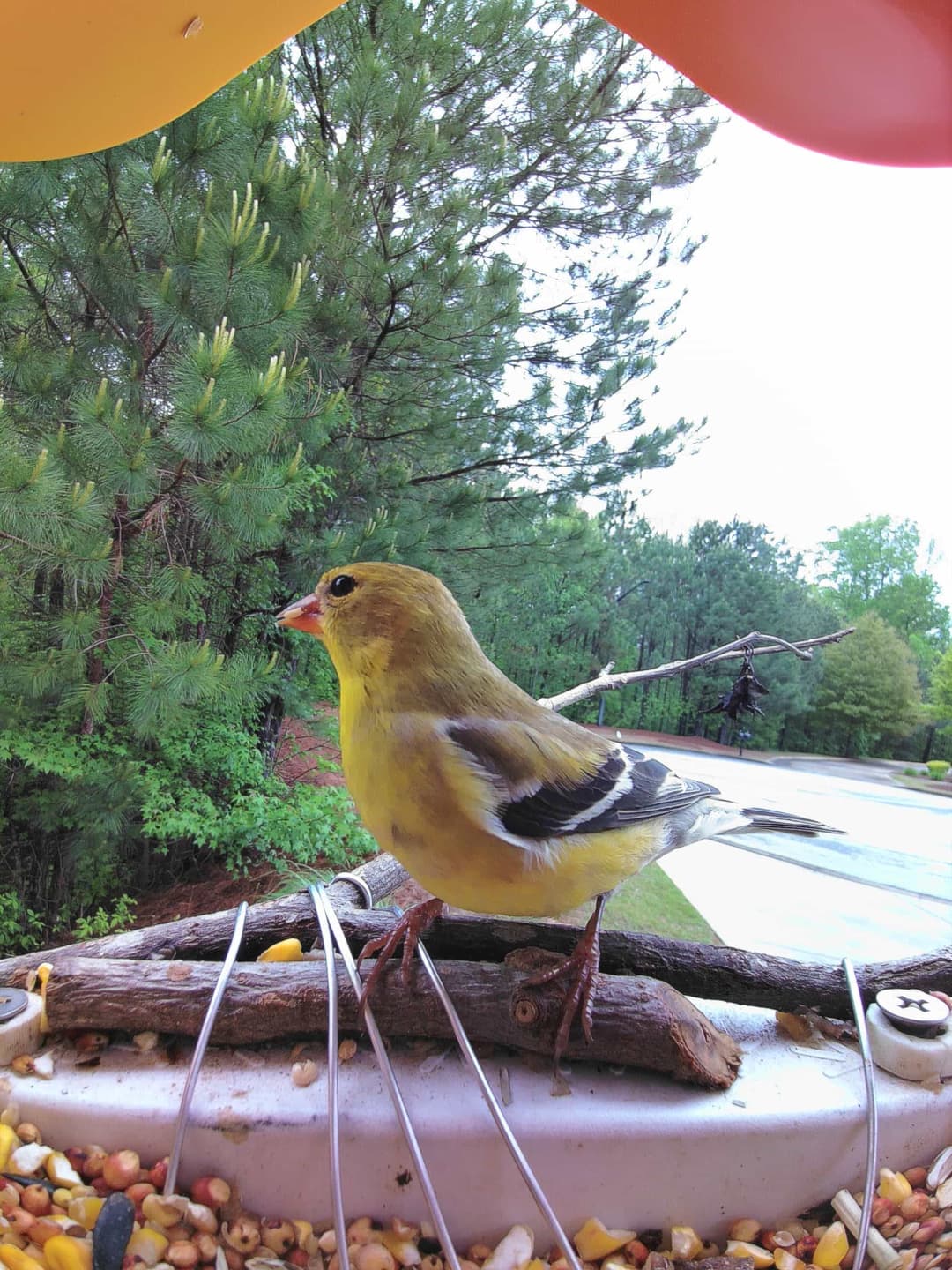
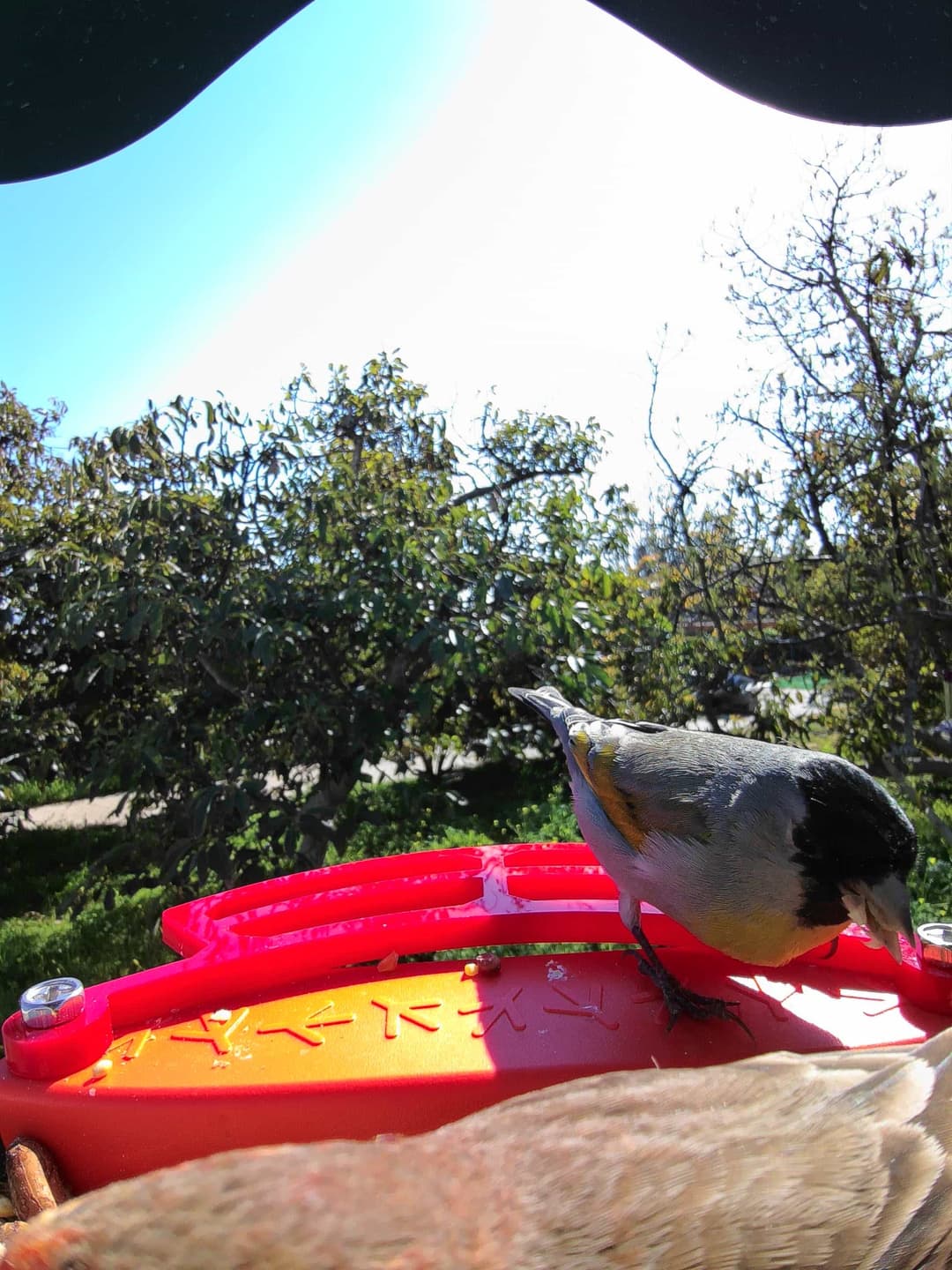
Lesser Goldfinch vs Lawrence’s Goldfinch
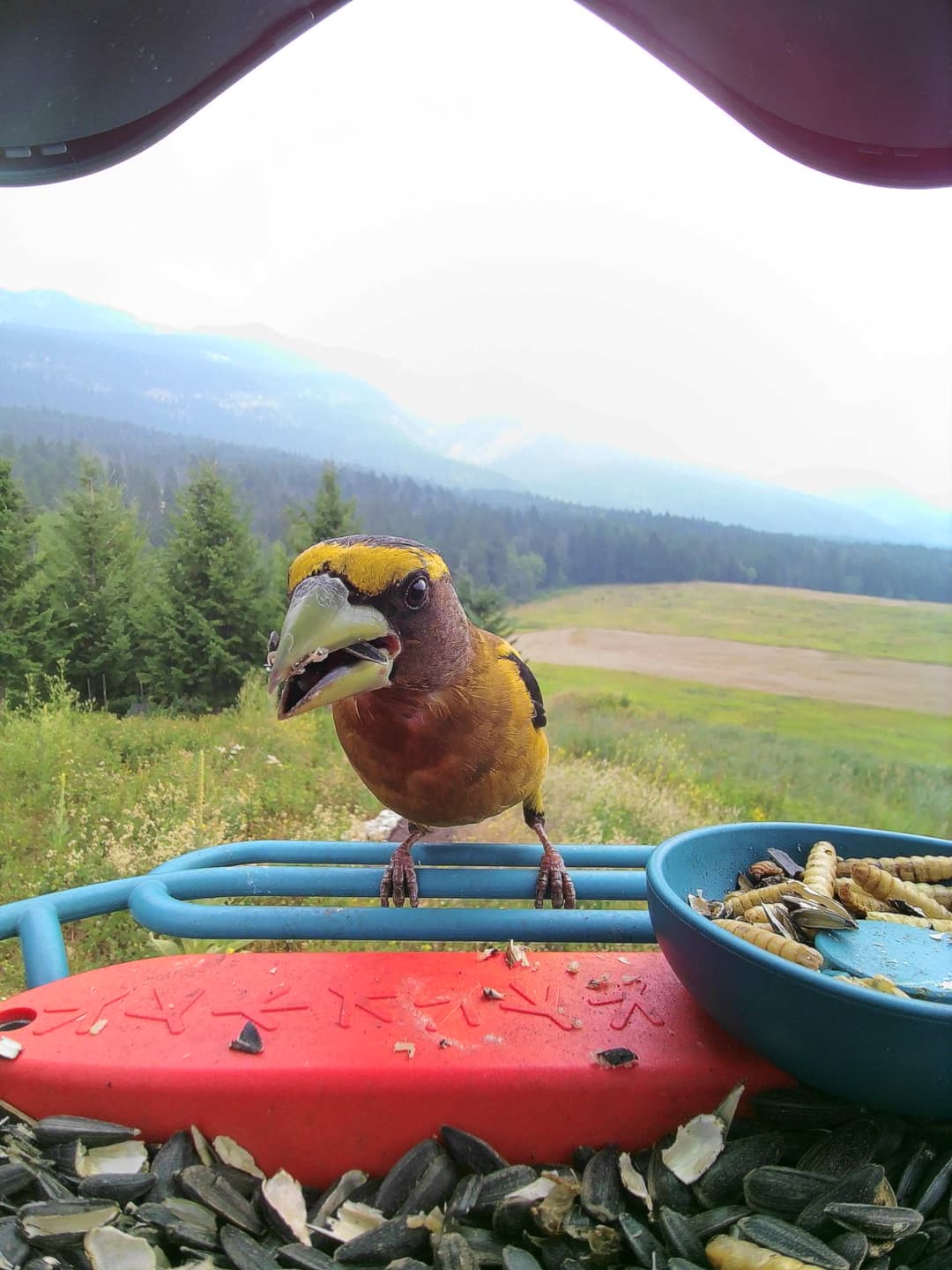
Lesser Goldfinch vs Evening Grosbeak
Pine Siskin vs House Finch
Lesser Goldfinch vs [Select a bird]

[Select a bird]
Pick a bird to compare
Pine Siskin vs [Select a bird]
[Select a bird]
Pick a bird to compare