
Audubon’s Oriole
Audubon’s Oriole
Also known as: Black-Headed Oriole
Icterus graduacauda
Quick Identification guide
Quick Identification guide
- •
Features a striking yellow body contrasting with a black head, throat, and upper chest
- •
Exhibits strong black wings with a touch of white visible during flight
- •
Carries a long, slightly curved beak that complements its sleek shape
What does an Audubon's oriole sound like?
The Audubon’s oriole possesses a distinct, sweet and melodious song characterized by a 3-syllable warble, considered one of the most pleasing among orioles. Typical vocalizations include a variety of sounds that create a unique pattern, from chattering to flute-like notes and clear whistles. These varied calls and songs contribute to its charming auditory presence in its natural habitat.
Description
These guys may be shy but that doesn't mean they shy away from a garden bird feeder! Both males and females love to sing and frequently sing to each other. Who doesn't love a good duet? These musical couples apparently look like good prospective parents, to bronzed cowbirds, at least, who are in the habit of depositing an egg or two in their nest!
The Audubon's oriole can weigh between 31to52grams and be from19to24centimeters tall.
The typical lifespan of the Audubon’s Oriole is not explicitly stated in the provided text. Therefore, I cannot provide the requested overview.
Did you know?
Most popular questions about Audubon's oriole
How to recognise an Audubon's oriole?
General appearance
The Audubon’s oriole is a medium-sized bird approximately the size of a Robin or 9 1/2 inches (24 cm) in length. Its most distinct feature is the stark contrast of colors with a solid black hood, black tail and mostly black wings against a yellow-green back. The bird's wing and tail shapes are rounded with a wedge-like appearance
Male vs female
Male and female Audubon’s orioles share similar coloration, but the female is slightly duller than the male. Notwithstanding, they both bear the distinctive yellow-green back strongly contrasting with their black regions.
Juvenile
Young Audubon’s orioles present a much duller color scheme than adults, mainly lacking the solid black found on mature birds. Over time, their plumage develops to resemble that of adults, thus indicating sexual maturity.
Often mistaken for
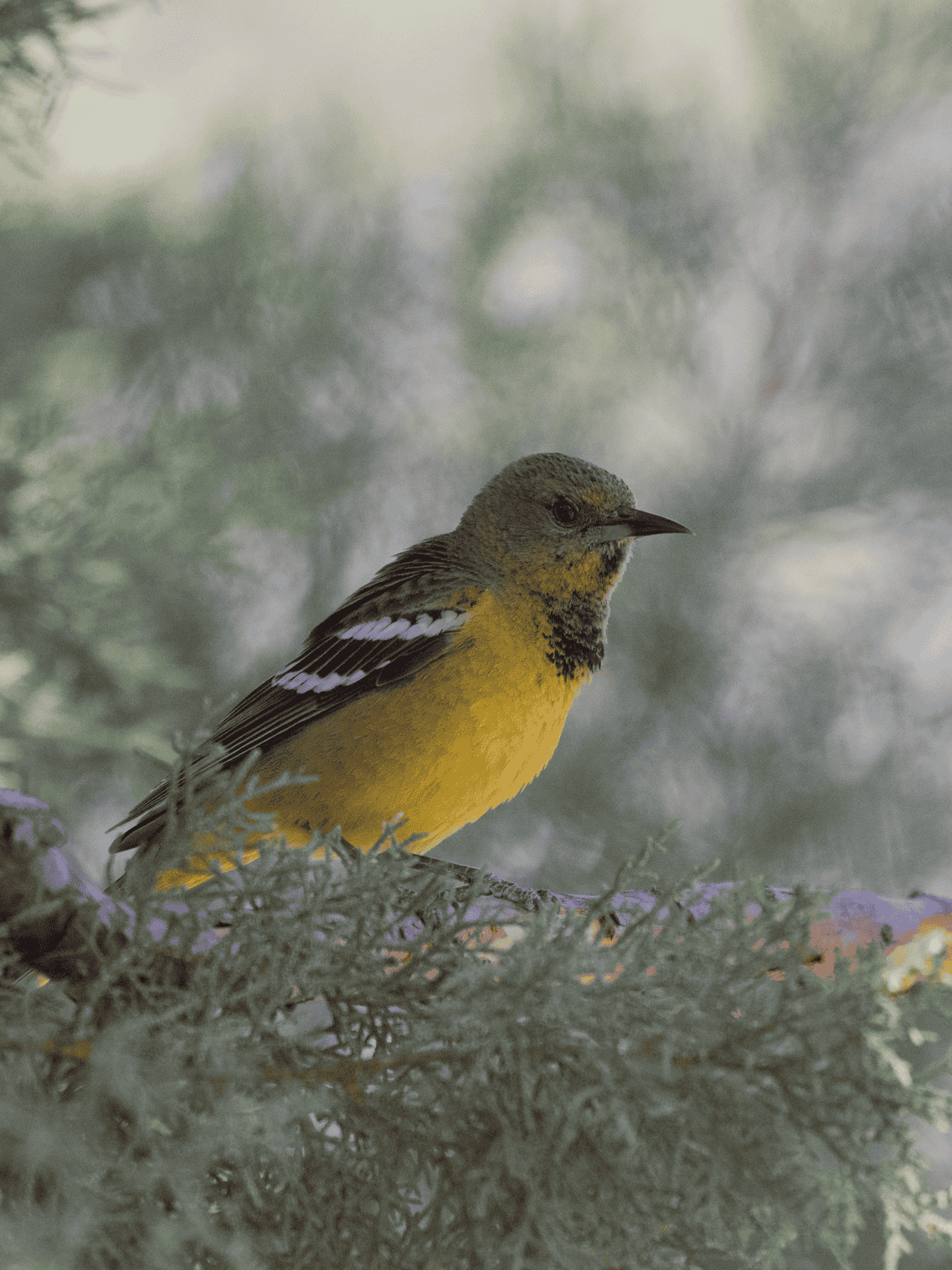
Scott’s Oriole vs Audubon’s Oriole
Audubon’s Oriole has a more uniformly yellow body with a black head and throat, whereas Scott’s Oriole has a more vibrant yellow with contrasting black on the back. Scott’s is generally slimmer.
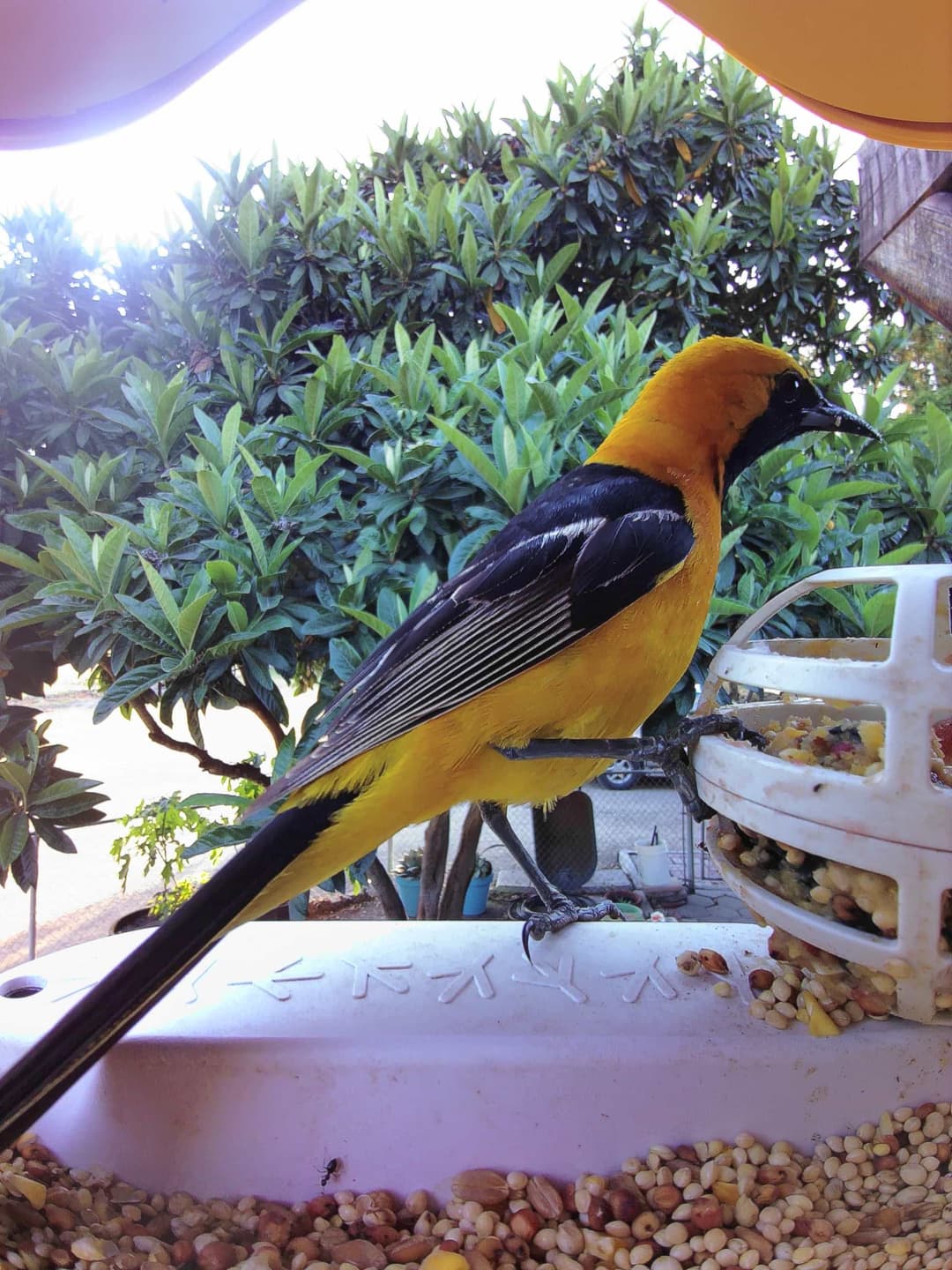
Hooded Oriole vs Audubon’s Oriole
Audubon’s Oriole is generally less vibrant in color compared to the bright orange-yellow of the Hooded Oriole. Look for the distinctive black hood and bib of the Hooded Oriole.
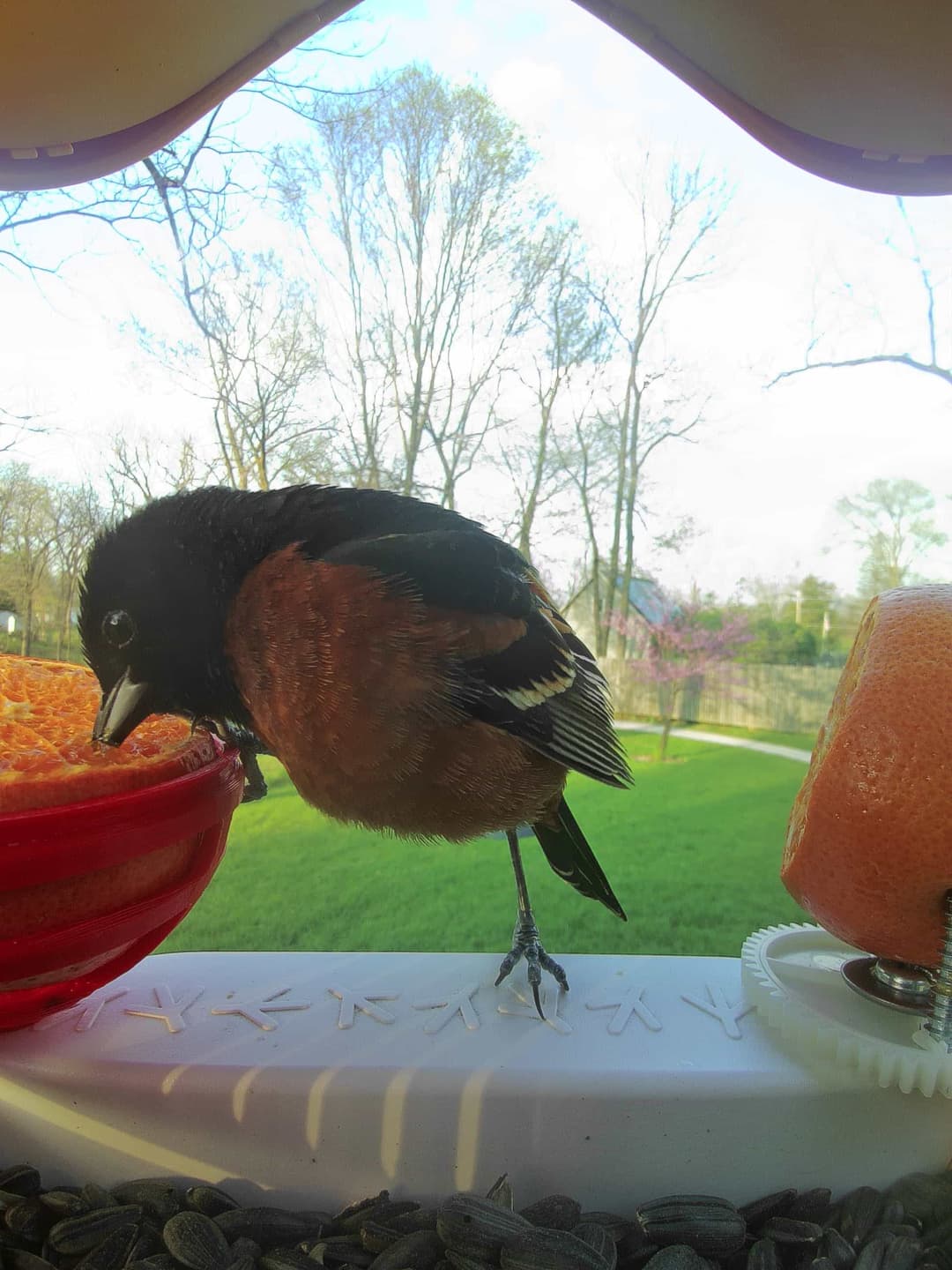
Orchard Oriole vs Audubon’s Oriole
Orchard Oriole is smaller and has a rich, dark chestnut color compared to the yellow-black contrast of Audubon’s Oriole. Audubon's appearance is also more robust.
Breeding and nesting habits of the Audubon's oriole
Mating behaviors
Audubon's orioles may form pairs that remain together throughout the year, maintaining their territory continuously. Details of their courtship behaviors are not well documented.
Nesting details
Nesting occurs primarily from late April through June in Texas. Nests are often parasitized by Bronzed Cowbirds and are constructed as hanging pouches or baskets on the outer branches of low trees, such as mesquite, 5-15 feet above the ground. These nests are made of green grass stems and lined with finer grass.
Eggs and chick-rearing
Specific information on eggs and chick-rearing practices is not provided. However, general passerine practices involve laying a clutch of eggs, incubating them, and feeding the chicks with insects and other available food sources until they fledge.
What does an Audubon's oriole like to eat?
Berries
Fruits
Insects
Nectar
Seeds
Spiders
Natural diet
The primary diet of Audubon's oriole consists of mostly insects and berries. While the details are not thoroughly known, it is known to consume a variety of insects. Additionally, it eats various berries, including those from the hackberry plant, and sometimes consumes nectar.
Bird feeders
Common foods found at bird feeders that Audubon's oriole might consume include fruits, such as oranges or grapes, and nectar from hummingbird feeders. Offering jelly or sugar water could also attract them, as they are known feeders on sweet substances.
Prepare their preferred snacks
To attract the Audubon's oriole, your feeder needs to have their favorite foods. These are primarily sugars and fruits. Consider using Bird Buddy seeds, as they are carefully selected by experts to suit the tastes of different bird species during different seasons. You can also use orange halves, as the birds love them. Be sure to renew the food regularly to keep it fresh and tempting.
Opt for the right feeder
Audubon’s orioles are fond of feeders that offer easy access. Tube or platform feeders are the best types to use. Opt for ones with perches that will allow the orioles to sit and enjoy their meal. Avoid overcrowded feeders, as these birds like quiet and less chaotic feeding spaces. Also, it’s essential to keep the feeder clean to prevent the spread of diseases.
Encourage them to come back
Attracting these orioles to your yard is one thing, but encouraging them to stay is another. You can make your yard a safe haven for them where they can make nests and breed. Provide nesting materials and place the feeder near branches of trees where they can easily take shelter. With delicious snacks, a welcoming feeder, and a safe habitat, the Audubon’s oriole will be more than happy to stay for a sing-along!
Where can you find Audubon’s orioles?

Primary habitat
Audubon’s oriole prefers woodlands and thickets, particularly native woods near Texas' Rio Grande and live oak groves.
Additional range
In addition to southern Texas, it is found in north mesquite brushland and humid oak forests or pine-oak woodlands in Mexico's foothills.
Do they migrate?
Audubon's oriole is described as "apparently a permanent resident throughout its range," indicating that it does not migrate and stays in one location year-round. This songbird species is known for inhabiting areas in Texas and northeastern Mexico, including the subtropical forests, dense thickets, and woodlands found there. Since Audubon's oriole is a non-migratory bird, there are no specific migration routes, timing, or key locations associated with its movements, as one would find with migratory species. This oriole typically remains within its established territory throughout the year, adapting to the localized climate and food resources available. Consequently, birdwatchers interested in observing Audubon's oriole will have the opportunity to find it in its natural habitat during any season, without the seasonal fluctuations in distribution that are typical of migratory birds.
What is the role of Audubon’s orioles in nature and how to protect them?
Conservation status
Audubon's oriole is considered vulnerable, with declining numbers in southern Texas over recent decades. A significant threat to the species is nest parasitism by cowbirds, which disrupts breeding success. Habitat loss due to urbanization and agriculture also poses challenges. Conservation efforts focus on habitat preservation and management, including controlling cowbird populations to enhance breeding success. Protecting riparian woodlands and restoration projects are crucial for sustaining their habitat and mitigating further declines. Overall, ongoing monitoring and habitat protection are essential to improve the conservation status of Audubon's oriole.
Ecological role of Audubon’s orioles
Its role in the ecosystem
The Audubon’s Oriole, as a nectar feeder, assists in pollination, contributing to plant biodiversity in their ecosystems. Their feeding behavior also aids in pest control as they quietly and deliberately forage among the foliage for insects, providing a natural check on insect populations. Moreover, their dietary preference for various berries assists in seed dispersal, notably that of the hackberry. When they consume these berries, the undigested seeds are excreted, facilitating the propagation of these plants. Additionally, their nests, constructed from long grass stems, enhance plant diversity by circulating seeds and contributing organic matter upon decay. However, more research is needed to fully understand their ecological significance as various details about their behavior, diet, and nesting are still unknown.
How to help protect Audubon’s orioles
Preservation tips
Habitat preservation strategies for audubon’s oriole
Focus on preserving and restoring the natural habitat of the Audubon’s oriole. This includes riparian woodlands and subtropical thickets. Limit clear-cutting and encroaching agricultural activities that fragment, degrade, or completely destroy habitats. Where necessary, implement reforestation of native plant species.
Community science initiatives for audubon’s oriole conservation
Encourage community participation in citizen science projects. This could involve bird monitoring tasks, nest tracking, and recording of bird presence or absence data. Provide training to ensure data reliability. Promoting public education also serves to raise awareness and foster co-existing strategies. The knowledge gleaned from these initiatives can inform future conservation actions.