Scott’s Oriole or Audubon’s Oriole?
Here's how to tell the difference


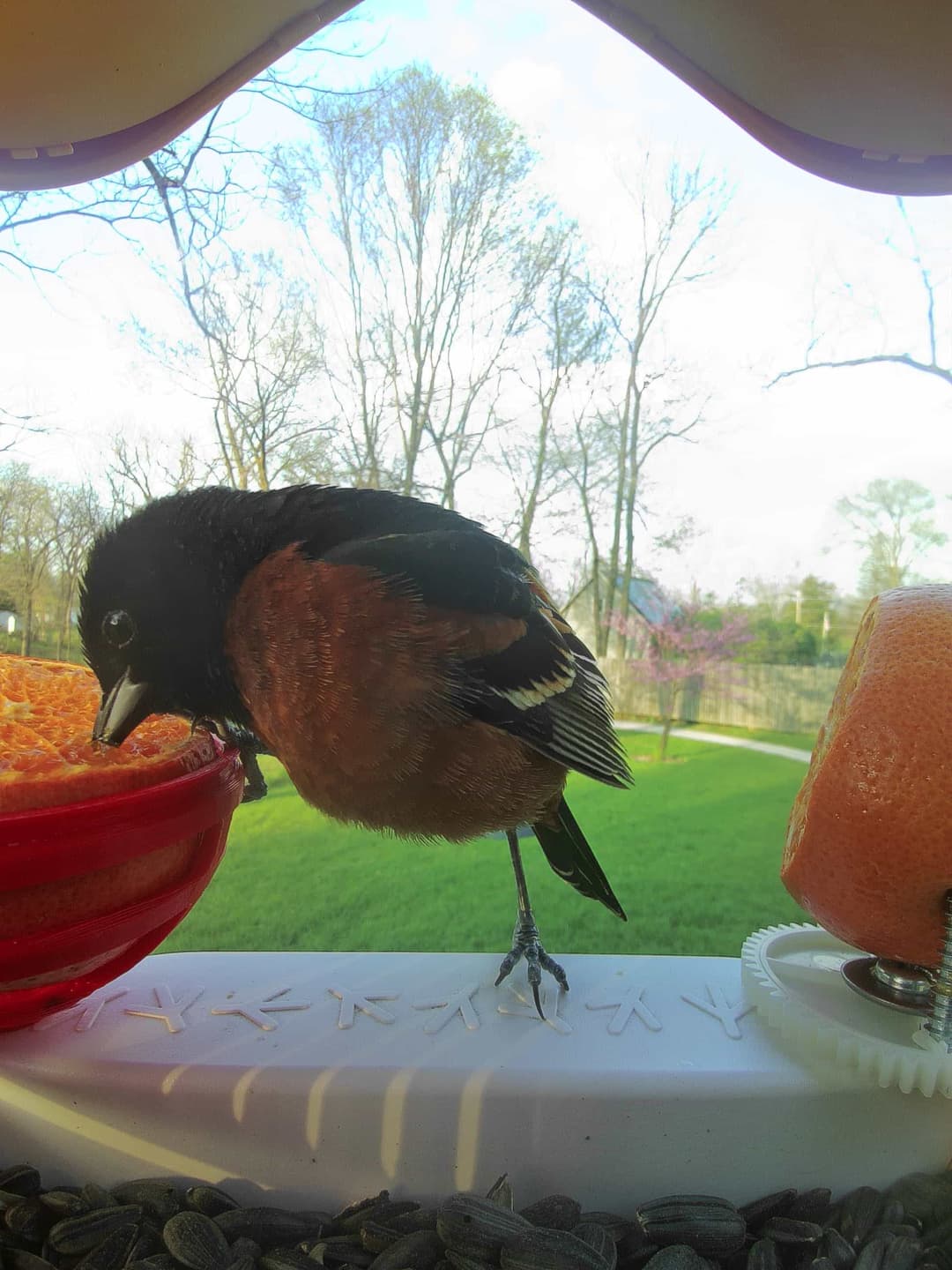
Scott’s Oriole

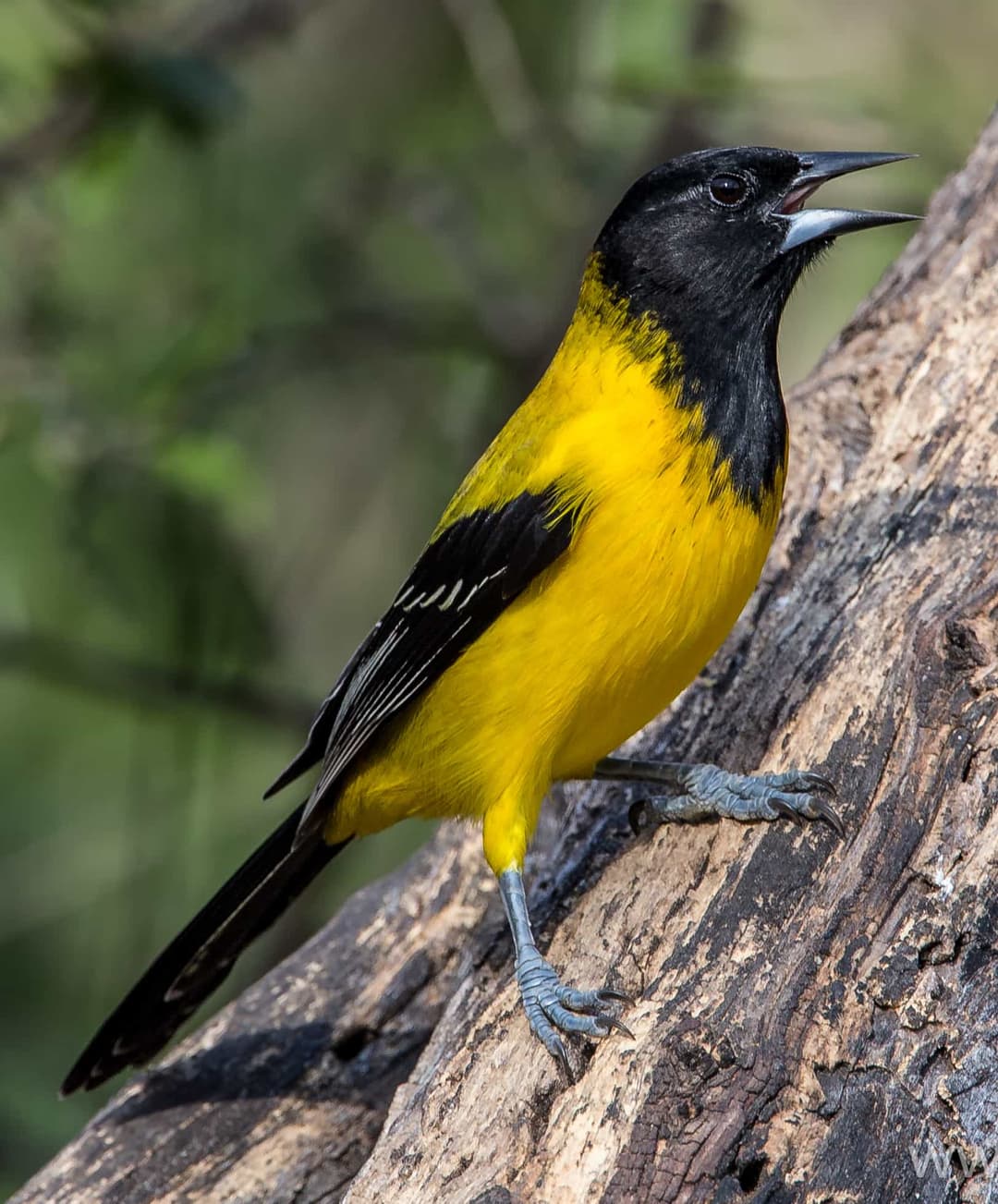
Audubon’s Oriole
Scott’s Oriole
Icterus parisorum
General appearance
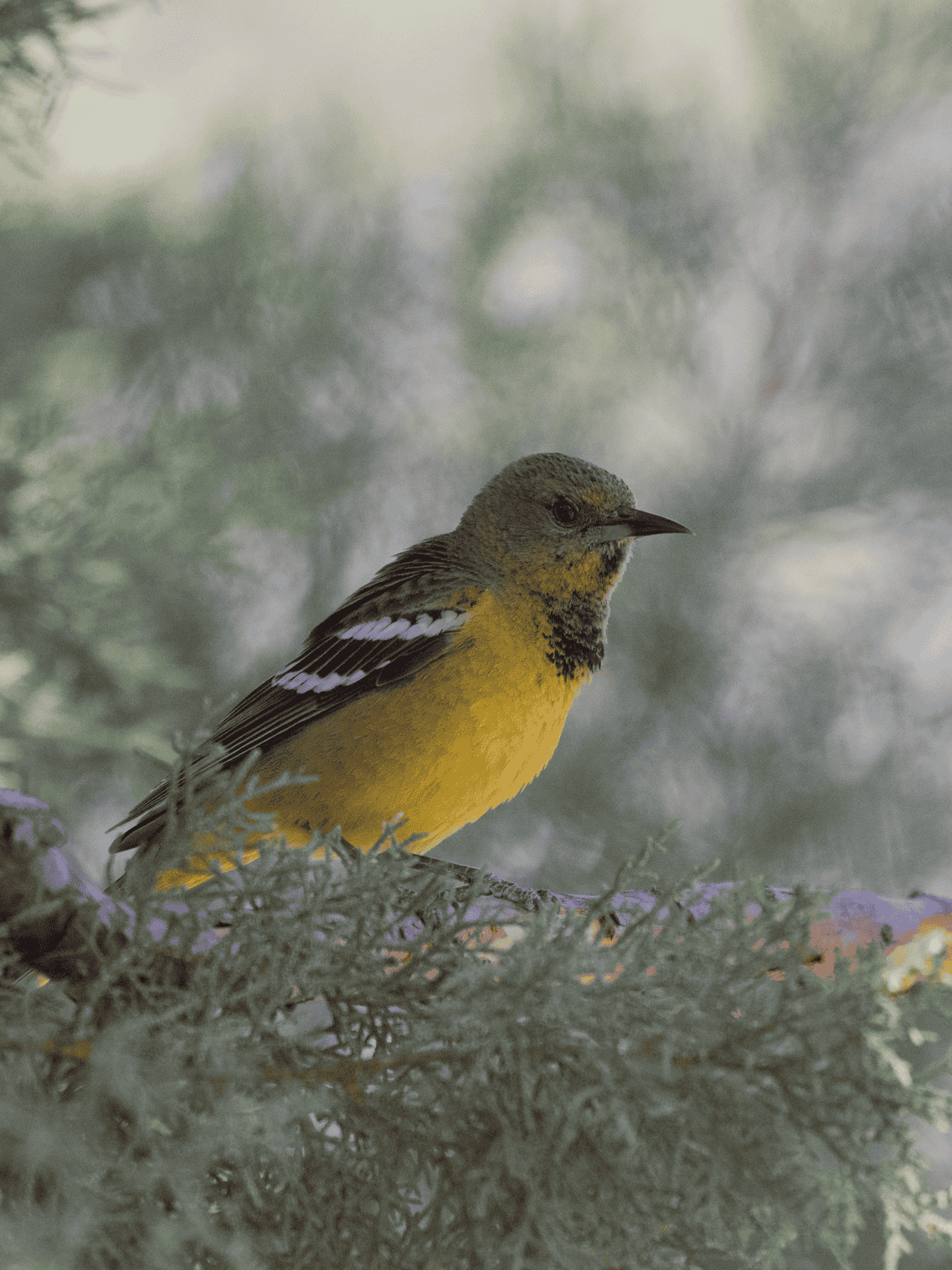
The Scott's oriole is a medium-sized bird, around 19-21 cm in length, comparable in size to a robin or sparrow. Its wings are rounded in shape, with a square-tipped tail. The bird has a striking black and yellow coloration, along with green and white shades.
Male vs female
Sexual dimorphism is apparent in this species. The male Scott's oriole is unmistakable for its brilliant black-and-yellow plumage, featuring a black upper back with yellow on the rump and base of the tail. The female, on the other hand, is more of a dusky yellow-green color. She's darker and larger than the females of the Hooded or Orchard Oriole species.
Juvenile
Juvenile Scott’s Orioles and older females may have much black on their heads. This could potentially make it difficult to distinguish them from adult males in the wild without close inspection. The extent of the black on the head may also be representative of the bird's age.
Size
7.5 - 9.4 in/1.1 - 1.4 oz
There's more to learn about Scott’s Oriole
View full detailsAudubon’s Oriole
Icterus graduacauda
Also known as: Black-Headed Oriole
General appearance
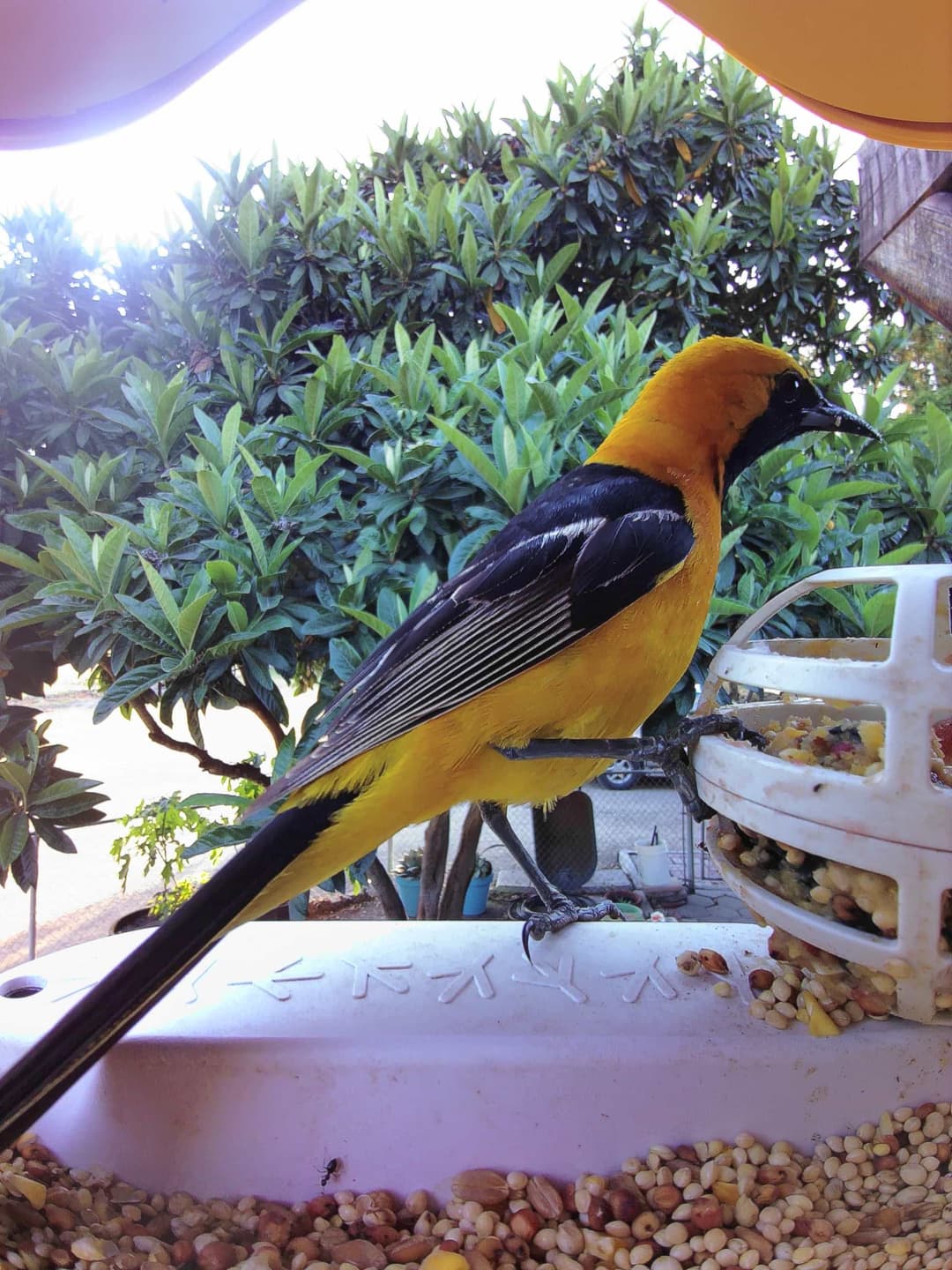
The Audubon’s oriole is a medium-sized bird approximately the size of a Robin or 9 1/2 inches (24 cm) in length. Its most distinct feature is the stark contrast of colors with a solid black hood, black tail and mostly black wings against a yellow-green back. The bird's wing and tail shapes are rounded with a wedge-like appearance
Male vs female
Male and female Audubon’s orioles share similar coloration, but the female is slightly duller than the male. Notwithstanding, they both bear the distinctive yellow-green back strongly contrasting with their black regions.
Juvenile
Young Audubon’s orioles present a much duller color scheme than adults, mainly lacking the solid black found on mature birds. Over time, their plumage develops to resemble that of adults, thus indicating sexual maturity.
Size
7.5 - 9.4 in/1.1 - 1.8 oz
There's more to learn about Audubon’s Oriole
View full detailsHow to tell the Scott’s Oriole from the Audubon’s Oriole
Visual differences
Scott's Oriole is 7.5-8.3 inches long and weighs 1.1-1.4 oz, with striking black and yellow plumage, a rounded wing, square-tipped tail, and a black upper back. The male's yellow is more intense than the female's dusky yellow-green. Audubon's Oriole is 9.5 inches long and weighs 1.1-1.8 oz, with a solid black hood, tail, mostly black wings, and a yellow-green back. Both sexes have similar colors, although females are slightly duller. Their wing and tail have a rounded, wedge-like shape, unlike the square tip of Scott's Oriole.
Key differences and behavior
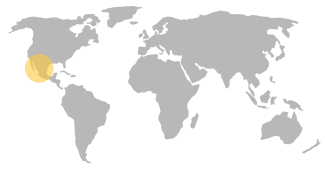
Scott’s Oriole and Audubon’s Oriole exhibit distinct behaviors despite both being medium-sized birds (7.5-9.5 inches). Scott's Oriole thrives in semi-arid Southwestern environments like oak canyons and yucca-filled grasslands, while Audubon's Oriole prefers woodlands near the Rio Grande and Mexico’s humid forests. Scott’s Oriole predominantly feeds on insects and fruit but also sips nectar, whereas Audubon’s includes berries and sometimes nectar. Scott’s Orioles sing persistently, especially males pre-sunrise, to establish territory. In contrast, Audubon’s pairs sing duets throughout the year, maintaining continuous territory. Scott’s nests in yuccas or trees with mistletoe, while Audubon’s uses low trees and faces cowbird parasitism. The Scott’s befits early territorial males; Audubon’s emphasizes year-round pair bonds.
Still not sure? Here are more lookalikes!
Scott’s Oriole vs [Select a bird]

[Select a bird]
Pick a bird to compare
Audubon’s Oriole vs [Select a bird]
[Select a bird]
Pick a bird to compare