Audubon’s Oriole or Hooded Oriole?
Here's how to tell the difference

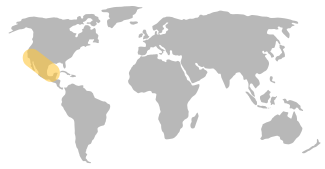

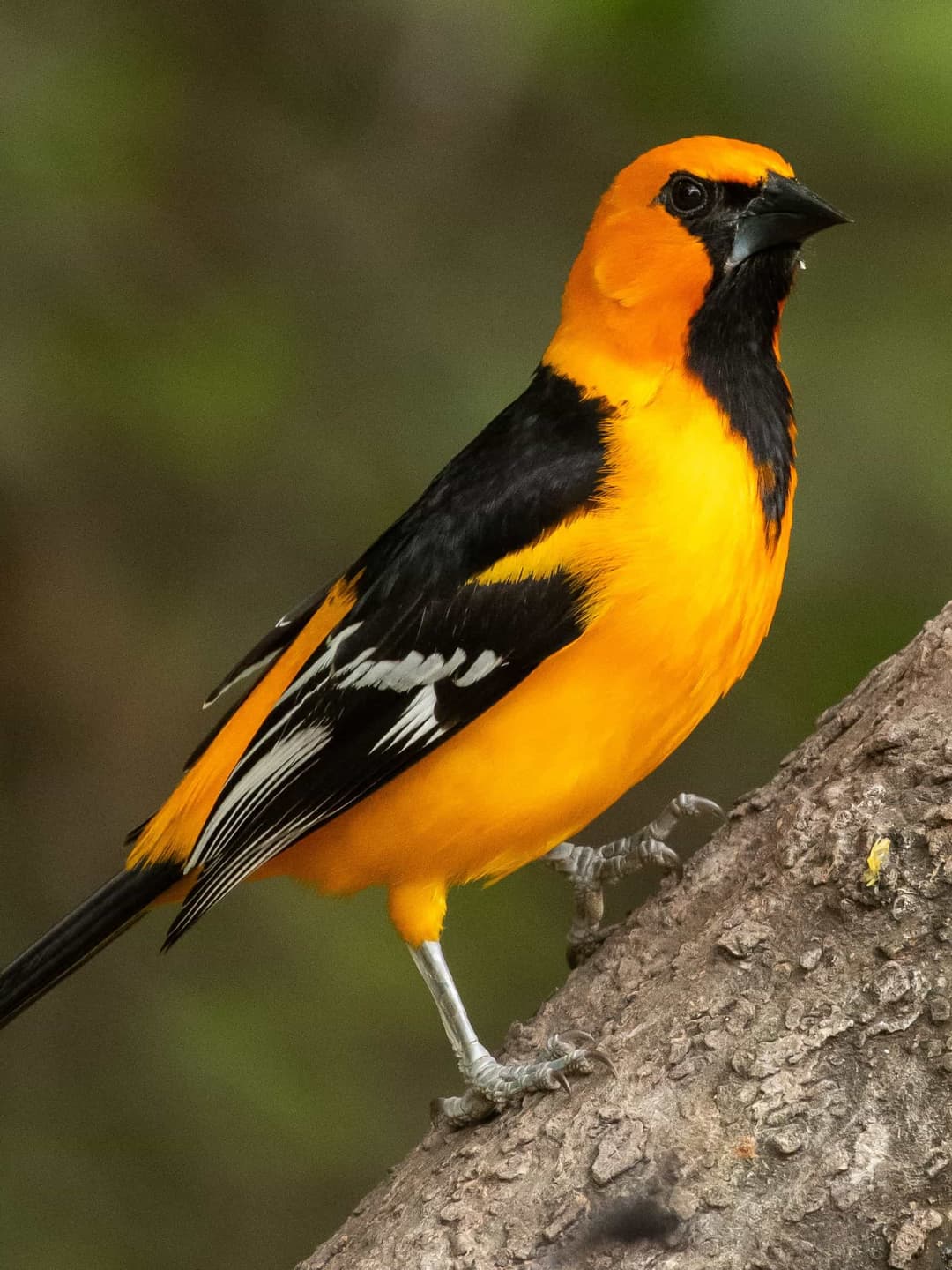
Audubon’s Oriole
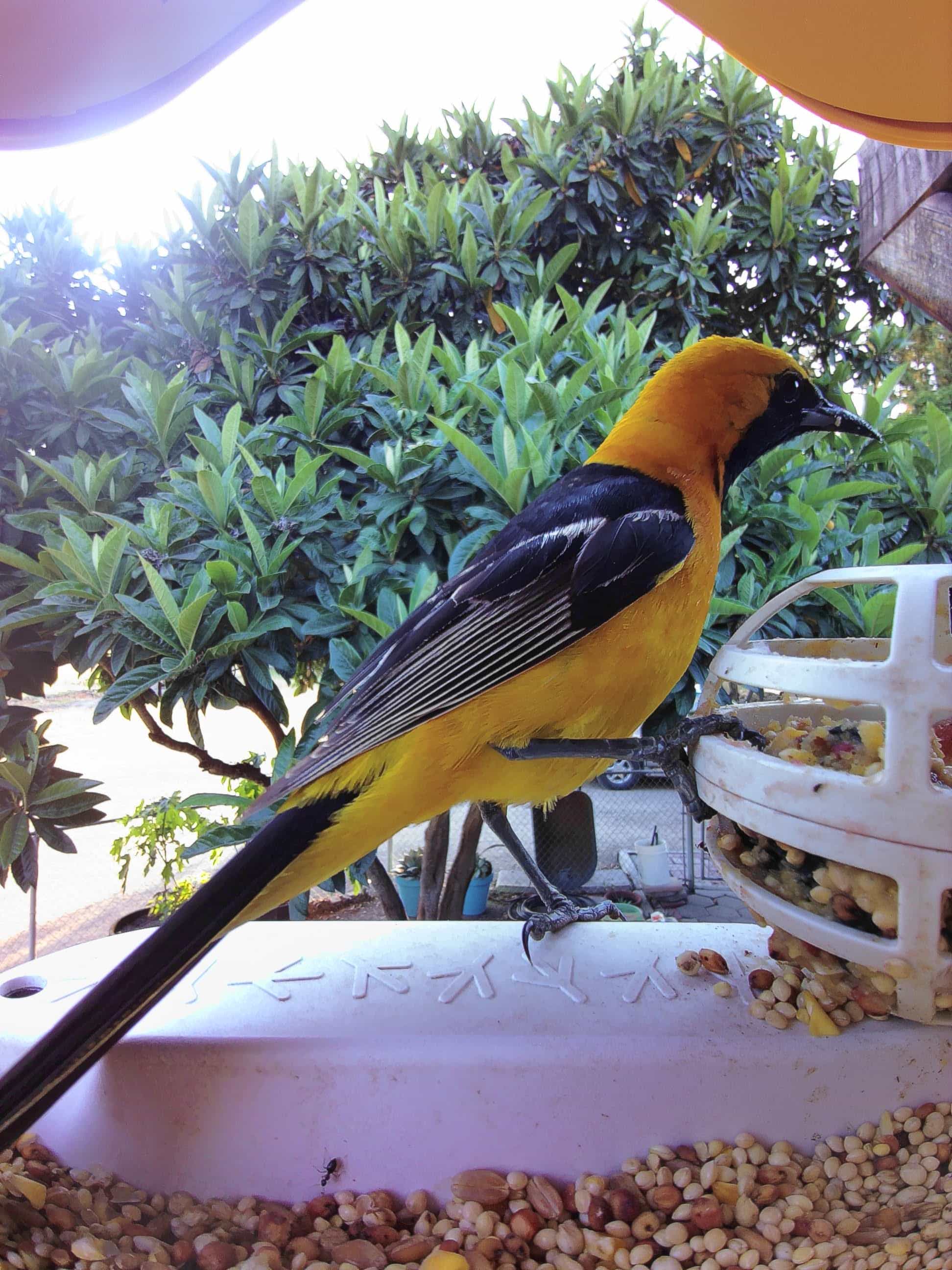


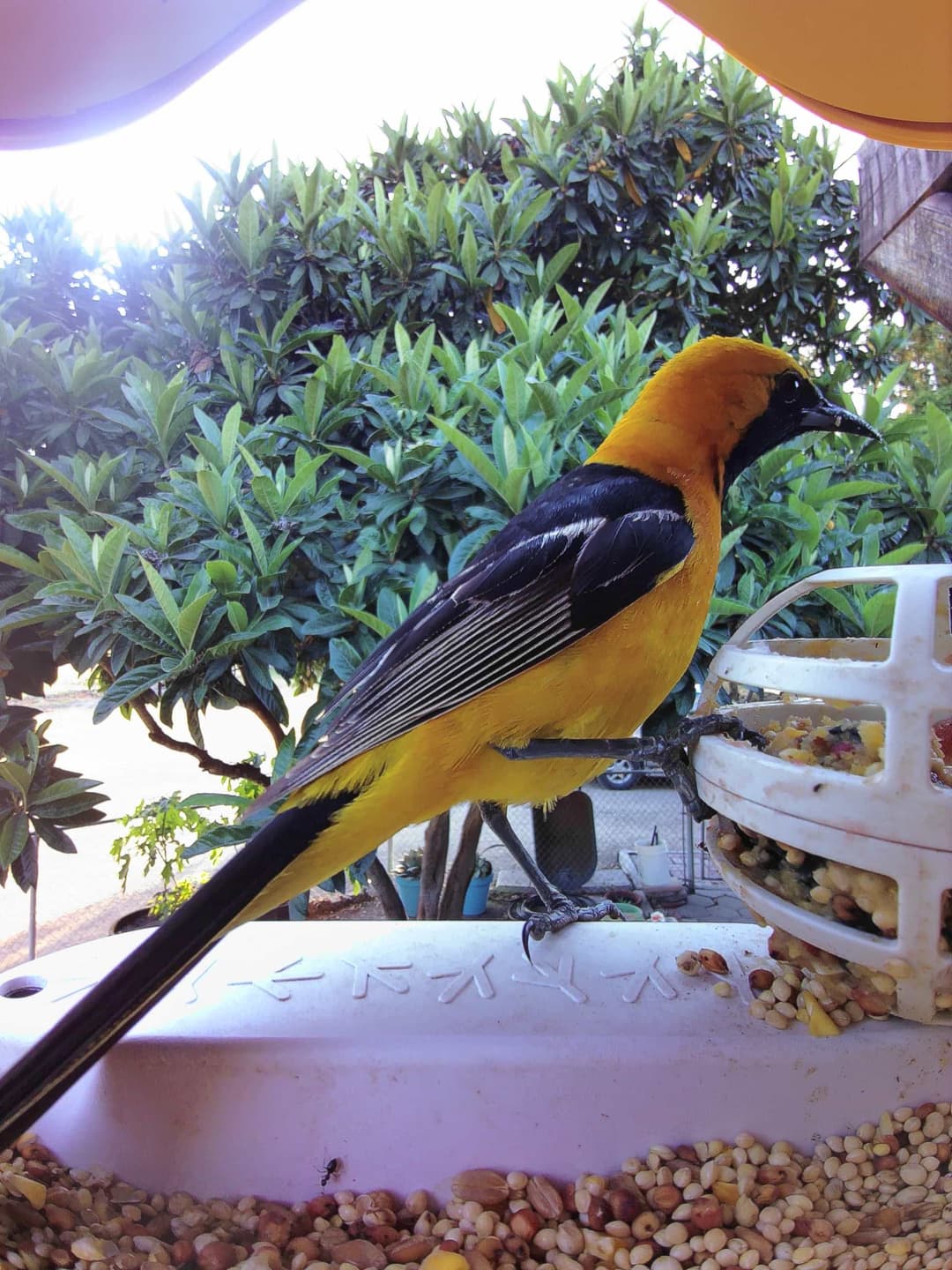
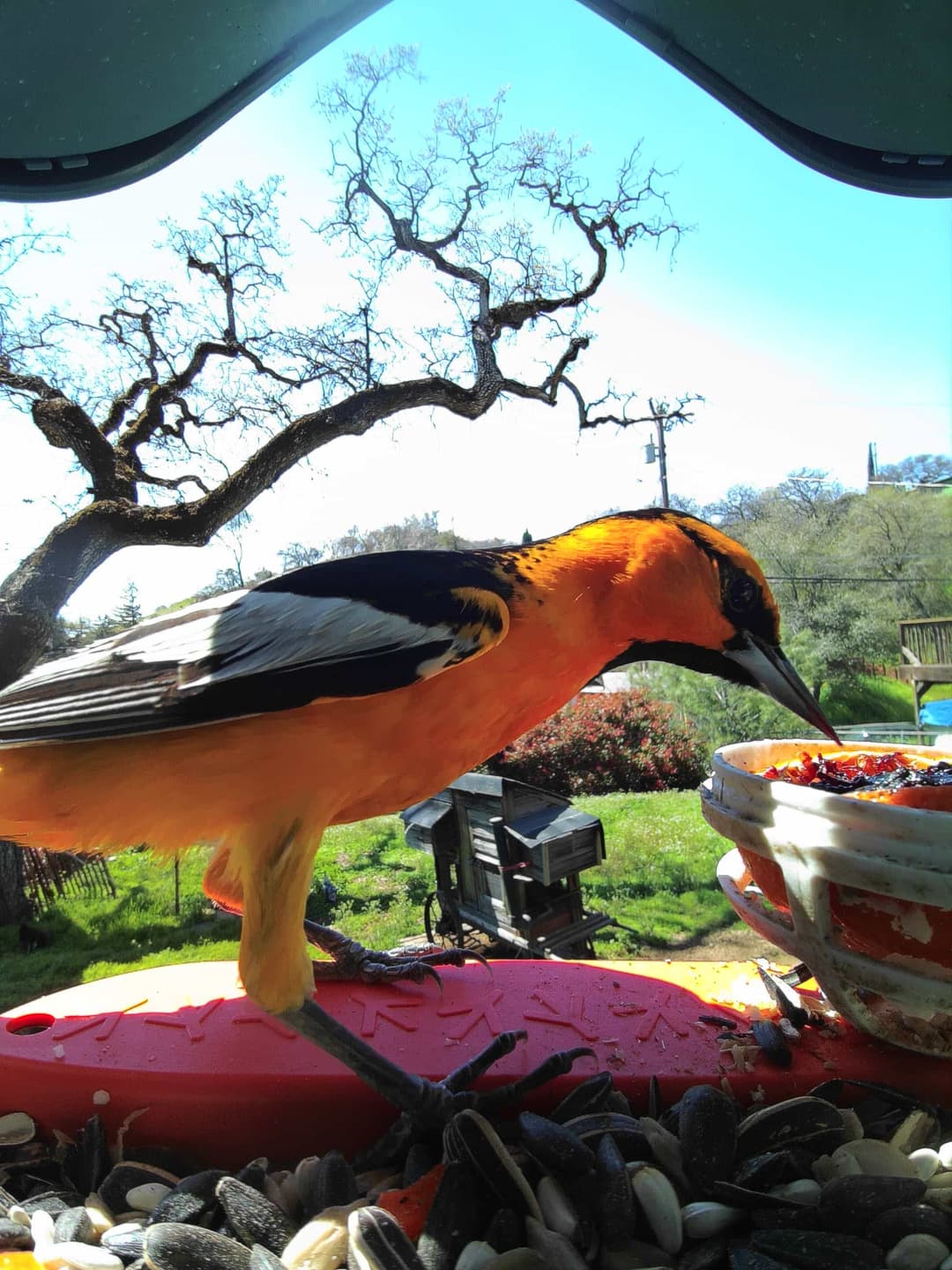
Hooded Oriole
Audubon’s Oriole
Icterus graduacauda
Also known as: Black-Headed Oriole
General appearance
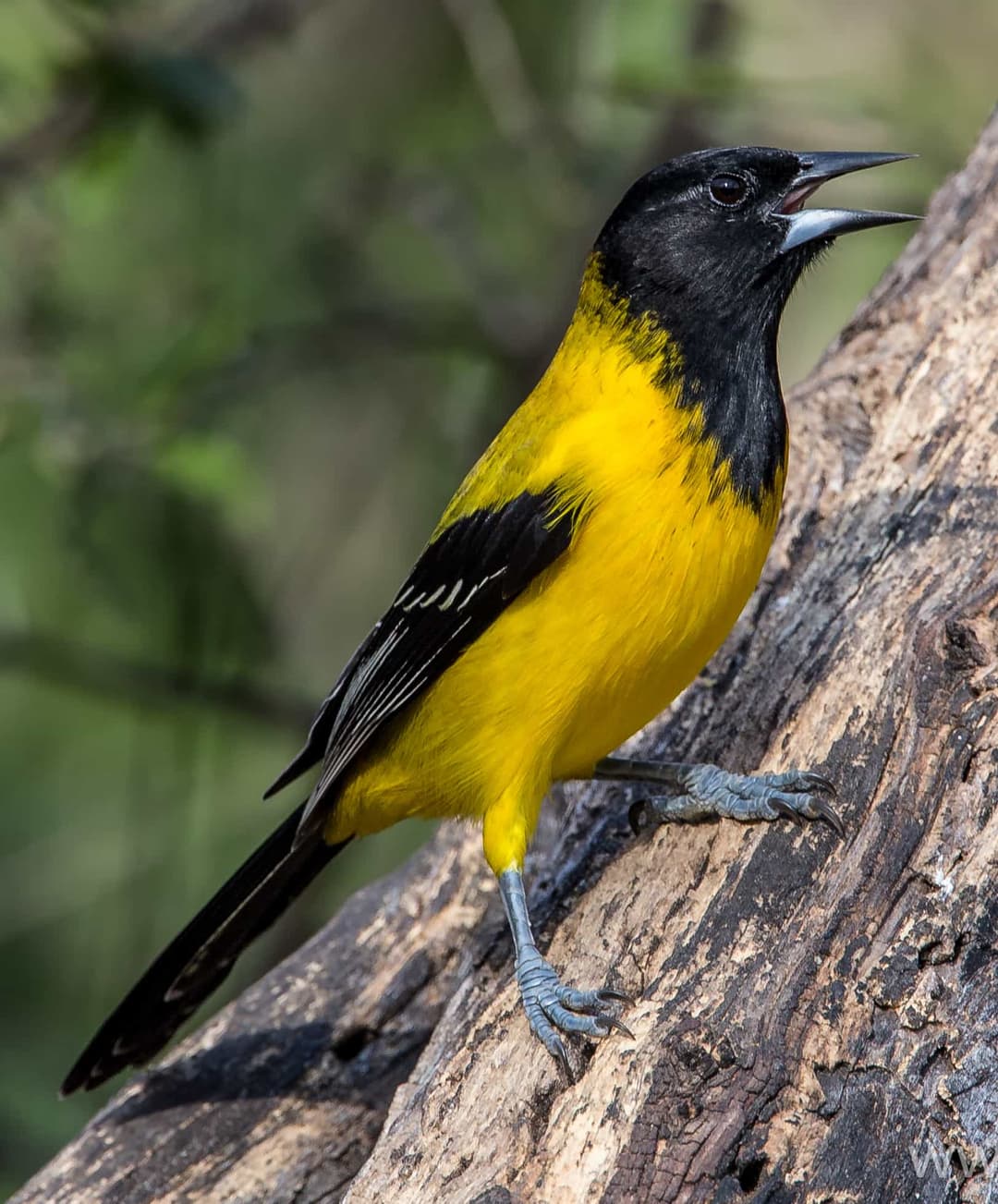
The Audubon’s oriole is a medium-sized bird approximately the size of a Robin or 9 1/2 inches (24 cm) in length. Its most distinct feature is the stark contrast of colors with a solid black hood, black tail and mostly black wings against a yellow-green back. The bird's wing and tail shapes are rounded with a wedge-like appearance
Male vs female
Male and female Audubon’s orioles share similar coloration, but the female is slightly duller than the male. Notwithstanding, they both bear the distinctive yellow-green back strongly contrasting with their black regions.
Juvenile
Young Audubon’s orioles present a much duller color scheme than adults, mainly lacking the solid black found on mature birds. Over time, their plumage develops to resemble that of adults, thus indicating sexual maturity.
Size
7.5 - 9.4 in/1.1 - 1.8 oz
There's more to learn about Audubon’s Oriole
View full detailsHooded Oriole
Icterus cucullatus
General appearance
Hooded orioles are slender songbirds with long tails and slightly curved bills. They display a vibrant combination of orange-yellow and black, with distinctive hood-like coloring on the head and neck. The wings and back are predominantly black, creating a stark contrast with their bright bodies.
Male vs female
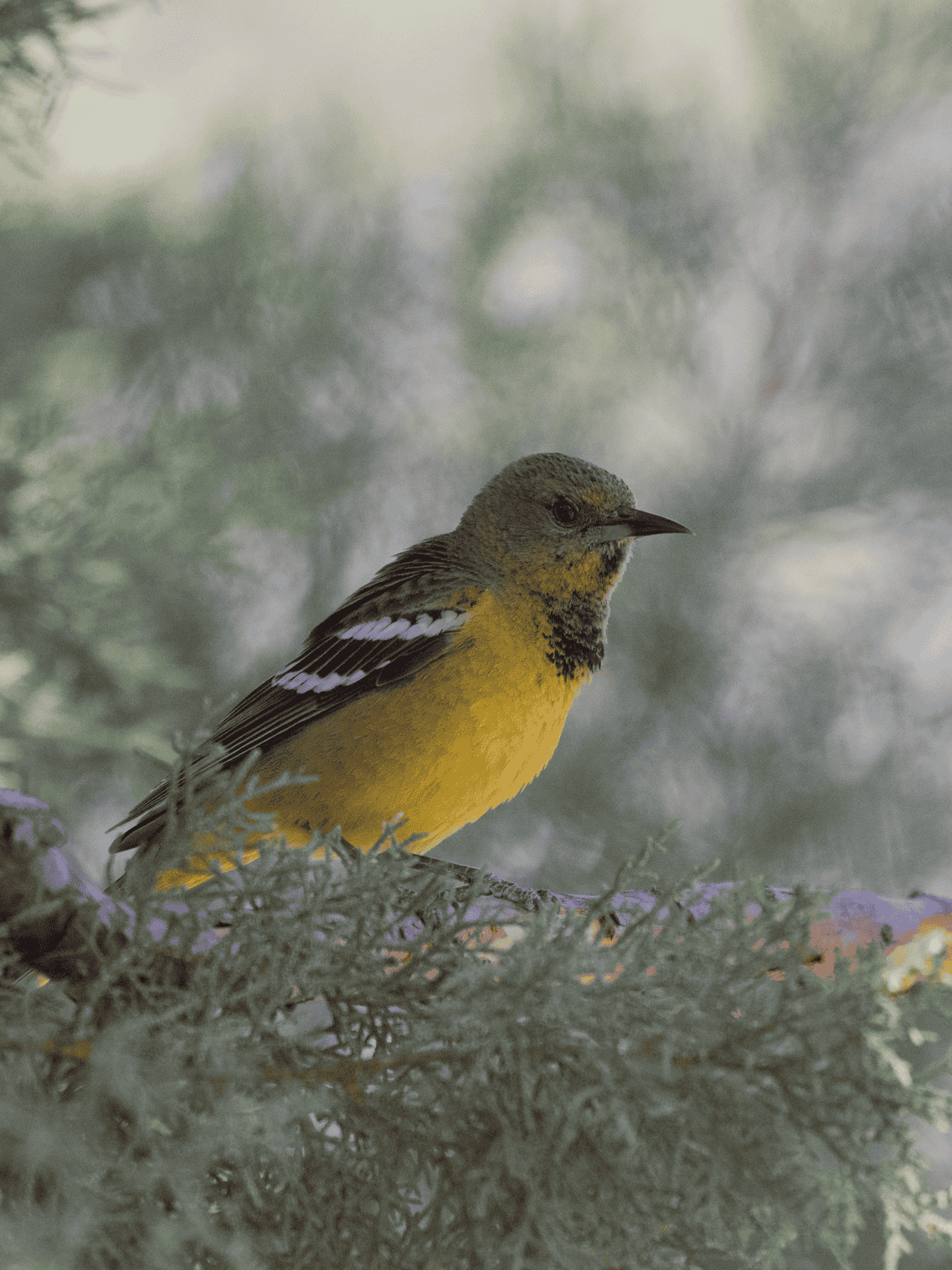
Male hooded orioles showcase a brighter orange-yellow color overall and have a more pronounced black cap and throat. Females are generally yellow to olive-yellow without the bold black markings found on males. They may exhibit some subtle grayish patterns on their wings, distinguishing them from juvenile males.
Juvenile
Juvenile hooded orioles resemble females in coloration with a yellowish-olive appearance. However, they can be distinguished by a slightly duller hue and inconsistently developed black facial markings. As they mature, young males gradually acquire brighter plumage and the distinctive black hood.
Size
7.1 - 7.9 in/0.7 - 1.2 oz
There's more to learn about Hooded Oriole
View full detailsHow to tell the Audubon’s Oriole from the Hooded Oriole
Visual differences
Audubon's Oriole is slightly larger, measuring up to 9.5 inches, compared to the Hooded Oriole's 8 inches. Audubon's displays a distinct black hood, wings, and tail with a yellow-green back, while the Hooded features bright orange-yellow plumage with a black head and throat. Hooded Orioles have a slender build with long tails and curved bills, whereas Audubon's Orioles appear more robust. Females of both species are duller, but Hooded Oriole females lack the bold black markings found on males. Both juveniles closely resemble their respective females.
Key differences and behavior
Audubon's Oriole and Hooded Oriole exhibit distinct behavioral and habitat preferences. Audubon's Orioles are shy but frequent backyard feeders, residing in Texas woodlands and Mexican oak forests. They form year-round pairs, and their nests often suffer parasitism by bronzed cowbirds. Hooded Orioles, however, exhibit acrobatic feeding and strong flight capabilities; they thrive in open woods, urban parks, and palm groves, particularly in California. Breeding Hooded Orioles display courtship rituals and construct elaborate woven nests in palms. Both species have diverse insect-based diets but vary in foraging: Audubon's Orioles consume insects, berries, and occasionally nectar, while Hooded Orioles often feed on insects, berries, and nectar, favoring sugar-water at feeders. In essence, Audubon's Oriole is more reclusive and forest-oriented, whereas Hooded Oriole is adaptable and urban-integrated.
Still not sure? Here are more lookalikes!
Audubon’s Oriole vs [Select a bird]

[Select a bird]
Pick a bird to compare
Hooded Oriole vs [Select a bird]
[Select a bird]
Pick a bird to compare