
Black Rosy-Finch
Black Rosy-Finch
Also known as: Black Rosy Finch
Leucosticte atrata


Quick Identification guide
Quick Identification guide
- •
Exhibits a dark brown to black body coloration accented by pinkish highlights on the wings and rump
- •
Features a medium, conical beak that is pale in color, suitable for feeding on seeds
- •
Possesses a rounded head and stout body, giving it a compact and robust appearance
What does a black rosy-finch sound like?
The Black Rosy-Finch uses a variety of low, cheap-sounding notes for communication. These are used as a contact call during flight and to proclaim an occupied nesting territory. The bird also employs a characteristic call pattern that is both falling and flat. The type of calls the Black Rosy-Finch makes include chatter, chirp or chip, and hi. Its complex vocalizations play an essential part in its interactions and behaviors.


Description
Scared of heights? Not these guys! They like to nest in cliff crevices and large boulders at incredibly high altitudes; up to 10,000 and 13,000 feet. That's why they are so difficult to study. For them, home is where their lady is. They don't defend a territory per se but you better not get too close to their mate because they'll chase you away if you do.
The black rosy-finch can weigh between 22to32grams and be from14to16centimeters tall.
The Black Rosy-Finch typically lives for up to five years. This is relatively short compared to other finch species such as the House Finch, which can live up to 11 years. Lifespan can be influenced by environmental factors, with harsh conditions potentially reducing life expectancy.
Did you know?
Most popular questions about black rosy-finch
How to recognise a black rosy-finch?
General appearance
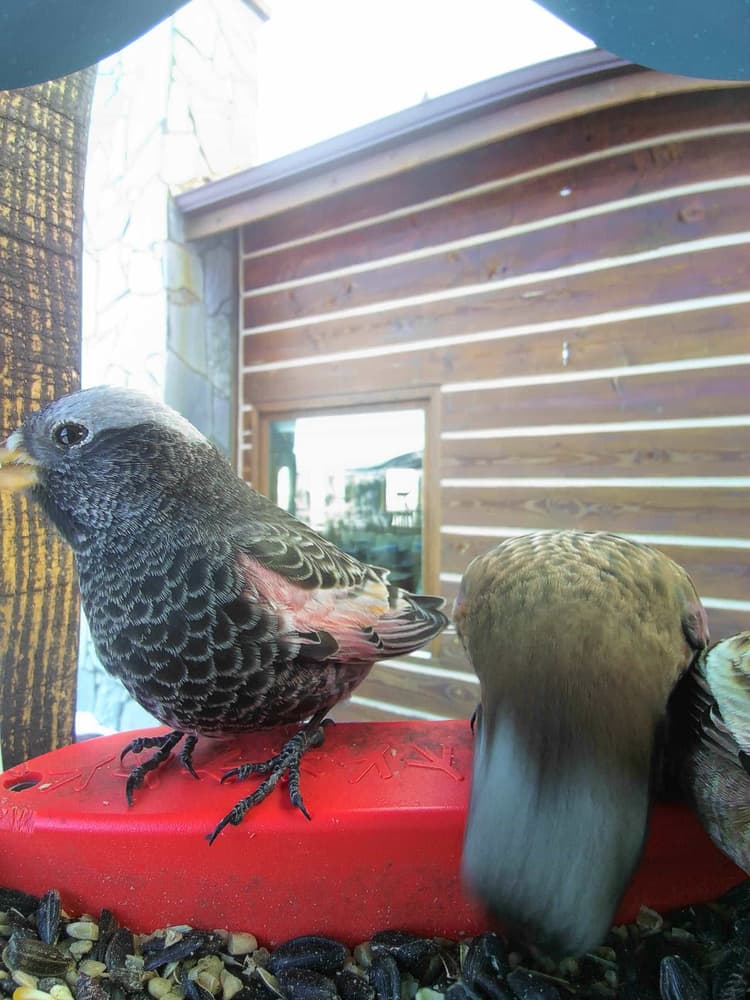
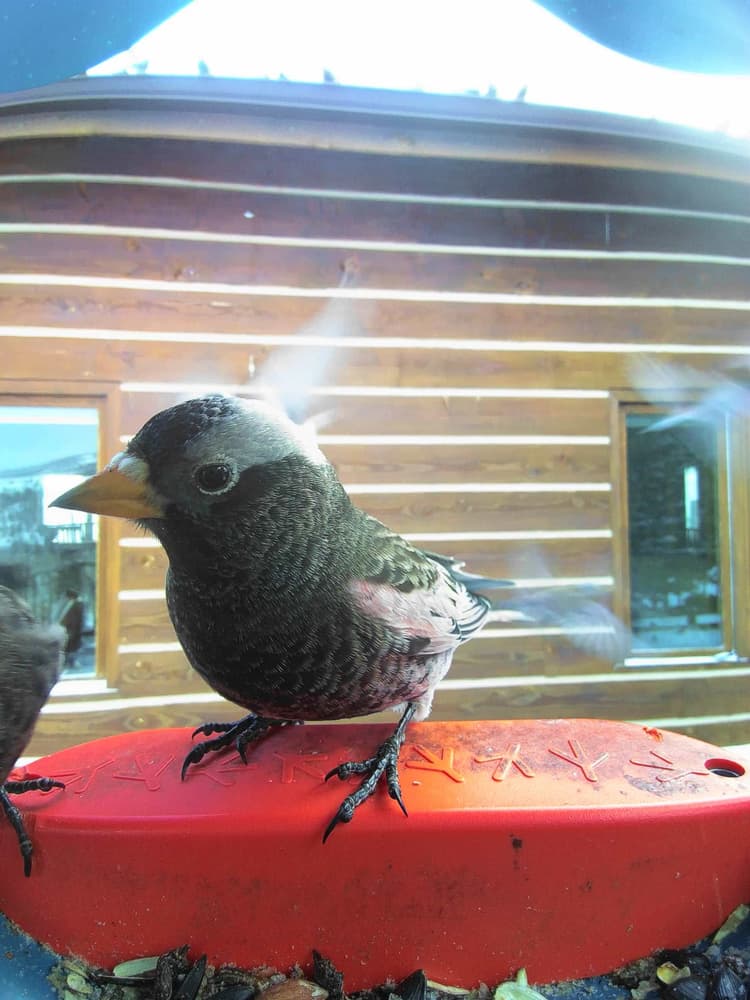
The black rosy-finch (Leucosticte atrata) showcases a striking combination of dark and rosy hues. It is primarily sooty black with a noticeable pinkish wash on the belly and wings. Its contrast of dark plumage and bright rosy patches makes it distinctive among alpine birds. In winter, their plumage may appear slightly duller, aiding their camouflage in snowy habitats.
Male vs female
Males are generally more vibrant, with richer black and rosier patches, especially during the breeding season. Females, while similar in overall coloration, tend to be duller, with less pronounced rosy hues. The subtlety in coloration makes females slightly less conspicuous than males in their rocky habitats.
Juvenile
Juveniles exhibit a mottled brown plumage, lacking the definitive black and rosy coloration of adults. They are more uniformly colored to blend into their high-altitude environments. As they mature, their plumage gradually transitions to the definitive adult patterning, with incremental increases in dark and rosy tones.
Often mistaken for
Brown-Capped Rosy-Finch vs Black Rosy-Finch
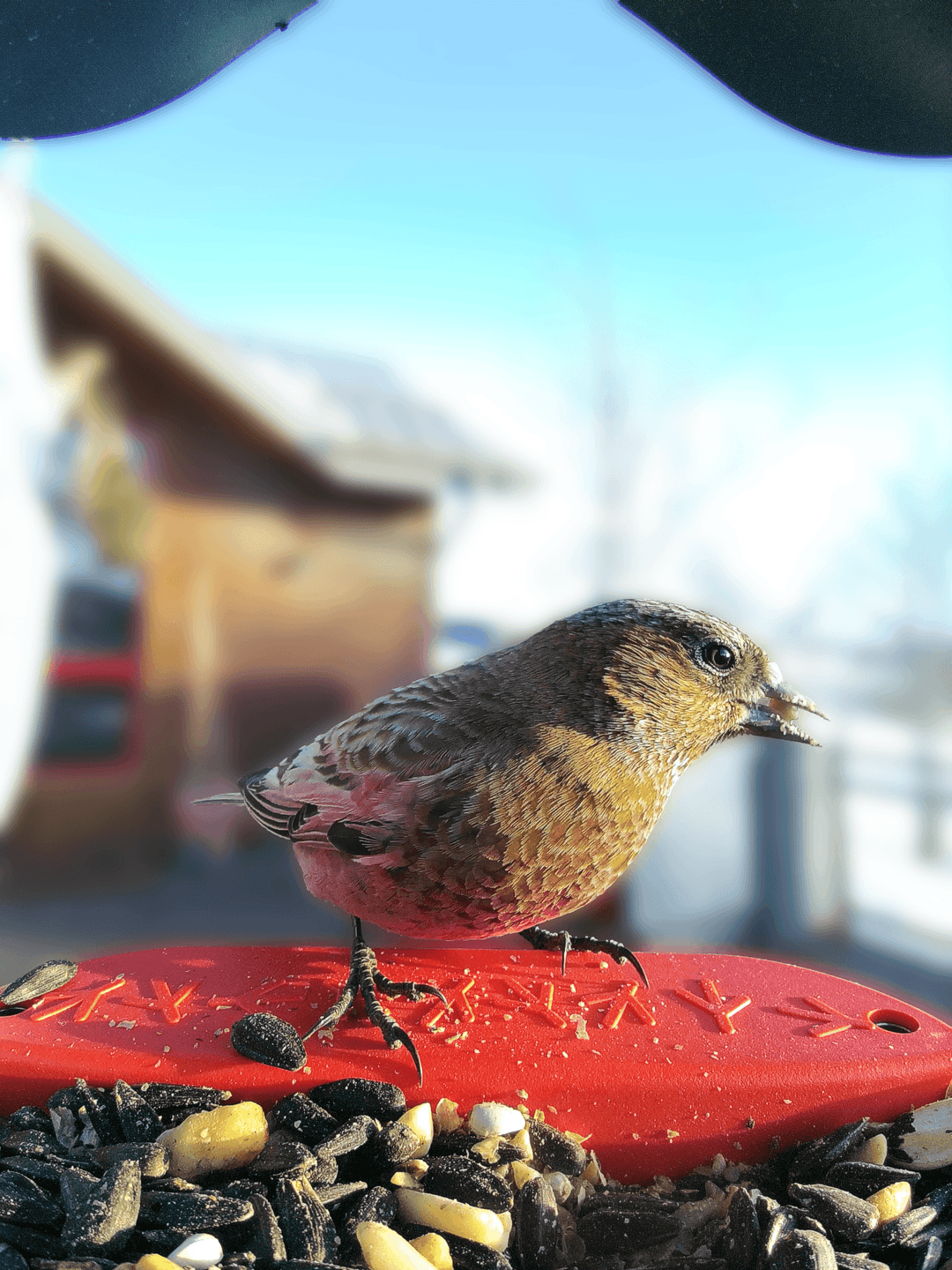
The Black Rosy-Finch has darker plumage than the Brown-Capped Rosy-Finch, which features a warmer brown cap. The Black Rosy-Finch also tends to have a slightly more extensive and uniform black tone on its body, while the Brown-Capped Rosy-Finch may appear more mottled. Both species share a similar overall shape and pinkish highlights on their wings, but focusing on the cap and overall darkness can aid in distinguishing them.
Gray-Crowned Rosy-Finch vs Black Rosy-Finch
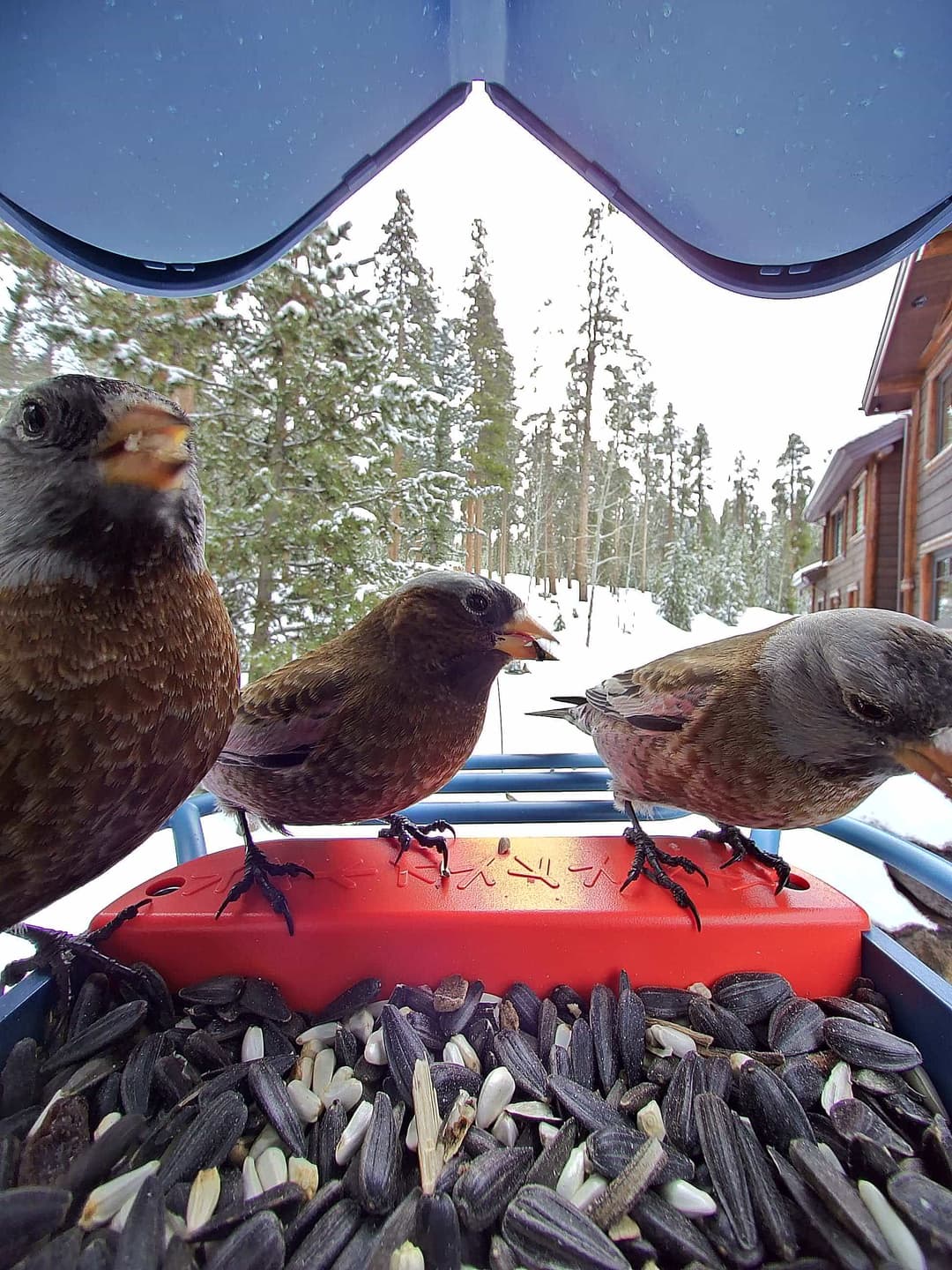
The Black Rosy-Finch exhibits a more uniformly dark appearance compared to the Gray-Crowned Rosy-Finch, which has a noticeable gray patch on its crown. Additionally, the Gray-Crowned Rosy-Finch often shows more contrast with its brown and black plumage. Observers should look for the gray crown and lighter body for the Gray-Crowned Rosy-Finch, while the Black Rosy-Finch lacks this crown and opts for a more uniform dark body.
Breeding and nesting habits of the black rosy-finch
Mating behaviors
The black rosy-finch engages in courtship during the breeding season, characterized by aerial displays and singing by males to attract females. Males may also perform flight displays, showcasing agility and strength to impress potential mates.
Nesting details
Nesting typically occurs in high-altitude rocky terrains, including cliffs and talus fields. Nests are built in crevices or sheltered locations and are constructed primarily from grasses, feathers, and moss. The chosen sites offer protection from predators and harsh weather conditions.
Eggs and chick-rearing
The female usually lays 3-5 eggs, which are incubated for two weeks. Both parents partake in feeding the chicks a diet of insects and seeds. Chicks fledge about three weeks post-hatching. Rosy-finches generally do not nest in gardens; thus creating artificial habitats isn't applicable.
What does a black rosy-finch like to eat?
Insects
Seeds
Natural diet
The black rosy-finch has a diet similar to the Gray-crowned Rosy-Finch. In its natural habitat, it primarily consumes seeds from grasses and forbs, insects, and other small invertebrates. During breeding season, the birds may increase their intake of insects and larvae to meet the higher protein needs for raising young. They often forage on the ground or in bushes where these resources are abundant.
Bird feeders
At bird feeders, black rosy-finches readily consume a variety of seeds. They are attracted to sunflower seeds, millet, and nyjer thistle. These birds may also visit feeders providing suet or other high-energy foods, especially during colder months when natural food sources become scarce. Their visits to feeders are often in flocks, providing an opportunity to observe their social feeding habits.
Choosing the right snacks for black rosy-finches
These beautiful black rosy-finches are particularly fond of sunflower seeds, hulled peanuts, and niger seeds. But for best results, we highly recommend using Bird Buddy seeds. These seeds are specially chosen by experts for the season, ensuring the birds get the nutrition they need and attracting more of these finches to your garden.
Selecting a feeder for black rosy-finches
To attract black rosy-finches to your yard, consider investing in hanging feeders. These feeders should have lots of perching space because black rosy-finches like to gather in large numbers. Tube feeders or hopper feeders are a good option, especially those with large seed dispensing holes to accommodate the black rosy-finch's larger beak.
Tricks to keep black rosy-finches coming back
Black rosy-finches are not only lovers of seeds, but they also need water. Adding a bird bath or a water feature in your yard will make it more appealing to these birds. Also, try positioning your feeders near bushes or trees, as black rosy-finches appreciate a quick, nearby escape to cover if they feel threatened. Lastly, maintain a peaceful environment. Too much noise or movement can scare these birds away, so keep your yard quiet and still for them to come, stay and perhaps participate in a delightful sing-along.
Where can you find black rosy-finches?

Primary habitat
The black rosy-finch's primary habitat includes rocky summits, alpine snowfields, and barren tundra of mountain peaks. It typically resides in rocky areas and near persistent snowfields.
Additional range
In additional range, this bird winters in open country of mountains and nearby valleys, occasionally coming down to lower levels and entering towns.
Do they migrate?
The black rosy-finch does exhibit migratory behavior, primarily shifting its range in response to seasonal changes. In late fall, these birds move downhill from their breeding grounds, which are typically located in alpine and subalpine environments. During winter, they form flocks and relocate to high valleys and plateaus. This southward relocation often includes areas that are some distance away from their breeding range, suggesting a search for more favorable conditions as temperatures drop and snow accumulates in their higher altitude summer habitats. While specific routes and key locations may vary, this general pattern indicates a southward and altitudinal migration. Their wintering range can include locations that provide ample food supply and milder weather, ensuring their survival outside the breeding season. This adaptation allows the black rosy-finch to exploit different ecological niches throughout the year, maximizing their chances for survival and reproductive success.
What is the role of black rosy-finches in nature and how to protect them?
Conservation status
The black rosy-finch is a rather uncommon and local bird species, with its population numbers currently stable. However, it is not listed as common due to its restricted mountaintop habitats, which are particularly susceptible to climate change. This environmental threat poses a significant risk to its conservation status. While specific conservation efforts were not mentioned, maintaining and monitoring its habitat in the face of climate change is crucial to ensure its continued survival.
Ecological role of black rosy-finches
Its role in the ecosystem
The Black Rosy-Finch plays a key role in maintaining the ecological balance within their habitats. Like its Gray-crowned counterpart, its feeding habits contribute to controlling the population of pests. A diet inclusive of insects ensures a certain level of regulation in pest prevalence, especially during the breeding season, which coincides with peak insect activity periods. The bird’s nesting behavior in crevices and cliff holes also indirectly aids in the dispersal of seeds that can stick to their bodies or be present in their droppings. This helps in the proliferation of certain varieties of flora, especially in their rugged, high-altitude habitats. Furthermore, the male's protective behavior during breeding and both parents' intensive care for their offspring for several weeks post-hatching demonstrate strong parental behavioral traits typical of their species, ensuring the continuity of their population. The female's unique role in nest construction also provides a small but vital contribution towards the cycling of organic materials in their ecosystem.
How to help protect black rosy-finches
Preservation tips
Habitat preservation for black rosy-finch
The preservation of the Black Rosy-Finch's natural habitat is critical to its survival. This entails protecting high alpine areas from development and degradation. Grassroots lobbying for legislation and policies that enforce rigid habitat conservation is crucial. Additionally, supporting organizations dedicated to preserving these habitats can also contribute towards the cause.
Community science initiatives
Emphasize on the significance of community science initiatives in monitoring the Black Rosy-Finch populations. This includes participating in bird counting programs and reporting sightings to contribute to databases tracking the bird's distribution. Informing local schools and groups about the importance of such initiatives could stimulate community involvement.