
Gray-Crowned Rosy-Finch
Gray-Crowned Rosy-Finch
Also known as: Gray-Crowned Rosy Finch
Leucosticte tephrocotis


Quick Identification guide
Quick Identification guide
- •
Features a gray crown contrasting with its dark brown body and distinctive rosy hue on the belly and wings
- •
Has a conical black beak, well-suited to its feeding habits
- •
Displays a chunky build with a short tail, enhancing its robust appearance


Description
Did you know that grey-crowned rosy-finches nest on Denali, the highest peak in North America? That likely makes them the highest breeding North American bird! It's a tough environment but they can more than handle it and are not deterred by wind or snowstorms in their quest for food. They are generally fearless and will approach humans!
The gray-crowned rosy-finch can weigh between 22to26grams and be from14to16centimeters tall.
The gray-crowned rosy-finch typically lives up to 6 years. Compared to other finches like the American Goldfinch which lives up to 11 years, or the House Finch with a lifespan of up to 10 years, the gray-crowned rosy-finch has a relatively shorter lifespan.
Did you know?
Most popular questions about gray-crowned rosy-finch
How to recognise a gray-crowned rosy-finch?
General appearance
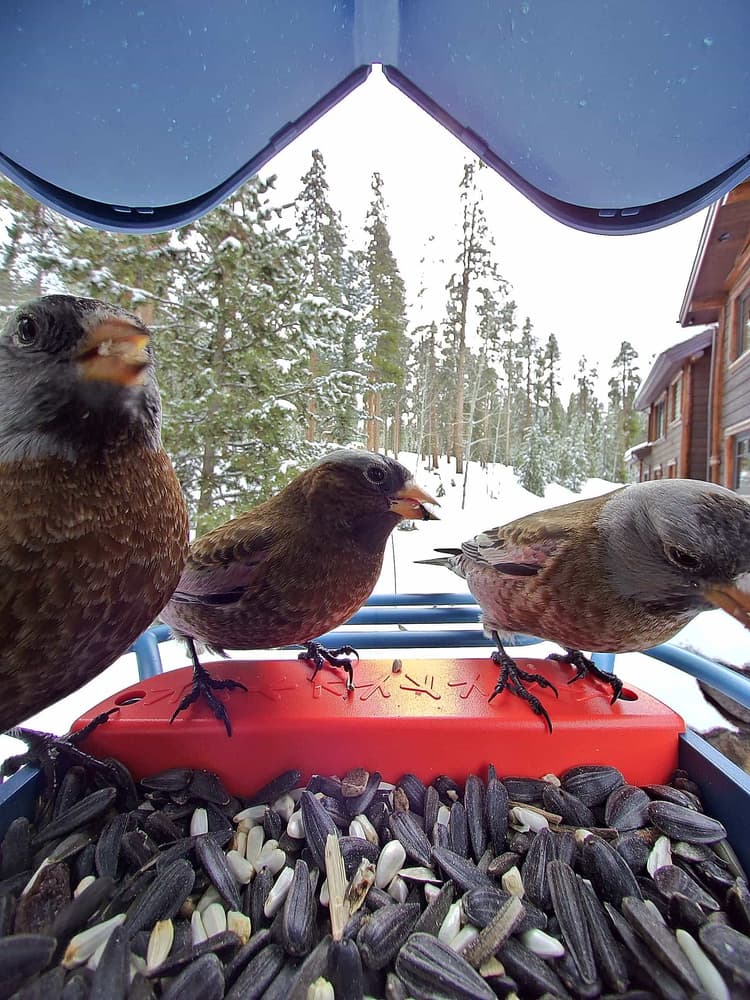
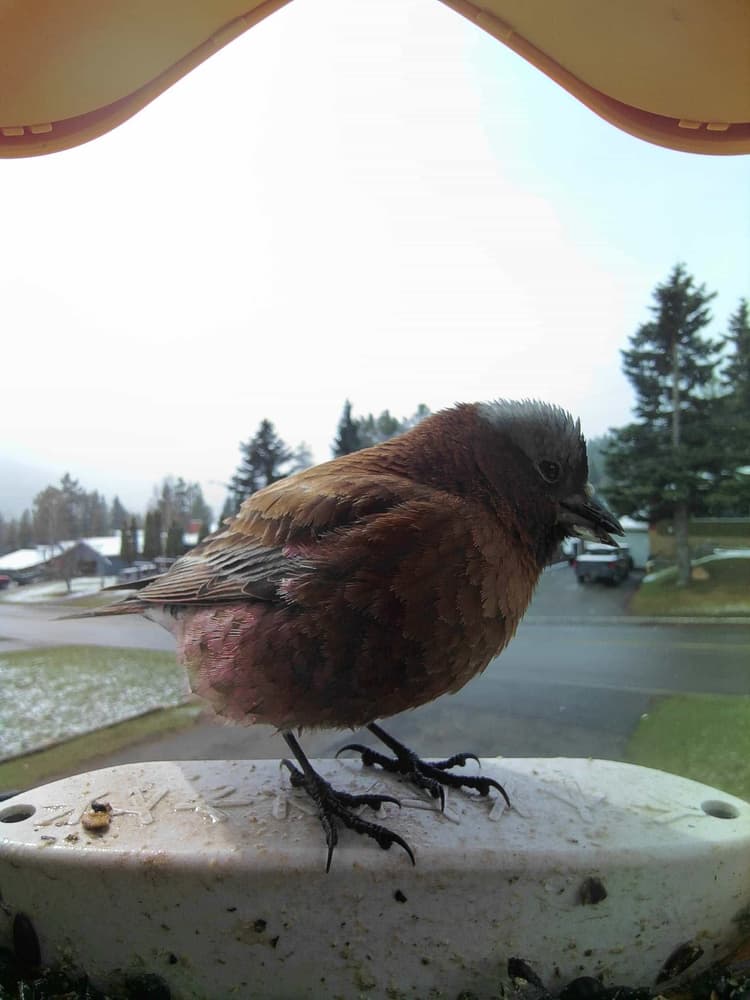
The gray-crowned rosy-finch is noticeable with its brown body and gray band. It has a blush of rose-pink color on its belly, rump, and wings. Its size varies from 5 3/4-6 3/4 inches (15-17 cm), almost similar to a Robin or Sparrow. The tail shape is either notched or square-tipped, and the wings are pointed.
Male vs female
The male gray-crowned rosy-finch is distinctive with a gray band across its nape. The width of this band can vary depending on the race. Females are similar to other female rosy finches, making it challenging to differentiate based on coloration. However, unlike males, females lack a noticeable gray neckband.
Juvenile
Juvenile gray-crowned rosy-finches may resemble adults but lack the pronounced coloration. Over time, they develop the distinct rosy pink wash and gray band. Detailed characteristics of juveniles are not clearly defined and further investigation is needed.
Often mistaken for
Brown-Capped Rosy-Finch vs Gray-Crowned Rosy-Finch
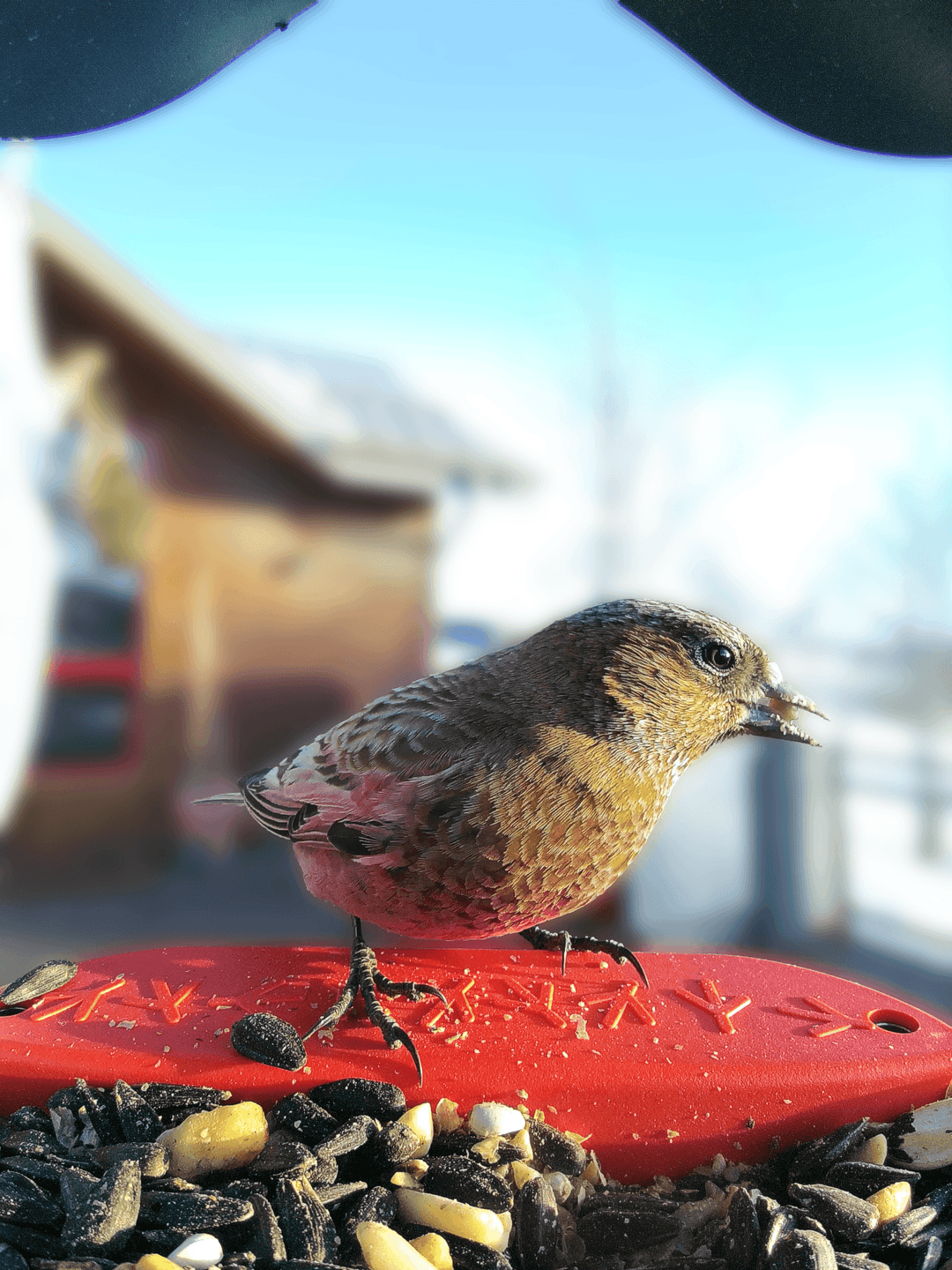
The Gray-Crowned Rosy-Finch differs from the Brown-Capped by having a distinct gray crown and nape, whereas the Brown-Capped has a smooth brown head without the distinct gray feature. The Gray-Crowned also has more pronounced pink coloring on the wings and belly, especially in males, which contrasts with the generally more muted coloration of the Brown-Capped. Look for the gray patch on the head for quick identification.
Black Rosy-Finch vs Gray-Crowned Rosy-Finch
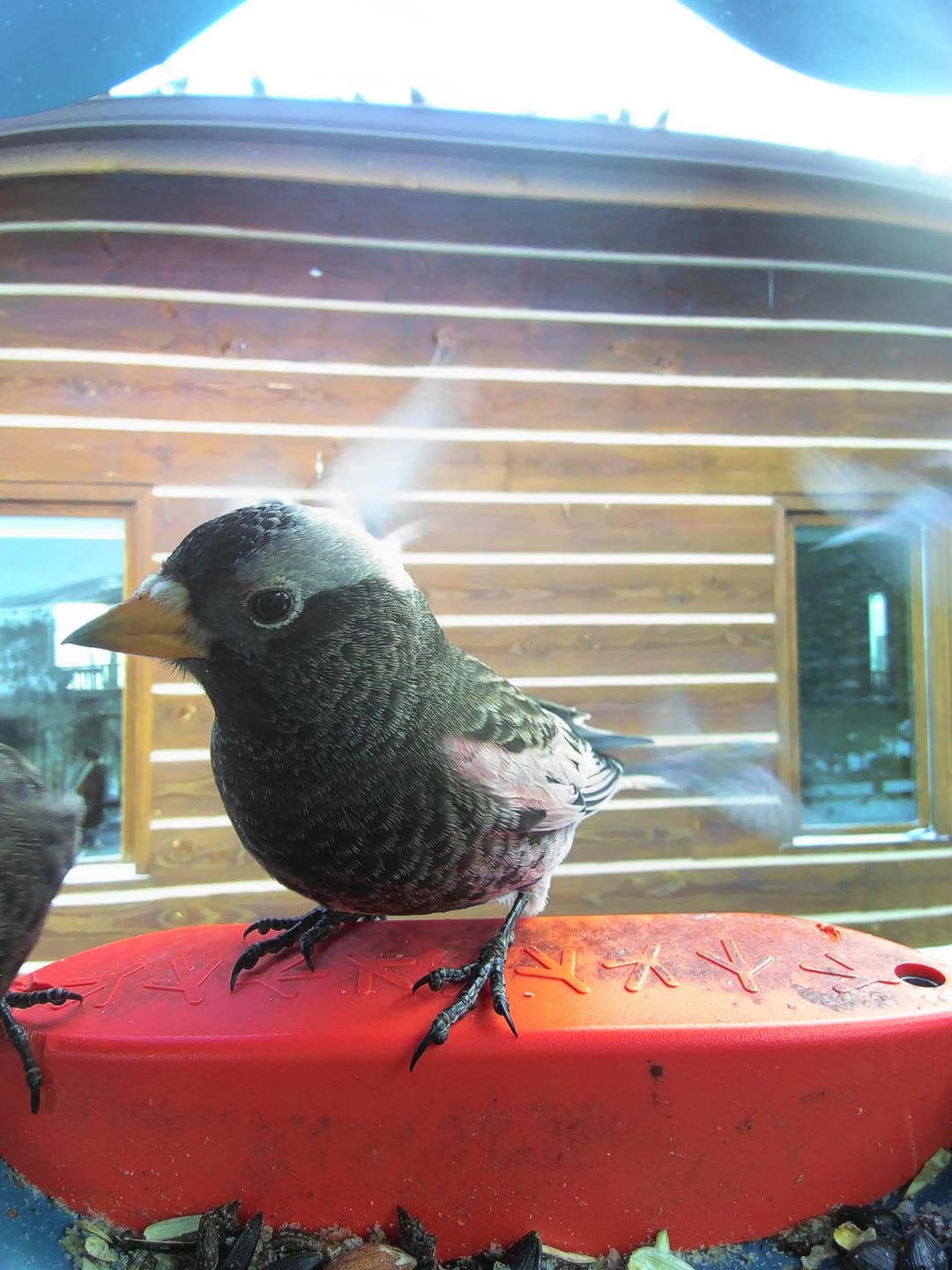
When comparing the Gray-Crowned Rosy-Finch to the Black Rosy-Finch, note the gray crown on the head and nape, absent in the Black Rosy-Finch, which has an entirely dark head. The Gray-Crowned also exhibits a lighter body with more extensive pink markings, especially on the belly and wings, while the Black Rosy-Finch maintains a more uniformly dark and unpatterned appearance.
Breeding and nesting habits of the gray-crowned rosy-finch
Mating behaviors
Gray-crowned rosy-finches display aerial displays and vocalizations during courtship. Males may chase females in swift flights, showcasing their agility. Song and plumage play key roles in attracting mates.
Nesting details
Nests are built in crevices, cliffs, or rocky outcrops at high altitudes. The nest is cup-shaped, constructed with grasses, moss, lichens, and lined with feathers. This remote and concealed location offers protection from predators.
Eggs and chick-rearing
Females typically lay 3-5 eggs, which are incubated for about 12-14 days. Both parents participate in feeding the chicks. The young fledge in approximately 15-20 days, during which they are nurtured with insects and seeds.
What does a gray-crowned rosy-finch like to eat?
Berries
Insects
Plants
Seeds
Natural diet
The gray-crowned rosy-finch primarily feeds on seeds and insects. In winter, its diet mainly consists of seeds from grasses and weeds, which can make up nearly its entire diet. During summer, it consumes many insects, while younger birds are primarily fed insects. Additionally, this bird may eat some buds, leaves, and even salt as part of its natural diet.
Bird feeders
The gray-crowned rosy-finch, typically sparingly seen at bird feeders, may be attracted by a supply of seeds including grass seeds or sunflower seeds, which mimic its natural winter diet of grass and weed seeds.
Creating a bird-friendly yard
To attract the gray-crowned rosy-finch, ensure your yard provides a safe and inviting habitat. Plant native trees and shrubs, as they can provide natural sources of food and shelter. Water sources such as bird baths can also be inviting to these birds.
Setting up a suitable feeder
Gray-crowned rosy-finches are known to be ground feeders, but they will also visit tube or platform feeders. Ensure your feeder has large enough perches for the birds to stand on, and position it in a quiet and safe location near trees or shrubs so the birds can escape to cover if threatened.
Choosing the right food
These birds enjoy a variety of foods, including birdseed, berries, and insects. Bird Buddy seeds are highly recommended because they are expertly chosen for the season. Include a seed mix with black oil sunflower seeds, which are high in fat and excellent for energy.
Engaging their curiosity
Playing soft bird songs can pique the curiosity of the gray-crowned rosy-finch and lure them to your yard for a visit. Small, shiny objects hung around the yard may also attract their attention. Of course, always be respectful and avoid anything that may cause stress or harm to the birds.
Where can you find gray-crowned rosy-finches?

Primary habitat
The gray-crowned rosy-finch primarily inhabits barren tundra, alpine snowfields, and rocky islands off Alaska. It breeds in high mountains and Alaskan islands tundra.
Additional range
In winter, the finch occupies similar habitats to its primary range, but also extends to mountain valleys, open plains, and towns.
Do they migrate?
The gray-crowned rosy-finch exhibits varied migratory behaviors depending on its geographic location. Populations residing on the Aleutian and Pribilof Islands in Alaska are permanent residents, staying in the same location throughout the year. In contrast, mountain populations situated further south tend to migrate seasonally. During winter, these birds may move to lower elevations, seeking milder conditions. This seasonal migration is primarily altitudinal rather than latitudinal. Occasionally, gray-crowned rosy-finches from mountain populations may stray eastward, extending well out onto the plains. This movement, however, is not a highly structured migration but more of a dispersal or wandering behavior induced by harsh winter conditions in their typical habitats. Specific routes and timing of these movements can vary, influenced by weather patterns and food availability. Typically, movements to lower elevations occur as colder temperatures set in, with return trips in spring as conditions improve. Key locations include mountainous areas for breeding and plains or lower elevation areas for wintering. While not exhibiting long-distance migration like some other bird species, these altitudinal movements are essential for the species' survival in varying climates.
What is the role of gray-crowned rosy-finches in nature and how to protect them?
Conservation status
The gray-crowned rosy-finch is fairly widespread and common, with stable population numbers. Its breeding range is largely remote and unaffected by human disturbance, suggesting the species is not currently vulnerable or endangered. There are no significant conservation efforts specifically targeting this bird, as its remote habitat minimizes major threats. Maintaining the current natural conditions of its habitat will help preserve its stable status.
Ecological role of gray-crowned rosy-finches
Its role in the ecosystem
The Gray-crowned Rosy-finch plays a significant ecological role as both a consumer of seeds and insects, and a distributor of seeds. By feeding predominately on seeds and insects, the bird assists in controlling pest populations, particularly in summer when its diet consists largely of insects. This pest control is beneficial, especially for vegetation where unwanted insect pests might otherwise be destructive. Through foraging and consuming large amounts of seeds, particularly during the winter, the Gray-crowned Rosy-finch also contributes to seed dispersal. As it feeds, it likely discards some seeds which may later germinate, thereby aiding in the propagation of various grasses and weeds. Additionally, the nests of these birds may contribute to ecosystem diversity by providing a habitat structure for other animals and insects. In regions where multiple broods are common, such as the Alaskan islands, this bird's reproductive habits might have a positive impact on the local bird population density.
How to help protect gray-crowned rosy-finches
Preservation tips
Habitat preservation strategies
Protection of the alpine and arctic tundra, which are the primary breeding grounds of the Gray-crowned Rosy-Finch, is crucial. Lobby for policies to limit development and resource exploitation in these areas. Support alpine conservation groups financially or through active participation. Plant native vegetation to provide them with natural sources of food and shelter. Ensure healthy water sources in these areas as they are vital for the survival of insects on which Rosy-Finches feed.
Community science initiatives
Promote participation in birdwatching and bird count initiatives, such as the ones organized by local Audubon societies, which can help in monitoring the population trends of these birds. Reporting sightings on platforms like eBird can contribute to essential data collection. Encourage educational initiatives to raise awareness about the species' conservation needs. Schools, community centers, and clubs can host conservation-focused events, workshops, and challenges that center around the Gray-crowned Rosy-Finch.