
Blyth's Reed Warbler
Blyth's Reed Warbler
Acrocephalus dumetorum
Quick Identification guide
Quick Identification guide
- •
Displays a uniform brownish-olive upperpart with a slightly warmer tone on wings and tail
- •
Features pale whitish underparts with subtle buff flanks, creating a delicate contrast
- •
Possesses a thin, pointed beak and a relatively long, rounded tail typical of warblers
What does a Blyth's reed warbler sound like?
Blyth's Reed Warbler is known for its varied and mimicry-rich vocalizations. Its song consists of a complex mix of harsh, chattering phrases interspersed with melodious fluting notes, often mimicking other bird species. The song is continuous and can last for extended periods. The typical call is a sharp "chek" or "tek" sound, sometimes repeated in quick succession. These vocal characteristics are most prominent during the breeding season, when males sing to establish territory and attract mates. Blyth's Reed Warbler is often heard rather than seen, especially in dense vegetation where it typically resides.
Description
Despite being called a reed warbler, the Blyth's reed warbler actually prefers to sing from trees or bushes, making it potentially easier to see, but no easier to identify! Their song is not only varied, but also contains bits and pieces of other birds' songs that they imitate. So if you managed to recognise it from it’s call, good job, you're a pro!
The Blyth's reed warbler can weigh between 8to20grams and be from11to14centimeters tall.
The typical lifespan of a Blyth's Reed Warbler (Acrocephalus dumetorum) is around 2 years, though some can live longer. This lifespan is typical for small passerine birds in the Acrocephalus genus. Compared to its relative, the Eurasian Reed Warbler (Acrocephalus scirpaceus), which also has a lifespan of about 2-3 years, both species face similar survival challenges like predation and habitat threats. Although some individuals of these species may live up to 10 years, such longevity is rare. Generally, warbler lifespans are influenced by environmental conditions and migration risks.
Did you know?
Most popular questions about Blyth's reed warbler
How to recognise a Blyth's reed warbler?
Blyth's reed warbler characteristics
General appearance: Blyth's Reed Warbler is a small, dull-colored songbird. Its plumage is predominantly grey-brown above with a paler, creamy-buff underside, which can appear slightly warmer in some lights. Its upperparts are characterized by a distinct olive tinge, while the wings have light, delicate feather edges that provide a slightly scalloped appearance. The bird boasts a pale supercilium, set against the slightly darker areas around the eyes. The bill is sharp and slender, perfectly adapted for its insectivorous diet. Male vs female: In Blyth's Reed Warbler, males and females exhibit minimal dimorphism, with both sexes sporting similar plumage and size. This resemblance can make gender identification challenging in the field without close observation or during specific behavioral displays during breeding. Juvenile: Juvenile Blyth's Reed Warblers are similar to adults but often possess a fresher and slightly more vibrant appearance due to the newness of their plumage. Their undersides might display a subtle, buff hue, and they lack the slight wear and tear that might be evident in adult feathers. Identifying juveniles is more straightforward during the late summer months when their pristine feathers contrast with those of worn adults.
Often mistaken for
Eurasian Reed Warbler vs Blyth's Reed Warbler
Eurasian Reed Warblers (ID: ecbf41e6-f616-4170-884d-0b88d735f7b7) resemble Blyth's Reed Warbler due to their similar size and plain brown plumage. You can distinguish them by the darker, more defined streaks on the tail of the Eurasian Reed Warbler and their preference for denser reedbed habitats.

Great Reed Warbler vs Blyth's Reed Warbler
The Great Reed Warbler (ID: d0f799a2-7a52-4efd-b4e8-b0691b2b458e) is larger and bulkier than Blyth's Reed Warbler, with a much stronger, more powerful singing voice. Its prominent white supercilium is a key difference between the two species.

Marsh Warbler vs Blyth's Reed Warbler
The Marsh Warbler (ID: eb531859-de04-4887-a7b8-9dd4b6ab0449) shares the same plain brown tones with Blyth's Reed Warbler. However, its song mimics other bird species extensively, unlike the simpler tune of the Blyth's Reed Warbler.

Breeding and nesting habits of the Blyth's reed warbler
Mating behaviors
Blyth's Reed Warblers are known for their elaborate courtship displays, which include singing complex melodies to attract mates. These birds generally establish territories early in spring and exhibit remarkable singing capabilities, which play a significant role in mate selection. Breeding pairs are typically monogamous during the breeding season, establishing clear territories where both partners partake in decision-making around nest location and construction.
Nesting details
The preferred nesting sites for Blyth's Reed Warblers are dense bushes, reeds, and shrub thickets. They construct cup-shaped nests using grass, leaves, and sometimes spider webs for binding. These nests are masterfully hidden in vegetation to protect them from predators. When considering garden habitats, providing dense, native shrubbery and leaving undisturbed thickets can create ideal nesting environments.
Eggs and chick-rearing
Females typically lay between 4 to 6 eggs per clutch, with an incubation period of around 12 to 13 days. Both parents share the responsibility of feeding and caring for the young. The chicks fledge the nest approximately 10 to 14 days after hatching. During this time, they are dependent on the parents for food, comprising primarily insects, which encourages rapid growth and development.
What does a Blyth's reed warbler like to eat?
Insects
Seeds
Natural diet
The Blyth's Reed Warbler primarily feeds on a wide variety of insects, which form the bulk of its diet in the wild. This includes beetles, caterpillars, flies, and spiders. The birds are adept at gleaning insects from foliage and branches, exhibiting impressive agility in pursuit of their prey. While insects are an essential year-round component of their diet, during the breeding season, they may intake higher quantities to meet increased energy demands. In addition to insects, they occasionally consume small amounts of seeds and berries, especially during migration when these foods can be more accessible. Seasonal variations impact their diet, with berries and fruits from shrubs playing a more significant role during migration periods.
Bird feeders
Blyth's Reed Warblers are less commonly observed at traditional bird feeders. These warblers might occasionally visit feeders offering mealworms or insect-based suet, as they naturally incline towards animal protein from insects. In regions where their range overlaps with human habitation, they might show interest in small seed mixes, though it is less common. To attract these warblers, setting up feeders with live or dried insects is advisable. Providing a variety of shrubbery and native plants in gardens can also attract them by boosting natural insect populations which align well with their natural foraging habits.
Choose a specialized warbler feeder
To attract Blyth's Reed Warbler, opt for a tubular feeder that offers small pegs or perches. The slender design mimics the warblers' natural feeding habits, allowing them to clamber and feed comfortably. Ensure the feeder is shield-proof to ward off larger birds that might intimidate the delicate warbler.
Offer blyth’s favorite nourishments
Stock your feeder with insect-rich mixtures and small seeds. Bird Buddy seeds are specifically curated to target the dietary needs of insectivorous species like the Blyth's Reed Warbler. Complement these with mealworms, especially during breeding season, as they offer a protein boost crucial for healthy offspring development.
Strategic placement for maximum attraction
Position your feeder at shrub-level height, preferably near dense foliage or hedges. This location mimics the bird's natural habitat and offers some camouflage against predators. Ensure it's within view of trees, providing the birds easy perching and singing spots for mating calls.
Embrace seasonal adjustments
During migration periods in spring and autumn, the warbler is more likely to seek food as it travels. Increasing food supply during these times allows you to capture their attention. Additionally, during late autumn and winter, maintaining fresh seed supply and insect varieties can keep them returning.
Enhance the habitat with water features and native plants
Integrate a shallow birdbath or small water fountain into your garden, ensuring fresh, moving water that appeals to the warblers. Enhance your yard with native shrubs and low-lying plants to create a hospitable environment, providing shelter and additional natural food sources.
Where can you find blyth's reed warblers?
Primary habitat
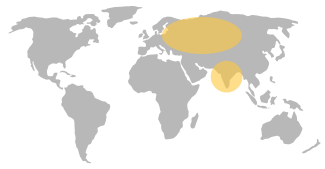
Blyth's Reed Warbler primarily inhabits temperate forests, dense shrubs, and reed beds typically found across northern Europe and Asia. They favor wetlands with abundant vegetation for nesting and foraging. This bird is commonly found during the breeding season in countries such as Russia, Finland, and Sweden. The climate preference includes temperate conditions with moderate humidity and access to water bodies.
Additional range
Apart from their primary habitat, Blyth's Reed Warblers display adaptability by occupying unexpected environments such as urban parks and gardens during migration. These birds can also be spotted in dry shrublands and grasslands, demonstrating remarkable resilience to varied climates and landscapes during their non-breeding season.
Do they migrate?
Blyth's Reed Warbler (*Acrocephalus dumetorum*) is a migratory bird. During the breeding season, typically from May to August, it inhabits a wide range across northeastern Europe and into Asia, extending from eastern Finland, through Russia, to western Siberia and the Altai Mountains. As autumn approaches, this warbler undertakes a long-distance migration to its wintering grounds in the Indian subcontinent, primarily from September to October. The migration route generally follows a southeast direction. Key stopover sites for refueling include areas in Central Asia, whereas primary wintering locations are found in India, Sri Lanka, and occasionally parts of Myanmar and Bangladesh. The return migration occurs in spring, from late March to May, following a similar but somewhat more westerly route. Some recent observations suggest they may utilize the Indus Valley and then move northwest along the base of the Himalayas towards their breeding range. Blyth's Reed Warblers can be observed at various traditional migratory bottlenecks like the Arabian Sea coasts and several inland riverine habitats, which provide essential stopover points for rest and nourishment.
What is the role of blyth's reed warblers in nature and how to protect them?
Conservation status
The Blyth's Reed Warbler is classified as "Least Concern" by the IUCN, indicating it is relatively common and not currently at risk of extinction. The species is widespread across its range in Asia. Key conservation efforts focus on habitat protection and monitoring migration patterns. While the bird is not facing immediate threats, potential concerns include habitat loss due to deforestation and land-use changes. Continued conservation efforts aim to prevent population decline by ensuring its natural habitats are preserved and resilience to environmental changes is maintained.
Ecological role of blyth's reed warblers
Its role in the ecosystem
The Blyth's Reed Warbler plays a vital role in its ecosystem through various ecological contributions. As an insectivore, it significantly aids in pest control by consuming a wide range of insects and their larvae. This feeding habit helps maintain balance in insect populations, preventing potential outbreaks that could damage local flora. Moreover, while primarily feeding on insects, these warblers occasionally consume small fruits and berries, contributing to seed dispersal and facilitating plant propagation. This interaction supports plant diversity and aids in sustaining healthy ecosystems. Though not a primary pollinator, the warbler may occasionally contribute to pollination when consuming nectar or pollen-covered insects. Through their feeding activities, Blyth's Reed Warblers also play a part in nutrient cycling, transferring nutrients within ecosystems, and enriching the soil through their droppings. This activity supports plant growth and enhances soil fertility. Interactions with other species are noted through their nesting habits and alert systems, where their presence warns other birds of potential predators. By understanding the ecological roles of species like the Blyth's Reed Warbler, we can appreciate their importance in maintaining ecosystem health and biodiversity.
How to help protect blyth's reed warblers
Preservation tips
Habitat preservation strategies
To support the conservation of Blyth's Reed Warbler, individuals and organizations can advocate for the protection and restoration of wetland areas, as these are vital to the bird's habitat. Supporting conservation groups that focus on wetland preservation can significantly impact local environments. Participating in local lobbying efforts to preserve bird habitats can also be beneficial, such as engaging with municipal authorities to implement measures that prevent urban development in key areas used by the Warbler. Landowners can be encouraged to foster environments conducive to the Warbler's breeding habitats by planting native bushes and maintaining small wetlands. Additionally, conservation easements can provide permanent protection for habitats from potential degradation.
Community science initiatives
Communities and individuals can make a difference by participating in citizen science programs that monitor Blyth's Reed Warbler populations. Joining projects like local birdwatching groups or submitting observations to global databases such as eBird provides valuable data for researchers. Involving schools and organizing educational events to raise awareness about the Warbler's plight creates a culture of conservation. Encouraging participation in bird counts or local habitat restoration days increases public engagement. Furthermore, sharing information about these birds through social media, blogs, or community workshops helps spread awareness and fosters a collective effort in their conservation.