
Barn Swallow
Barn Swallow
Also known as: Swallow
Hirundo rustica


Quick Identification guide
Quick Identification guide
- •
Recognizable by its deeply forked tail and sleek profile, providing a streamlined silhouette
- •
Sports a glossy steel-blue upper part with contrasting cinnamon-colored throat and forehead
- •
Features a pale underbelly with a slight white band across the upper breast, enhancing its distinct appearance
What does a barn swallow sound like?
The Barn Swallow's vocalizations are marked by continuous liquid twittering and chattering sounds. Its signature call pattern is both flat and undulating, representing a varied range in pitch. The barn swallow primarily uses four types of call, namely a chirp or chip, a salutation of "hi," a rattle, and a whistle. Each call distinctively characterizes its unique vocal repertoire, contributing to the rich acoustic communication that sets the species apart.


Description
These little guys are true free spirits. Unable to endure captivity, swallows have also been nicknamed the bird of freedom, as well as saw wings. If you're wondering why, you'd instantly know the minute you saw their wings. They are known for engaging in aerial feeding, meaning they swallow food mid-air. Makes you wonder if that's how they got their name, eh?
The barn swallow can weigh between 16to24grams and be from17to19centimeters tall.
The typical lifespan of a barn swallow is 11 years. This is comparatively longer than many related species, such as the Song Sparrow, which usually live up to 11.3 years. However, exceptional cases have been reported where barn swallows have lived up to 16 years. As in all bird species, the lifespan of a barn swallow can vary greatly due to several influencing factors including geographic region, diet, and exposure to predation.
Did you know?
Most popular questions about barn swallow
How to recognise a barn swallow?
General appearance
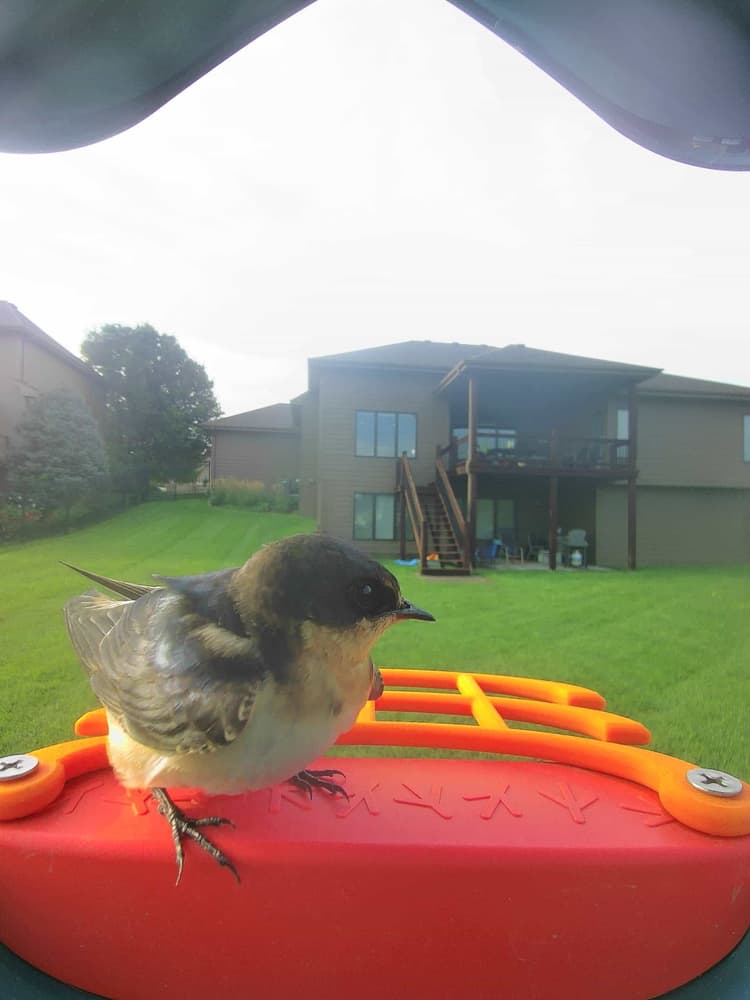
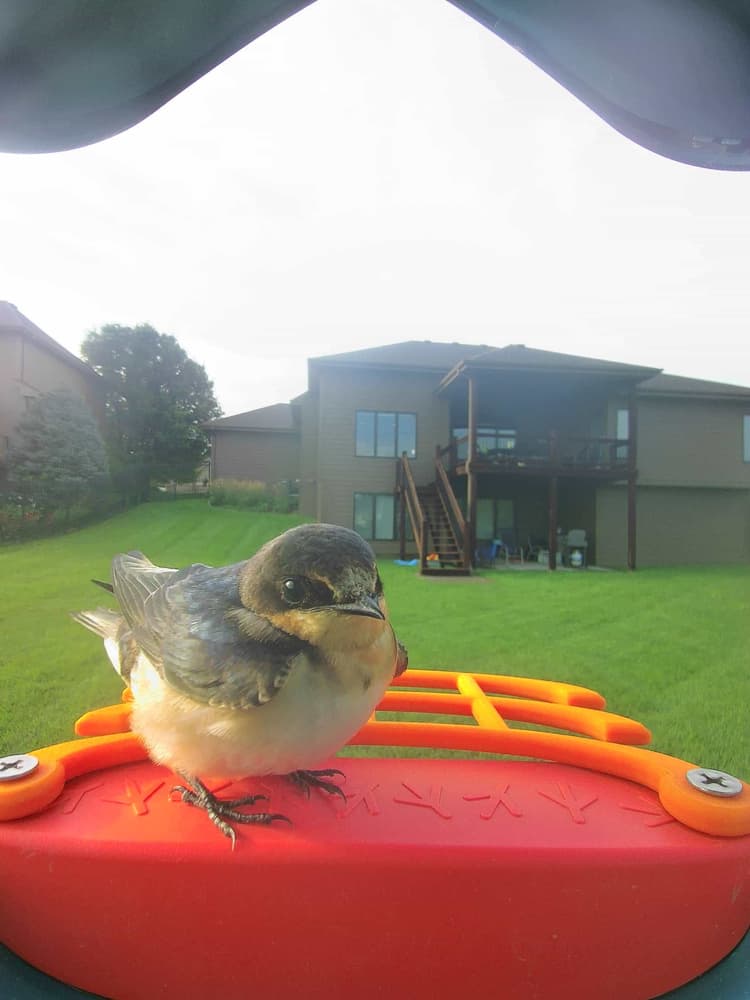
Barn swallows are small birds with streamlined bodies, long, forked tails, and pointed wings. They have a striking coloration with a steel-blue back, wings, and tail. Their underparts are buff to cinnamon-colored, and they possess a distinctive rufous throat and forehead. The tail features white spots that are more visible when the tail is spread.
Male vs female
While both sexes have similar coloration, males are generally more vibrant with a deeper blue sheen and more pronounced red throat and forehead. Their tail feathers are typically longer than those of females, enhancing their forked appearance. Females may appear slightly duller, with less defined color contrasts compared to males.
Juvenile
Juvenile barn swallows resemble adults but with less glossy plumage. Their tails are shorter, making the fork less pronounced. The throat and forehead areas are a paler rufous rather than deep red. Juveniles gradually acquire adult coloration as they mature. In the wild, identifying barn swallows involves observing their distinct flight pattern and sleek body while noting seasonal changes such as molting.
Often mistaken for
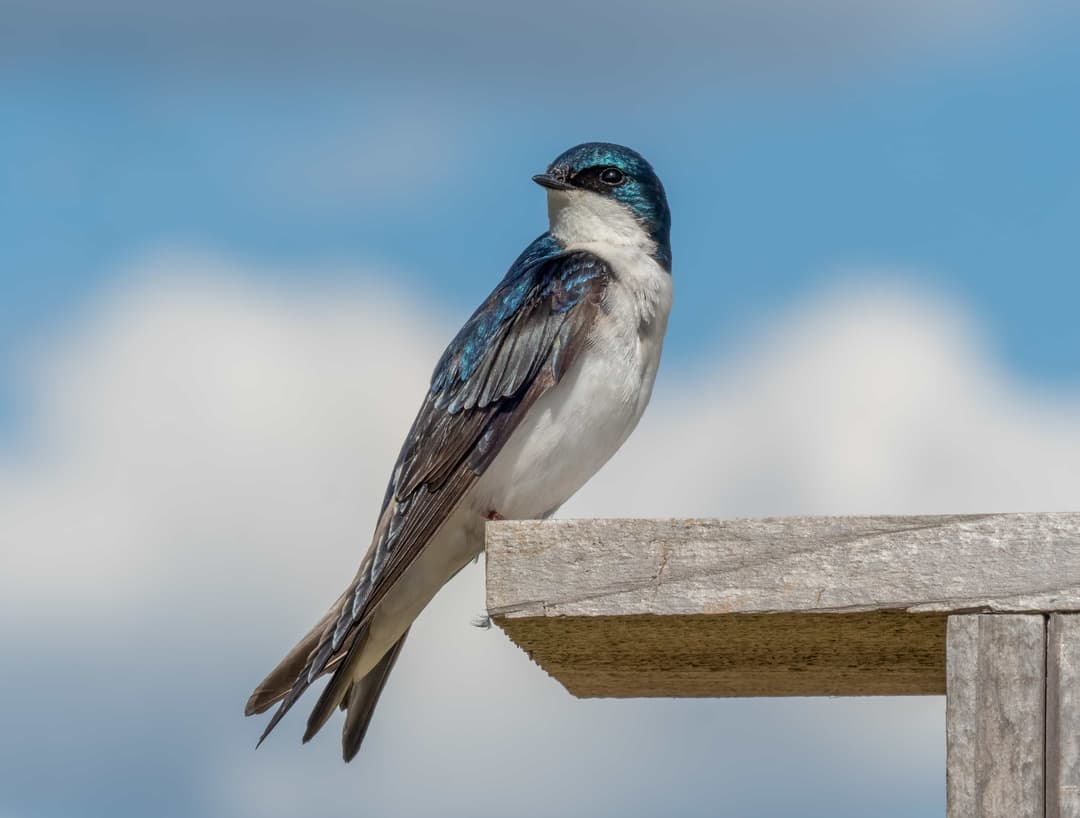
Tree Swallow vs Barn Swallow
Barn Swallows have a longer, more deeply forked tail compared to Tree Swallows. Barn Swallows display a striking orange-buff underside and a deep blue back and cap, while Tree Swallows have a less vibrant white underbelly and iridescent blue-green upperparts. Tree Swallow's tail is less forked, making flight profiles noticeably different. In flight, Barn Swallows often glide with their wings slightly bowed and tail spread.
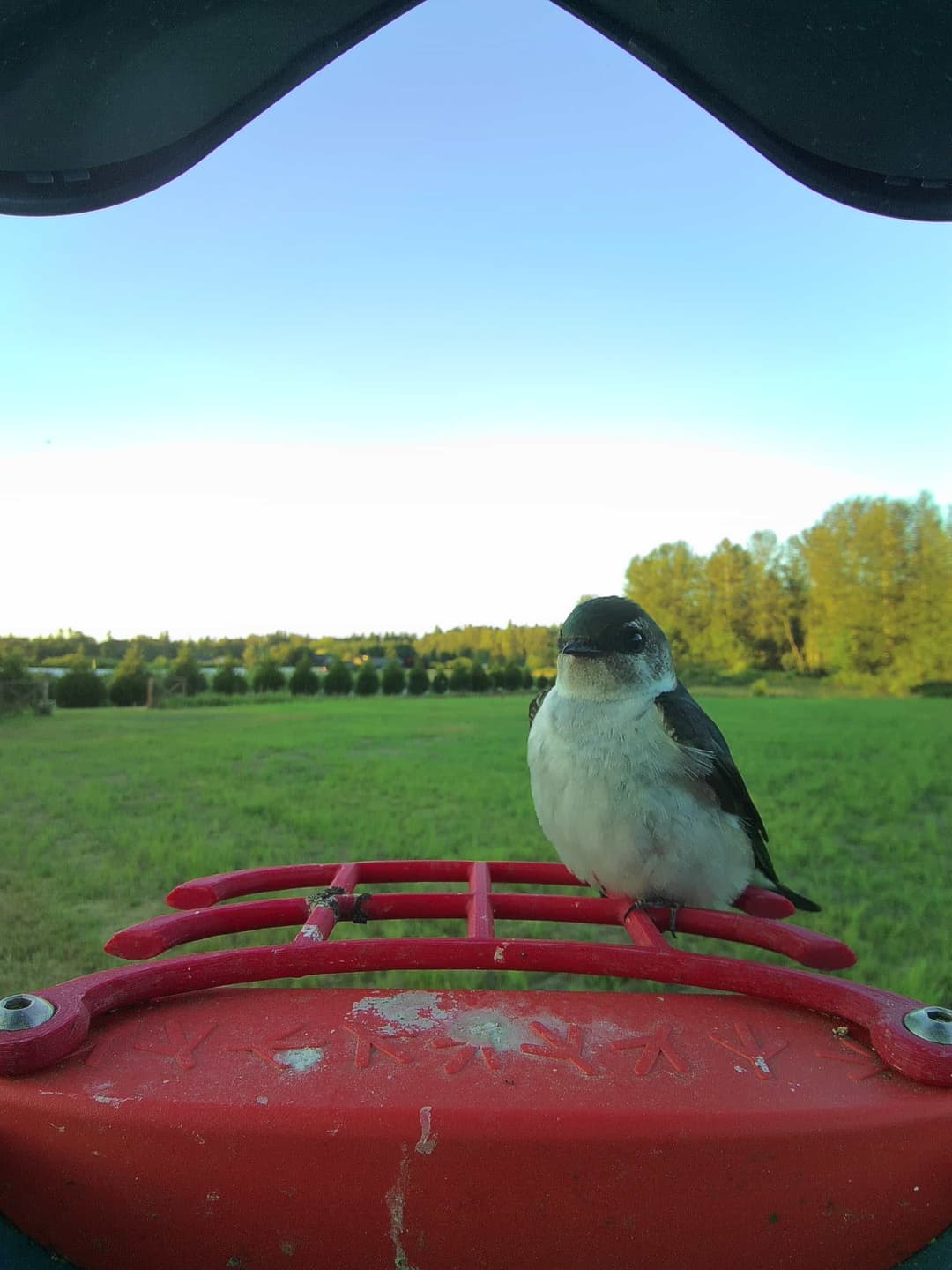
Violet-Green Swallow vs Barn Swallow
The Barn Swallow can be distinguished from the Violet-Green Swallow by their darker, more uniformly blue upperparts compared to the Violet-Green Swallow's iridescent green back and white face patches. Barn Swallows have reddish underparts and a deeply forked tail, while Violet-Green Swallows show a clean white underbelly with shorter, square tails. Look for the blue face and tawny underbelly to identify a Barn Swallow.
Breeding and nesting habits of the barn swallow
Mating behaviors
Barn swallows engage in courtship through aerial chases. Once paired, they sit close on a perch, touching bills and preening each other's feathers, signifying mutual bonding.
Nesting details
Natural nesting sites include sheltered crevices in cliffs or shallow caves. Currently, barn swallows prefer open buildings, eaves, bridges, or docks. Both sexes build a cup-shaped nest using mud and dried grass, lined with feathers. They may nest near others but do not form dense colonies.
Eggs and chick-rearing
Barn swallows lay eggs in the prepared nest, providing constant care to ensure successful hatching. The chicks are reared in the nest, where both parents partake in feeding and nurturing until the fledglings are ready to leave.
What does a barn swallow like to eat?
Berries
Insects
Natural diet
Barn swallows primarily feed on a variety of flying insects. Their diet includes flies such as house flies and horse flies, beetles, wasps, wild bees, winged ants, and true bugs. They also consume some moths, damselflies, grasshoppers, and other insects, along with a few spiders and snails. Occasionally, barn swallows eat berries or seeds, although these constitute a minor part of their diet.
Bird feeders
Barn swallows are not typically attracted to bird feeders as their diet largely consists of live insects which are not commonly provided at feeders. Therefore, barn swallows generally do not visit bird feeders for food.
Choosing the right feed
To tempt barn swallows to your yard, select the right feed. Their diet primarily consists of insects, but they can be enticed with seeds too. We highly recommend Bird Buddy seeds. These are expertly chosen according to the season and will provide the essential nutrients the birds need.
Setting up the feeder
As for the type of feeder, barn swallows prefer a platform or tray feeder which is easy to perch on. These types of feeders allow them visibility and easy access to their food. Place the feeder in an open area where they can have a good view of their surroundings. Swallows tend to avoid areas with heavy vegetation.
Providing nesting materials
Attracting these birds can also be achieved by providing nesting materials. A simple DIY would be to put out short pieces of straw, feathers, or grass. This will also give them the impression that your yard is a suitable habitat for them.
Creating a water source
Having a reliable water source such as a birdbath or a small pond can significantly increase your chances of attracting swallows to your yard. They like having a ready water supply for drinking and bathing.
Playing birdsong
A fun trick to encourage barn swallows to drop by and maybe stay for a sing-along is to play their song. These birds are quite sociable and are known for their melodious calls. Playing barn swallow song recordings may intrigue them and draw them closer to your yard.
Where can you find barn swallows?

Primary habitat
The barn swallow prefers open and semi-open terrains, especially near water sources, and ofttimes breeds around farms, buildings, and towns.
Additional range
Their range extends to fields, marshes, and lakes. Despite eschewing very dry areas and unbroken forest, they still exhibit adaptability by foraging over fields or ponds.
Do they migrate?
The barn swallow is a migratory bird known for its extensive seasonal movements. It migrates in flocks and primarily travels during the day. The southward migration from breeding grounds begins by mid-August and continues through October, reaching winter destinations in the Southern Hemisphere. In North America, the barn swallow breeds across the United States and Canada. As temperatures drop, these birds journey southward to Central and South America, as far as Argentina, for the winter months. Their migration route often involves crossing significant geographic landmarks, such as the Gulf of Mexico, and utilizing suitable resting and feeding stopovers, like wetlands and open fields, to replenish energy. In Europe and Asia, barn swallows breed from the UK and northern Europe to Asia, including China and Japan. They migrate to Africa's sub-Saharan regions and parts of the Indian subcontinent. Key locations during migration may include southern European countries, North Africa, and the Middle East, where they rest and refuel before proceeding. Barn swallows rely on favorable wind conditions and abundant insect supplies during migration. Their synchronized movement in large flocks often provides safety in numbers and aids navigation over long distances.
What is the role of barn swallows in nature and how to protect them?
Conservation status
The barn swallow remains common and widespread, though it has experienced local population declines in certain regions. It is not considered vulnerable or endangered. Key conservation efforts focus on preserving nesting habitats and mitigating threats from urban development and agricultural practices. Significant threats include habitat loss, reduced insect prey due to pesticide use, and climate change impacts. Conservation strategies aim to promote biodiversity-friendly farming and protect nesting sites to ensure the species remains abundant.
Ecological role of barn swallows
Its role in the ecosystem
The Barn Swallow holds significant ecological value, particularly through their role in maintaining a natural balance of insect populations. Their diet consists primarily of a variety of flying insects, including flies, beetles, wasps, bees, and ants, many of which are considered pests. By predating on these insects, Barn Swallows effectively control excessive population growth and limit the spread of insect-borne diseases. Despite their occasional consumption of seeds and berries, their primary contribution to seed dispersal is minimal. However, their nests, built in usually open buildings, under eaves, bridges, or docks, provide a unique contribution to micro-ecosystems, as they can be utilized by other species for shelter after the breeding season. Additionally, they may contribute indirectly towards nutrient cycling. Their droppings, composed of indigested insect exoskeletons, can contribute towards soil enrichment, ultimately fostering primary productivity.
How to help protect barn swallows
Preservation tips
Habitat preservation strategies for barn swallow
Barn Swallows favor open habitats near structures for nesting, hence, preservation of such environments is essential. Maintain traditional, low-intensity farming around barns and outbuildings. Avoid using harmful pesticides that can kill the insect population that barn swallows heavily rely on for feeding. Promote setting up artificial nest sites or bird houses to encourage nesting. Restrict renovation of old structures during their breeding season (April-September) to safeguard nests.
Community science initiatives for barn swallow
Encourage local communities to participate in citizen science projects like bird counts, observing barn swallow behavior, and reporting sightings. This helps in tracking their migration patterns and monitoring populations over time. National and local governments, environmental NGOs can lead this campaign to foster connection between people and nature. Education about the role of swallows in the ecosystem and their status as a threatened species may further boost engagement.