Barn Swallow or Tree Swallow?
Here's how to tell the difference




Barn Swallow

Tree Swallow
Barn Swallow
Hirundo rustica
Also known as: Swallow
General appearance
Barn swallows are small birds with streamlined bodies, long, forked tails, and pointed wings. They have a striking coloration with a steel-blue back, wings, and tail. Their underparts are buff to cinnamon-colored, and they possess a distinctive rufous throat and forehead. The tail features white spots that are more visible when the tail is spread.
Male vs female
While both sexes have similar coloration, males are generally more vibrant with a deeper blue sheen and more pronounced red throat and forehead. Their tail feathers are typically longer than those of females, enhancing their forked appearance. Females may appear slightly duller, with less defined color contrasts compared to males.
Juvenile
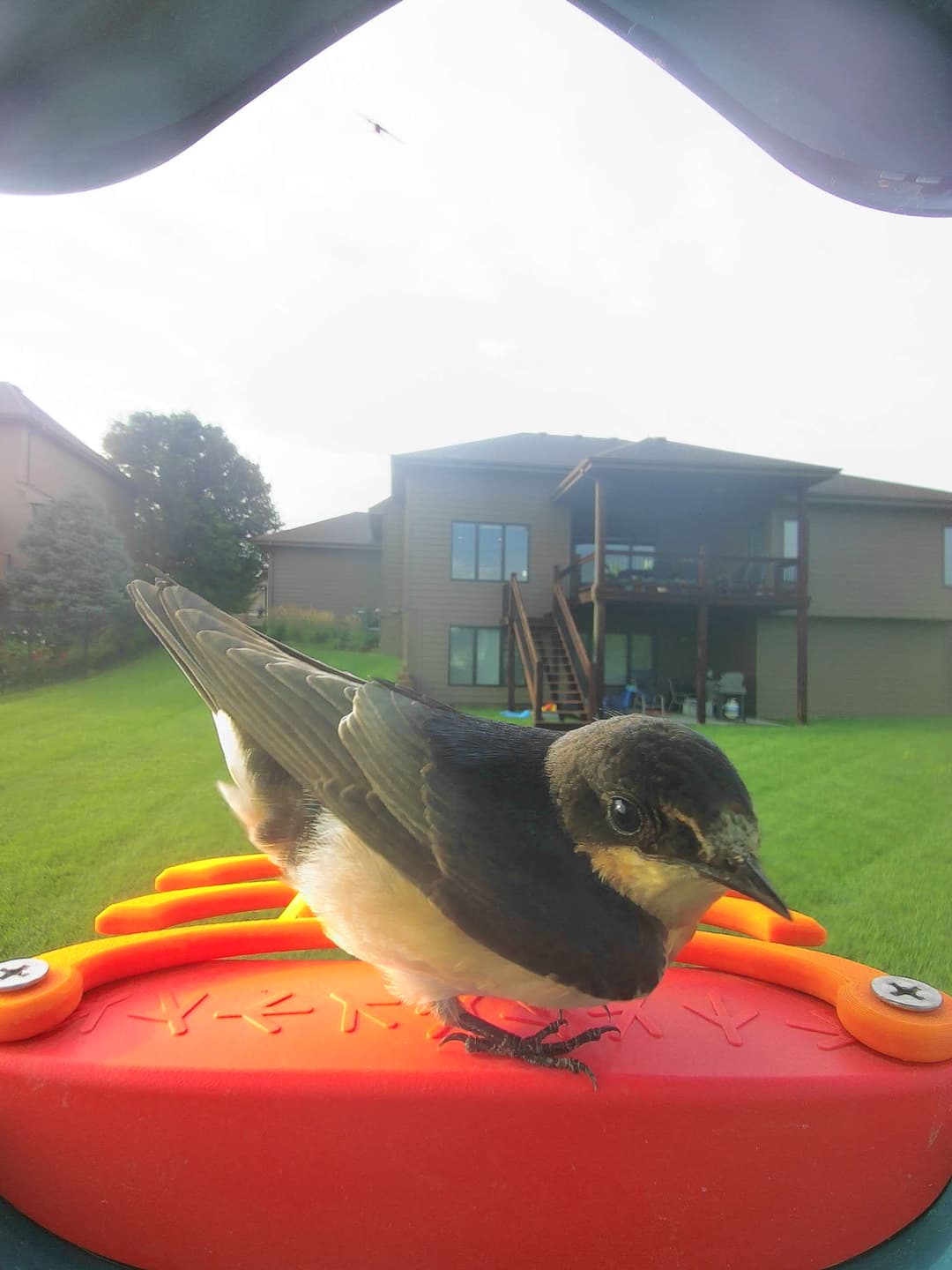
Juvenile barn swallows resemble adults but with less glossy plumage. Their tails are shorter, making the fork less pronounced. The throat and forehead areas are a paler rufous rather than deep red. Juveniles gradually acquire adult coloration as they mature. In the wild, identifying barn swallows involves observing their distinct flight pattern and sleek body while noting seasonal changes such as molting.
Size
6.7 - 7.5 in/0.6 - 0.8 oz
There's more to learn about Barn Swallow
View full detailsTree Swallow
Tachycineta bicolor
General appearance
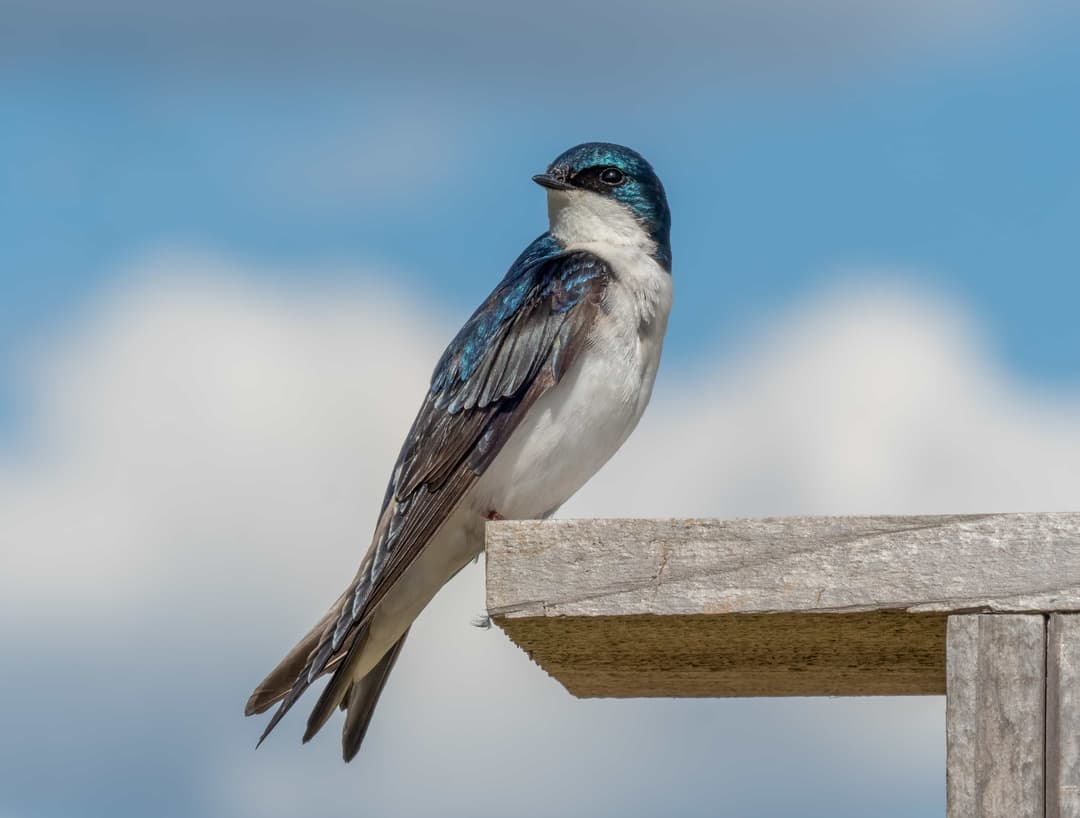
The tree swallow measures between 5 to 6 1/4 inches or 13-16 cm. It displays a sharp contrast in colors between the top and bottom, with dark above and clean white below. Its wing shape is broad, long, pointed and tapered. The tail shape is notched and square-tipped.
Male vs female
The adult males and females of tree swallows have distinctive colorations. The adult males are glossy blue or green above, with a dark cap that extends down to the eye level. The females might show similar coloration, although possibly less glossy.
Juvenile
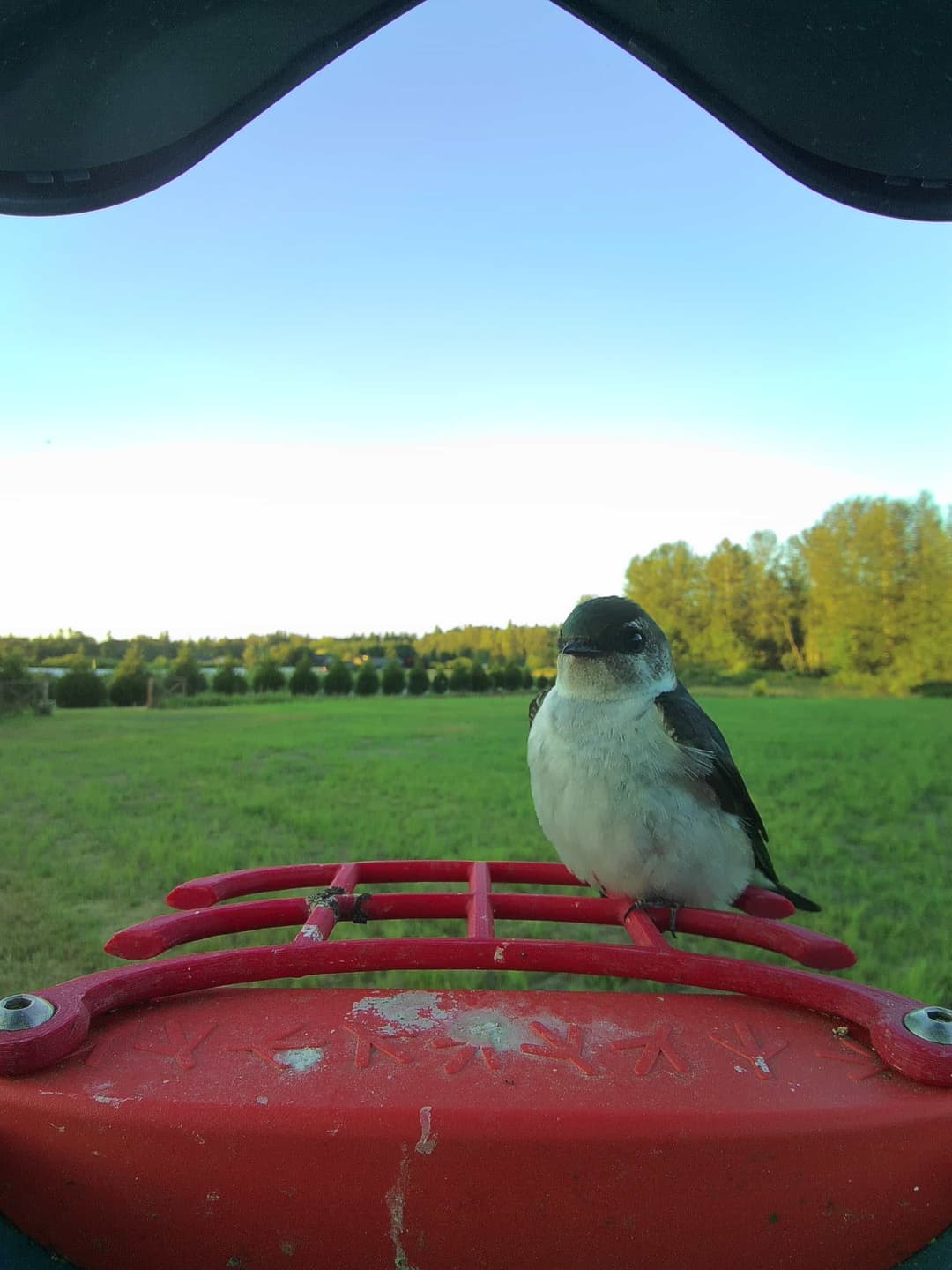
Juvenile tree swallows display a different coloration from adults. They are dusky brown above and often have a gray-brown wash across their chest. This is unlike the Bank Swallow, which exhibits a more prominent marking on the chest. With time, the juveniles' color changes to resemble those of the adults.
Size
4.7 - 5.5 in/0.6 - 0.8 oz
There's more to learn about Tree Swallow
View full detailsHow to tell the Barn Swallow from the Tree Swallow
Visual differences
Barn Swallows are larger (6.7-7.5 inches) with a steel-blue back and long, deeply forked tails. They have rufous throats and foreheads with buff underparts. Tree Swallows are smaller (5-6.25 inches), with a glossy blue or green back and a stark contrast between dark upperparts and clean white underparts. Their tails are notched and square-tipped. Both species have pointed wings, but Barn Swallows have more elongated tails, while tree swallows exhibit a distinct color contrast and a more uniform, sleek body coloration.
Key differences and behavior
Barn Swallows and Tree Swallows exhibit distinct behavioral differences. Barn Swallows prefer open areas near water and are adept at aerial feeding, consuming primarily flying insects midair. In contrast, Tree Swallows not only eat insects but also consume plant matter, with diet diversity increasing in winter. Tree Swallows flock in thousands outside breeding season, whereas Barn Swallows do not. During breeding, Barn Swallows engage in aerial courtship and build mud nests on man-made structures, while Tree Swallows use natural cavities or nest boxes, occasionally change mates, and add feathers after laying eggs for insulation. Although both species nest near water bodies, Barn Swallows thrive near human activity like farms, while Tree Swallows can be farther from water, in meadows or coastal areas in winter.
Still not sure? Here are more lookalikes!
Barn Swallow vs [Select a bird]

[Select a bird]
Pick a bird to compare
Tree Swallow vs [Select a bird]
[Select a bird]
Pick a bird to compare