
Dickcissel
Dickcissel
Spiza americana


Quick Identification guide
Quick Identification guide
- •
Features a streaked brown back and wings, contrasting with a bright yellow chest and face
- •
Exhibits a black bib below the throat and a white throat patch
- •
Has a cone-shaped, thick beak, well-suited for seed eating
What does a dickcissel sound like?
The dickcissel's song is characterized by sharp sounds, followed by a buzzy, hissy 'cissel'. This sequence is repeated tirelessly from perches on fences, bushes, or weeds. The bird also possesses a unique, buzzy call often used during flight. The call pattern descends and is categorized as a chirp or chip.


Description
Did you know that the dickcissel's name is onomatopoeic? And boy, do males never tire of repeating it! Especially on their wintering grounds when millions of birds get together. Males are, in general, all about that tough guy life. They have multiple mates, don't participate in rearing the young and instead make sure that everybody steers clear of their territory.
The dickcissel can weigh between 23to28grams and be from14to16centimeters tall.
Dickcissels typically live around 3-5 years, with the oldest recorded living to 9.7 years. This lifespan is similar to related species like the House Finch which lives around 11 years and the Eastern Meadowlark which lives to about 9 years. Longevity in these species is often affected by factors like predation and habitat loss.
Did you know?
Most popular questions about dickcissel
How to recognise a dickcissel?
General appearance
Dickcissels are small birds, the size of a robin or sparrow with a 15 cm width. They possess a distinct coloration pattern that includes black, brown, red, white, and yellow. They have pointed wings and depending on the subspecies, they may have a notched, rounded, or square-tipped tail.
Male vs female
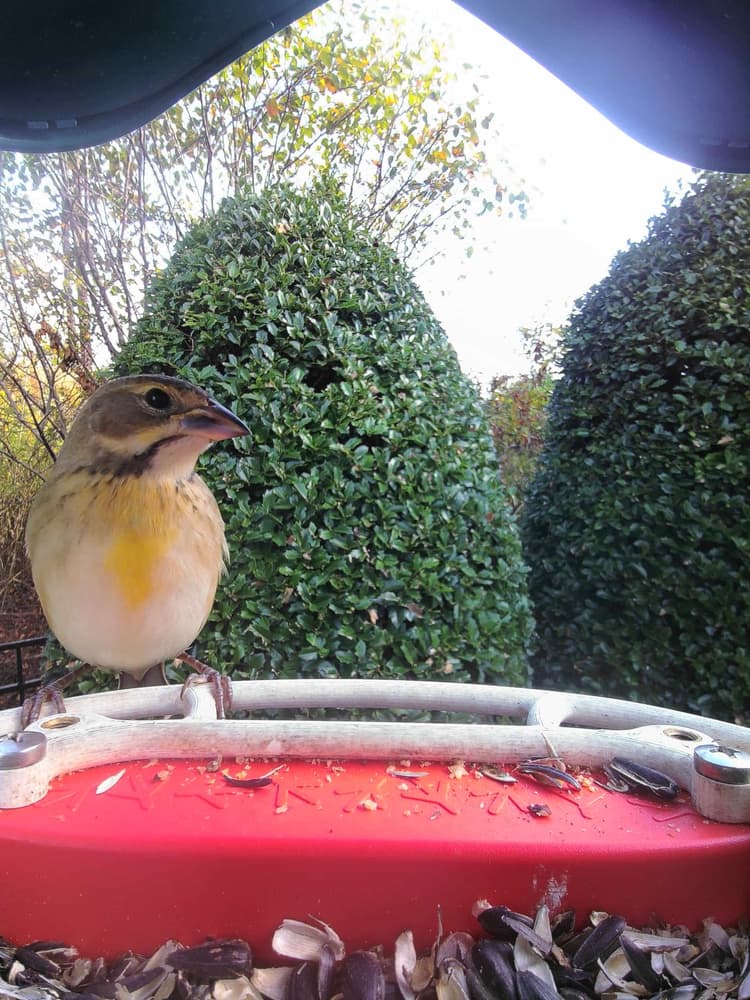
There are notable differences between male and female dickcissels. Males have a bold black bib on a yellow chest, a combination which is rare amongst bird species, with the added unique feature of a rusty shoulder. Females, on the other hand, resemble house sparrows but with a hint of yellow on the chest and reddish tones on the shoulder.
Juvenile
Juvenile dickcissels are less distinct than adults, and while information is limited, they are likely to display less prominent coloration and markings. Until they reach maturity, identifying them may be more challenging.
Often mistaken for
Eastern Meadowlark vs Dickcissel
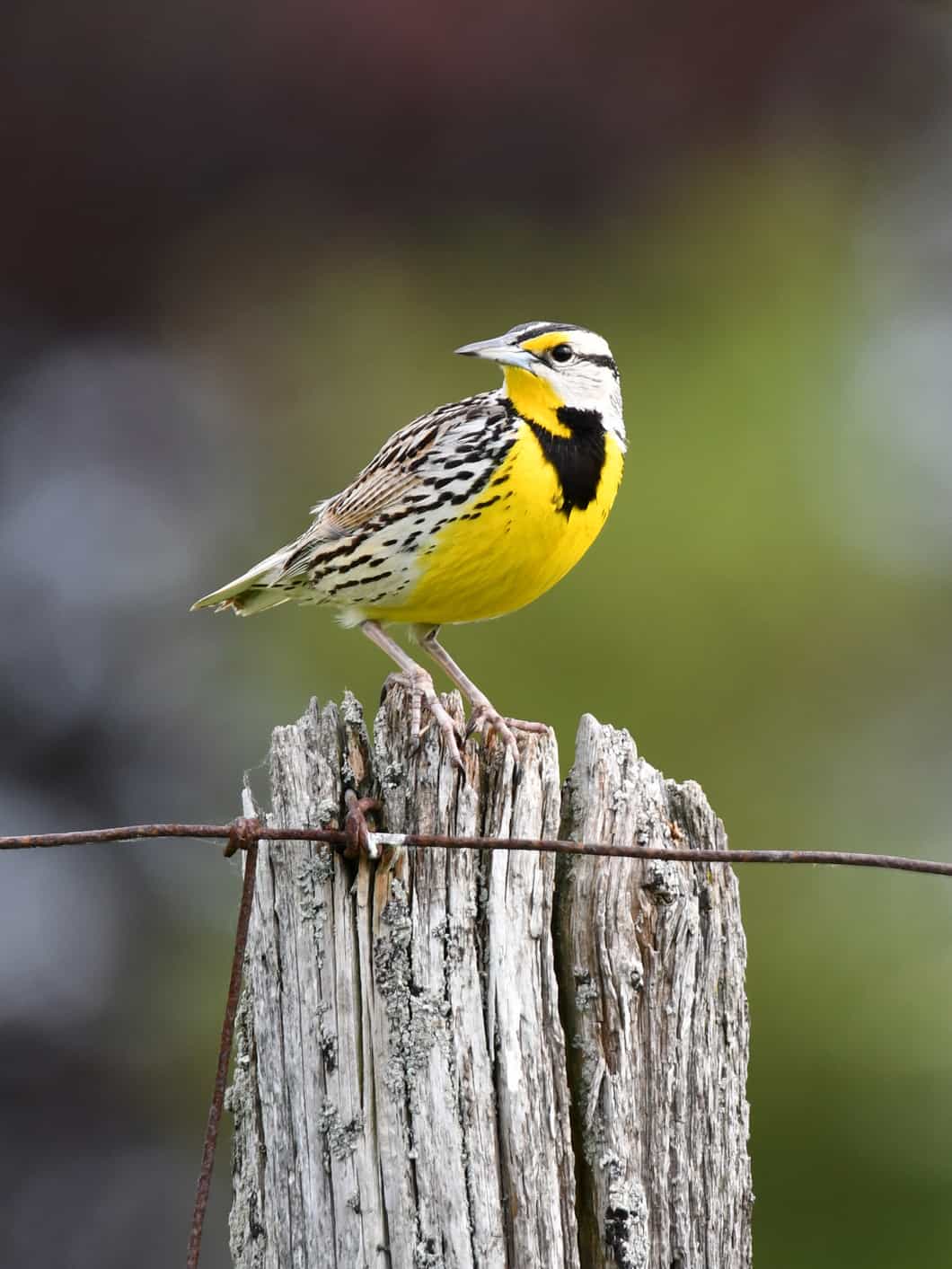
Dickcissels are smaller, around 6 inches, while Eastern Meadowlarks are bigger at about 9 inches. Dickcissels have a yellow chest with a distinct black V, similar to the meadowlark, but lack its long tail and short bill. Meadowlarks have a more prominent, longer, more pointed beak. Listen for songs: Dickcissels have a sharp, 'dick-dick-cissel' call, whereas meadowlarks have flute-like whistles.
House Sparrow vs Dickcissel
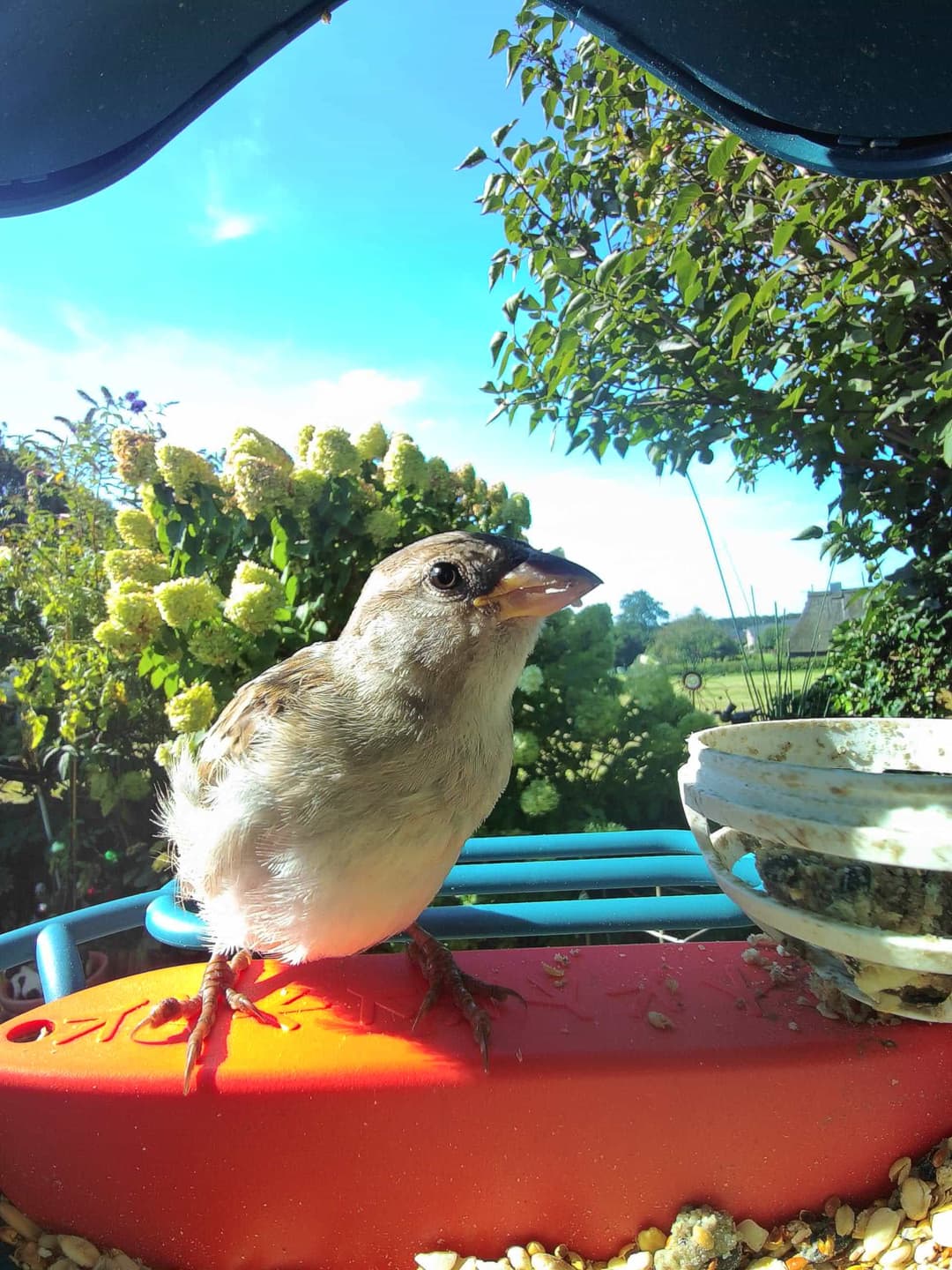
Dickcissels can resemble House Sparrows but are brighter with a yellow chest and black throat, unlike the sparrow's plain chest. Dickcissels have a chunky build similar to sparrows but with a more vibrant, colorful appearance. Sparrows are more compact and uniformly colored with a brown and grey streaked pattern. Dickcissels' song is buzzy and distinct, setting them apart from the sparrow’s chirps.
Breeding and nesting habits of the dickcissel
Mating behaviors
In Dickcissels, males arrive at breeding grounds about a week before females to establish territories. They sing to defend these areas. One male may mate with multiple females, indicating a polygynous mating system.
Nesting details
Dickcissel nests are usually on or near the ground, hidden in dense grasses, weeds, alfalfa, or clover. Occasionally, nests are placed in shrubs or low trees, up to 6 feet high. The female constructs the nest, an open cup made with weeds, grass, leaves, lined with fine grass, rootlets, and sometimes animal hair.
Eggs and chick-rearing
Dickcissels lay eggs in well-concealed nests. The female is primarily responsible for incubating the eggs and feeding the chicks. After hatching, chicks are raised in the nest, relying on the parents for food and protection until they are ready to fledge.
What does a dickcissel like to eat?
Insects
Seeds
Spiders
Natural diet
The dickcissel primarily feeds on insects and seeds. During early summer, insects dominate their diet, with grasshoppers, crickets, caterpillars, beetles, and various other insects being consumed. In other seasons, the dickcissel shifts its diet more towards seeds, particularly those from weeds and grasses, as well as cultivated grains.
Bird feeders
While specific details about dickcissels at bird feeders are not provided, they may be attracted to feeders that offer a variety of seeds, similar to their natural seed consumption, including those of grasses and cultivated grains commonly found in birdseed mixes.
Feeders and food for dickcissels
The type of feeder you use can greatly impact your ability to attract dickcissels. They are most attracted to tube feeders with large perches or platform feeders. As for their favorite snacks, dickcissels love seeds - especially sunflower seeds, grain sorghum, and milo. Enhance your chances of a visit by offering Bird Buddy seeds. These are the preferred choice since they are expertly picked for the season and will please the palate of even the most discerning dickcissel.
Creating a bird-friendly yard for dickcissels
Other than providing the right food and feeder, make your yard more appealing to dickcissels by planting native plants and grasses. Dickcissels are primarily located in the Midwest and they are attracted to large, open grassy areas - replicating these conditions can make your yard a hot spot for these birds. For a bit of fun, consider playing recordings of the dickcissel’s song to tempt them into a sing-along. Remember, patiences is key. It might take a bit of time but it'll worth it when you finally spot one of these yellow-chested visitors in your yard.
Where can you find dickcissels?

Primary habitat
The Dickcissel primarily nests in natural prairies and meadows, as well as in fields of alfalfa, clover, timothy or other crops.
Additional range
During migration, Dickcissels can be found in various grassy or weedy fields.
Do they migrate?
The dickcissel is a migratory bird that is known for its long-distance movements. During migration, dickcissels travel in large flocks that can sometimes number in the hundreds. In the autumn, they stray from their usual routes and can be found reaching both the East and West coasts of the United States. Their primary migratory route, however, leads them from their breeding grounds in the central United States to their wintering areas in Central America and northern South America, including countries like Venezuela and Colombia. The timing of the migration typically begins in late summer or early autumn, as they leave the prairies and grasslands to head south. Throughout the winter, they predominantly remain in these warmer southern regions. However, it is noted that a small number of dickcissels may be found during winter in the Northeast United States. This is rare, but those that do stay are often observed at bird feeders, taking advantage of the available food sources. Come spring, they begin their return journey north, usually arriving back at their breeding territories by late spring.
What is the role of dickcissels in nature and how to protect them?
Conservation status
The dickcissel, once common along the Atlantic seaboard, disappeared in the late 19th century but began to reappear in small numbers since the 1920s. Recently, their population has been declining again, indicating a vulnerable status. The limited presence in the East suggests that conservation efforts are necessary to prevent further decline. Significant threats include habitat loss and changes due to agriculture and land development. Key conservation efforts should focus on preserving breeding habitats and addressing these land use challenges to support population recovery.
Ecological role of dickcissels
Its role in the ecosystem
The Dickcissel plays a crucial ecological role in pest control and seed dispersal. As a bird with a diet primarily consisting of insects and seeds, it helps in maintaining pest populations, especially during early summer when insects make up most of its diet. The insects it consumes typically includes grasshoppers, crickets, caterpillars, beetles and many others. This makes the Dickcissel an effective natural pesticide. Meanwhile, in other seasons when its diet is majorly composed of seeds, the Dickcissel aids in dispersing the seeds of weeds, grasses, and even cultivated grains. The act of consuming seeds and depositing them in new locations facilitates plant diversity and expansion. Lastly, with its nesting behavior of creating homes in dense grass, weeds, and shrubbery, the Dickcissel also contributes to the ecosystem by influencing plant growth distribution and structure.
How to help protect dickcissels
Preservation tips
Habitat preservation for the dickcissel
Preserve patches of tall grass prairies to support Dickcissel breeding. Limit agriculture expansion and use sustainable farming practices. Leave fields uncut until after breeding season as mowing can damage nests. Promote land conservation programs that maintain and restore grassland habitats.
Community science initiatives
Engage in citizen science programs to track Dickcissel populations, such as Bird Counting Initiatives and Nest Monitoring Projects. Raise awareness about the Dickcissel's plight via social media campaigns and local community events. Advocate for legislation protecting migratory birds and grassland ecosystems. Donate to organizations that support bird conservation.