Dickcissel or House Sparrow?
Here's how to tell the difference


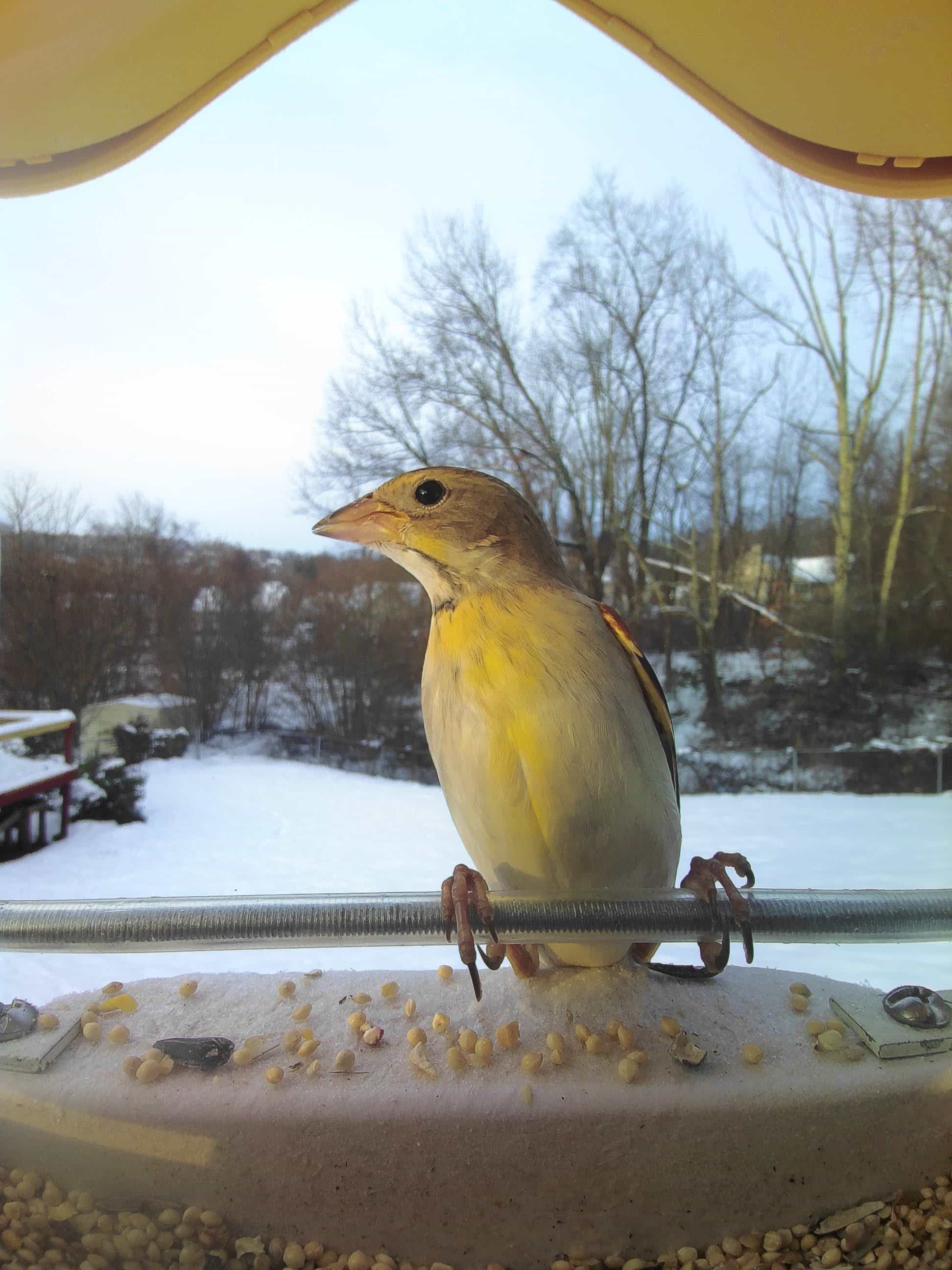


Dickcissel
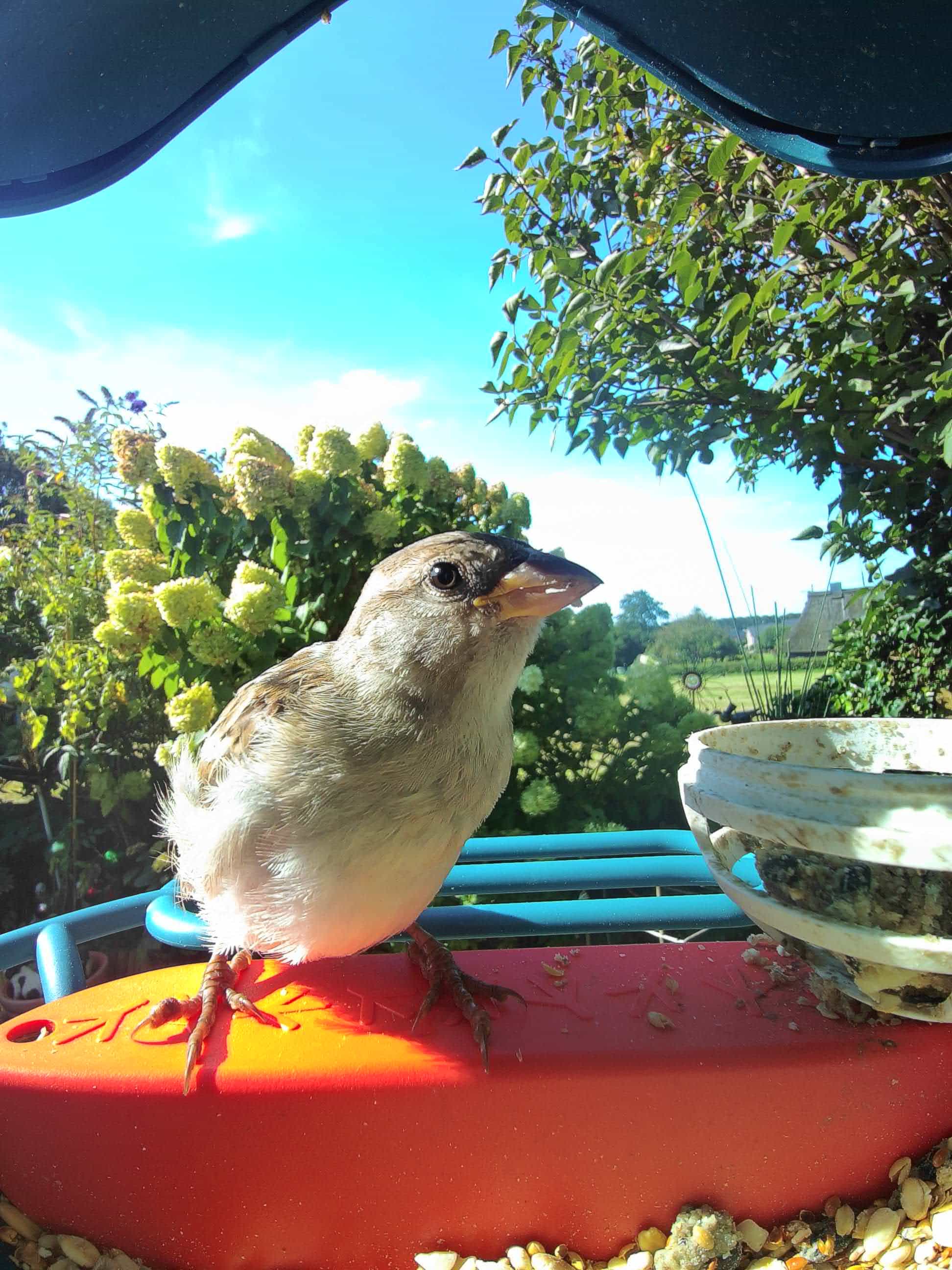


House Sparrow
Dickcissel
Spiza americana
General appearance
Dickcissels are small birds, the size of a robin or sparrow with a 15 cm width. They possess a distinct coloration pattern that includes black, brown, red, white, and yellow. They have pointed wings and depending on the subspecies, they may have a notched, rounded, or square-tipped tail.
Male vs female
There are notable differences between male and female dickcissels. Males have a bold black bib on a yellow chest, a combination which is rare amongst bird species, with the added unique feature of a rusty shoulder. Females, on the other hand, resemble house sparrows but with a hint of yellow on the chest and reddish tones on the shoulder.
Juvenile
Juvenile dickcissels are less distinct than adults, and while information is limited, they are likely to display less prominent coloration and markings. Until they reach maturity, identifying them may be more challenging.
Size
5.5 - 6.3 in/0.8 - 1.0 oz
There's more to learn about Dickcissel
View full detailsHouse Sparrow
Passer domesticus
General appearance
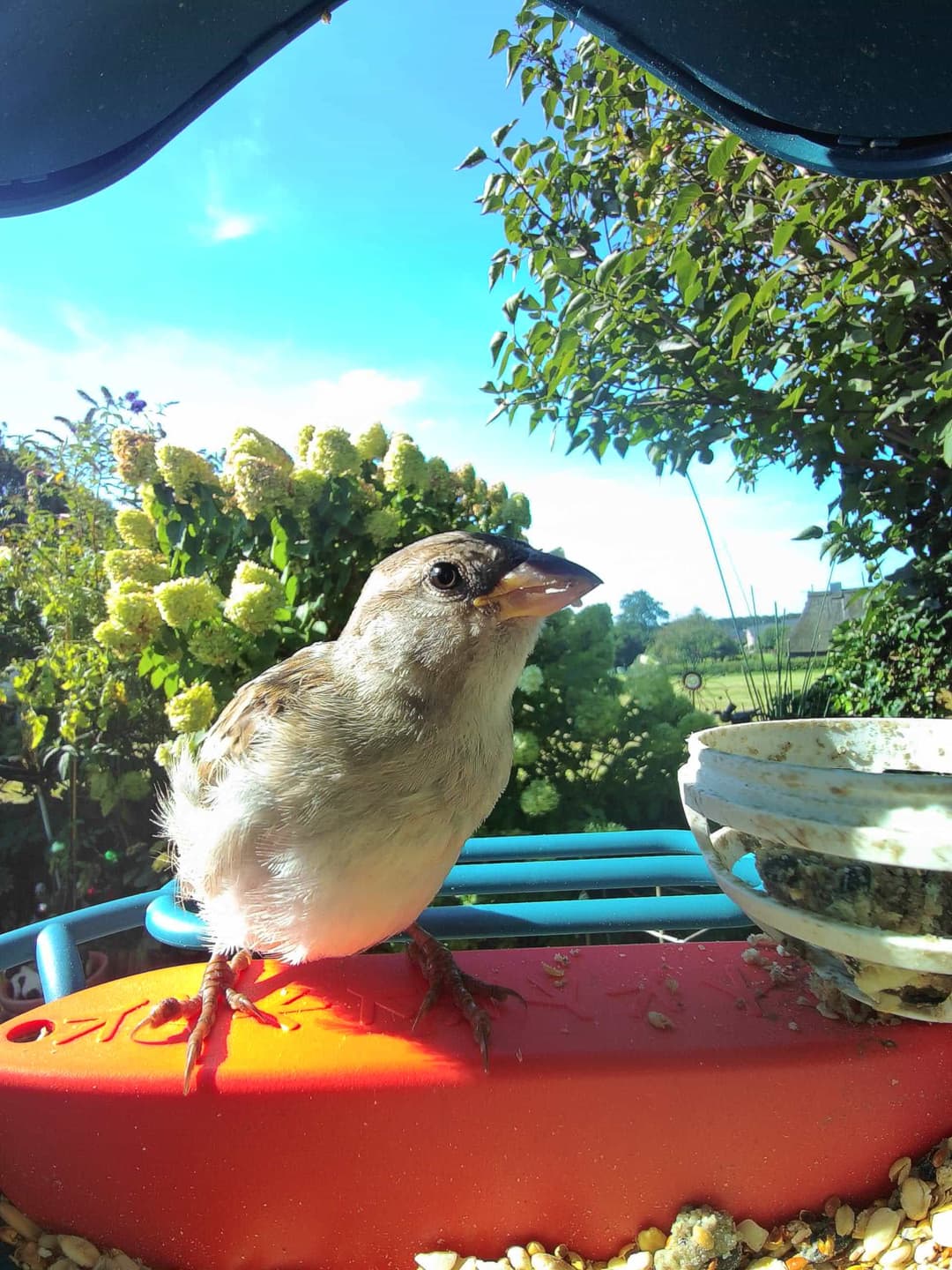
House sparrows are small, stocky birds measuring about 16 cm in length. They have a short tail and a stout bill. Their plumage is predominantly brown, with black streaks on their back and wings. This common bird has a distinctive, somewhat rounded head and a smooth body shape that helps in identifying it in urban and rural areas alike.
Male vs female
Male house sparrows are more vibrant with a gray crown, a chestnut-brown nape, and white cheeks. They have a distinctive black bib on their throat, which can vary in size seasonally. In contrast, females are duller with a more uniform brown coloration, lacking the bold markings of males. Their underparts are a plain grayish-brown, and they have a more pronounced eye stripe behind the eye.
Juvenile
Juvenile house sparrows resemble females but are even paler, with grayish-brown plumage and softer streaks. They lack the developed throat patch and bright head pattern found in adults. Juveniles gradually acquire adult coloration through moulting, becoming distinguishable by their more uniform brown appearance and subtler facial markings.
Size
5.9 - 6.7 in/1.0 - 1.1 oz
There's more to learn about House Sparrow
View full detailsHow to tell the Dickcissel from the House Sparrow
Visual differences
Dickcissels are similar in size to house sparrows, both around 6 inches in length, but they exhibit distinct visual features. Male dickcissels display a bold black bib on a yellow chest and a unique rusty shoulder, whereas male house sparrows have a gray crown, chestnut nape, and black bib on a grayish-brown body. Female dickcissels resemble house sparrows but have a slight yellow chest tint and reddish shoulder tones. House sparrows have stout bills and a short tail, with brown plumage and black streaks, while dickcissels feature pointed wings.
Key differences and behavior
Dickcissels and House Sparrows, while similar in size, differ markedly in behavior and habitat. Dickcissels prefer natural prairies and fields, whereas House Sparrows thrive around human habitation, even in deserts or forests near isolated structures. Behaviorally, male Dickcissels assertively defend territories and pursue polygynous mating, whereas House Sparrows form social colonies, often engaging in group singing and dust bathing. In terms of diet, both species consume seeds and insects, but House Sparrows are known for scavenging human food remnants and frequenting feeders for seeds like millet. Nesting habits also contrast, with Dickcissels nestling on or near the ground, while House Sparrows use cavities in manmade structures. Notably, Dickcissel females handle nesting duties alone, whereas in House Sparrows, both sexes participate.
Still not sure? Here are more lookalikes!
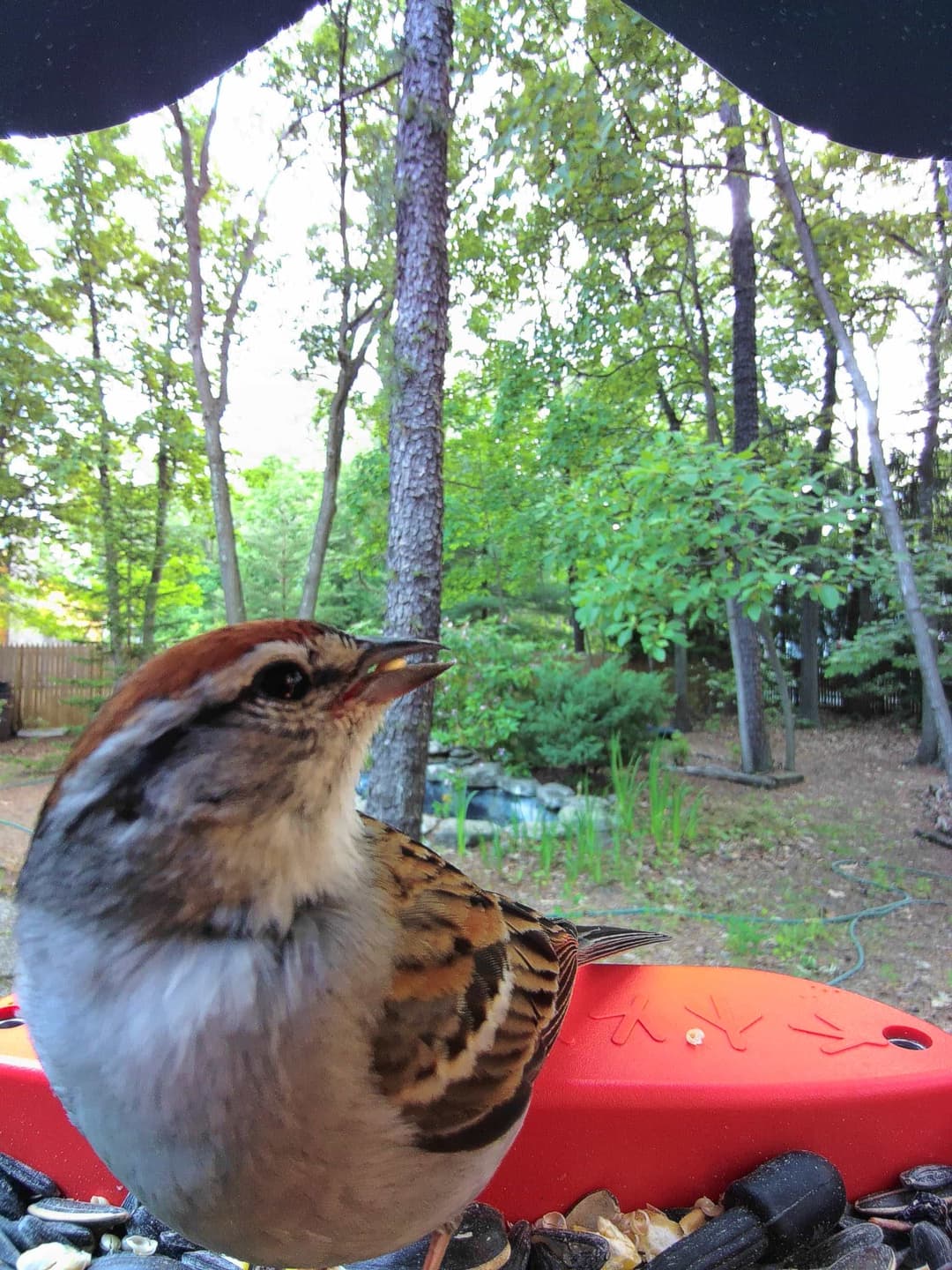
House Sparrow vs Chipping Sparrow
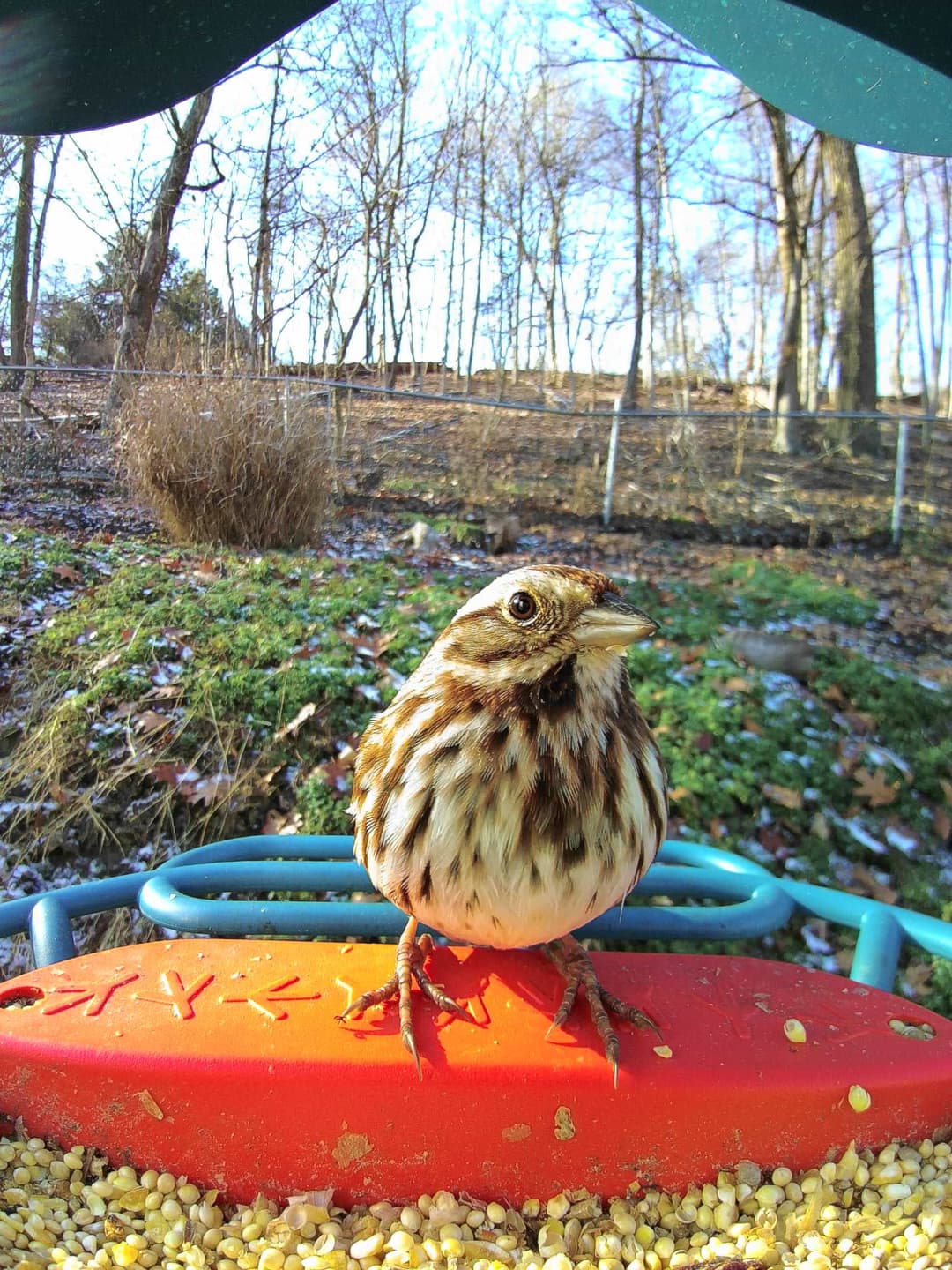
House Sparrow vs Song Sparrow
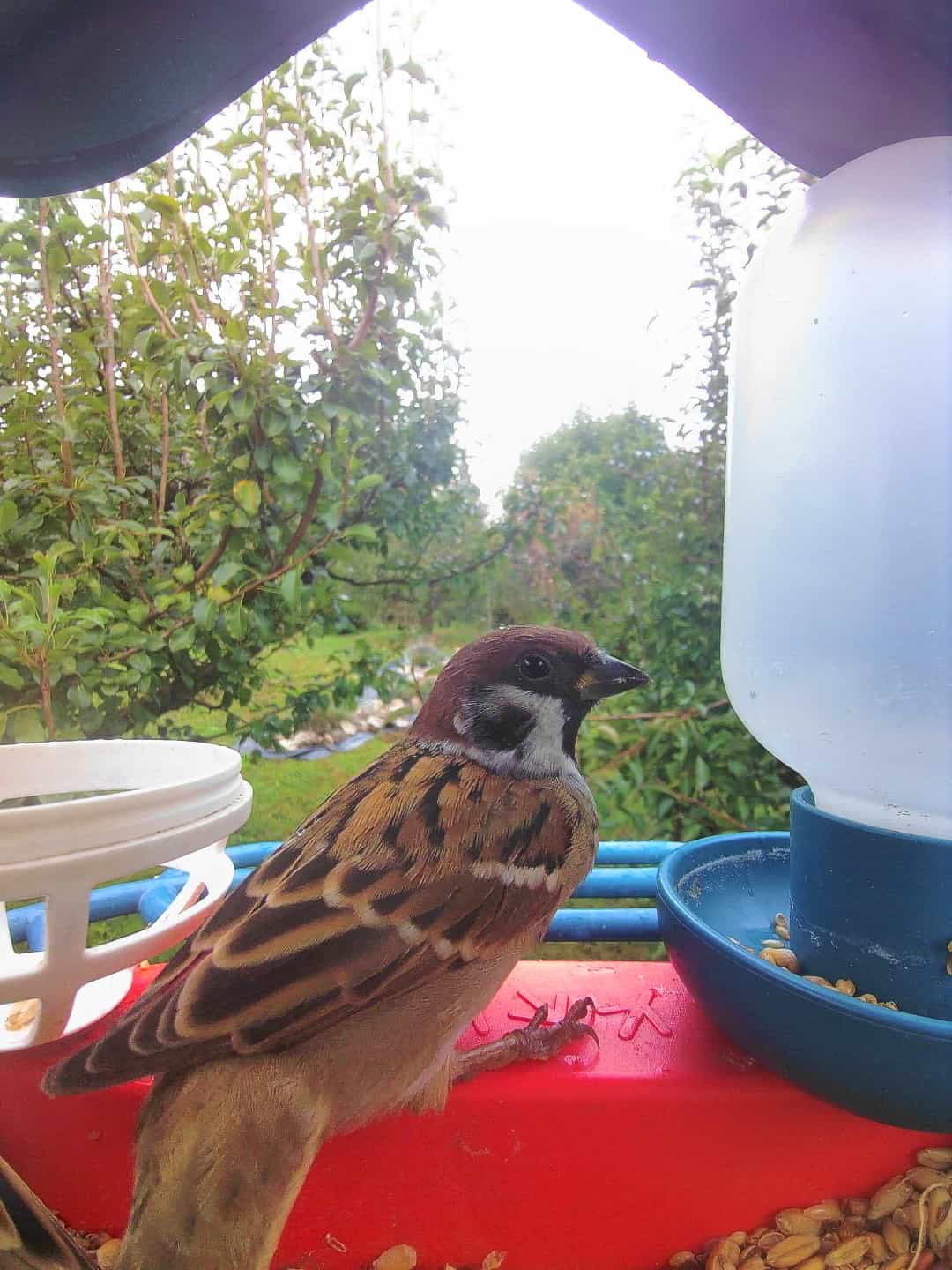
House Sparrow vs Eurasian Tree Sparrow
House Sparrow vs American Tree Sparrow
Dickcissel vs [Select a bird]

[Select a bird]
Pick a bird to compare
House Sparrow vs [Select a bird]
[Select a bird]
Pick a bird to compare