Dickcissel or Eastern Meadowlark?
Here's how to tell the difference


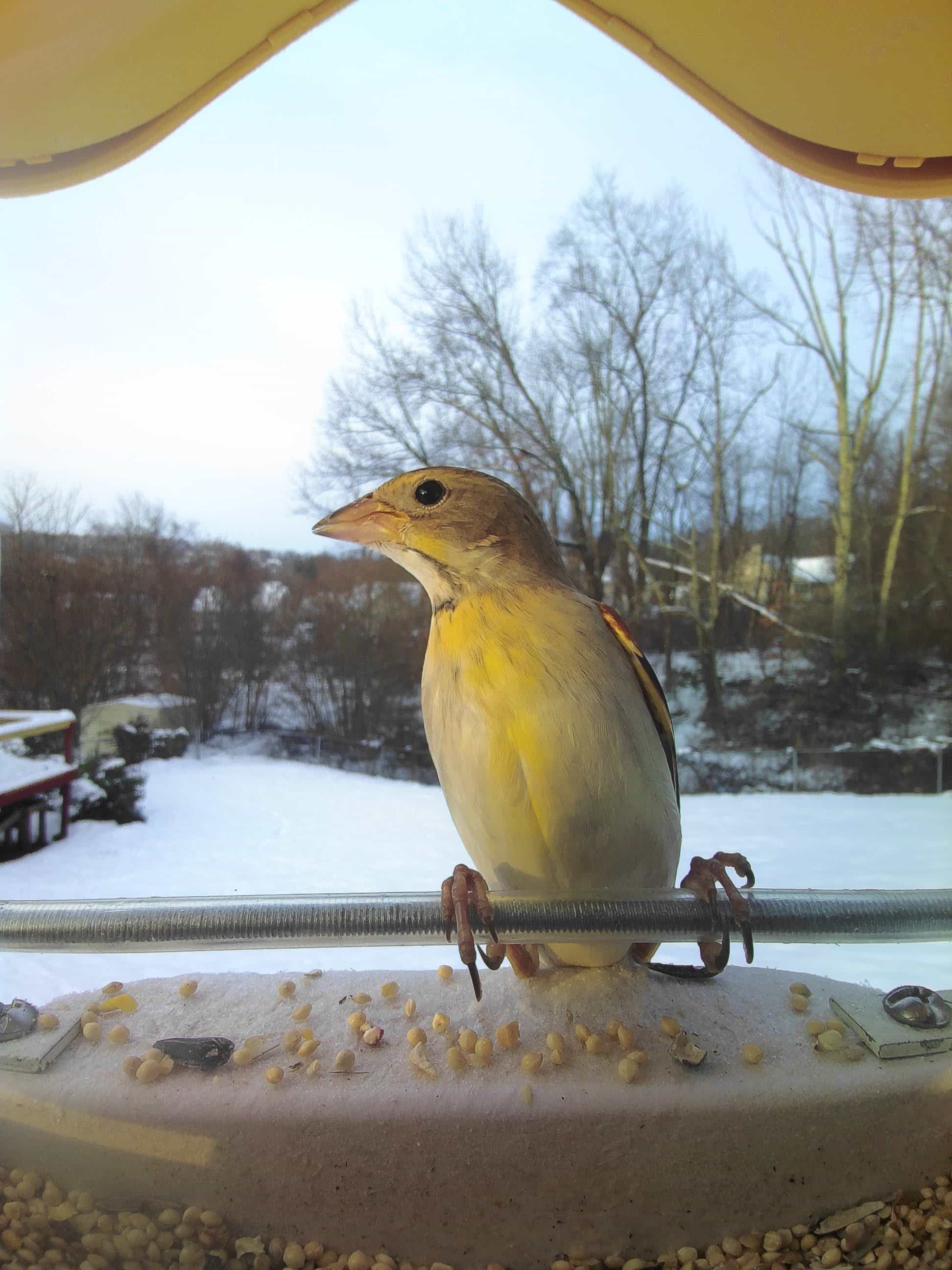


Dickcissel
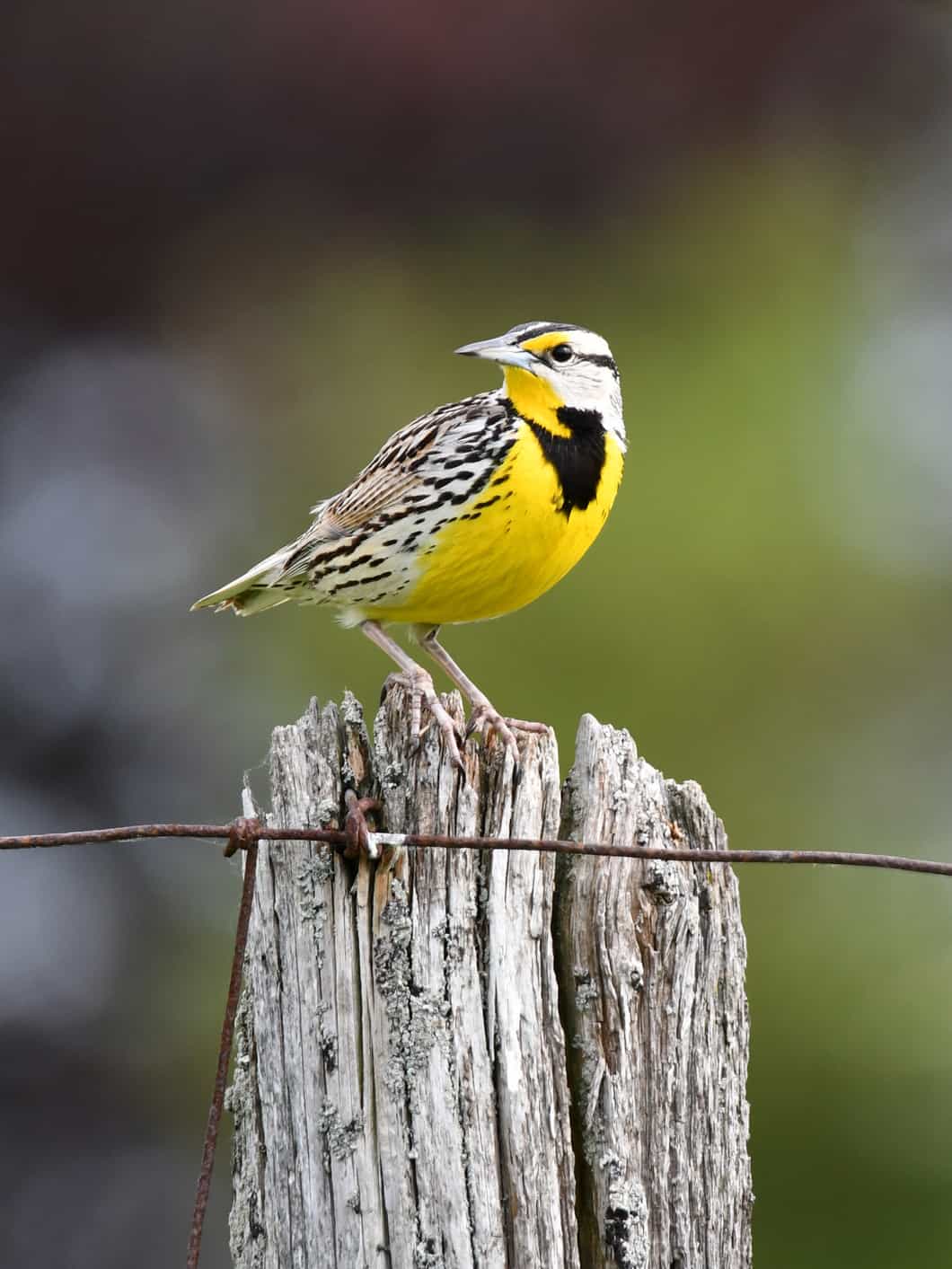
Eastern Meadowlark
Dickcissel
Spiza americana
General appearance
Dickcissels are small birds, the size of a robin or sparrow with a 15 cm width. They possess a distinct coloration pattern that includes black, brown, red, white, and yellow. They have pointed wings and depending on the subspecies, they may have a notched, rounded, or square-tipped tail.
Male vs female
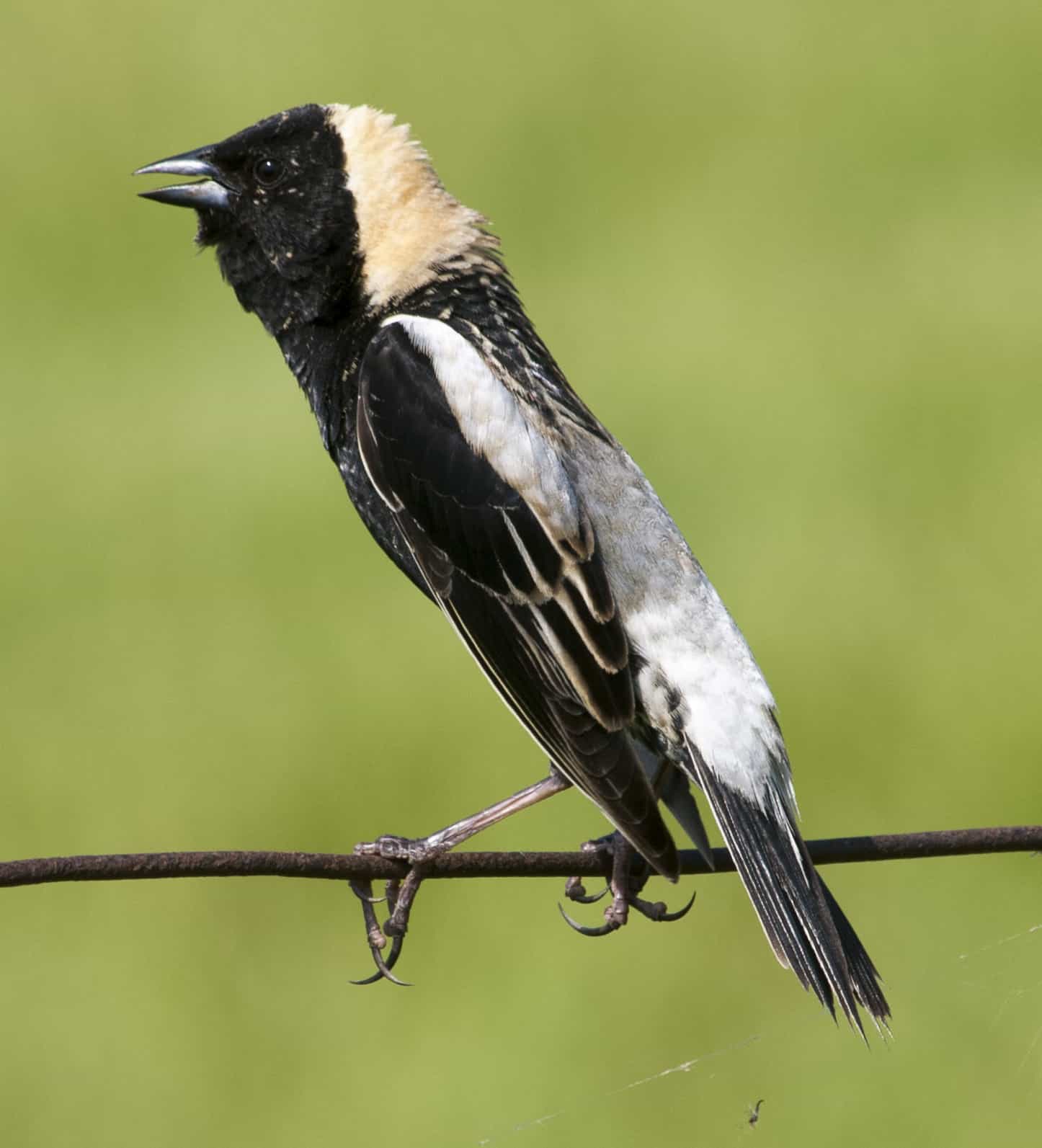
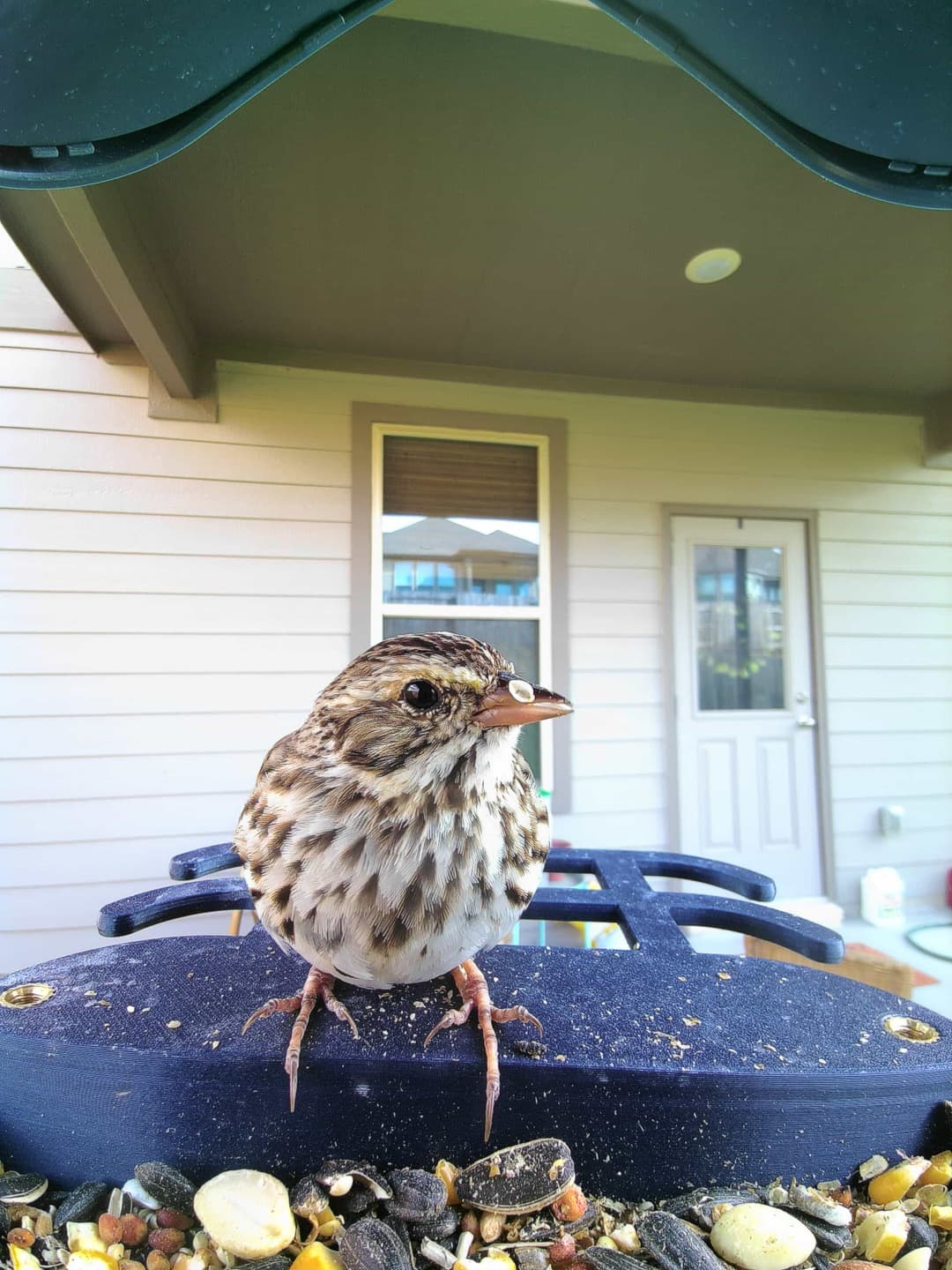
There are notable differences between male and female dickcissels. Males have a bold black bib on a yellow chest, a combination which is rare amongst bird species, with the added unique feature of a rusty shoulder. Females, on the other hand, resemble house sparrows but with a hint of yellow on the chest and reddish tones on the shoulder.
Juvenile
Juvenile dickcissels are less distinct than adults, and while information is limited, they are likely to display less prominent coloration and markings. Until they reach maturity, identifying them may be more challenging.
Size
5.5 - 6.3 in/0.8 - 1.0 oz
There's more to learn about Dickcissel
View full detailsEastern Meadowlark
Sturnella magna
General appearance
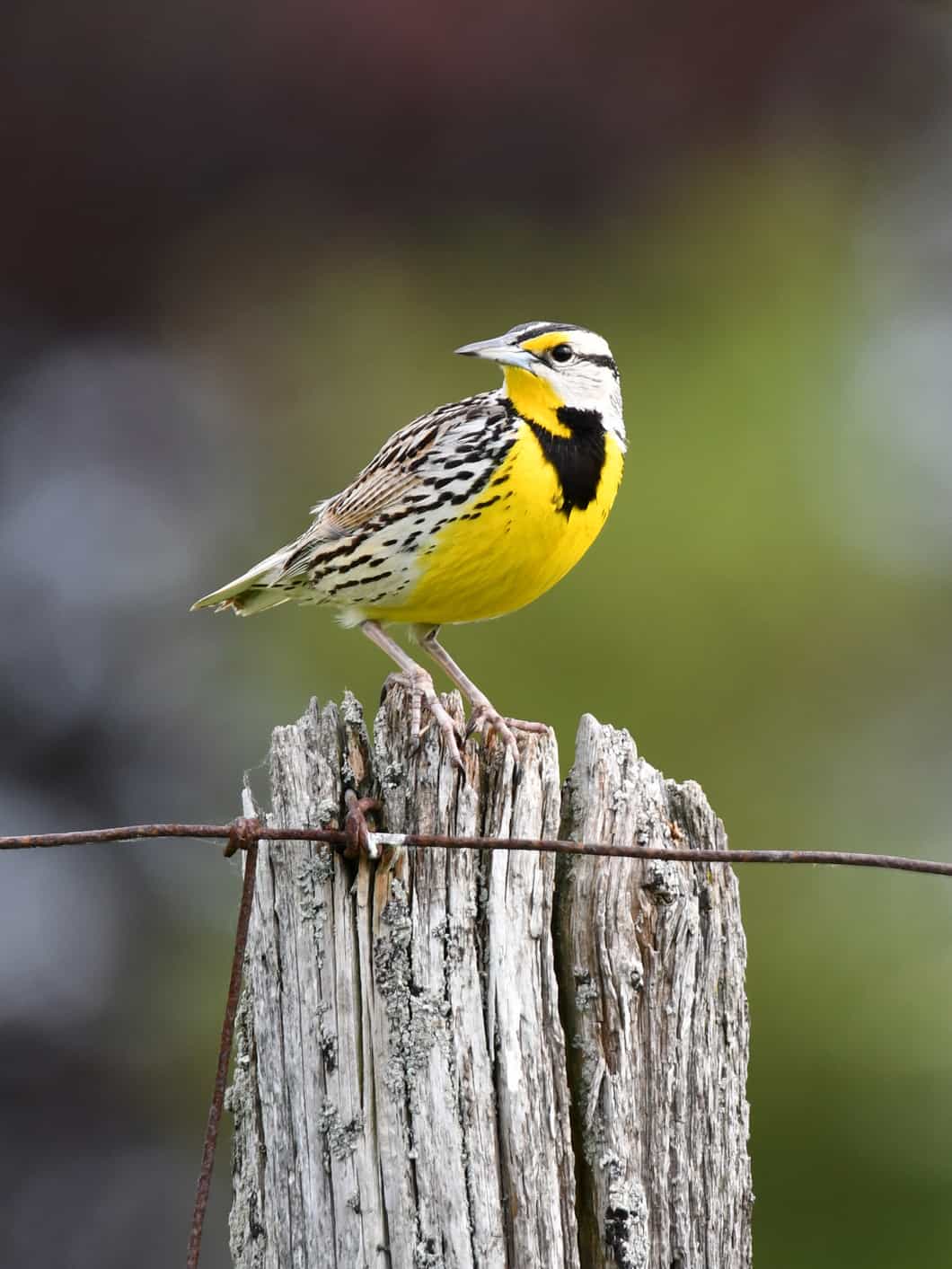
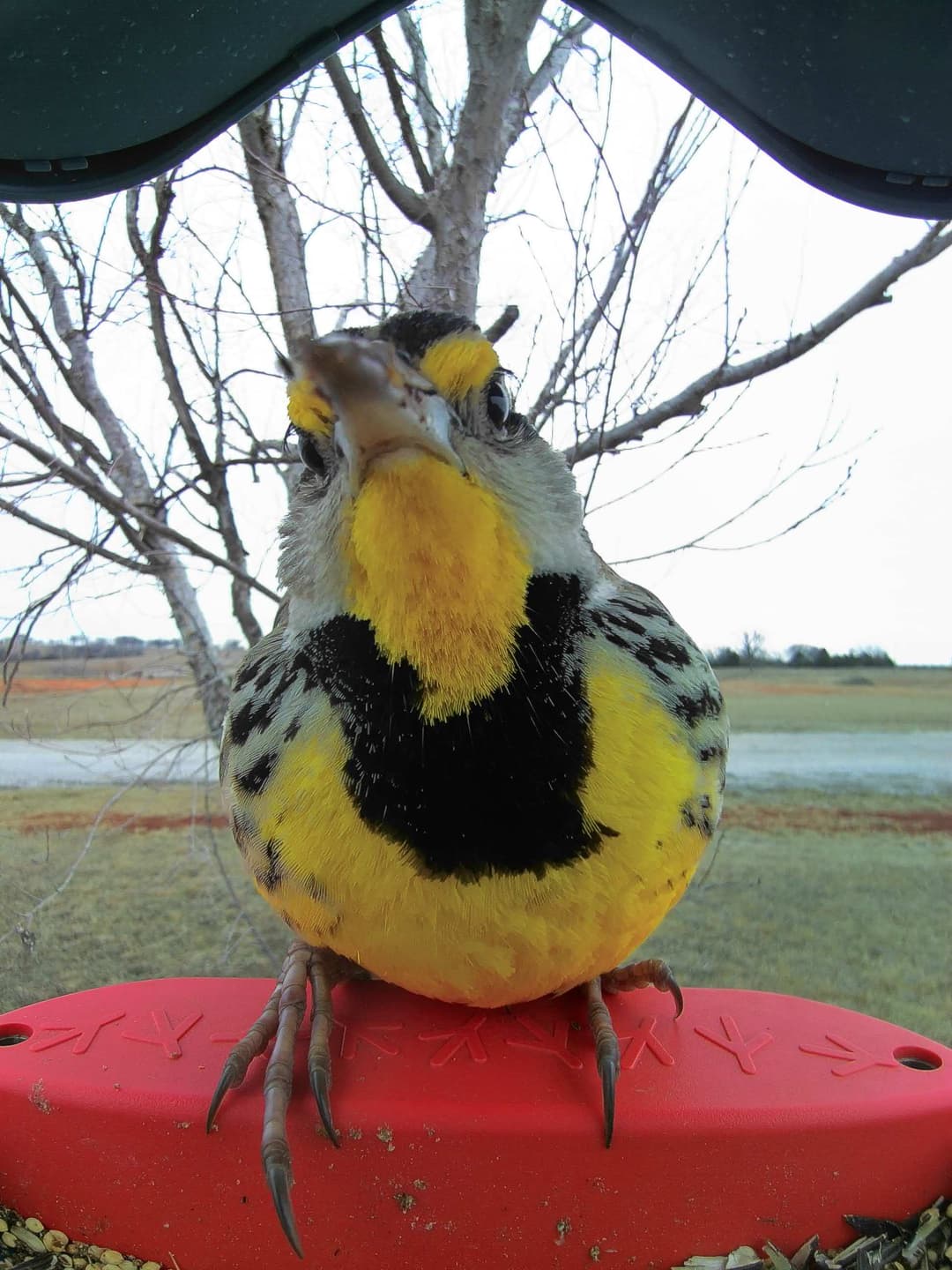
The eastern meadowlark is a medium-sized songbird, characterized by its bright yellow underparts and a distinctive black 'V' necklace on its chest. The upperparts are brown with intricate streaks, providing camouflage in grassy habitats. The face features a sharp contrast with a white or pale yellow stripe above the eye and a dark crown. They possess a long, pointed bill.
Male vs female
Males and females have similar plumage, making them difficult to distinguish by appearance alone in the field. However, males are typically slightly larger and possess more vibrant colors. During the breeding season, males' songs are more pronounced, assisting in identification.
Juvenile
Juvenile eastern meadowlarks resemble adults but have duller and more muted colors. The black 'V' on the chest is less defined, and the overall plumage shows more spotting rather than streaking. Juveniles lack the fully-developed song of adults, with more subdued calls.
Size
7.5 - 10.2 in/2.0 - 5.3 oz
There's more to learn about Eastern Meadowlark
View full detailsHow to tell the Dickcissel from the Eastern Meadowlark
Visual differences
The Dickcissel is smaller, about 5.5-6.3 inches long with a weight of 0.8-1 ounce, featuring a striking black bib on a yellow chest and a rusty shoulder in males. In contrast, the Eastern Meadowlark, larger at 7.5-10.2 inches and 2-5.3 ounces, has a distinctive black 'V' on its vibrant yellow chest, brown streaked upperparts, and a pale stripe above the eye. Unlike the pointed wings and varied tail of Dickcissel, the Meadowlark has a long, pointed bill suited to its songbird classification.
Key differences and behavior
Dickcissels and Eastern Meadowlarks differ significantly in behavior and ecology. Dickcissels are polygynous, with males maintaining territories and attracting multiple mates without participating in rearing young. In contrast, Eastern Meadowlarks often have up to three mates, with both parents involved in chick care. Habitat preferences overlap in grasslands and fields, but Dickcissels migrate to weedy fields, while Eastern Meadowlarks adapt to various grassland types year-round. Both species forage mainly on insects in summer and seeds in other seasons, but meadowlarks seldom visit feeders. Dickcissels are incessant vocalists, especially on their winter grounds, while Eastern Meadowlarks are noted for their diverse songs during courtship. Although both nest on the ground, Dickcissels may also choose low shrubs, whereas meadowlarks carefully conceal nests in tall grasses. Despite their common ground, their distinct vocal behaviors and parental roles offer clear distinctions for field identification.
Still not sure? Here are more lookalikes!
Dickcissel vs House Sparrow
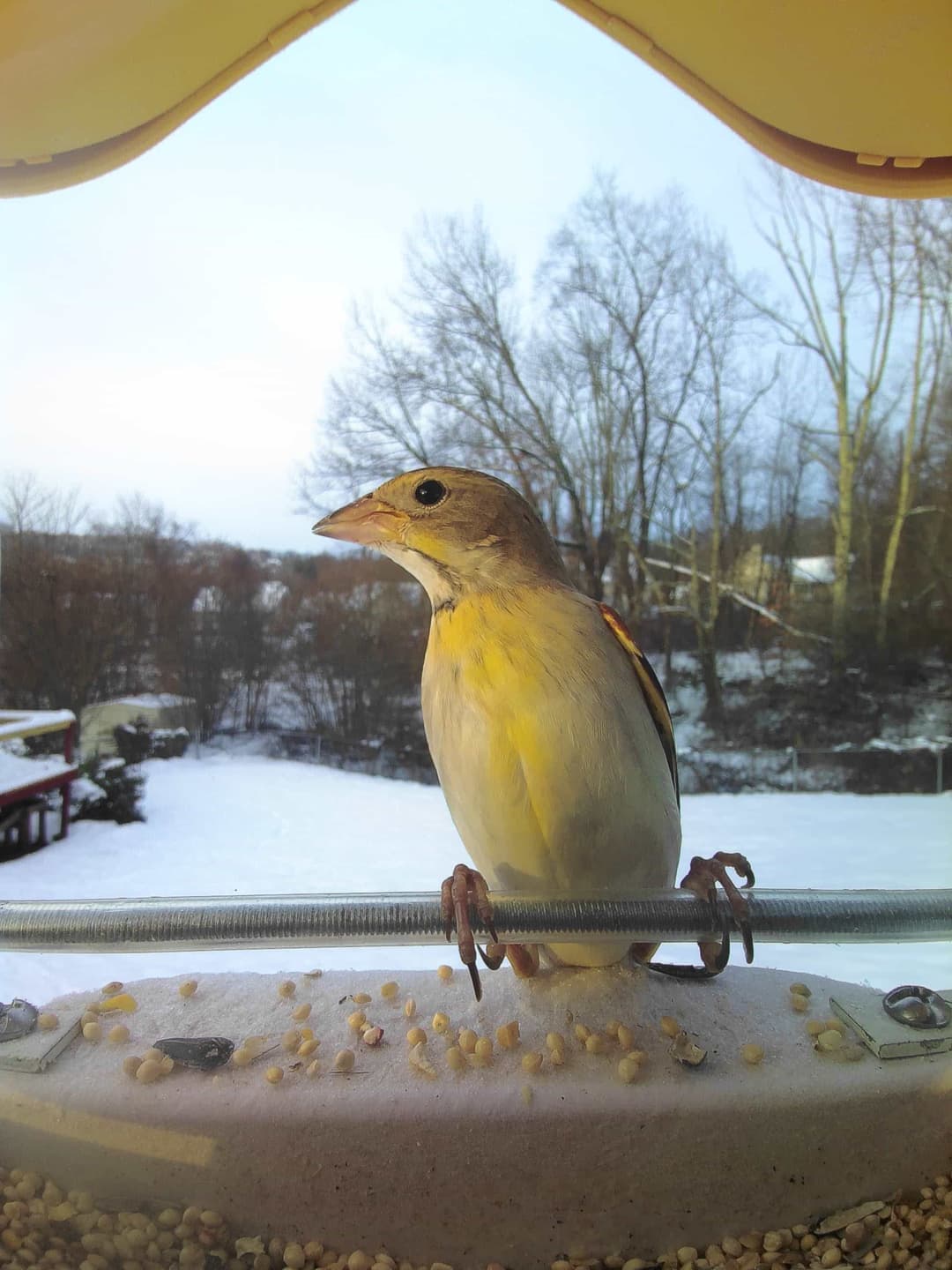
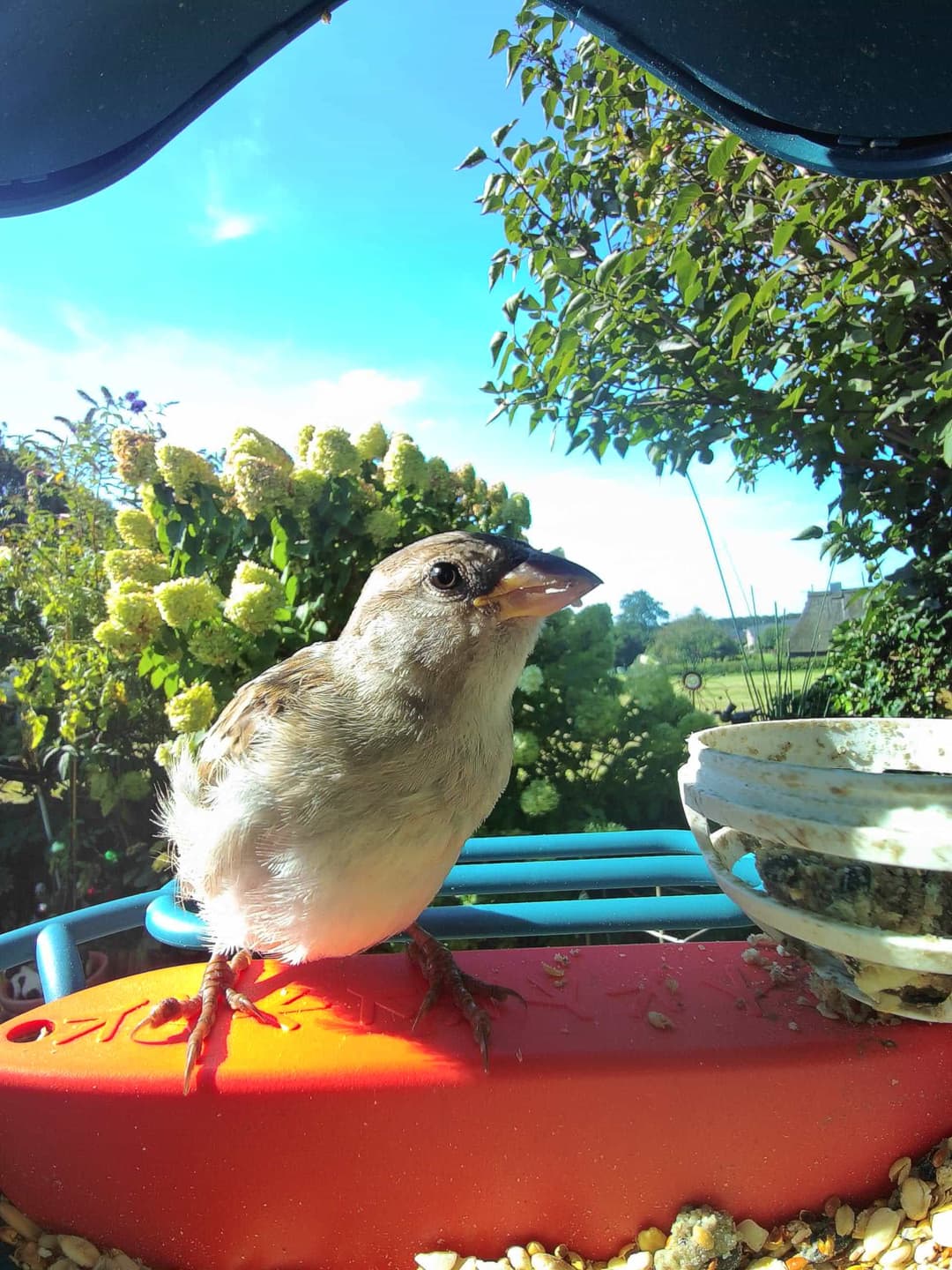
Dickcissel vs [Select a bird]

[Select a bird]
Pick a bird to compare
Eastern Meadowlark vs [Select a bird]
[Select a bird]
Pick a bird to compare