
Mallard
Mallard
Also known as: Wild Duck
Anas platyrhynchos


Quick Identification guide
Quick Identification guide
- •
Males exhibit a glossy green head, bright yellow bill, and distinctive white ring around the neck
- •
Females are mottled in brown and tan tones with an orange-billed, more muted appearance
- •
Both sexes have a blue speculum edged in white on their wings and a curly tail
What does a mallard sound like?
Mallard vocalizations are distinguishable between sexes. The male mallard typically utters soft, reedy notes, while the female produces a louder, distinctive quack. The call pattern is typically flat and simple. Both sexes employ croaking or quacking types of calls, with the male's croak often being softer and the female's quack being notably louder and stronger. These sounds are communicative signals to draw the attention or respond to fellow mallards.


Description
Mallards are a familiar sight across ponds, parks and rivers, and are usually what people first think of when they hear the word "duck". But did you know that the famous quacking sound that is ducks' trademark is the sound of a female mallard. Males don't quack at all!
The mallard can weigh between 735to1800grams and be from50to70centimeters tall.
The typical lifespan of a mallard is 5-10 years, although they can live up to 20 years in exceptional cases. Female mallards tend to live shorter lives than males due to the energy demands of producing eggs. This lifespan is similar to other duck species, such as the Wood Duck and the Pintail, which also average between 5 and 10 years. However, larger waterfowl like the Canada Goose can live considerably longer, with lifespans of up to 24 years.
Did you know?
Most popular questions about mallard
How to recognise a mallard?
General appearance
Mallards are medium-sized dabbling ducks, often seen in and around water bodies. They have a robust body with a round head and a distinctive flat bill. They exhibit a characteristic strong, direct flight.
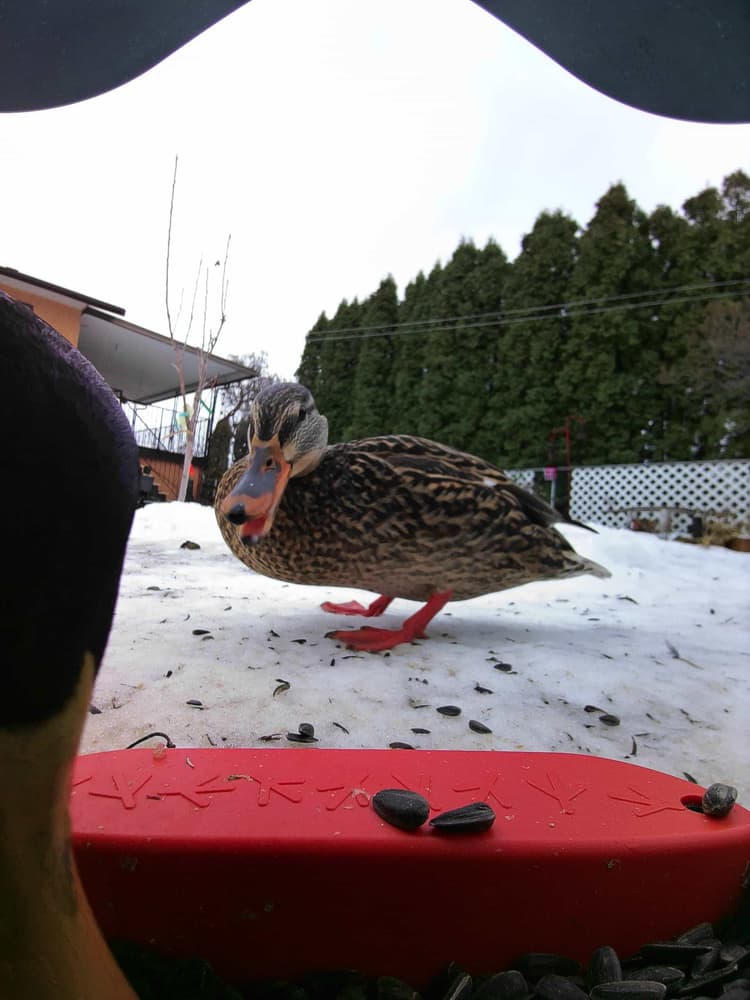
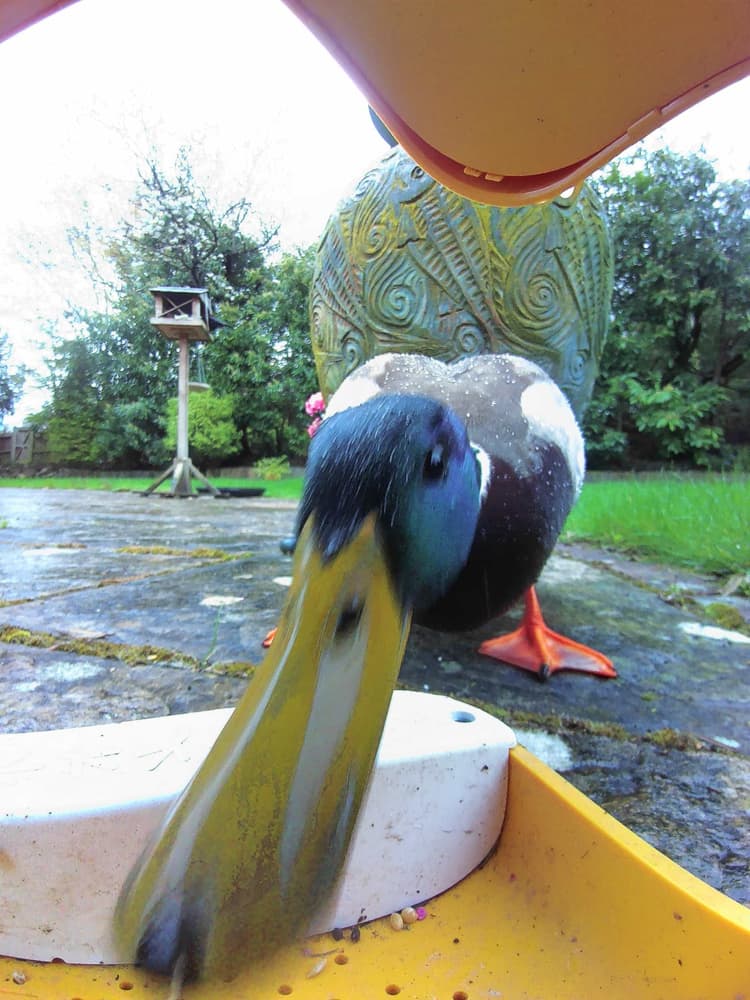
Male vs female
Male mallards are known for their iridescent green heads, white ring around the neck, and chestnut-brown chest, while females are mottled brown with an orange bill marked with black. Both sexes have a blue speculum bordered with white on their wings. Males lose their bright colors and resemble females during the eclipse plumage in late summer.
Juvenile
Juvenile mallards resemble adult females with their mottled brown coloration but are generally duller and lack the distinct markings. As they mature, young males slowly transition to their vibrant adult plumage. They can often be seen in flocks with adults, using wetlands and ponds for feeding.
Often mistaken for
Mottled Duck vs Mallard
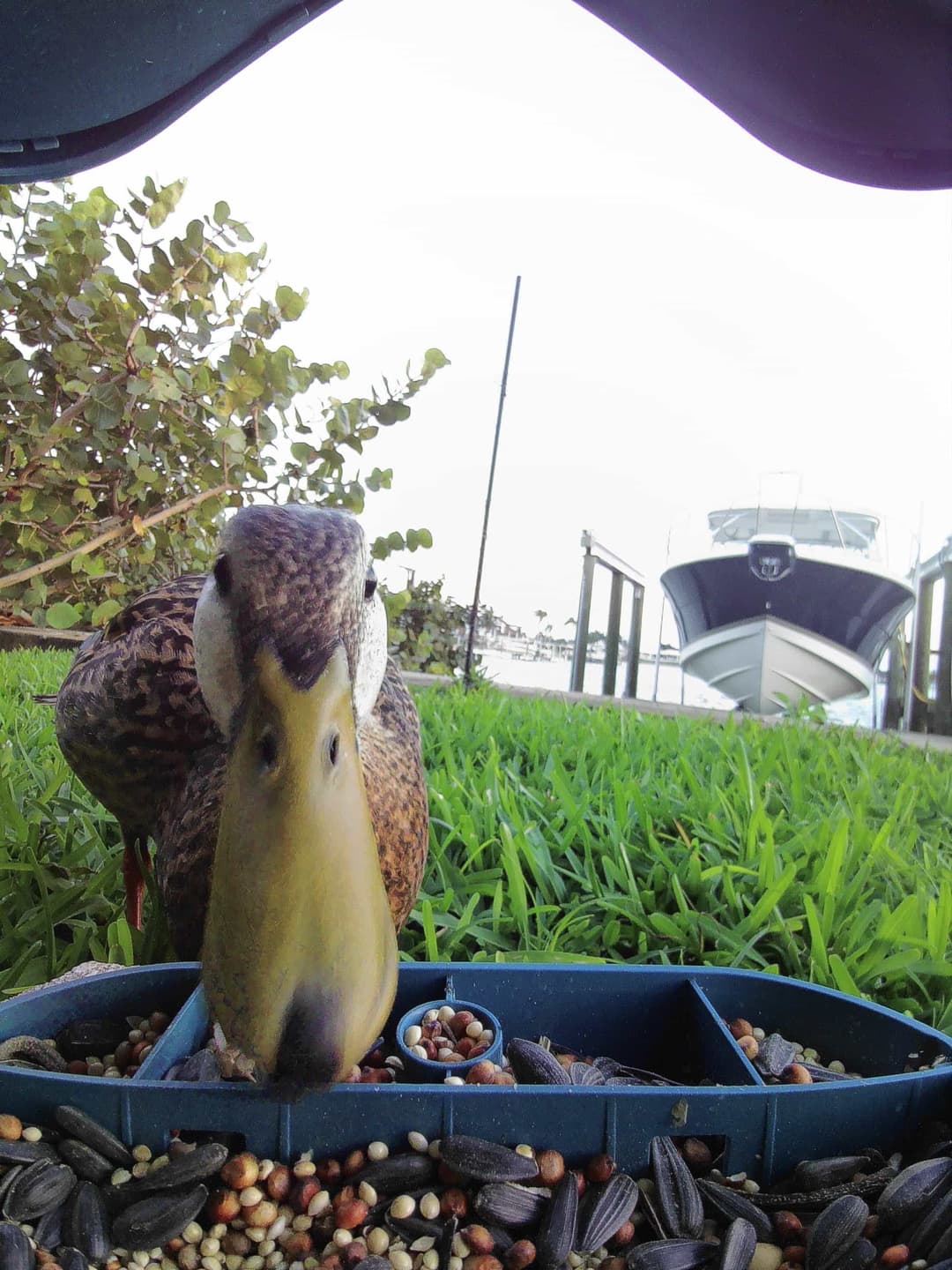
The Mallard and Mottled Duck can be confused, but have key differences. Male Mallards have an iridescent green head and bright yellow bill, while Mottled Ducks display a mottled brown appearance with a more uniform color and a slightly lighter head. The female Mallard has a mottled brown body as well, but with a distinctive orange bill adorned with black markings, while the Mottled Duck's bill is more olive or duller in comparison. Also, in flight, the Mallard shows a bright blue speculum bordered by white, a feature more subdued or absent in Mottled Ducks.
Breeding and nesting habits of the mallard
Mating behaviors
Mallard pairs form in fall and winter. The male performs displays including dipping its bill in water, rearing up, and giving whistle and grunt calls. Displays may also involve raising the head and tail or flinging water with the bill.
Nesting details
Nest sites are chosen by the female and can be more than 1 mile from water, typically on the ground among vegetation, but also on stumps, in tree hollows, or elevated structures. Nests are shallow bowls made from gathered plant material, lined with down.
Eggs and chick-rearing
Mallards lay eggs in these prepared nests where the female incubates them. Chicks are reared by the mother and are guided to water shortly after hatching. Providing a safe, quiet garden area can support mallard nesting and chick rearing, enhancing their natural habitat.
What does a mallard like to eat?
Aquatic animals
Insects
Nuts
Scraps
Seeds
Worms
Natural diet
Mallards are omnivorous and their natural diet primarily consists of plant material such as seeds, stems, and roots from a wide variety of plants, including sedges, grasses, pondweeds, and smartweeds. They also consume acorns, other tree seeds, and waste grain. In addition to plants, their diet includes insects, crustaceans, mollusks, tadpoles, frogs, earthworms, and small fish. Young ducklings often feed mostly on aquatic insects.
Bird feeders
At bird feeders, mallards may consume grains and seeds similar to those found in their natural habitat. It's common for them to eat offerings such as cracked corn and birdseed mixes provided by humans.
Feed them their favorite snacks
To attract mallards to your yard or feeder, one of the most effective ways is to offer them their favorite foods. They especially love Bird Buddy seeds that are expertly chosen for the season. Other snacks mallards are fond of include corn, oats, barley, soya beans, and sunflower seeds.
Use attractive feeders
Using the right type of feeder can make a big difference in attracting mallards. They tend to prefer tray or platform feeders that are placed near ground level. Also, make sure to place the feeder near a water source if possible, as mallards are typically found in or near water.
Try some fun tricks
There are some fun tricks you can try to encourage mallards to visit and stay in your yard. One helpful trick is scattering some extra Bird Buddy seeds on the ground around the feeder to catch their attention. Also, making sure your yard offers plenty of cover in the form of shrubs or small trees can help the mallards feel more secure and encourage them to stay longer.
Throw a bird song party
A fun way to encourage mallards and other birds to visit your yard and stay longer is by hosting a 'bird song party.' Simply play bird songs and calls, which you can find on various online platforms. This will not only tempt them to drop by but also keep them entertained and possibly even encourage them to join the sing-along.
Where can you find mallards?
Primary habitat
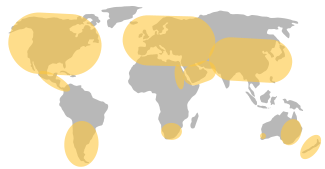
Mallards primarily favor fresh water habitats like marshes, wooded swamps, ponds, and lakes. They are most abundant in prairie potholes and semi-open country north of the prairies during summer, and in swamps and lakes of the lower Mississippi Valley in winter.
Additional range
Besides their primary habitats, mallards can also be found in grain fields, rivers, bays, city parks, and other aquatic environments. During winter, they sparingly occupy coastal waters, particularly sheltered bays and estuaries.
Do they migrate?
Mallards are primarily migratory birds in North America, although feral populations can be permanent residents in some areas. Wild mallards migrate in part due to seasonal changes that affect their habitat and food sources. Fall migration involves a prolonged period, while spring migration occurs relatively early. The migration routes for mallards are diverse, as they inhabit various regions across North America. They typically move from northern breeding grounds, such as Alaska, Canada, and the northern United States, to overwintering areas in the southern United States and Mexico. Some key stopover locations during migration include the Mississippi Flyway, the Central Flyway, and the Atlantic Flyway. During fall, mallards start moving south as temperatures drop and water sources begin to freeze, usually between September and December. In spring, they return north to their breeding areas as early as late February through April. Mallard pairs often form during the fall and winter, and it is believed that males follow females to the breeding grounds. Overall, by taking advantage of various habitats such as wetlands, rivers, and lakes along their migratory routes, mallards successfully navigate the challenges posed by seasonal changes in their environment.
What is the role of mallards in nature and how to protect them?
Conservation status
The mallard remains one of the most abundant duck species globally, though its population in the northern Great Plains is likely lower than historical levels. The conservation status is complex, as large feral populations obscure the status of truly wild birds. While not currently vulnerable or endangered, ongoing monitoring is vital. Key threats include habitat loss and hunting, but conservation efforts focus on habitat protection and management to ensure sustainable populations.
Ecological role of mallards
Its role in the ecosystem
Mallards play a crucial ecological role. They are omnivores, with a significant majority of their diet composed of plant materials such as seeds, stems, roots, acorns, and various kinds of waste grain. This feeding behavior aids in seed dispersal, promoting plant propagation and biodiversity. On the other hand, they also consume insects, crustaceans, mollusks, tadpoles, frogs, earthworms, and small fish. This diverse diet means mallards act as pest controllers, keeping the populations of these small organisms in check, thereby maintaining a balanced ecosystem. Young mallards, in particular, may predominantly consume aquatic insects, aiding in insect control. Furthermore, the nest-making behavior of mallards incorporates plant material, possibly aiding in decomposition and nutrient cycling in their habitats. Therefore, the presence of mallards in an ecosystem can be indicative of its overall health and functionality.
How to help protect mallards
Preservation tips
Habitat preservation strategies
Support mallard conservation with habitat management. This includes preserving wetlands and grasslands, areas where mallards nest and feed. Encourage local and regional policies that protect these habitats from development. Manage predator populations to secure nesting sites. Plant native vegetation near water bodies to provide cover and nutrition.
Community science initiatives
Get involved in community science projects, like bird count surveys. These initiatives give valuable data on mallard populations to researchers. Encourage local schools to incorporate these projects into their curriculum. Participate in cleanup activities in local parks and water bodies, as a clean environment contributes to mallard health. Educate the community about the importance of mallards in ecosystem balance.