Mallard or Mottled Duck?
Here's how to tell the difference
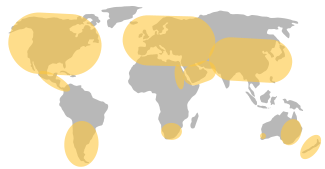


Mallard


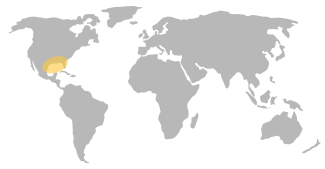
Mottled Duck
Mallard
Anas platyrhynchos
Also known as: Wild Duck
General appearance
Mallards are medium-sized dabbling ducks, often seen in and around water bodies. They have a robust body with a round head and a distinctive flat bill. They exhibit a characteristic strong, direct flight.
Male vs female
Male mallards are known for their iridescent green heads, white ring around the neck, and chestnut-brown chest, while females are mottled brown with an orange bill marked with black. Both sexes have a blue speculum bordered with white on their wings. Males lose their bright colors and resemble females during the eclipse plumage in late summer.
Juvenile
Juvenile mallards resemble adult females with their mottled brown coloration but are generally duller and lack the distinct markings. As they mature, young males slowly transition to their vibrant adult plumage. They can often be seen in flocks with adults, using wetlands and ponds for feeding.
Size
19.7 - 27.6 in/25.9 - 63.5 oz
There's more to learn about Mallard
View full detailsMottled Duck
Anas fulvigula
Also known as: Mottled Mallard
General appearance
The mottled duck is a medium-sized dabbling duck native to the southeastern United States. It has mottled brown plumage that provides excellent camouflage. Its overall dark appearance is accentuated by lighter, buffy edges on the feathers. The bill is olive green to yellow, and the legs are orange, which helps in distinguishing it from similar species.
Male vs female
Males and females have similar plumage, making them hard to differentiate. However, males typically possess a brighter yellow bill than females. Females tend to have an olive to dull yellow bill with orange at the base. Both sexes exhibit a subtle purple speculum bordered by black, making them unique among dabbling ducks.
Juvenile
Juvenile mottled ducks resemble adults but are typically duller in coloration. Their plumage is more uniform and lacks the distinctive faint pattern seen in adults. Juvenile bills are usually duller and more orange-toned compared to adults. As they mature, the characteristic adult mottling and brighter bill color develop.
Size
19.7 - 24.0 in/20.8 - 48.7 oz
There's more to learn about Mottled Duck
View full detailsHow to tell the Mallard from the Mottled Duck
Visual differences
Mallards (Anas platyrhynchos) display sexual dimorphism: males boast an iridescent green head, white neck ring, and chestnut-brown chest, while females are mottled brown with an orange bill marked with black. Both feature a blue speculum. In contrast, Mottled Ducks (Anas fulvigula) have uniformly mottled brown plumage with buffy edges, and both sexes share similar appearances. Males have brighter yellow bills compared to females' olive tones. Their speculum is subtle purple bordered by black. Mallards range 20-28 inches in length, while Mottled Ducks measure 20-24 inches.
Key differences and behavior
Mallards and Mottled Ducks exhibit distinct behavioral differences. Mallards are more adaptable, residing in diverse habitats like city parks, grain fields, and coastal estuaries, whereas Mottled Ducks prefer open marshes and rice fields near the coast but avoid salt marshes. Mallards form pairs in fall, with intricate male displays, while Mottled Ducks pair in August, breeding starting in January. Mottled Duck nests are typically in dense marsh growth, close to water, while Mallards choose varied sites, sometimes over a mile from water. Diets overlap, but Mallards, often seen at bird feeders, consume both plant materials and animal matter, while Mottled Ducks stick to natural foraging. Vocalization differs, with female Mallards known for quacking, contrasted by Mottled Ducks' less audibly marked presence. Mallards are larger (28-39 inches in length, 1.6-4 pounds) compared to the Mottled Duck (20-24 inches, 1.3-3.0 pounds).
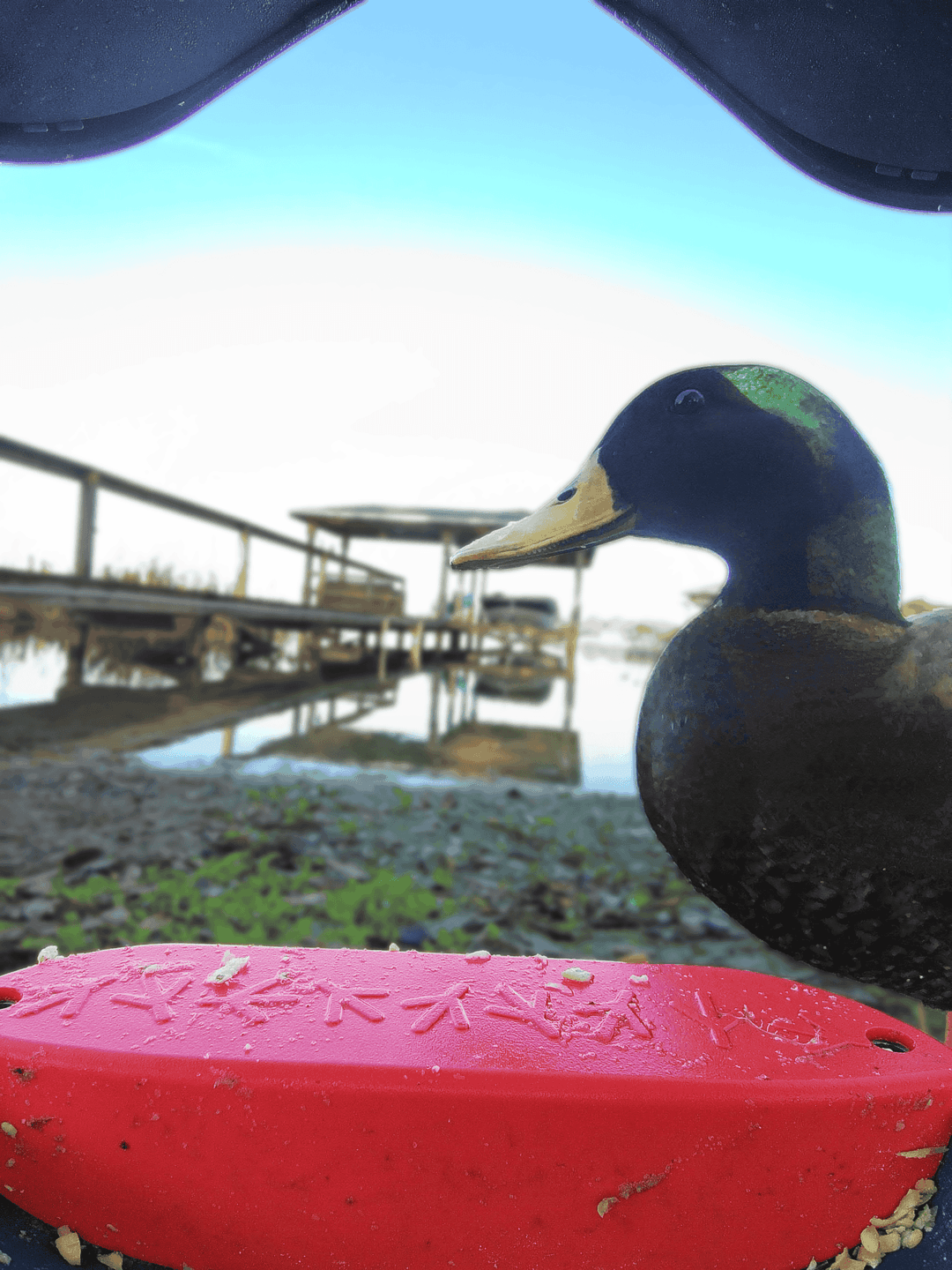
Mallard vs [Select a bird]

[Select a bird]
Pick a bird to compare
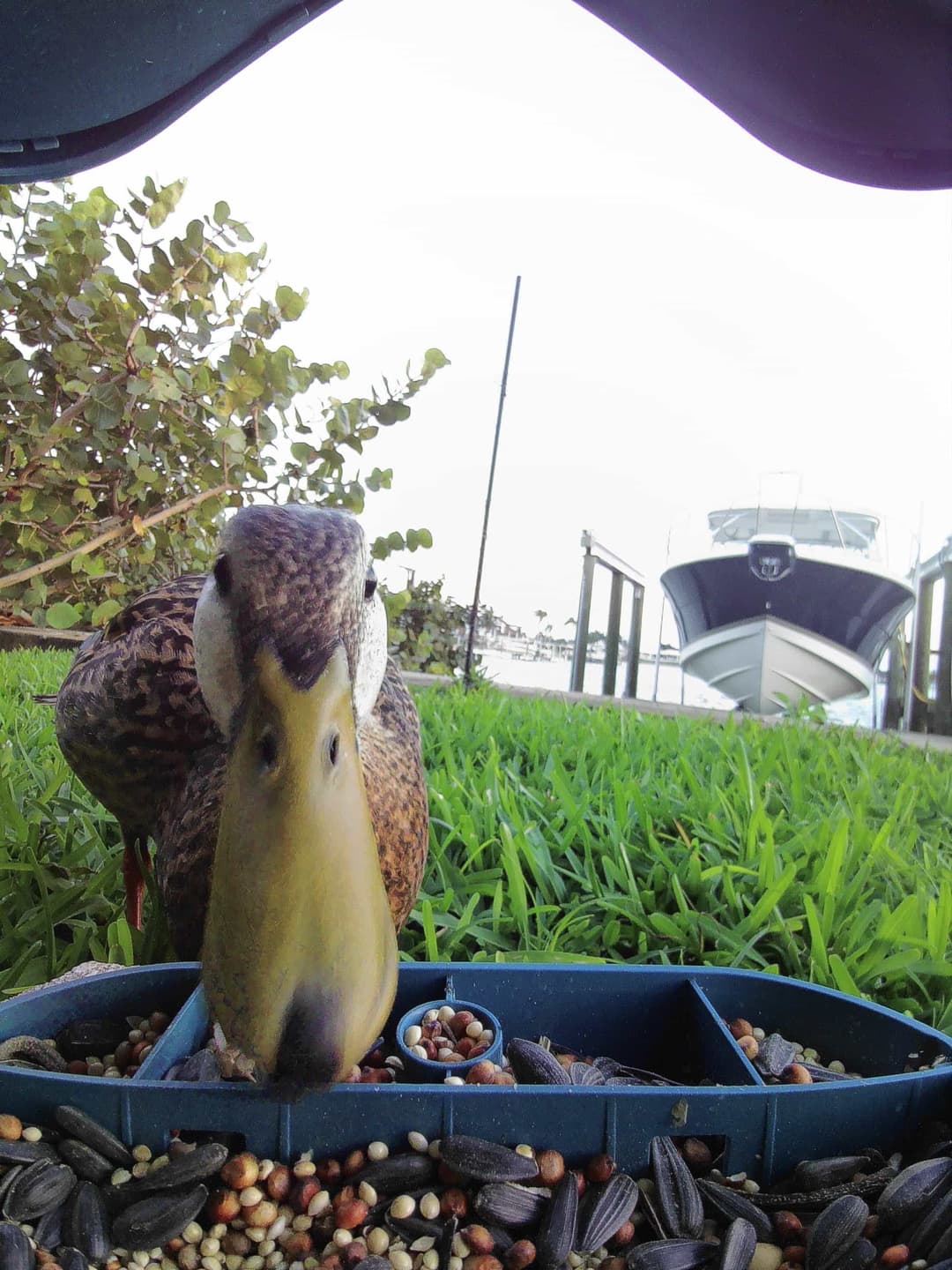
Mottled Duck vs [Select a bird]
[Select a bird]
Pick a bird to compare