
Mexican Jay
Mexican Jay
Aphelocoma wollweberi
Quick Identification guide
Quick Identification guide
- •
The upper body is a soft, deep blue with a contrasting paler underbelly
- •
Features a stout, straight bill which is black or dark grey in color
- •
Lacks a crest, with a smooth, rounded head and a sleek outline making it easily recognizable
What does a Mexican jay sound like?
The Mexican jay's vocalizations are characterized by loud, often repeated, sounds that may be described as 'shrink' or 'wenk'. The typical call pattern of this bird is either flat or rising, showcasing a simple, distinctive rhythm. These vocal features make the Mexican jay easy to identify. Its repeated calls and simple song patterns are its unique indices that contribute to the auditory biodiversity of its natural habitat.
Description
Did you know that Mexican jays that live at lower elevations have hooked bills, perfect for eating the meat of acorns, but those at higher elevations have straight bills, perfect for eating pine nuts? Isn't that nuts? These guys live in family groups of up to 25 birds, and most will stay with the group their whole life. When little ones come along, the whole group pitches in and contributes to feeding them!
The Mexican jay can weigh between 100to135grams and be from28to32centimeters tall.
The Mexican jay typically lives approximately 11 years in the wild, but with potential to reach up to 18 years. This is mid-range compared to the blue jay, which typically lives between 7 years to 17 years, and the Steller's jay, with a similar lifespan in the wild as the Mexican jay but potential to reach up to 27 years in captivity.
Did you know?
Most popular questions about Mexican jay
How to recognise a Mexican jay?
General appearance
The Mexican jay is a medium-sized bird with a long tail and a robust bill. Its plumage is predominantly a striking blue, with lighter shades on its head, nape, and wings. The throat and underparts are pale grayish-white, providing a noticeable contrast to the deeper blue hues of its back and tail.
Male vs female
There is little to no sexual dimorphism in the Mexican jay, meaning males and females appear similar. Both genders exhibit the same vivid blue and gray coloration, making visual differentiation between sexes difficult in the field.
Juvenile
Juvenile Mexican jays are duller in color compared to adults, with more muted blue tones and a slightly browner overall appearance. Their underparts are also grayer rather than the crisp white seen in adults, and their bills and legs appear lighter.
Often mistaken for
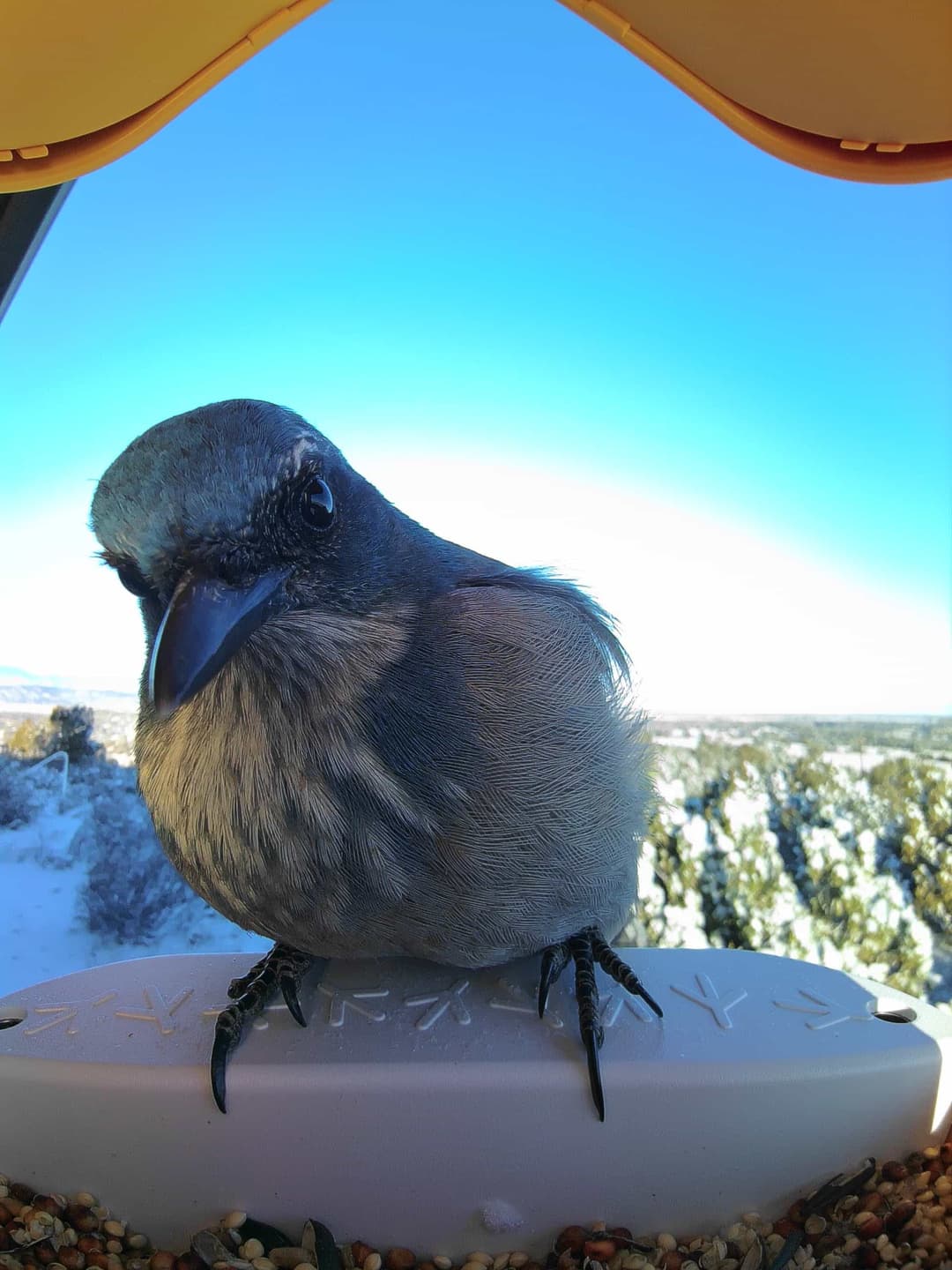
Woodhouse’s Scrub-Jay vs Mexican Jay
Mexican Jay is slightly bulkier with a more uniform blue and gray color. Woodhouse’s Scrub-Jay has a distinct white throat and a darker back, setting it apart. Look for the longer tail and more pronounced eyebrow in the Scrub-Jay.
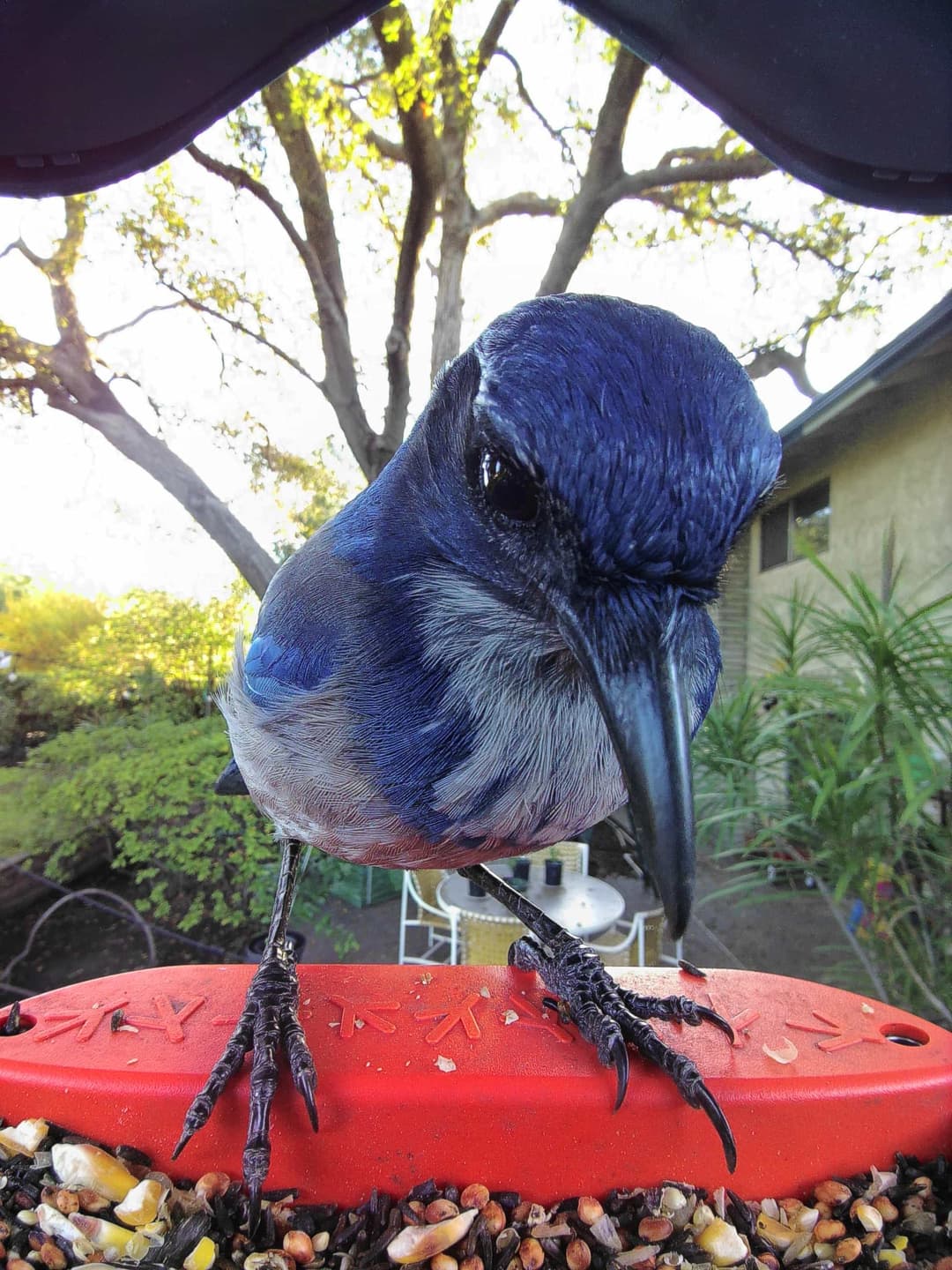
California Scrub-Jay vs Mexican Jay
Distinctive features of Mexican Jay include its generally uniform blue-gray plumage. California Scrub-Jay exhibits a strong white throat contrast and more vibrant blue upperparts. Look for the bold eyebrow and darker streaks on the breast in the Scrub-Jay.
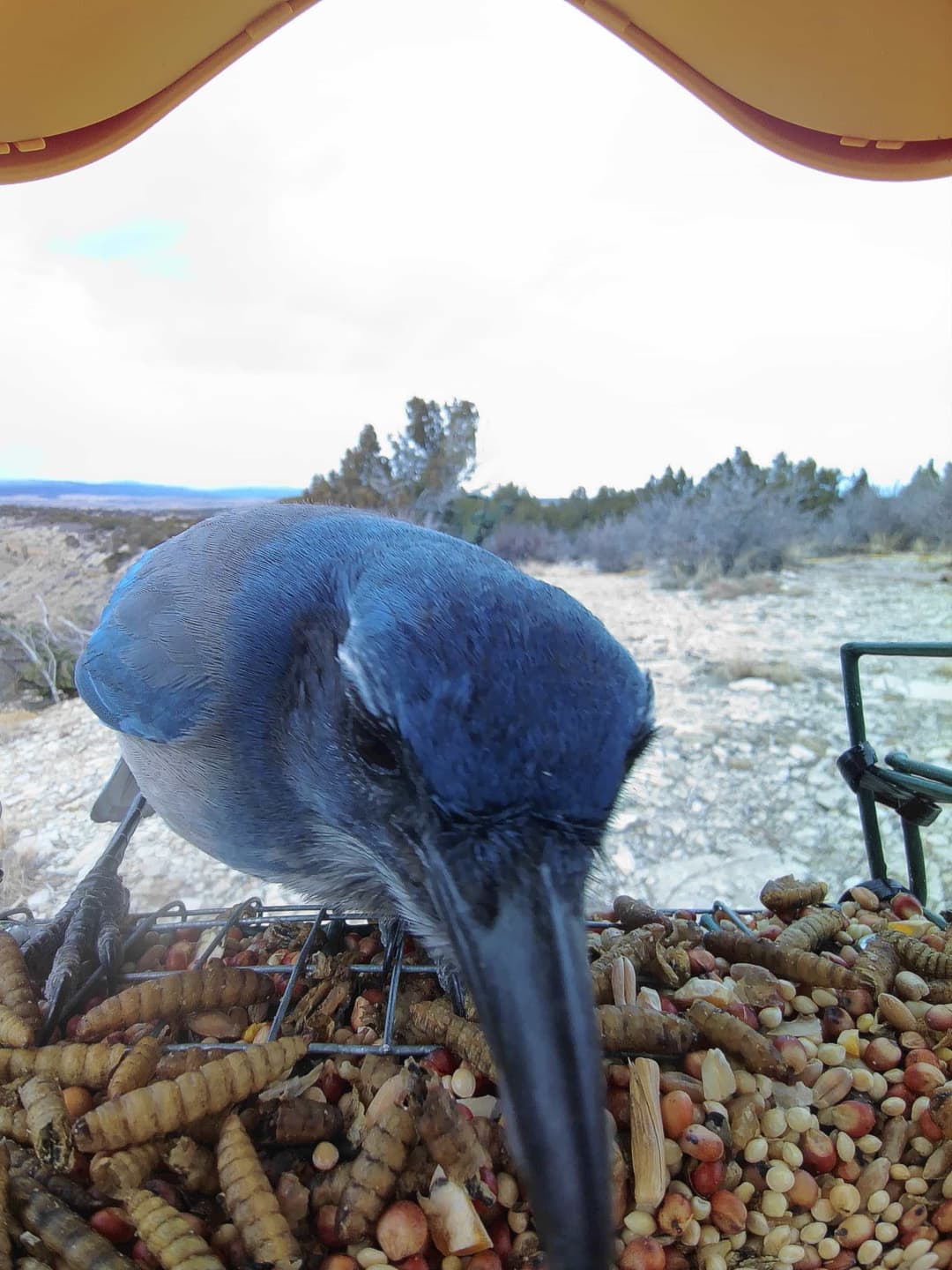
Pinyon Jay vs Mexican Jay
Mexican Jay is blue with gray underparts, whereas Pinyon Jay is a duller, more uniform bluish-gray. Watch the bill shape; Pinyon Jay has a heavier, more tapered bill. Also, Pinyon Jay often flocks noisily, while Mexican Jay is more quietly social.
Breeding and nesting habits of the Mexican jay
Mating behaviors
Within each flock, 2-4 females may nest simultaneously, with each being attended by a male. However, females may mate with multiple males within the flock. In Texas, Mexican jays may nest as isolated pairs.
Nesting details
Mexican jays build their nests in trees, often choosing oak, juniper, or pine. These nests are well hidden among foliage at an average height of 20' above the ground, though they can range from 6-60' high. Both sexes contribute to constructing a bulky cup-shaped nest made of sticks and twigs, finished with fine rootlets and plant fibers.
Eggs and chick-rearing
Little information was provided on eggs or chick-rearing. Ensuring a suitable habitat involves preserving natural foliage and providing tree variety conducive to nesting, such as oaks and pines.
What does a Mexican jay like to eat?
Berries
Bird eggs
Insects
Nectar
Nuts
Seeds
Small animals
Spiders
Natural diet
The Mexican jay is omnivorous, primarily consuming acorns and seeds of pinyon pine from fall through winter. During the summer months, its diet shifts to mostly insects, including grasshoppers, beetles, and caterpillars. It also eats lizards, small snakes, birds' eggs, and less frequently, mice or birds.
Bird feeders
Mexican jays are known to visit bird feeders where they often consume seeds, nuts, suet, and sometimes pieces of fruit. Their adaptable foraging habits enable them to take advantage of food sources provided in garden settings.
Attracting the mexican jay
Welcoming the Mexican Jay to your yard can be a delightful experience. These birds are attracted to a variety of seeds, nuts, and fruits. To start, fill your feeders with Bird Buddy seeds. These seeds are specifically chosen by experts for each unique season and have shown great success in attracting Mexican Jays.
Favorite snacks of mexican jays
Mexican Jays love a variety of seeds and nuts. In particular, they tend to prefer sunflower seeds, peanuts, and pecans. Occasionally, these birds will also appreciate a sweet treat, such as pieces of fruit like apples and pears. But remember, for the best results, consider using Bird Buddy seeds, expertly picked for each season's needs.
Feeder types for mexican jays
Mexican Jays are large birds so a sturdy, large-sized feeder is recommended. They are also quite social, so choose a feeder with multiple perches. One popular type is a platform feeder, which allows multiple birds to feed at the same time. Another good option is a hopper feeder, as it provides ample space and protection from the elements.
Fun tricks to encourage visits
To encourage more Mexican Jays to visit your yard, consider positioning the feeder near a tree or shrub, as they gravitate towards these natural environments. Adding a birdbath or water feature can also attract these birds, as they not only love to drink but enjoy bathing as well. Through providing food, shelter, and water needs, you're sure to create an enticing haven for these magnificent birds.
Where can you find Mexican jays?

Primary habitat
The Mexican jay primarily inhabits open oak forests and oak-pine woodlands in Arizona and Texas. It also occupies various oak woodlands mixed with pines in the mountains of Arizona, up to about 7,000' high.
Additional range
Beyond Arizona and Texas, the Mexican jay can be found in a variety of forests in Mexico, particularly those dominated by pines and oaks.
Do they migrate?
The Mexican jay is one of the most sedentary bird species in North America, which means it almost never moves away from its immediate breeding territory. This species does not engage in the migratory behavior that some other bird species exhibit. Instead, Mexican jays remain in their established territories throughout the year. Key factors contributing to this sedentary nature include their strong territoriality and the generally mild climates in the regions they inhabit, which typically do not necessitate seasonal movements to find food or suitable living conditions. The Mexican jay's range extends across parts of the southwestern United States, including Arizona, New Mexico, and Texas, stretching down into Mexico, primarily inhabiting woodlands, forests, and regions with abundant oak and pine trees. Since the Mexican jay is non-migratory, there are no specific migration routes, timing, or key locations associated with its movement. Rather, these birds can be observed year-round within their home territories. Their adaptation to a stable environment and ability to find resources locally renders migration unnecessary.
What is the role of Mexican jays in nature and how to protect them?
Conservation status
The Mexican jay remains locally common within its limited U.S. range and does not show any obvious population trends that suggest a decline. Therefore, it is not currently classified as vulnerable or endangered. While specific conservation efforts are not highlighted, its stable status suggests that major threats are not presently impacting its population significantly. Conservation efforts would likely focus on habitat preservation to ensure its continued stability in the region.
Ecological role of Mexican jays
Its role in the ecosystem
The Mexican jay serves a significant role in ecosystems as a pest controller and seed disperser. Its diet consists of a variety of insects including grasshoppers, beetles, and caterpillars. By preying on these pests, it helps maintain balance in the ecosystem, preserving plant populations and preventing pest overpopulation. Furthermore, the jay's feeding habits are crucial for seed dispersal. It eats and harvests acorns in the fall, burying them in the ground to retrieve later. Often, these acorns are forgotten or unconsumed, leading to new vegetation growth, aiding in the dispersal and germination of plants. This jay's nesting behavior also contributes to the ecosystem. Their nests are built within various tree species, providing these trees with protection from pests. As multiple females may nest simultaneously, this collectively contributes to pest control efforts. By understanding the Mexican jay's ecology, we comprehend its integral role in nature.
How to help protect Mexican jays
Preservation tips
Habitat preservation strategies
Adopt a land-use approach, managing forested areas where Mexican jays thrive, reducing deforestation and encouraging reforestation. Implement policies ensuring conservation of oak and pine-oak woodlands, these birds' preferred habitats. Encourage sustainable farming and logging practices to limit habitat destruction.
Community science initiatives
Promote citizen science initiatives, enabling locals and volunteers to monitor Mexican jay populations and habitats. Encourage community involvement in nest box installation and maintenance. Establish education programs focusing on the importance of biodiversity and conservation. Advocacy for legal protection of the Mexican Jay can also be beneficial.