
Pinyon Jay
Pinyon Jay
Gymnorhinus cyanocephalus


Quick Identification guide
Quick Identification guide
- •
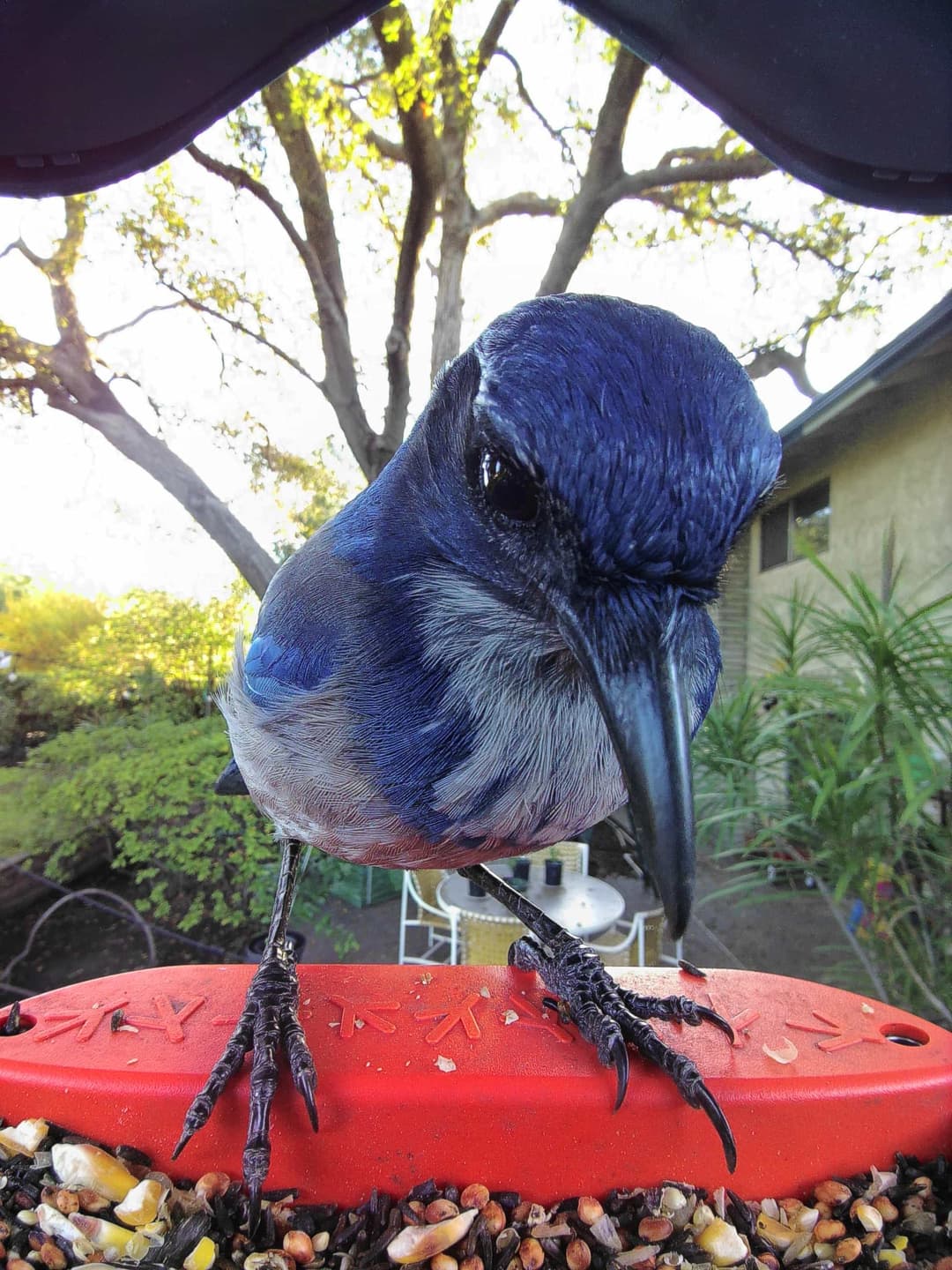
Features a uniform slate-blue plumage with no distinct markings
- •
Has a slender, pointed bill, suited for extracting seeds from pine cones
- •
Displays a compact, rounded body with a short tail and broad wings
What does a pinyon jay sound like?
The vocalizations of the Pinyon Jay are characterized by a high-pitched, often quavering 'caaa' which often sounds like a laughing 'haa-a-a-a'. Its call pattern is flat and then rises, encompassing a range of vocal styles such as buzzing, rattling, raucous screaming, and trilling. These varied sounds form its typical calls and songs, creating a distinct and diverse auditory signature.


Description
Pinyon jays form permanent flocks of up to 500 birds and stay in them for life! You can probably hear them coming as they like to chat with each other while flying around looking for seeds to eat and hide. They hide them by the tens of thousands and can remember where most are hidden! They'd come in handy when looking for your lost keys, right?
The pinyon jay can weigh between 90to120grams and be from26to29centimeters tall.
The typical lifespan of a Pinyon Jay in the wild is estimated to be up to 11 years, although birds in captivity can live up to 15 years. This is comparable to other medium-sized jay species, such as the Western Scrub Jay which can live up to 9 years in the wild, and the Blue Jay which can live up to 7 years.
Did you know?
Most popular questions about pinyon jay
How to recognise a pinyon jay?
General appearance
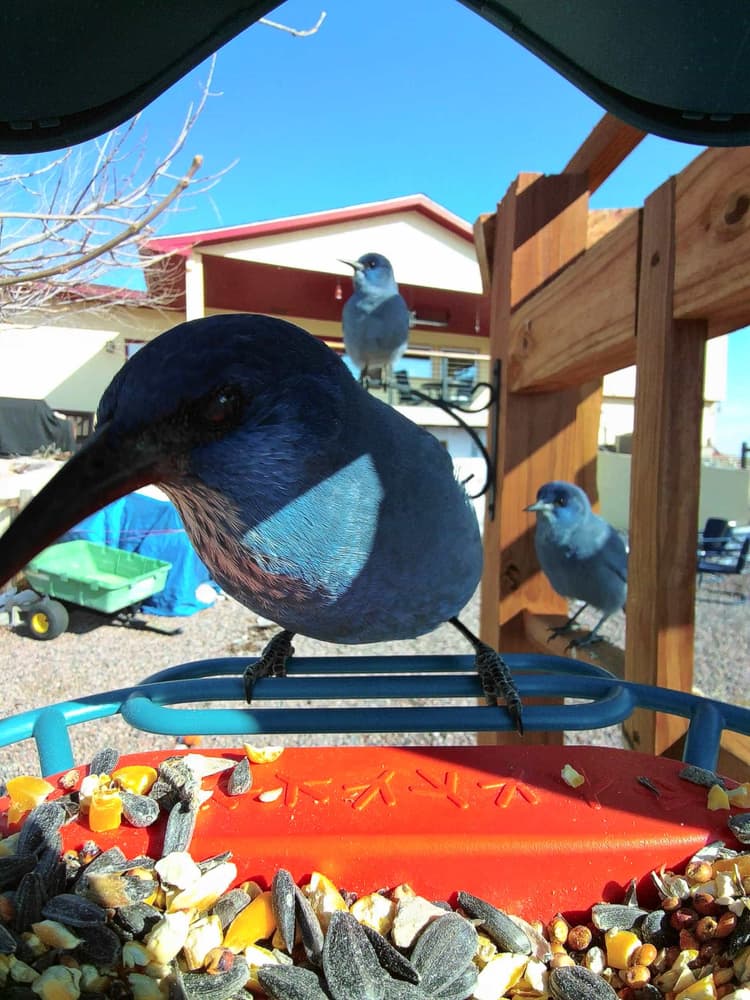
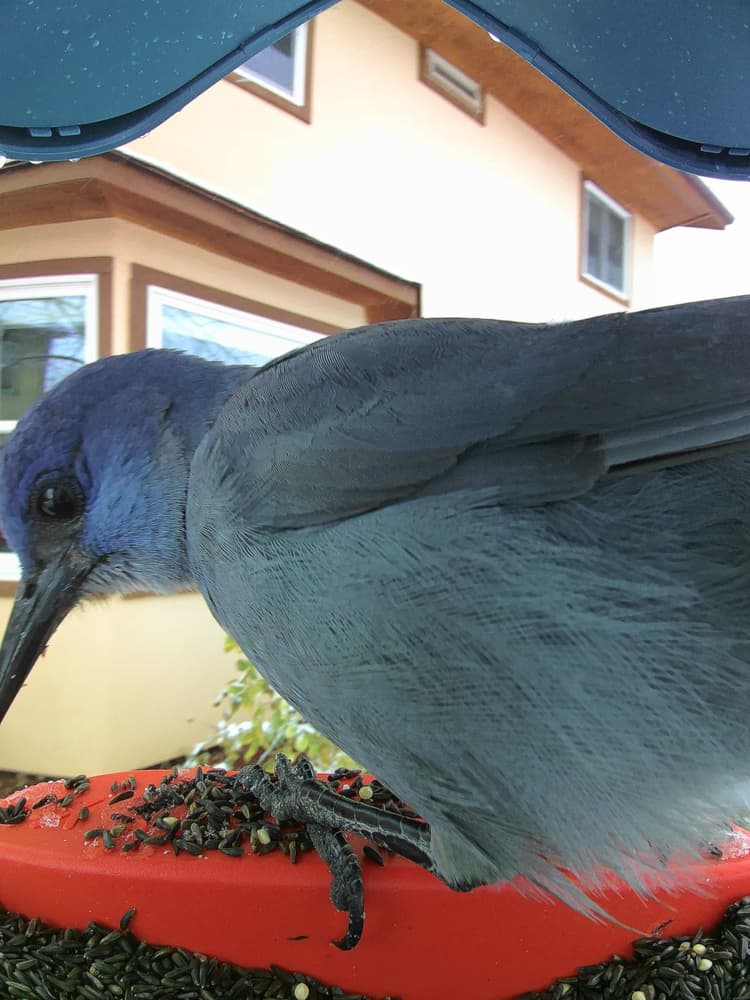
The general appearance of the pinyon jay marks a stocky body and short tail. It's most noticeable for its keen spike-like bill. The jay displays a unique coloration that might be characterized as a dull blue hue that covers the entire body. Its feather shape appears fingered and rounded on the wings, while the body can be approximately compared to the size of a crow, or alternatively, a robin.
Male vs female
Male and female pinyon jays share similar appearances, which makes them difficult to distinguish. Both sexes bear the same black, blue, and gray coloration as well as the identical body sizes. Their wing shape can be termed as fingered and rounded. Notably, both males and females share the same tail variations: rounded, short, and square-tipped.
Juvenile
Juvenile pinyon jays exhibit a grayer coloration compared to their adult counterparts. While they maintain the general dull-blue coloration as they age, juveniles are noticeably grayer when they're young. Similar to adults, juveniles almost always flock together with their group, thus making them identifiable in the wild.
Often mistaken for
Mexican Jay vs Pinyon Jay
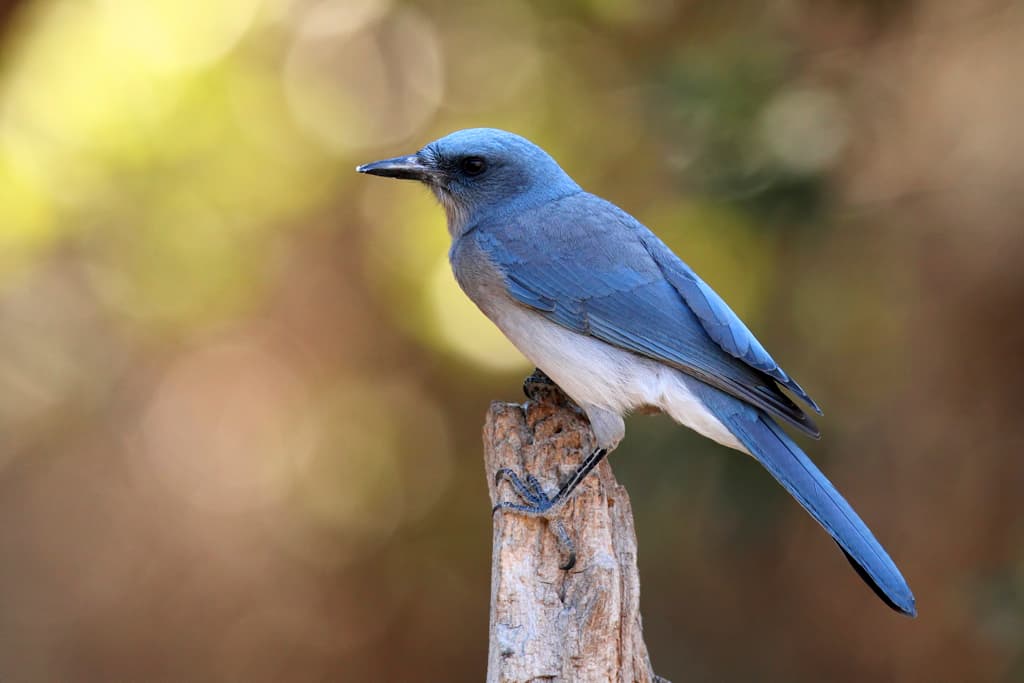
The Pinyon Jay is more slender with a smaller bill compared to the bulkier Mexican Jay. Pinyon Jays are uniformly blue with a paler, grayer underbelly and lack the distinct neck collar of Mexican Jays.
Woodhouse’s Scrub-Jay vs Pinyon Jay
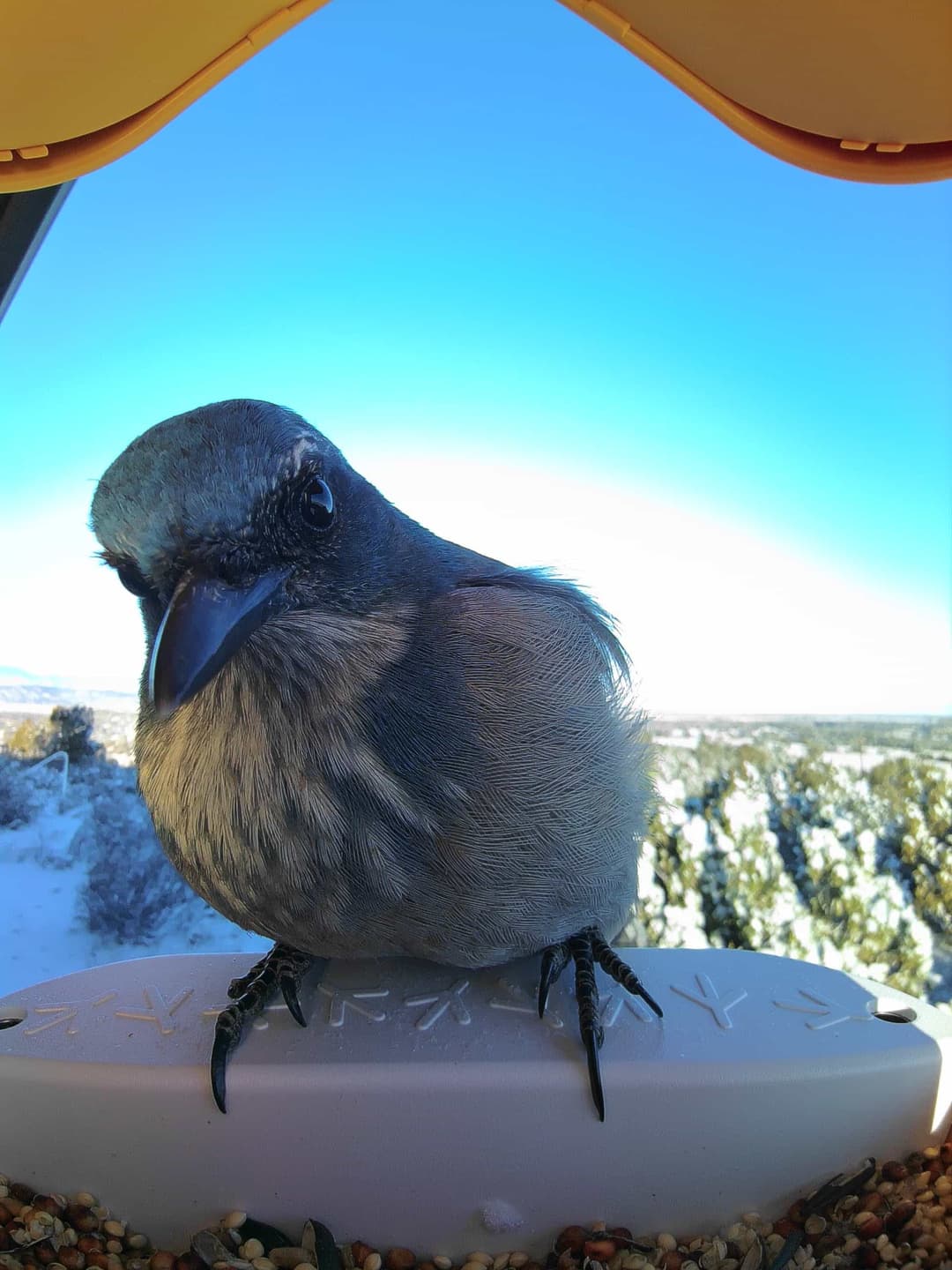
Pinyon Jays are distinguished by their shorter tail and lack the stark white eyebrows of Woodhouse’s Scrub-Jay. They are uniformly bluish, whereas Woodhouse's shows more contrast with a white throat and grayish-belly.
California Scrub-Jay vs Pinyon Jay
Unlike the Pinyon Jay, the California Scrub-Jay has a pronounced blue and white color pattern with a white chest and belly. The Pinyon Jay is more uniformly blue and lacks the California Scrub-Jay's distinctive facial markings and blue back.
Breeding and nesting habits of the pinyon jay
Mating behaviors
In courtship, multiple males may pursue a single female in flight. This competitive display among males is a key aspect of the pinyon jay's mating rituals.
Nesting details
Pinyon jays nest in colonies with 1-3 nests per tree, typically in juniper, oak, or pinyon pines at heights of 3-20 feet. Both sexes build the nest using twigs for the foundation and materials like shredded bark, grass, rootlets, pine needles, and animal hair for the inner cup. They may also steal materials from neighboring nests.
Eggs and chick-rearing
Breeding usually occurs in late winter, with adults feeding on stored seeds. In cases of bumper seed crops by pinyon pines, a second nesting may take place in late summer. The nurturing and feeding of the chicks are supported by both parents.
What does a pinyon jay like to eat?
Berries
Birds
Insects
Nuts
Seeds
Small animals
Natural diet
The pinyon jay primarily feeds on seeds from pinyon pines, which are a staple in their diet. They are known for their role in dispersing pinyon seeds in their natural habitat. Besides pine seeds, pinyon jays also consume a variety of other seeds, nuts, fruits, and berries. They have a diet that includes insects, such as beetles and ants, especially during the breeding season when protein intake is vital for chick development. Additionally, pinyon jays are opportunistic feeders and may vary their diet based on food availability, including occasionally consuming small invertebrates.
Bird feeders
At bird feeders, pinyon jays are likely to consume sunflower seeds, cracked corn, and peanuts. They may also be attracted to feeders offering suet, especially if it contains nuts or seeds. While not as common as some other feeder-frequenting birds, pinyon jays may visit feeders that are in proximity to their natural habitat, particularly during times when their natural food sources are scarce.
Creating the pinyon jay paradise
To attract Pinyon Jays to your yard, start by creating a bird-friendly environment. Set up a birdhouse or a nesting box, provide plenty of open space, and install a birdbath where they can drink and cool off.
Choose the right feeder
Pinyon Jays prefer platform feeders or large, sturdy tube feeders. This allows them to perch comfortably while they eat. Make sure the feeder is in a safe, quiet place, away from busy roads and windows.
Selecting snacks for pinyon jays
Pinyon Jays are attracted to a variety of seeds, but their favorites are sunflower seeds, pine nuts, and peanuts. They also like fruits, so you can also put out a few apple or orange slices.
Using bird buddy seeds
For the best results, consider using Bird Buddy seeds. Expertly chosen for the season, these seeds will maximize your chances of attracting Pinyon Jays to your yard.
Fun tricks to encourage visits
If you want to encourage Pinyon Jays to keep coming back, try leaving out nesting materials, like twigs or straw, that they can use to build their homes. Additionally, playing soft bird songs may attract these musical birds for a sing-along.
Where can you find pinyon jays?

Primary habitat
Pinyon jays are typically found near pinyon pines, in pinyon-juniper woods, and are sometimes seen in sagebrush areas.
Additional range
In circumstances such as a failure in the pinyon cone crop, these birds expand their habitats, relocating to streamside groves, oak woods, or other varied environments.
Do they migrate?
The pinyon jay is not truly migratory but rather nomadic in its behavior. This species does not follow a consistent migration route like typical migratory birds. Instead, pinyon jays may remain in one area if there are good cone crops available, providing a reliable food source. However, in the absence of sufficient resources, particularly during fall and winter, they tend to wander widely in search of food. This nomadic roaming does not follow specific routes or designated key locations but is primarily driven by the availability of pinyon pine seeds and other resources. The movement patterns of pinyon jays are influenced by environmental conditions and food availability rather than a fixed migratory path. These birds may cover large areas across their range, which includes parts of the southwestern United States, particularly in regions where pinyon pine communities are found. Consequently, their presence in specific areas can be unpredictable and subject to annual variations in food resources.
What is the role of pinyon jays in nature and how to protect them?
Conservation status
The pinyon jay is considered vulnerable due to significant declines in its population over recent decades. Local numbers fluctuate drastically each year, complicating accurate tracking. Major threats include habitat loss from logging, land development, and climate change. Conservation efforts focus on habitat preservation and restoration, especially in pinyon-juniper woodlands. Monitoring and research are critical to understanding population dynamics and implementing effective strategies to protect this species.
Ecological role of pinyon jays
Its role in the ecosystem
The Pinyon Jay, an omnivorous bird, plays a significant role in the ecosystem. Notably, its diet includes insects such as beetles, caterpillars, and grasshoppers, thus aiding in biological pest control. In addition, the bird also sometimes feeds on the eggs and young ones of smaller birds, controlling their population. Its foraging behavior, particularly the storing and burying of many pine seeds during the late summer and fall, makes the Pinyon Jay an effective agent of seed dispersal. The stored seeds that are not eaten later germinate, contributing to the propagation of pine trees, especially the Pinyon Pine. Moreover, this bird’s social behavior of nesting in colonies contributes to the balance and vitality of avian community structure. Also, its behavior of stealing material from unattended nests of neighbors reveals their role in material recycling within their habitat.
How to help protect pinyon jays
Preservation tips
Habitat preservation strategies
Firstly, prioritise the conservation of large, unbroken, mature pinyon juniper woodlands which are the preferred habitat of Pinyon Jays. Advocate enforcing a prohibition on logging and including the woodlands in officially protected areas. Diversify forest structure with a variety of growth stages to maintain suitable habitat. Support prescribed burning to manage the woodland habitat providing it doesn't harm Pinyon Jays or their nesting areas.
Community science initiatives
Become a participant in community science projects such as eBird to help monitor the population dynamics of the Pinyon Jay. Encourage local schools to include citizen science projects in their curriculum to foster a sense of stewardship. Advocate for community talks, workshops, or webinars about the importance of Pinyon Jays to pinyon juniper woodland ecosystems and the threats the species faces. Lastly, recommend bird-friendly practices, like responsible bird feeding and keeping cats indoors, to reduce mortality.