
Wood Duck
Wood Duck
Also known as: Carolina Duck
Aix sponsa


Quick Identification guide
Quick Identification guide
Male
- •
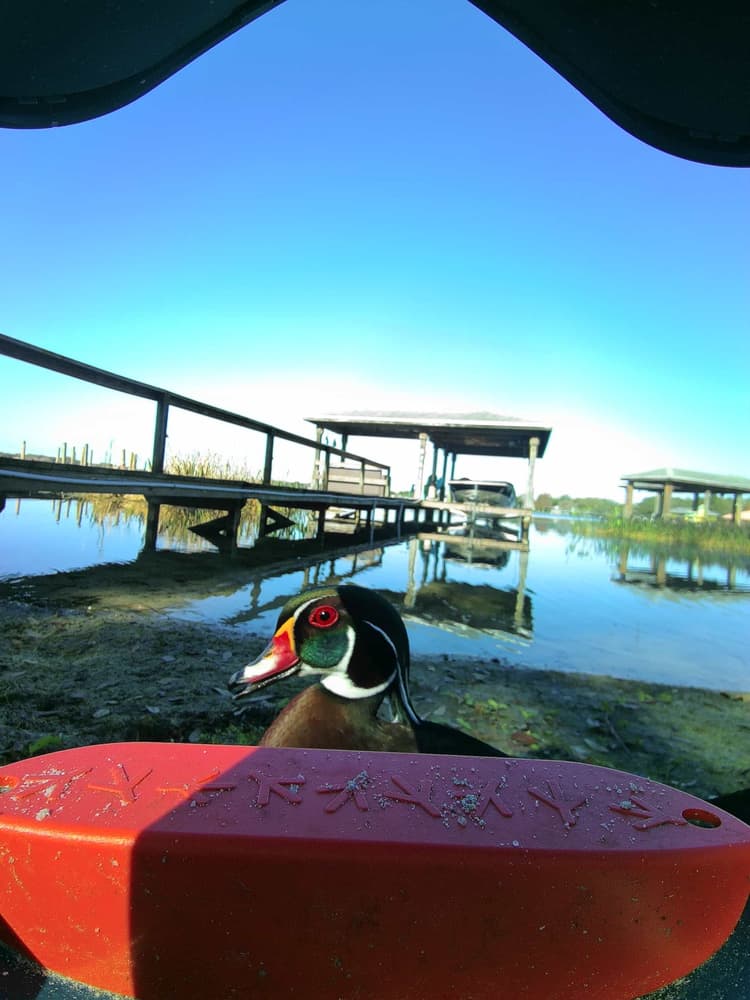
Striking iridescent green and purple head with distinctive white facial stripes
- •
A red eye and brightly colored bill with a white base and tip
- •
Bold chestnut breast with scaly, patterned flanks and a long tail
Female
- •
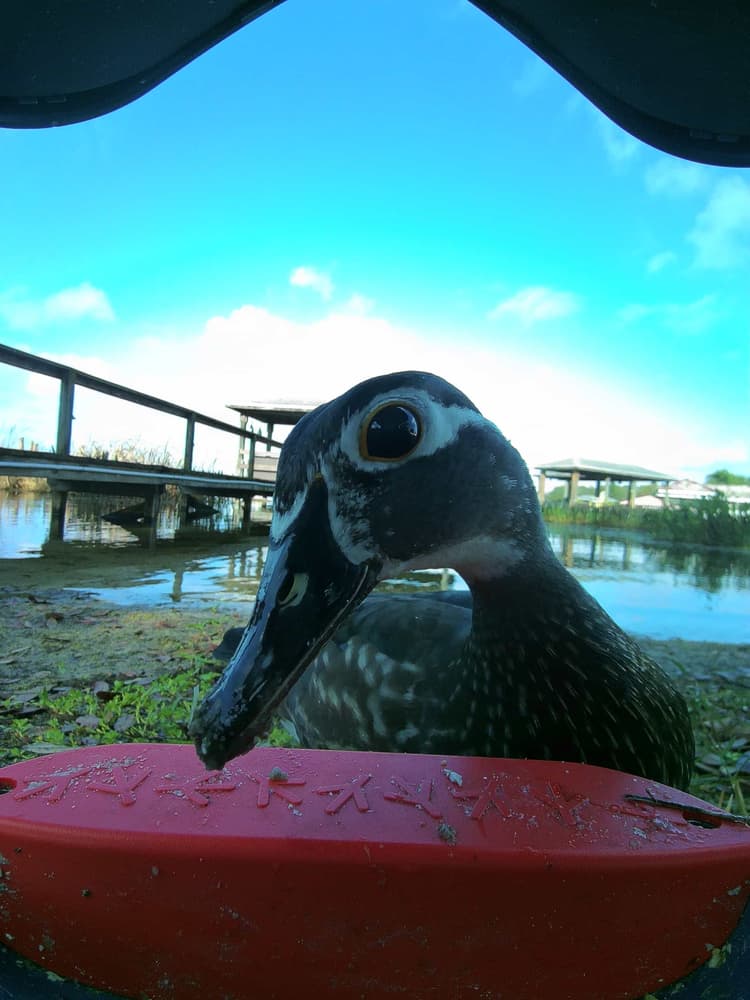
Softer brown-grey plumage with a delicate white eye-ring
- •
A whitish throat and subtle mottling on the breast
- •
Compact body with a short, blue-tinted bill and hint of iridescence on wings


Description
Though all birds are beautiful, it is hard to argue with the fact that wood duck drakes are up there with some of the prettiest! If you would like a pair of these beauty queens to potentially move into your garden, try putting up a nest box. They need one, too, as they are the only North American duck species to consistently have two broods per year!
The wood duck can weigh between 542to750grams and be from47to54centimeters tall.
The typical lifespan of a wood duck can range from 10 to 15 years, however few make it to old age due to high predation rates. In comparison, the mallard has a slightly shorter average life span of 5 to 10 years. Some wood ducks have been observed still breeding at 15-20 years old in favorable habitats, although these are outliers rather than the norm. The longest recorded lifespan of a wood duck in the wild is 22.5 years.
Did you know?
Most popular questions about wood duck
How to recognise a wood duck?
General appearance
Wood ducks are small to medium-sized perching ducks with a distinctive shape, featuring a boxy, crested head and a long tail. They exhibit broad, multicolored wings and a unique iridescence on their plumage. Wood ducks are most commonly found near wooded swamps, shallow lakes, and freshwater marshes.
Male vs female
Male wood ducks display a striking array of colors with iridescent greens, purples, and blues, a glossy green head, bright red eyes, and a distinctive white throat patch framed by black lines. Females, in contrast, have a more subdued appearance with grayish-brown plumage, a white eye-ring, and an overall mottled pattern. Both sexes have a unique, thin white bill with a dark tip.
Juvenile
Juvenile wood ducks resemble females with their duller coloration, though their plumage is generally even more muted. They lack the iridescent sheen of adult males and have less developed crests. As they mature, juveniles gradually develop characteristic markings and begin to show gender-specific coloration patterns as they reach adulthood.
Often mistaken for
Mallard vs Wood Duck
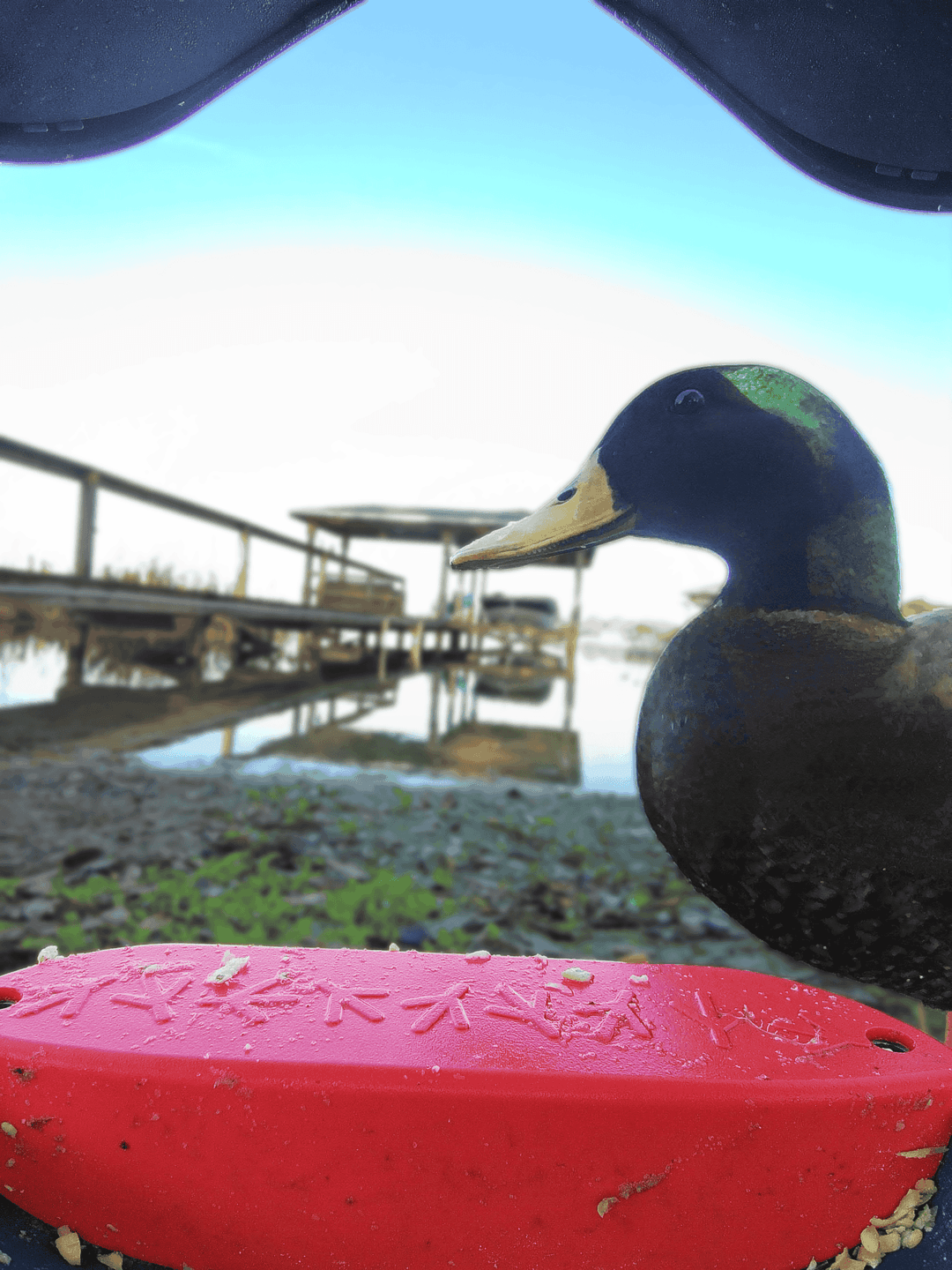
The Wood Duck and Mallard are both waterfowl but have distinctive differences. Male Wood Ducks have striking iridescent plumage with a unique green and purple head, red eyes, and a white throat with finger-like extensions. Females have a distinctive white teardrop around the eye. Conversely, male Mallards have a glossy green head, yellow bill, and a more uniformly colored brown and gray body. Female Mallards are mostly mottled brown with an orange bill marked with black. To tell them apart, focus on the head coloration and bill of the males, and the eye marking in females.
Breeding and nesting habits of the wood duck
Mating behaviors
Male wood ducks perform courtship displays involving postures that highlight their colorful plumage to attract females.
Nesting details
Wood ducks typically nest in large tree cavities near water, situated up to 65 feet above the ground. The cavities are lined with down. They may also use hollow fallen logs, barn lofts, or crevices in rocks. Artificial nest boxes are also used, even if placed low in open marshes.
Eggs and chick-rearing
After mating, the female lays eggs in the selected nesting site. Once hatched, the chicks are reared by the mother, who may lead them to water shortly after hatching.
What does a wood duck like to eat?
Aquatic animals
Berries
Insects
Nuts
Plants
Seeds
Natural diet
Wood ducks primarily consume seeds, with a significant portion of their diet comprising aquatic plant seeds and fallen seeds from trees and shrubs. Acorns are notably important in various areas. They also feed on insects and crustaceans, especially during their formative years, where young wood ducks mainly consume insects and invertebrates. Additionally, they are known to forage in fields for waste grain, supplementing their nutritional intake.
Bird feeders
Wood ducks are not frequent visitors to standard backyard bird feeders. However, if located near their natural habitats, they might occasionally feed on seeds or grains intended for other birds. Nonetheless, their preference remains towards naturally available food sources in their environment.
Set up the right feeder
Wood ducks are attracted to floatation feeders or platform feeders. If you want to attract these beautiful birds to your yard, try to set up a platform feeder near water. If water isn't available, a feeder with a little pool can also work.
Offer tasty snacks
Wood ducks enjoy a variety of snacks. They mostly eat insects, berries, seeds, and aquatic plants. To make your yard a tempting spot for wood ducks, provide a buffet of Bird Buddy seeds. These seeds are chosen by experts for the season and are proven to attract a host of pretty birds, wood ducks included.
Make the environment inviting
Wood ducks are attracted to yards that mimic their natural habitat. This includes shallow water, a high tree for nesting, and protective vegetation. If you provide these elements in your yard, you're more likely to see these ducks drop by.
Use fun tricks
An interesting way to encourage wood ducks to visit is by playing recordings of wood duck calls. This can make them curious and encourage them to check out your yard. Just don't overdo it or it might startle them!
Use bird buddy seeds
Not all bird seeds are created equal. If you really want to attract wood ducks, invest in Bird Buddy seeds. These seeds are chosen by experts for the season and are known to attract a variety of birds. Wood ducks are likely to flock to your yard if you have Bird Buddy seeds in your feeder.
Where can you find wood ducks?
Primary habitat
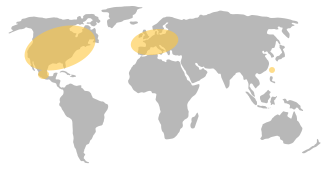
The wood duck prefers shallow inland lakes, ponds, slow-moving rivers, and swamps, especially those surrounded by deciduous or mixed woodland with large trees overhanging the water, creating shade.
Additional range
The wood duck can also be found in open marshes within generally forested areas.
Do they migrate?
The wood duck exhibits varied migratory patterns depending on its geographic location. Northern populations of wood ducks are migratory. These birds typically travel to southern regions during the winter months. Migration routes are generally oriented north-south, with key wintering locations including the southeastern United States, such as the coastal and inland wetlands of Florida, Georgia, and the Carolinas. In contrast, southern populations, particularly the females, may be permanent residents and do not exhibit significant migratory behavior. The males, however, have more variable movements. During the winter, pairs form on the wintering grounds, and the male follows the female to her nesting range in the spring. This behavior means that a male wood duck might migrate a long distance north one spring and only a short distance the next, depending on his mate's origin. The timing of migration for northern wood ducks typically occurs from September to November when moving south, and they return north from February to April. Central flyway routes often include stopovers in wetlands and rivers that provide essential resting and foraging opportunities. This migration pattern reflects the adaptability and opportunistic nature of the wood duck's reproductive and survival strategies.
What is the role of wood ducks in nature and how to protect them?
Conservation status
The wood duck is currently considered common, having recovered from early 20th-century threats of extinction due to habitat loss and hunting. Key conservation efforts, such as legal protection and the widespread provision of nest boxes, have been instrumental in their recovery, allowing thousands to thrive in the U.S. and southern Canada. While currently stable and expanding its range north and west, continual monitoring and conservation efforts remain important to ensure their habitat is preserved and hunting pressures are managed effectively.
Ecological role of wood ducks
Its role in the ecosystem
The Wood Duck plays a crucial role in the ecosystem through various ways. As a dietary supplement, they consume insects and crustaceans, thereby serving as a form of pest control. Their aquatic and terrestrial feeding habits also aid in controlling the population of certain plants, contributing to a balanced ecosystem. Additionally, Wood Ducks contribute to seed dispersal by consuming seeds from various sources such as aquatic plants, trees, shrubs, and waste grains from fields. These seeds are often transported to different locations through the ducks' droppings, promoting plant propagation and contributing to biodiversity. With their unique nesting preference in tree cavities, they promote the use and maintenance of mature forests, affecting the landscape and encouraging the growth of certain tree species. Additionally, Wood Ducks have been known to nest in artificial nest boxes, aiding in waterfowl management and conservation efforts. Overall, the ecological services provided by the Wood Duck are important for the maintenance and balance of aquatic and terrestrial ecosystems.
How to help protect wood ducks
Preservation tips
Habitat preservation strategies
Enforce strict regulations against habitat destruction, particularly in areas rich in aquatic vegetation which is crucial to wood ducks' diet. Encourage the creation of local protected areas where wood ducks can safely breed and forage. Plant trees with cavities near water bodies as they serve as natural nesting sites for wood ducks. Install artificial nest boxes in areas where natural cavities are scarce.
Community science initiatives
Involve communities in monitoring wood duck populations and reporting any threats. Organize educational seminars to foster local understanding about the importance of wood duck conservation. Set up citizen science projects to involve the public in data collection such as monitoring nesting success in artificial nest boxes. This not only aids in conservation efforts but also raises public awareness and appreciation for wood ducks.