Band-Tailed Pigeon or White-Winged Dove?
Here's how to tell the difference
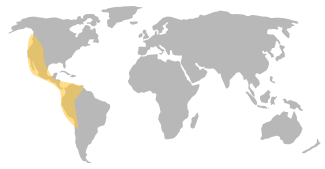
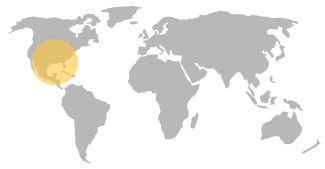
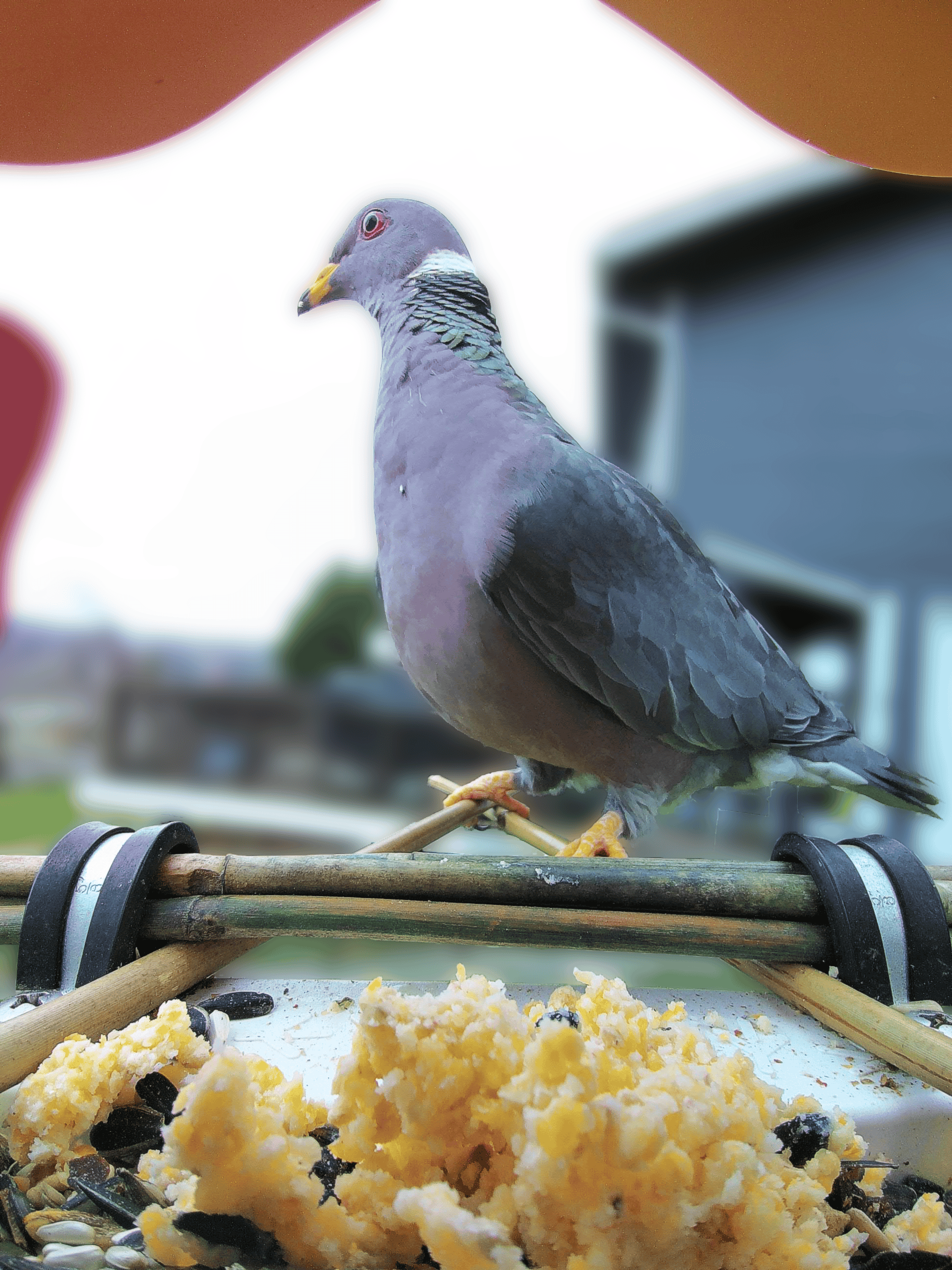


Band-Tailed Pigeon
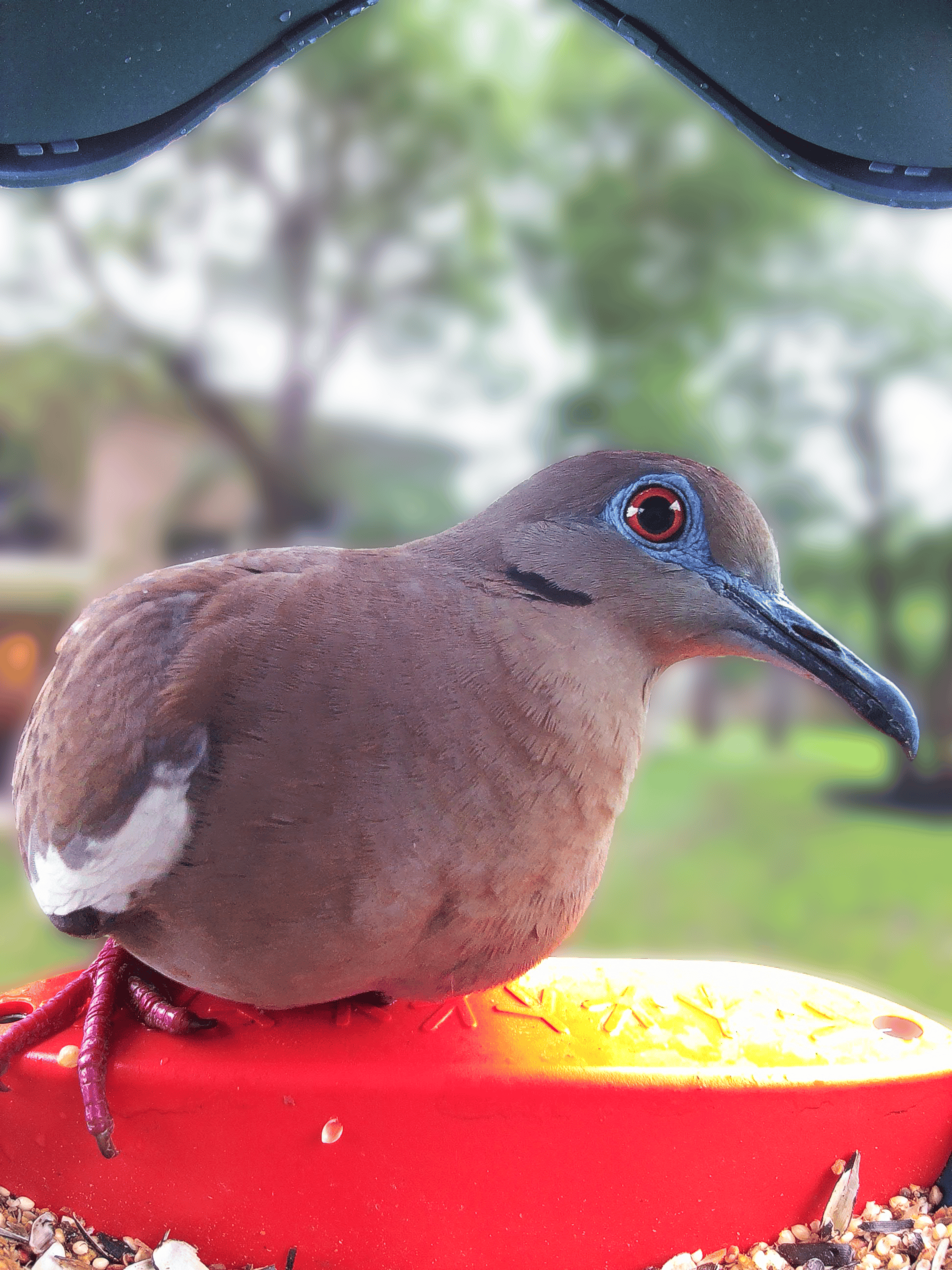


White-Winged Dove
Band-Tailed Pigeon
Patagioenas fasciata
General appearance
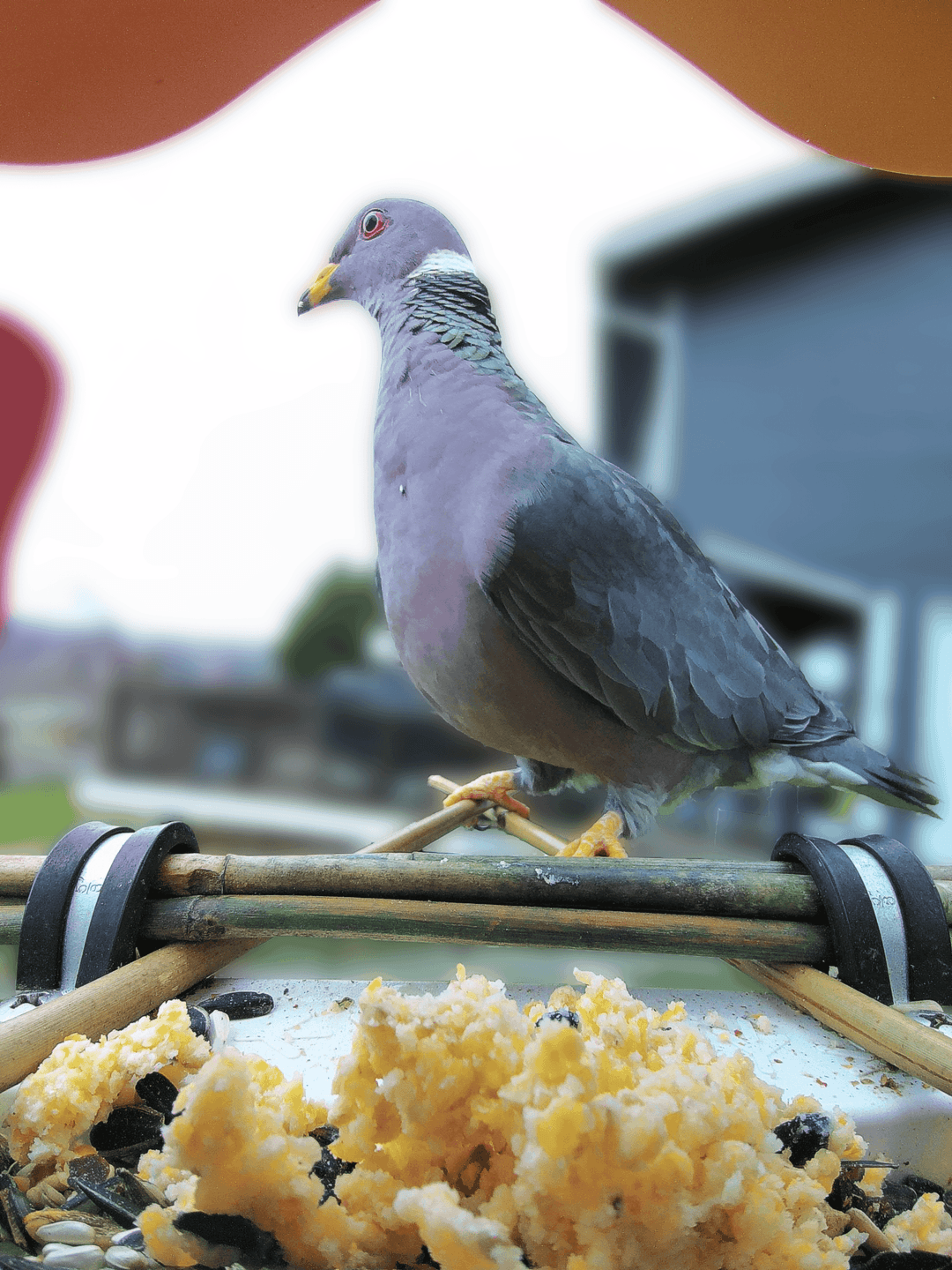
The band-tailed pigeon is a large, vibrant bird measuring around 14-15 1/2 inches or 36-39 cm. It showcases striking coloration, showcasing black, gray, purple, white, and yellow hues. A notable physical trait is the narrow white band across its nape. The bill base is yellow, while the tail possesses a broad gray band. The pigeon's head and chest are clothed in purplish-pink colors, and its neck displays hints of green iridescence.
Male vs female
There is no significant physical difference in color and size between male and female band-tailed pigeons that can be used for easy identification in the wild. Both genders exhibit similar coloration and physical features.
Juvenile
Juveniles of this species exhibit subtle differences compared to adults. They lack the distinguishing narrow white band across the nape which is a key characteristic of mature band-tailed pigeons. With time, as they mature, they will gradually acquire the vibrant adult coloration and physical traits.
Size
12.6 - 15.7 in/12.1 - 12.8 oz
There's more to learn about Band-Tailed Pigeon
View full detailsWhite-Winged Dove
Zenaida asiatica
General appearance
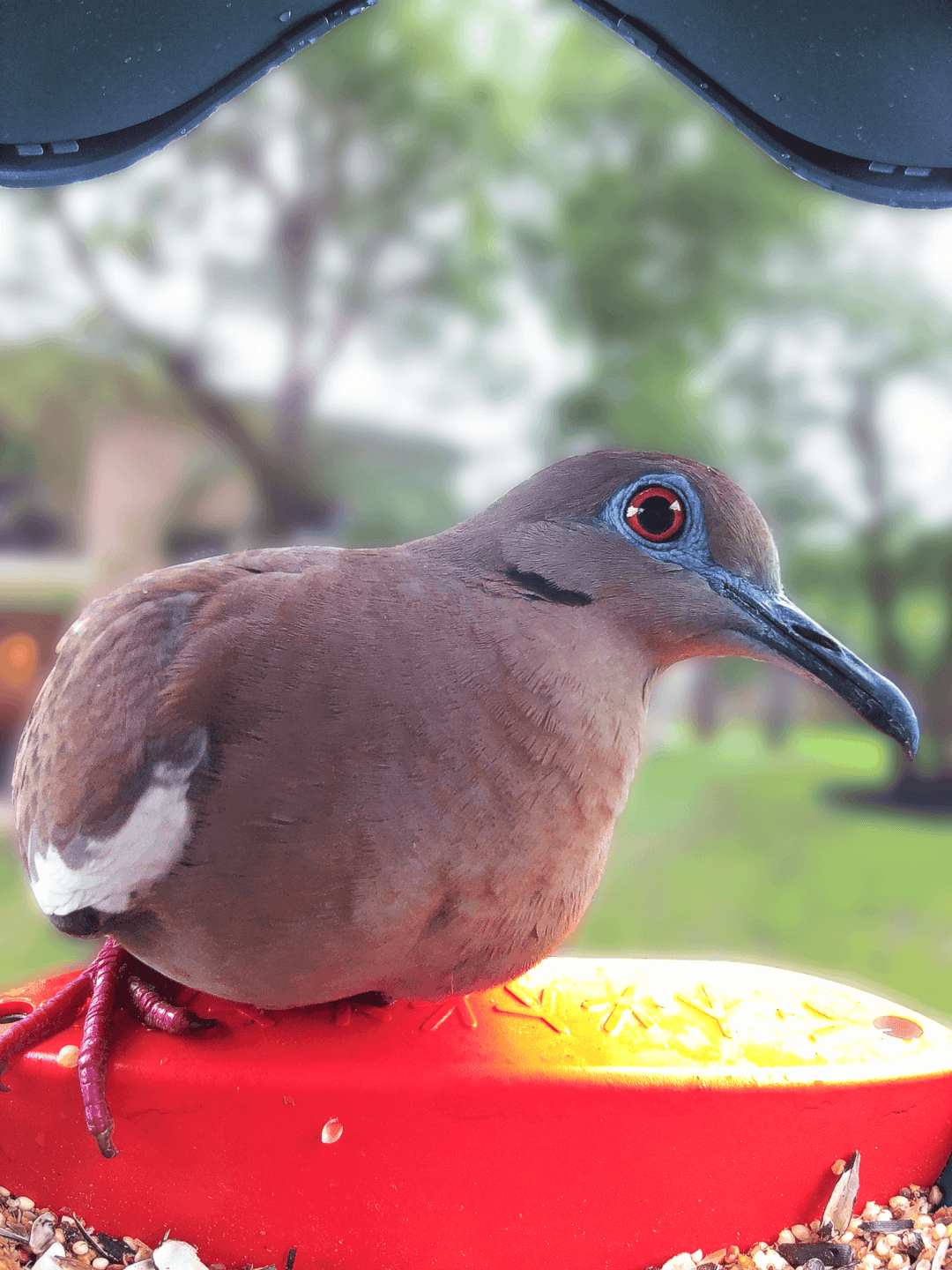
The White-winged Dove has a bulky body with short tail and measures approximately 12 inches or 30 cm in length, which is about the size of a crow. Its most distinctive characteristics are its big white wing patches and white tips on outer tail feathers. These features are most visible during flight. The dove has a broad, pointed wing shape and a rounded, square-tipped tail. The color varies from black, blue, brown, to gray and white.
Male vs female
Male and female White-winged Doves are similar in appearance. They both share the same unique coloration and physical traits, including the noticeable white markings on the wings and tail. Any differences between the genders are minimal and not easily discernible.
Juvenile
Juvenile White-winged Doves do not possess the vibrant and stark coloration seen in adults. Instead of the wide range of colors observed in adults, they are generally more brown, serving as a form of camouflage. However, as they grow and mature, they'll acquire the full array of adult coloration.
Size
11.0 - 11.8 in/4.4 - 6.6 oz
There's more to learn about White-Winged Dove
View full detailsHow to tell the Band-Tailed Pigeon from the White-Winged Dove
Visual differences
The Band-Tailed Pigeon is larger, measuring 14-15.5 inches, compared to the White-Winged Dove's 12 inches. The pigeon features purplish-pink on the head and chest, a narrow white band on the nape, and a yellow bill base, with a broad gray tail band. In contrast, the dove displays large white wing patches and white tail tips, most visible in flight. It has a bulkier body and shorter tail, with plumage ranging from black, blue, and gray tones. Both species lack noticeable gender differences and exhibit more drab juveniles.
Key differences and behavior
Band-Tailed Pigeons and White-Winged Doves exhibit distinct behaviors and preferences in their natural habitats. Both can suck water without lifting their heads and feed young with crop milk. Band-Tailed Pigeons tend to travel up to three miles for food, primarily in oak woodlands and mountain forests, while White-Winged Doves inhabit semi-open areas, brushlands, and urban spaces. Band-Tailed Pigeons have a preference for seeds, berries, and pine nuts, whereas White-Winged Doves primarily consume seeds and grains, favoring cactus fruits. During courtship, Band-Tailed Pigeons display with upward flights and wheezing calls, often nesting in loose colonies in trees. White-Winged Doves court with cooing calls and loud wing sounds, usually nesting in dense shrubbery or trees. Both species visit bird feeders for seeds but differ in travel habits and specific dietary preferences.
Still not sure? Here are more lookalikes!
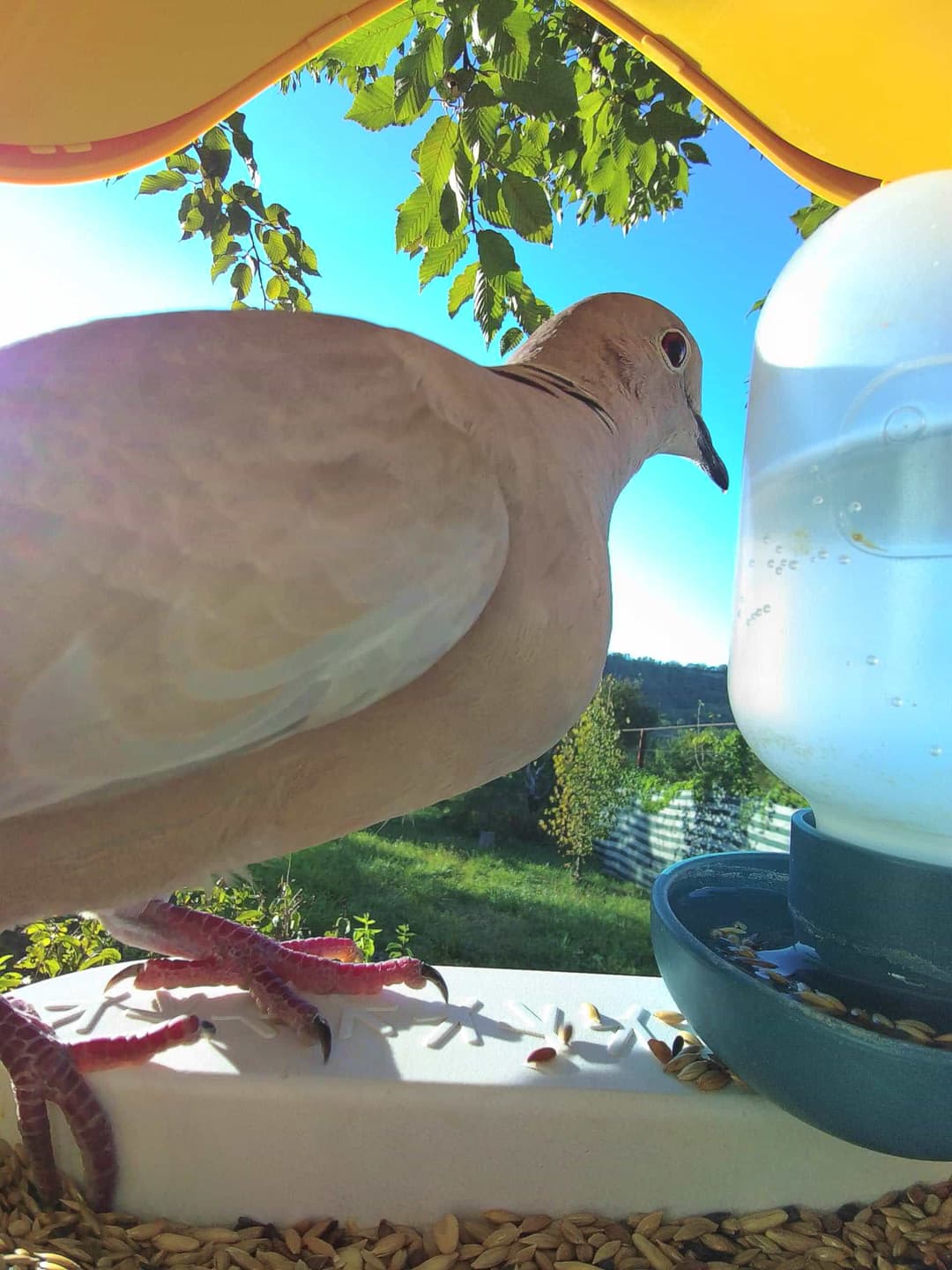
Band-Tailed Pigeon vs Eurasian Collared Dove
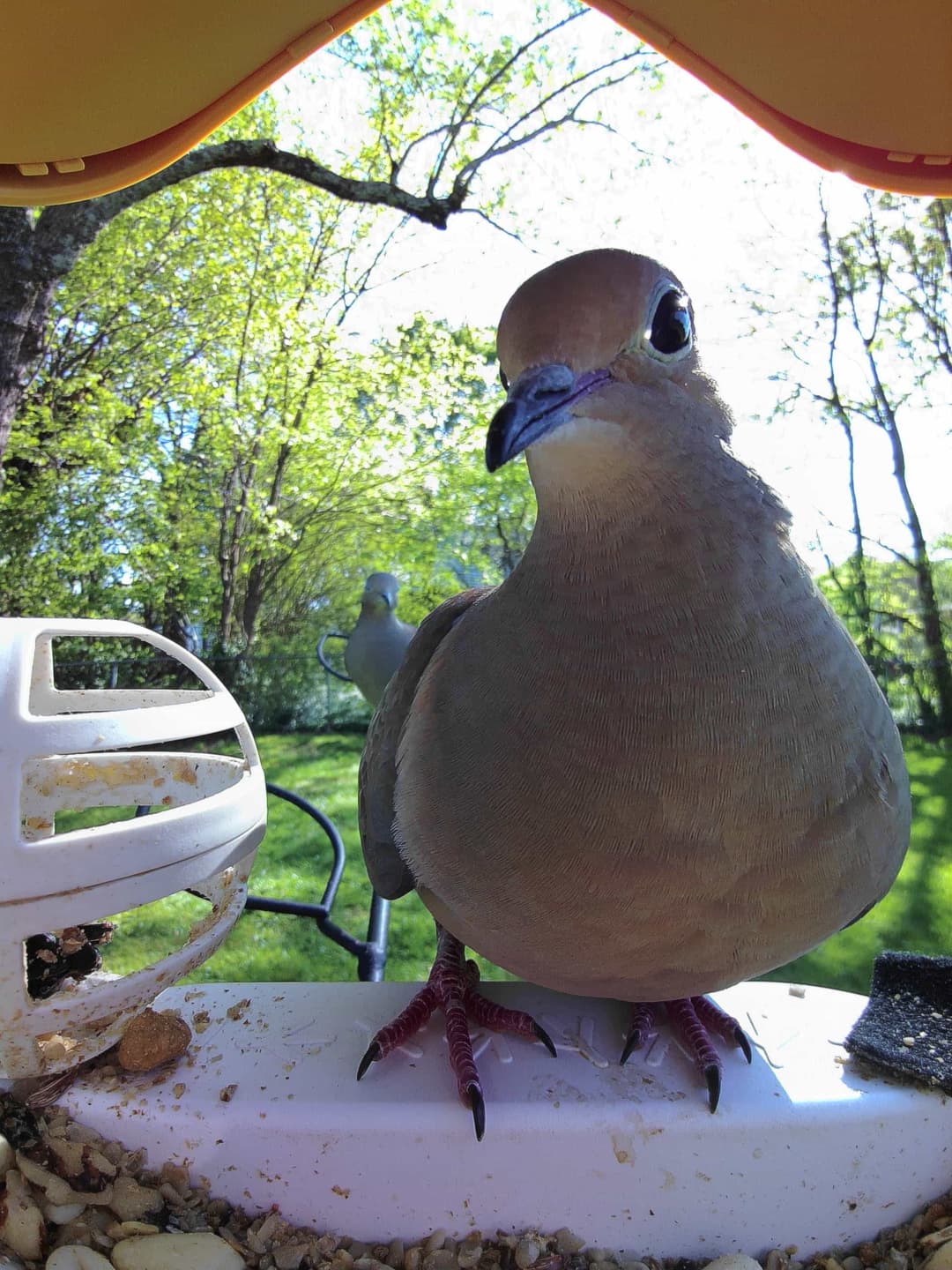
Band-Tailed Pigeon vs Mourning Dove
White-Winged Dove vs Mourning Dove
White-Winged Dove vs Eurasian Collared Dove
White-Winged Dove vs White-Tipped Dove
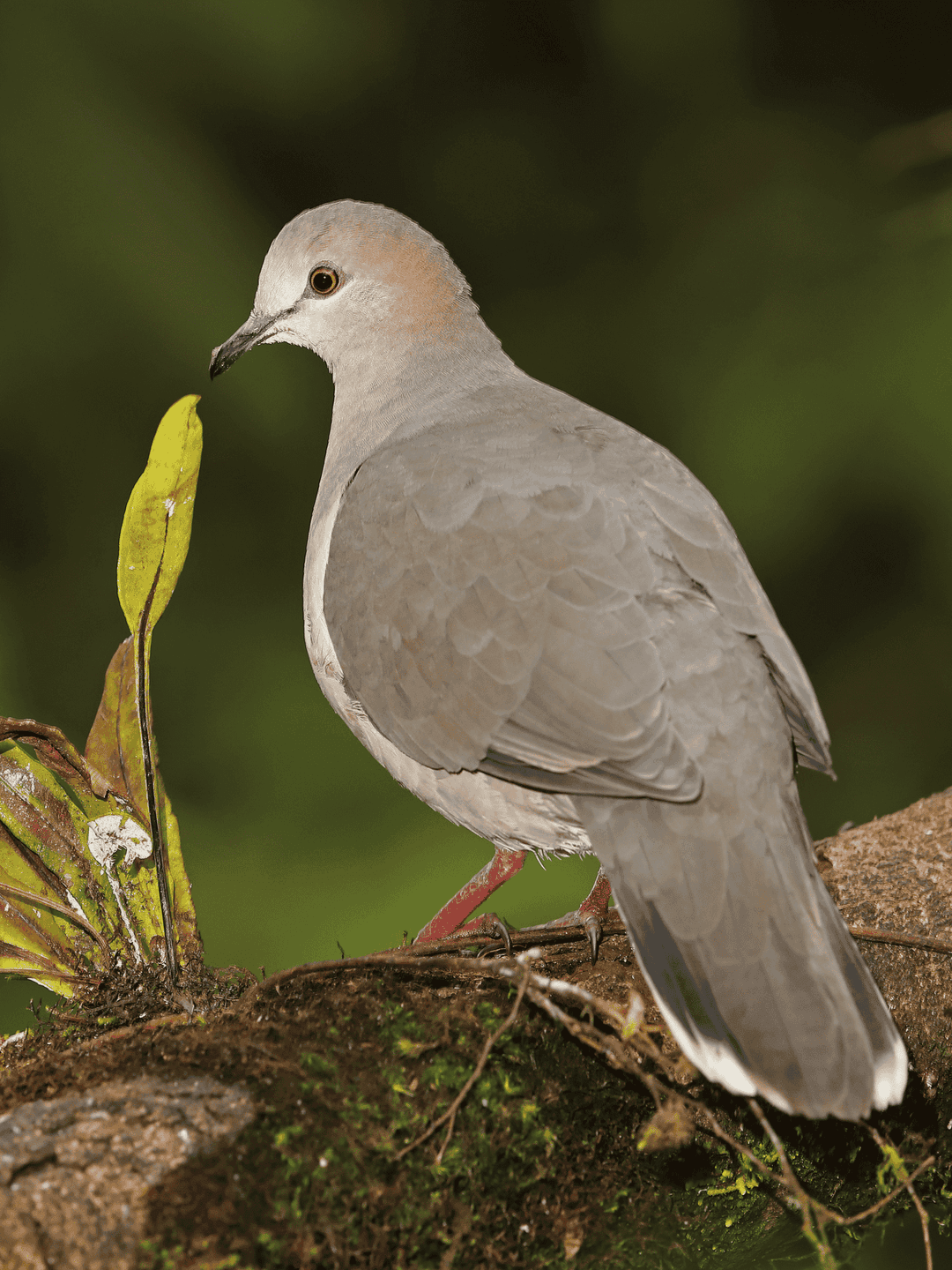
Band-Tailed Pigeon vs [Select a bird]

[Select a bird]
Pick a bird to compare
White-Winged Dove vs [Select a bird]
[Select a bird]
Pick a bird to compare