Black-Headed Grosbeak or Blue Grosbeak?
Here's how to tell the difference


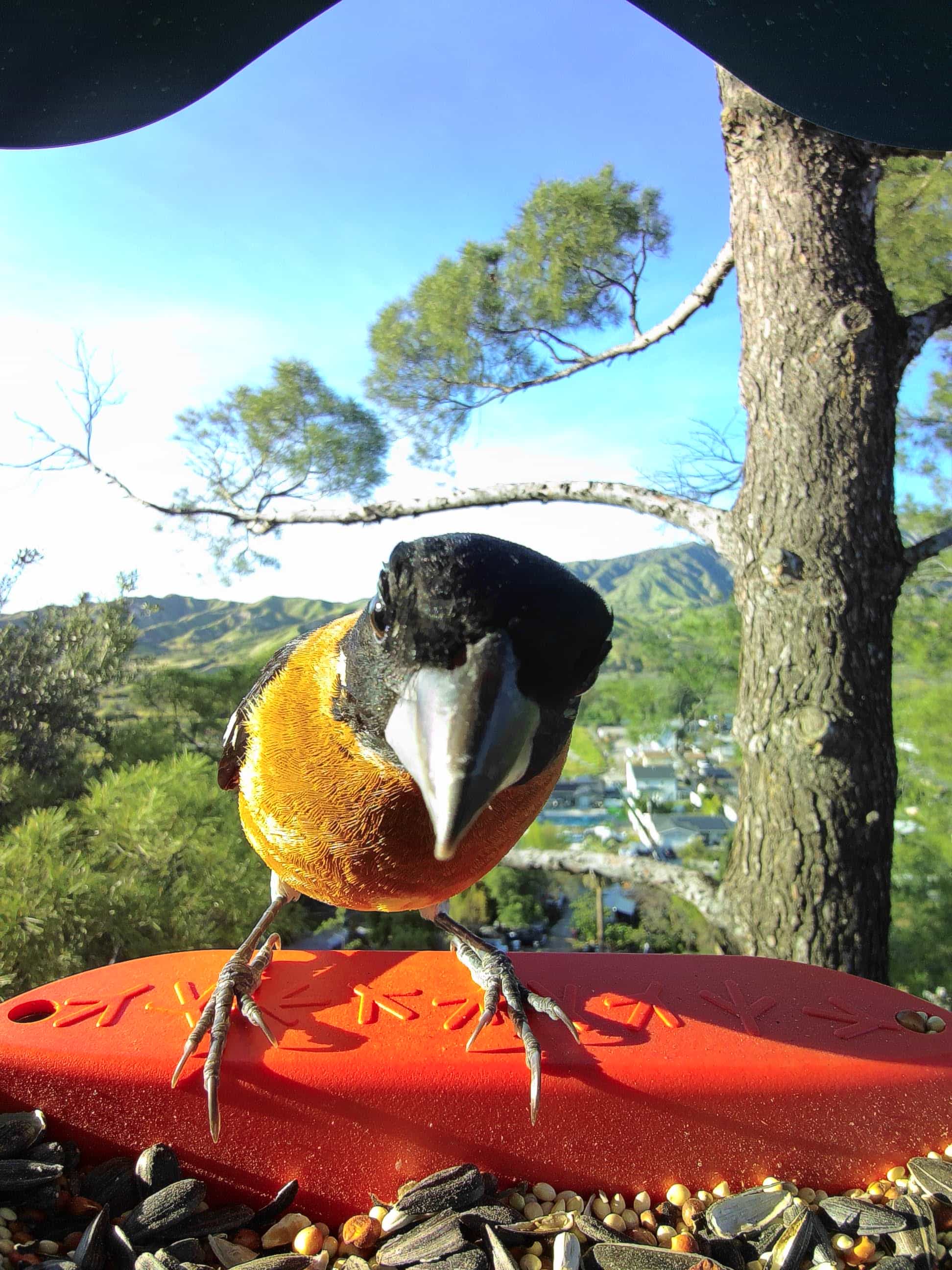


Black-Headed Grosbeak
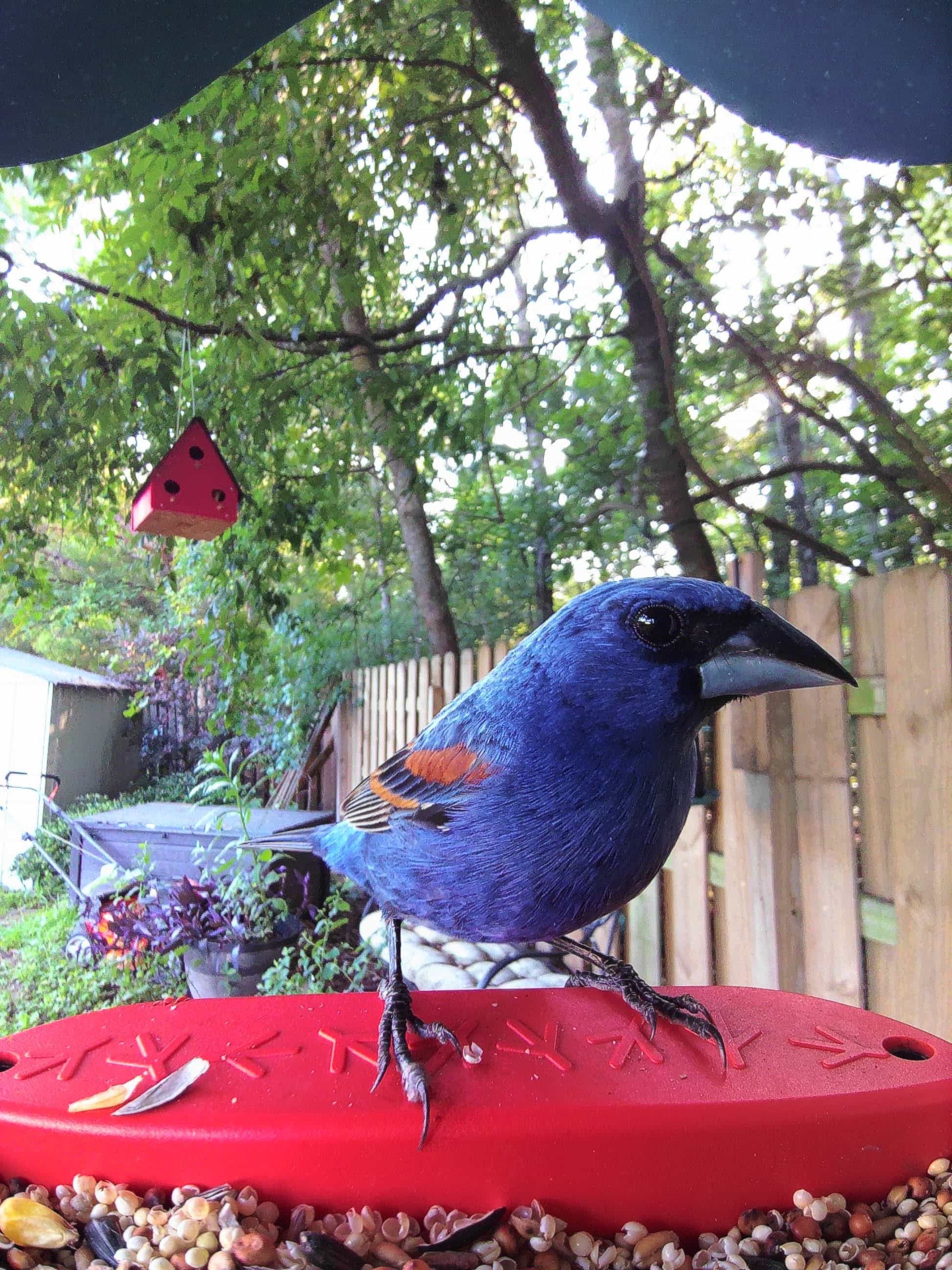


Blue Grosbeak
Black-Headed Grosbeak
Pheucticus melanocephalus
General appearance
The black-headed grosbeak is a roughly robin-sized bird, measuring around 7 1/2 inches (19 cm). It displays characteristic colors such as black, brown, orange, tan, and white. Its wings are rounded, while its tail can be shaped, notched, squared, or rounded. The bird's notable features include markedly vibrant coloration and size.
Male vs female
For the black-headed grosbeak, the males tend to be dull orange-brown in color with a black head and black-and-white wings. On the other hand, females feature colors and patterns similar to the Rose-breasted Grosbeak but have more pronounced orange undertones beneath and less streaking. In addition, the females often have a darker bill.
Juvenile
Juvenile black-headed grosbeaks resemble the female but are tinged orange below, showing less streaking than their adult counterparts. They also have a bill that is often darker than the adults. Juveniles may experience a change in coloration during the season's transition.
Size
7.1 - 7.5 in/1.4 - 1.8 oz
There's more to learn about Black-Headed Grosbeak
View full detailsBlue Grosbeak
Passerina caerulea
General appearance
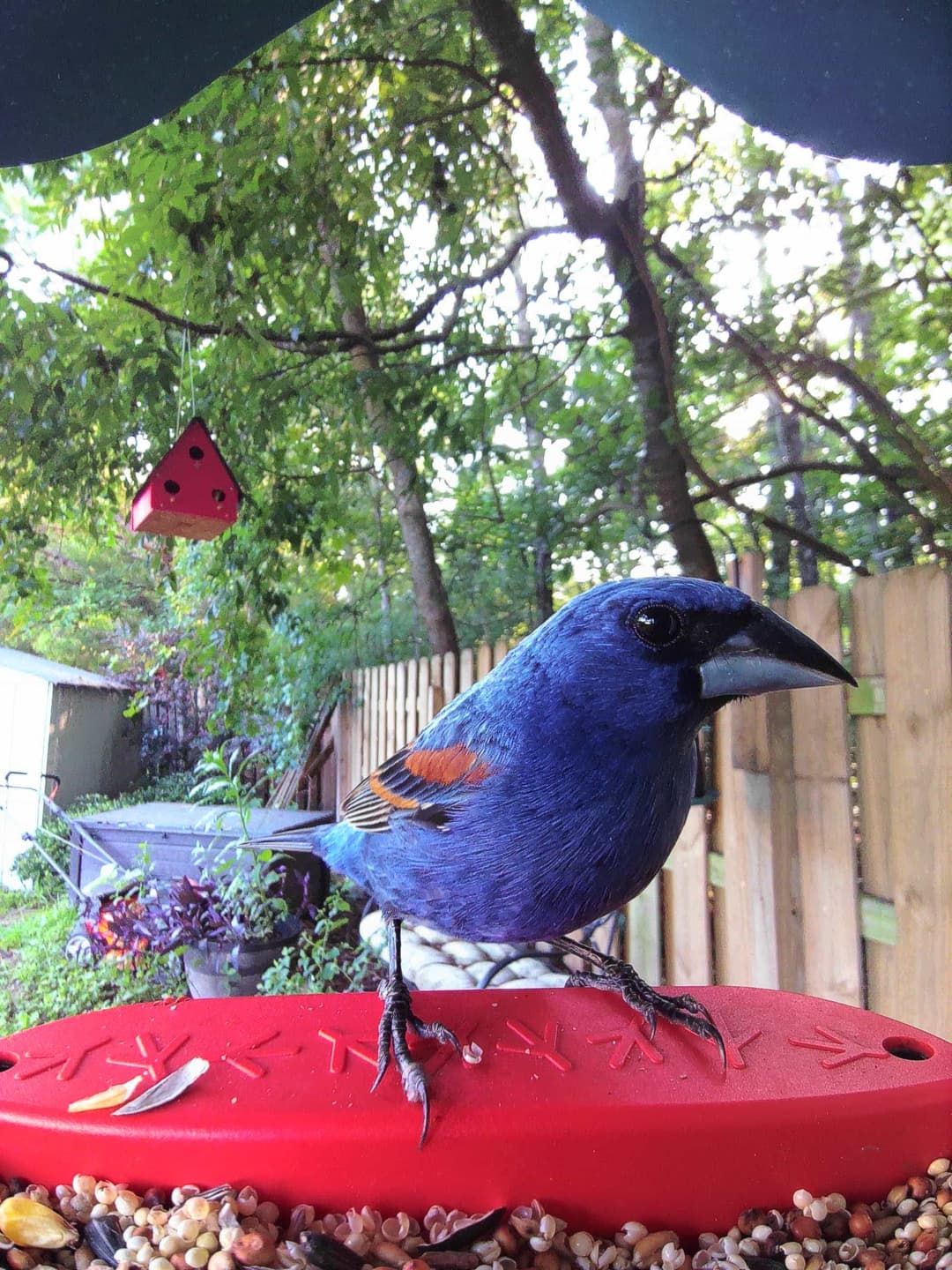
The blue grosbeak is a medium-sized songbird renowned for its striking coloration. It exhibits a robust build with a large, conical bill apt for seed-cracking. Typically, the species displays rich blue plumage that stands out due to its vibrant hue. Observed mostly in habitats like thickets and forest edges, they are often recognized by their melodic song composed of rich warbles and trills.
Male vs female
The male blue grosbeak is distinguished by its deep, bright blue plumage with chestnut-brown wing bars, making it more visually striking compared to the female. In contrast, females exhibit a more subdued coloration, primarily rich brown with subtle hints of blue in their wings and tail, aiding in camouflage. Both sexes, however, share the characteristic stout bill and are similarly sized.
Juvenile
Juvenile blue grosbeaks resemble the adult female more closely, with overall brownish plumage. Unlike adults, juveniles lack the pronounced blue tones and wing bars. As they mature, young males gradually acquire their signature blue coloring during their first fall molt. Seasonal variations are mostly evident in males, accentuating their iridescent blue during the breeding season.
Size
5.9 - 6.3 in/0.9 - 1.1 oz
There's more to learn about Blue Grosbeak
View full detailsHow to tell the Black-Headed Grosbeak from the Blue Grosbeak
Visual differences
The Black-Headed Grosbeak (7.5 in., 1.4-1.8 oz.) is larger and features a striking black head with orange-brown plumage and black-and-white wings. The Blue Grosbeak (6-6.3 in., 0.9-1.1 oz.) is smaller with vibrant blue plumage and chestnut wing bars. Both species have a robust, conical bill, but the Black-Headed Grosbeak's bill may appear darker. Males of both species are more vividly colored than females. Key visual differences lie in size and the Blue Grosbeak's distinctive blue color compared to the Black-Headed Grosbeak's brown-orange tones.
Key differences and behavior
The Black-Headed Grosbeak (19 cm, 40-50 g) and Blue Grosbeak (15-16 cm, 26-31 g) exhibit distinct behaviors. Black-Headed Grosbeaks are involved parents, with both sexes participating in nest building and chick rearing; females can also sing, possibly deterring rivals. They favor oak woodlands and streamside habitats, feeding on insects, seeds, and berries. Conversely, Blue Grosbeaks, often seen in flocks and ground-foraging, use vocalization primarily by males for territory defense and mate attraction. They typically inhabit brush and forest edges, preferring insects and seeds. They use unique nest materials like snakeskin to deter predators. At feeders, both might consume sunflower seeds.
Still not sure? Here are more lookalikes!
Black-Headed Grosbeak vs Rose-Breasted Grosbeak
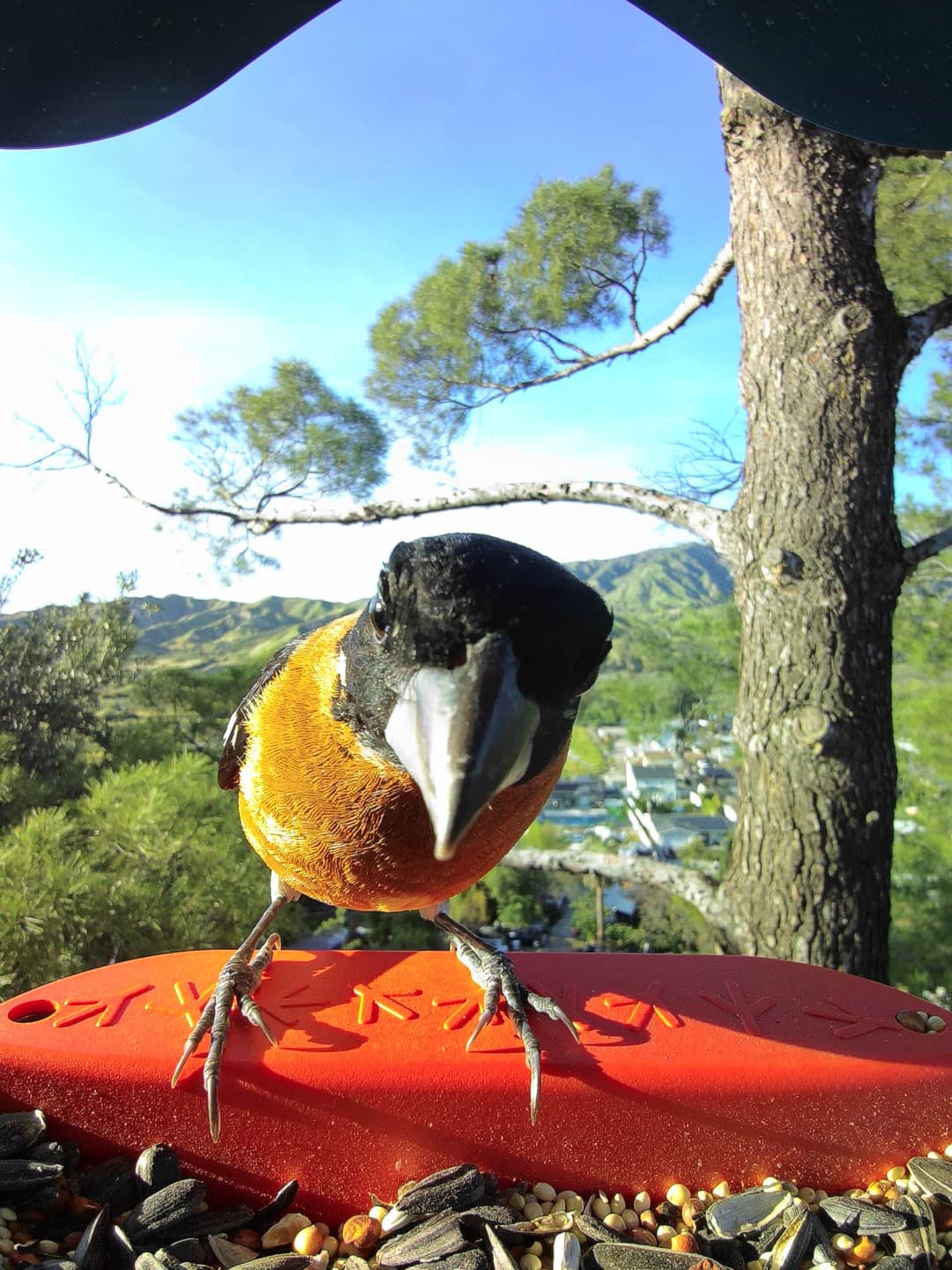
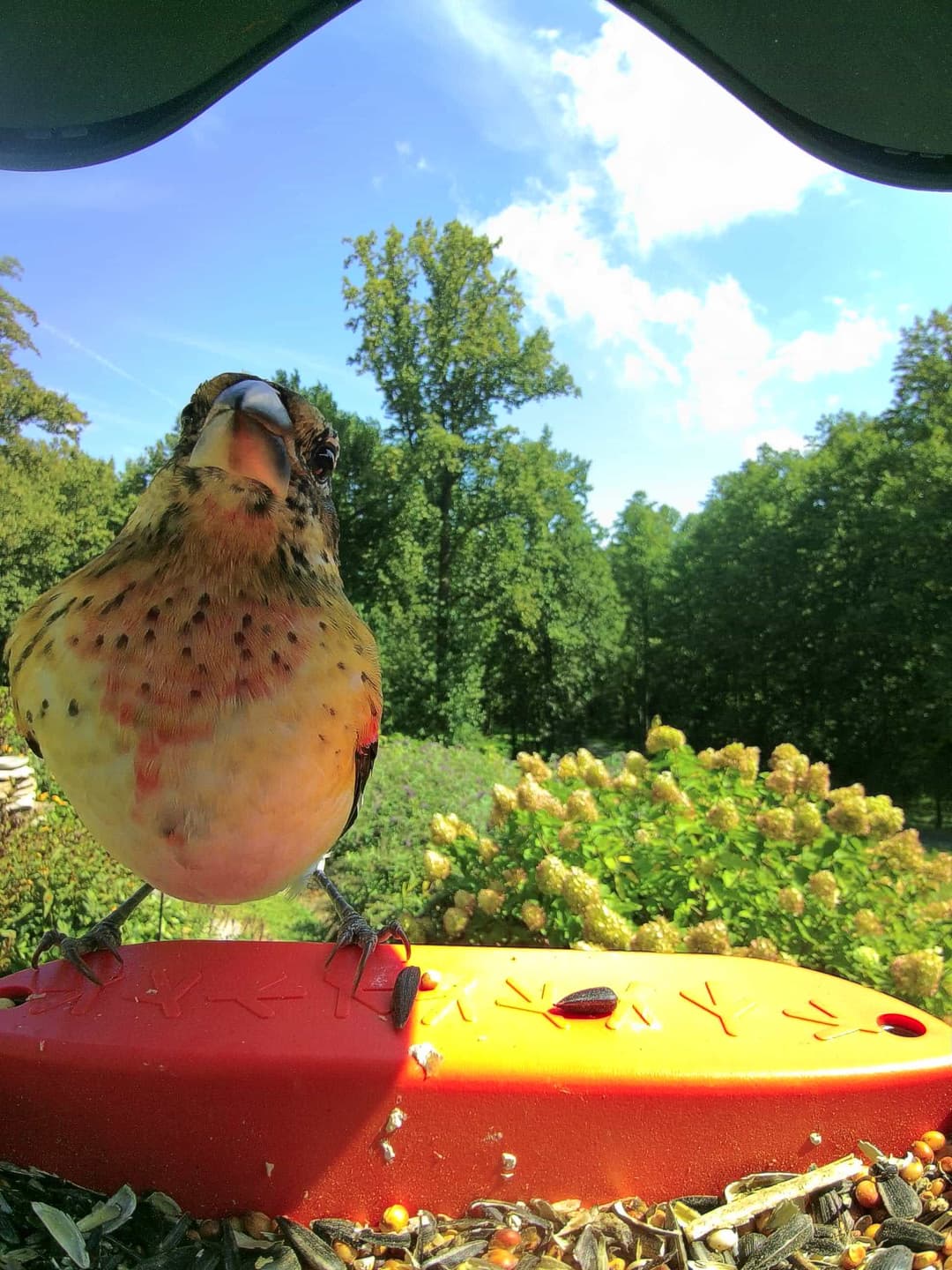
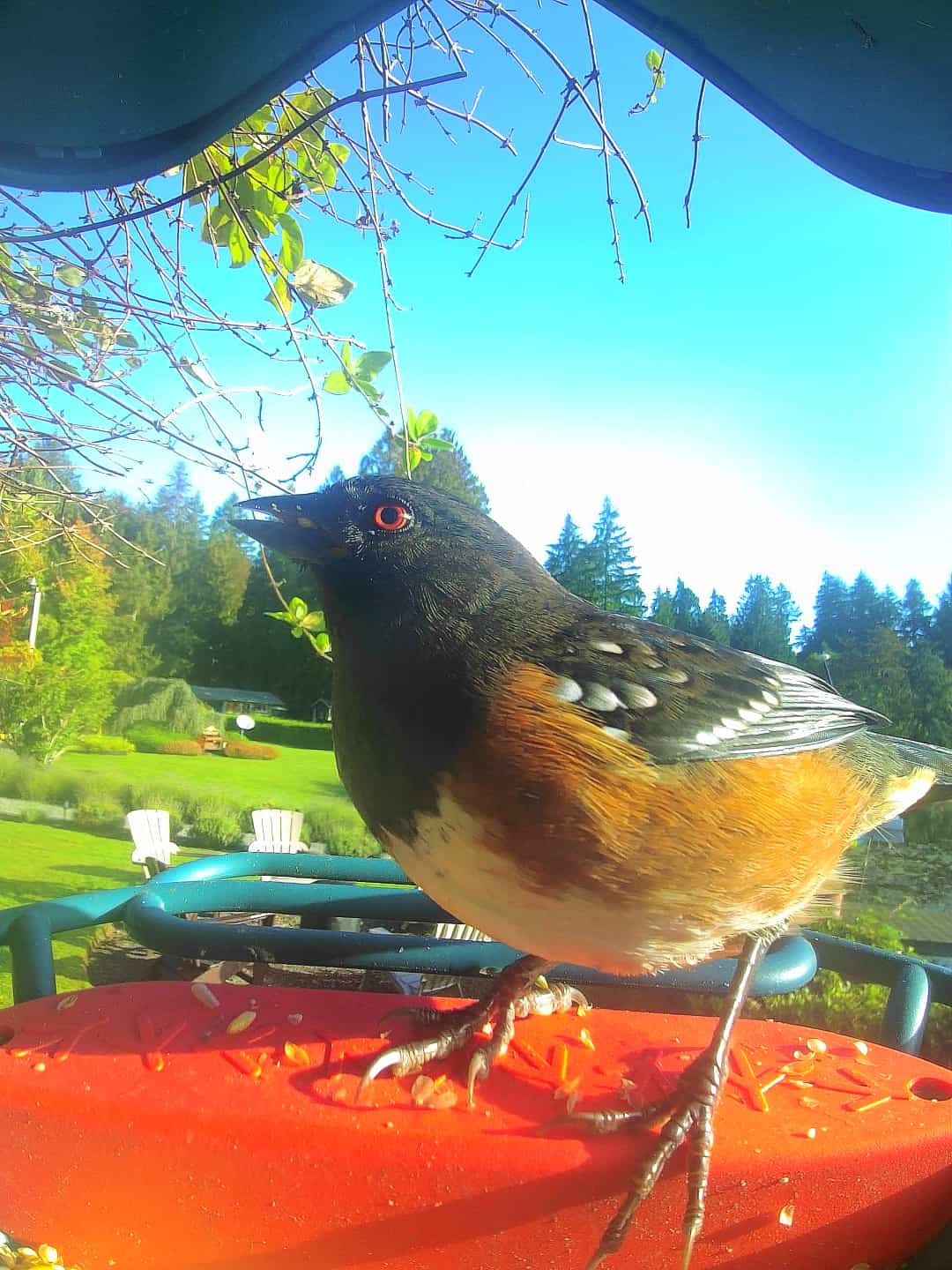
Black-Headed Grosbeak vs Spotted Towhee
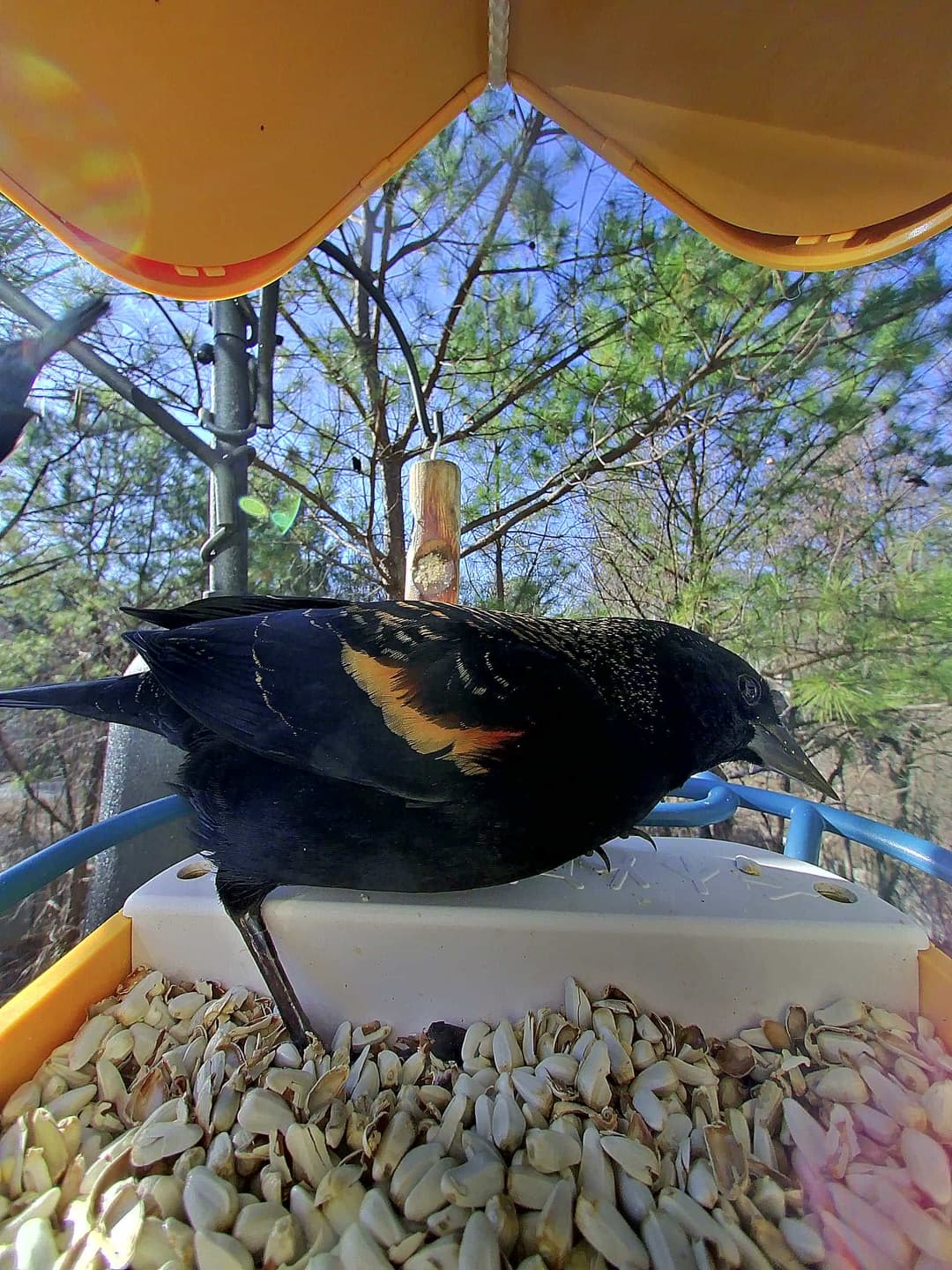
Black-Headed Grosbeak vs Red-Winged Blackbird
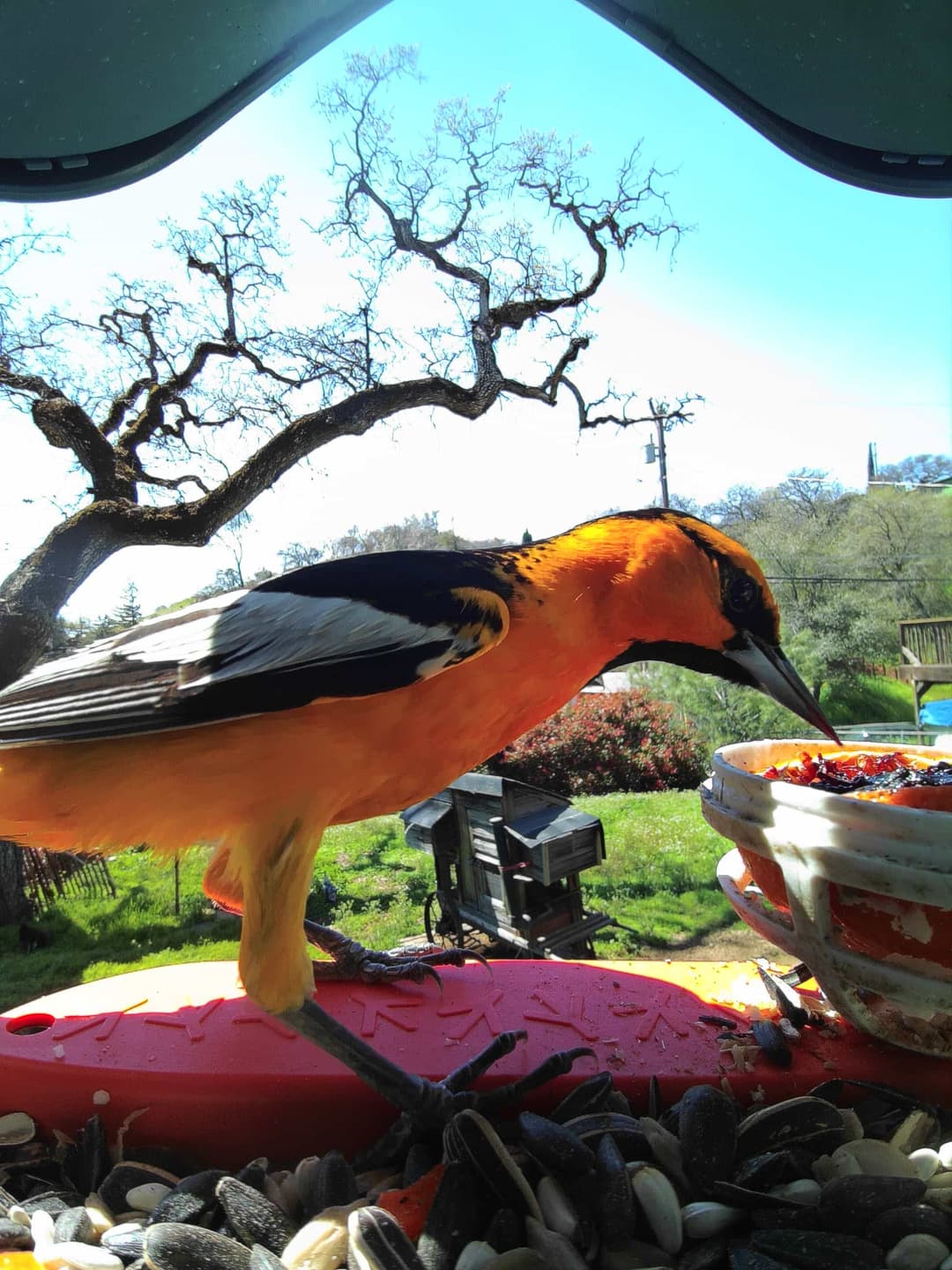
Black-Headed Grosbeak vs Bullock’s Oriole
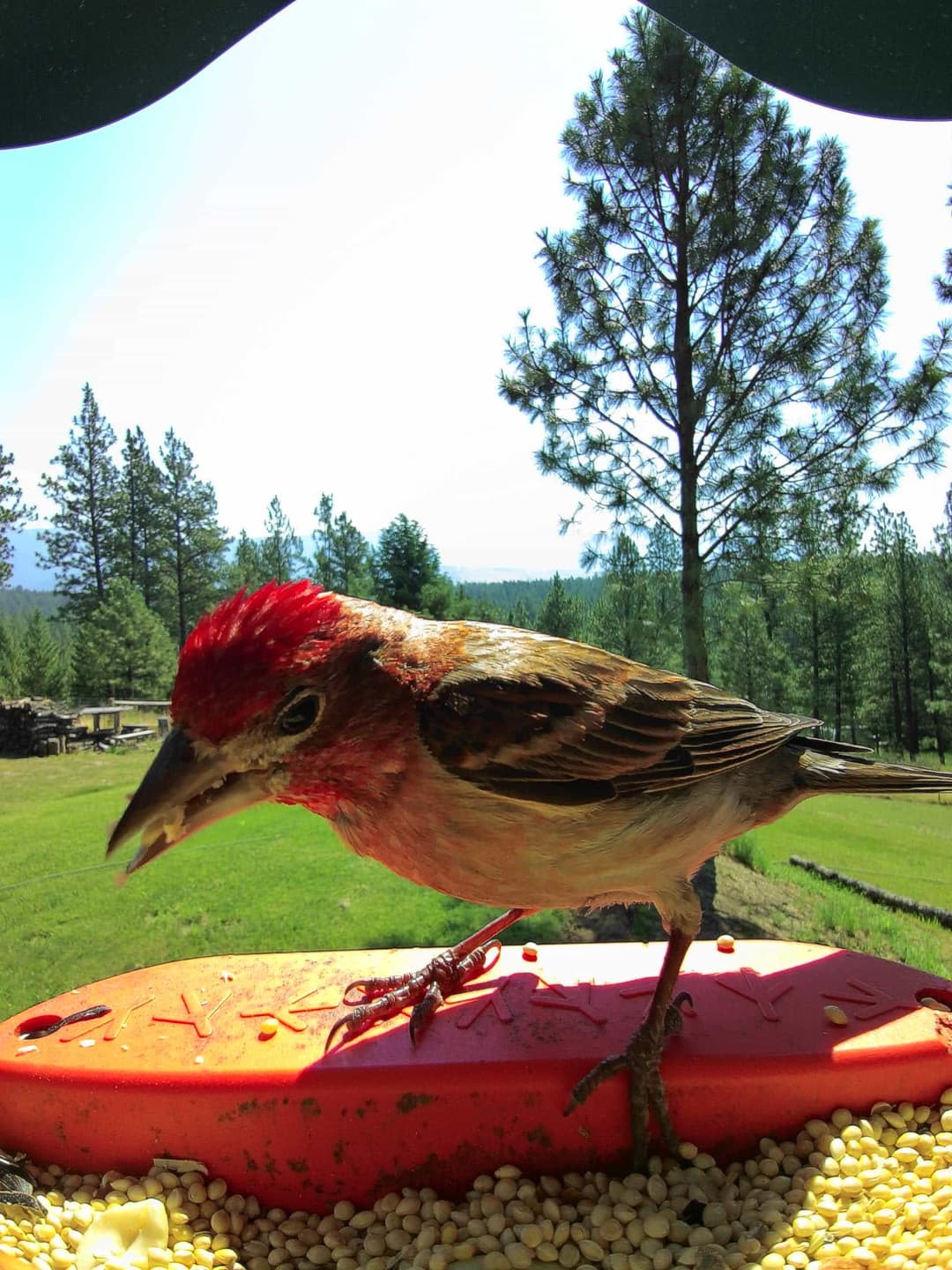
Black-Headed Grosbeak vs Cassin’s Finch
Black-Headed Grosbeak vs Purple Finch
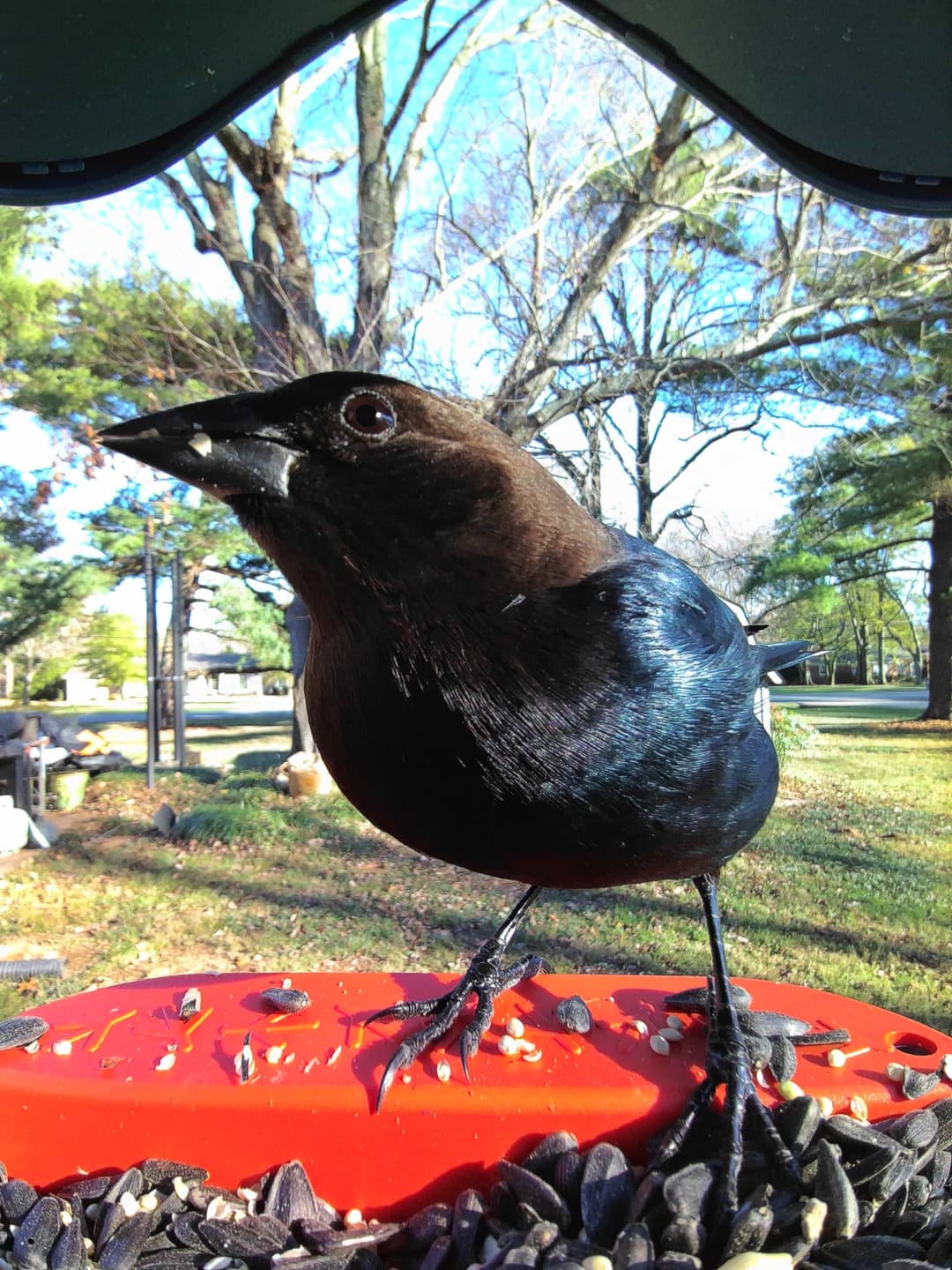
Blue Grosbeak vs Brown-Headed Cowbird
Black-Headed Grosbeak vs [Select a bird]

[Select a bird]
Pick a bird to compare
Blue Grosbeak vs [Select a bird]
[Select a bird]
Pick a bird to compare