Black-Headed Grosbeak or Bullock’s Oriole?
Here's how to tell the difference


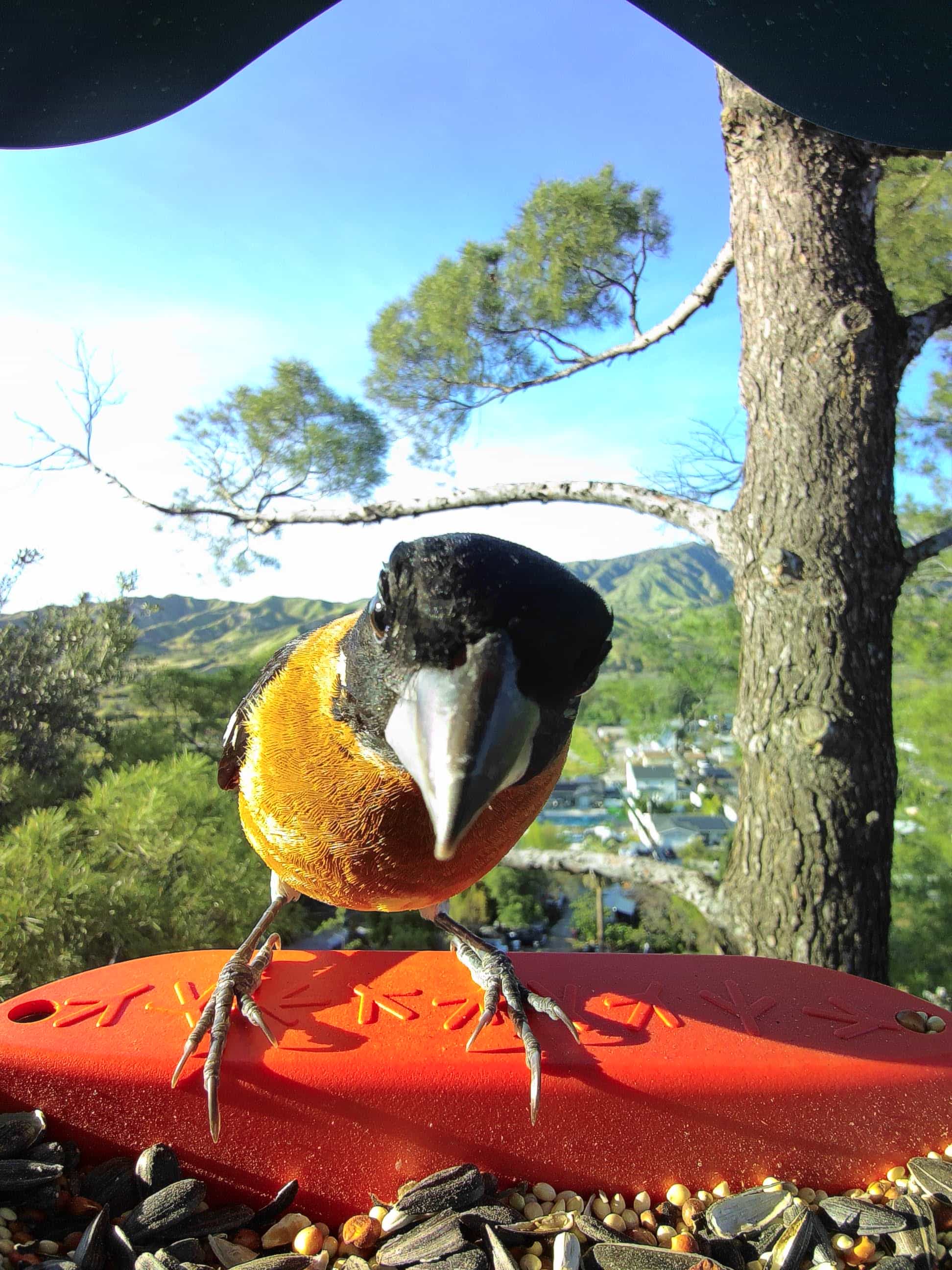


Black-Headed Grosbeak


Bullock’s Oriole
Black-Headed Grosbeak
Pheucticus melanocephalus
General appearance
The black-headed grosbeak is a roughly robin-sized bird, measuring around 7 1/2 inches (19 cm). It displays characteristic colors such as black, brown, orange, tan, and white. Its wings are rounded, while its tail can be shaped, notched, squared, or rounded. The bird's notable features include markedly vibrant coloration and size.
Male vs female
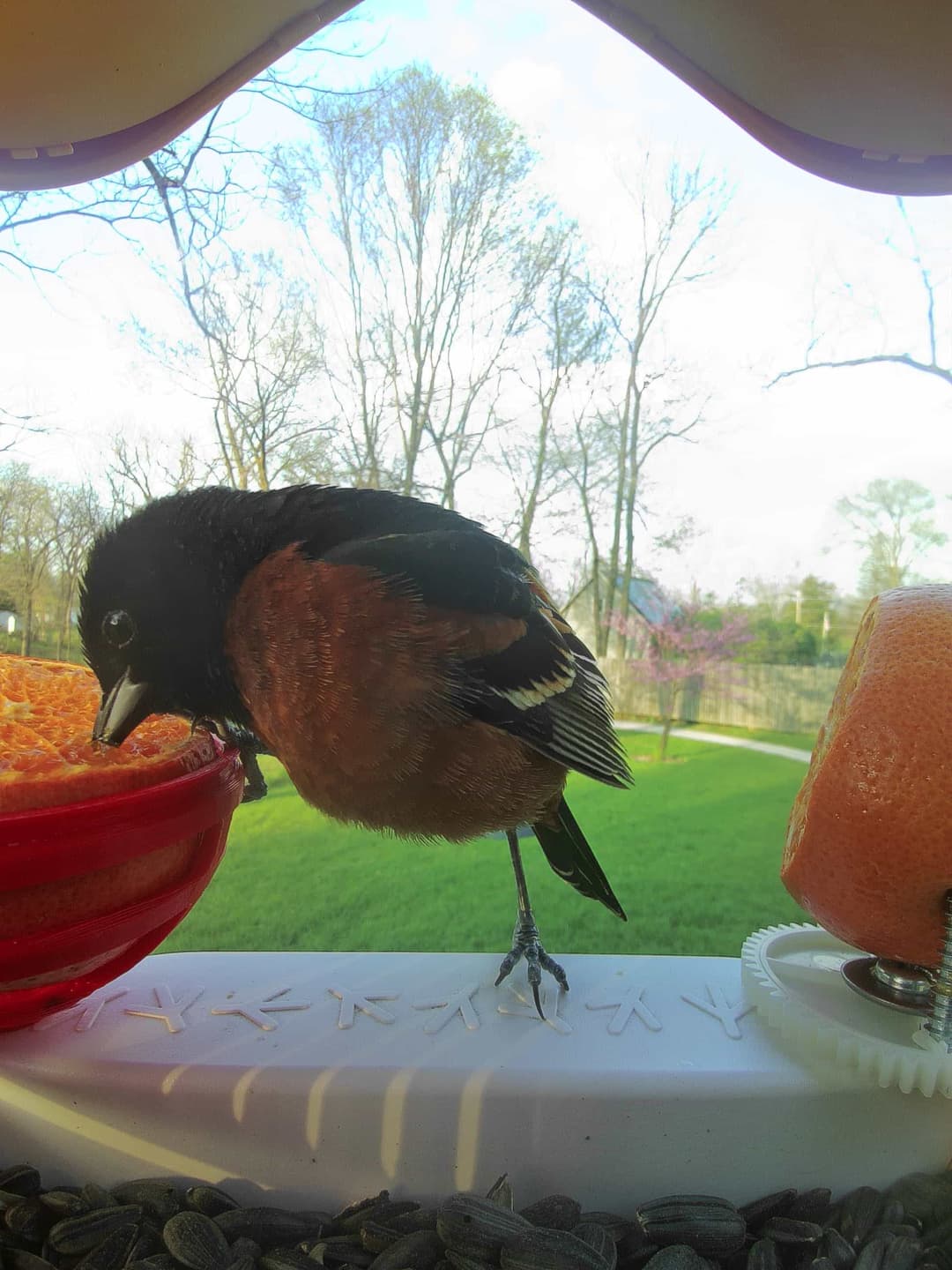
For the black-headed grosbeak, the males tend to be dull orange-brown in color with a black head and black-and-white wings. On the other hand, females feature colors and patterns similar to the Rose-breasted Grosbeak but have more pronounced orange undertones beneath and less streaking. In addition, the females often have a darker bill.
Juvenile
Juvenile black-headed grosbeaks resemble the female but are tinged orange below, showing less streaking than their adult counterparts. They also have a bill that is often darker than the adults. Juveniles may experience a change in coloration during the season's transition.
Size
7.1 - 7.5 in/1.4 - 1.8 oz
There's more to learn about Black-Headed Grosbeak
View full detailsBullock’s Oriole
Icterus bullockii
General appearance
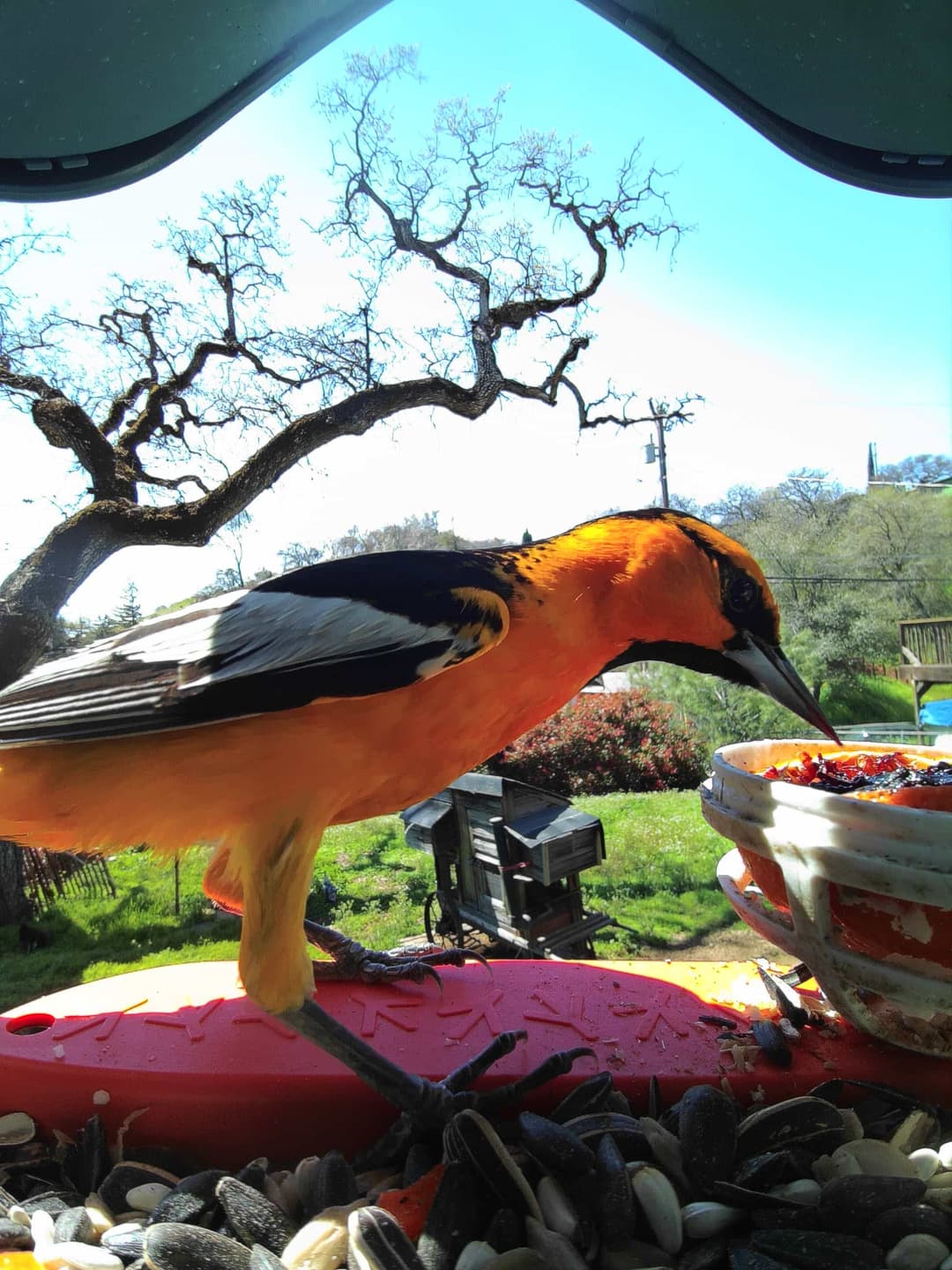
Bullock's Oriole is a medium-sized songbird distinguished by its slender body and sharp, pointed bill. It typically displays vibrant colors with striking contrasts, making it easily recognizable in its natural habitat. Both genders possess a pointed beak, perfect for foraging insects and fruit.
Male vs female
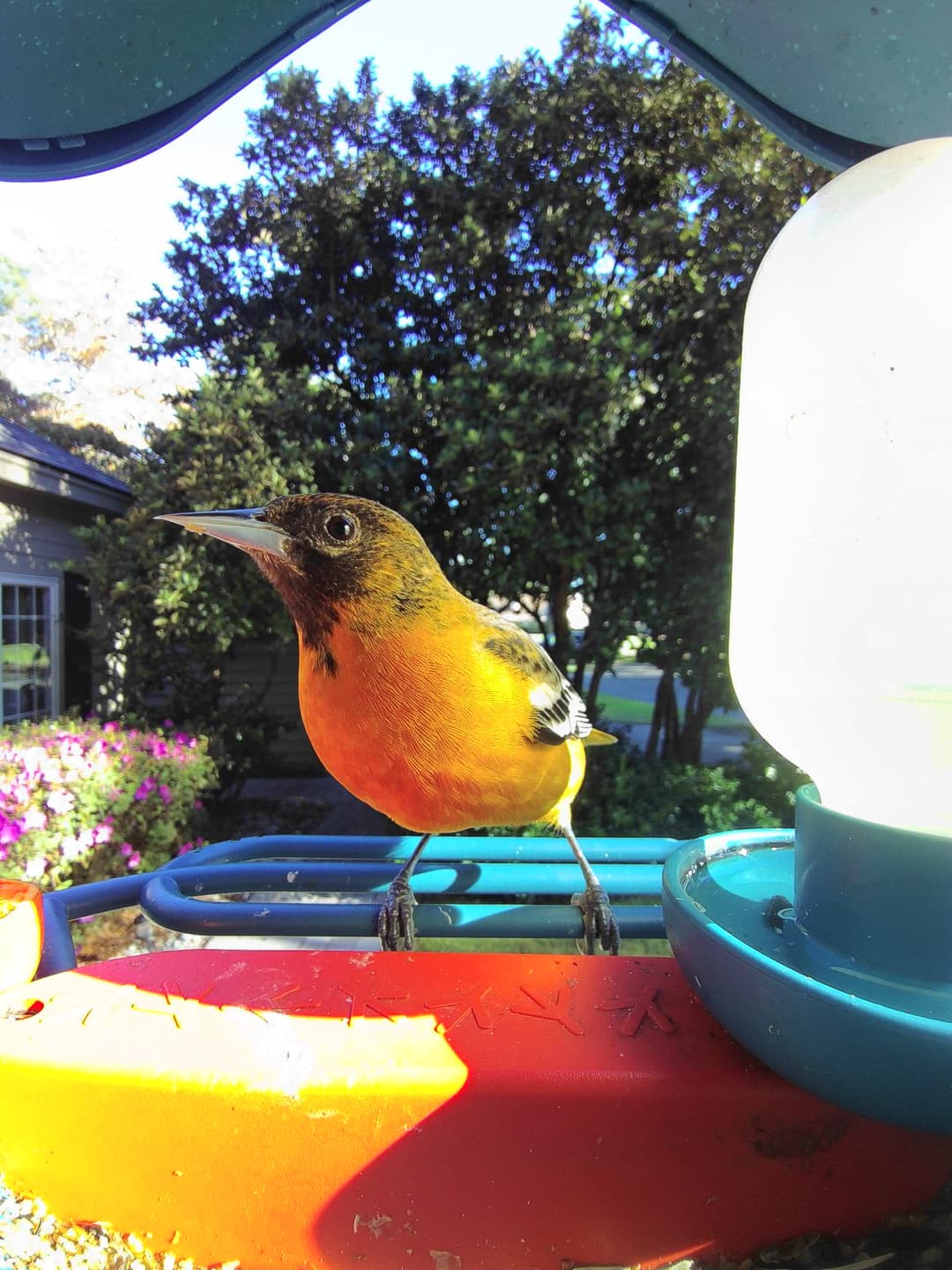
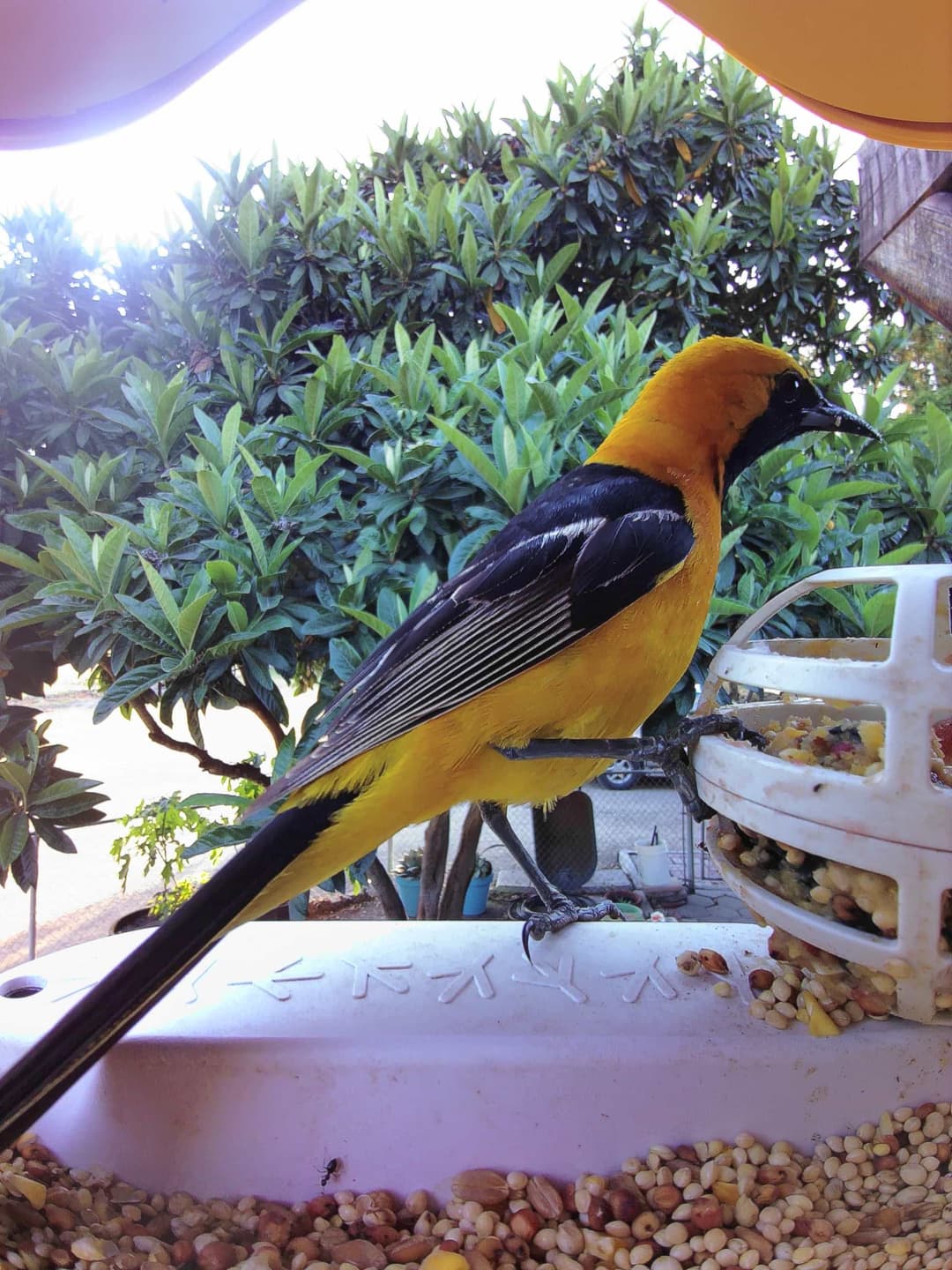
Males are brightly colored with a vibrant orange face and underparts, contrasted by a black cap, throat, and eye-line. They also have a distinctive white patch on the wing. Females are more subdued, showcasing grayish-buff tones with a hint of pale orange on the underparts and lacking the stark black markings seen in males. Their wings are more mottled, featuring less contrast.
Juvenile
Juvenile Bullock's Orioles resemble females but generally exhibit even duller and more muted colors. Young males may begin showing hints of the brighter orange plumage as they mature. Observers can identify juveniles by the mix of adult female-like body coloration and gradually emerging adult male plumage patterns.
Size
6.7 - 7.5 in/1.0 - 1.5 oz
There's more to learn about Bullock’s Oriole
View full detailsHow to tell the Black-Headed Grosbeak from the Bullock’s Oriole
Visual differences
The Black-Headed Grosbeak and Bullock's Oriole differ visually in several key ways. The Grosbeak is slightly bulkier at 7.5 inches, with a black head, orange-brown body, and black-and-white wings. Its beak is thick and robust. In contrast, the Oriole is more slender at 7 inches, with a sharp pointed bill. Male Orioles have a bright orange face and underparts with black accents and a white wing patch, whereas females are grayish-buff with muted tones, lacking the vivid colors of males.
Key differences and behavior
Black-headed Grosbeaks and Bullock's Orioles exhibit distinct behavioral and ecological differences. Grosbeaks, inhabiting oak woodlands and streamside trees, are diligent parents with males actively partaking in feeding their young. Their diet is diverse, including insects, seeds, and berries, and they favor sunflower seeds at feeders. Bullock’s Orioles prefer open woods and riverside areas, often in suburban locales. They are selective in nesting, constructing intricate woven pouches in tall deciduous trees. Their diet primarily consists of insects, especially caterpillars, supplemented by fruit. At feeders, they are drawn to sugar-water solutions and berries. In terms of nesting, female orioles lead construction, whereas grosbeak nesting involves both parents. Orioles exhibit territorial singing and display intricate courtship rituals, while grosbeaks use song flights to impress mates.
Still not sure? Here are more lookalikes!
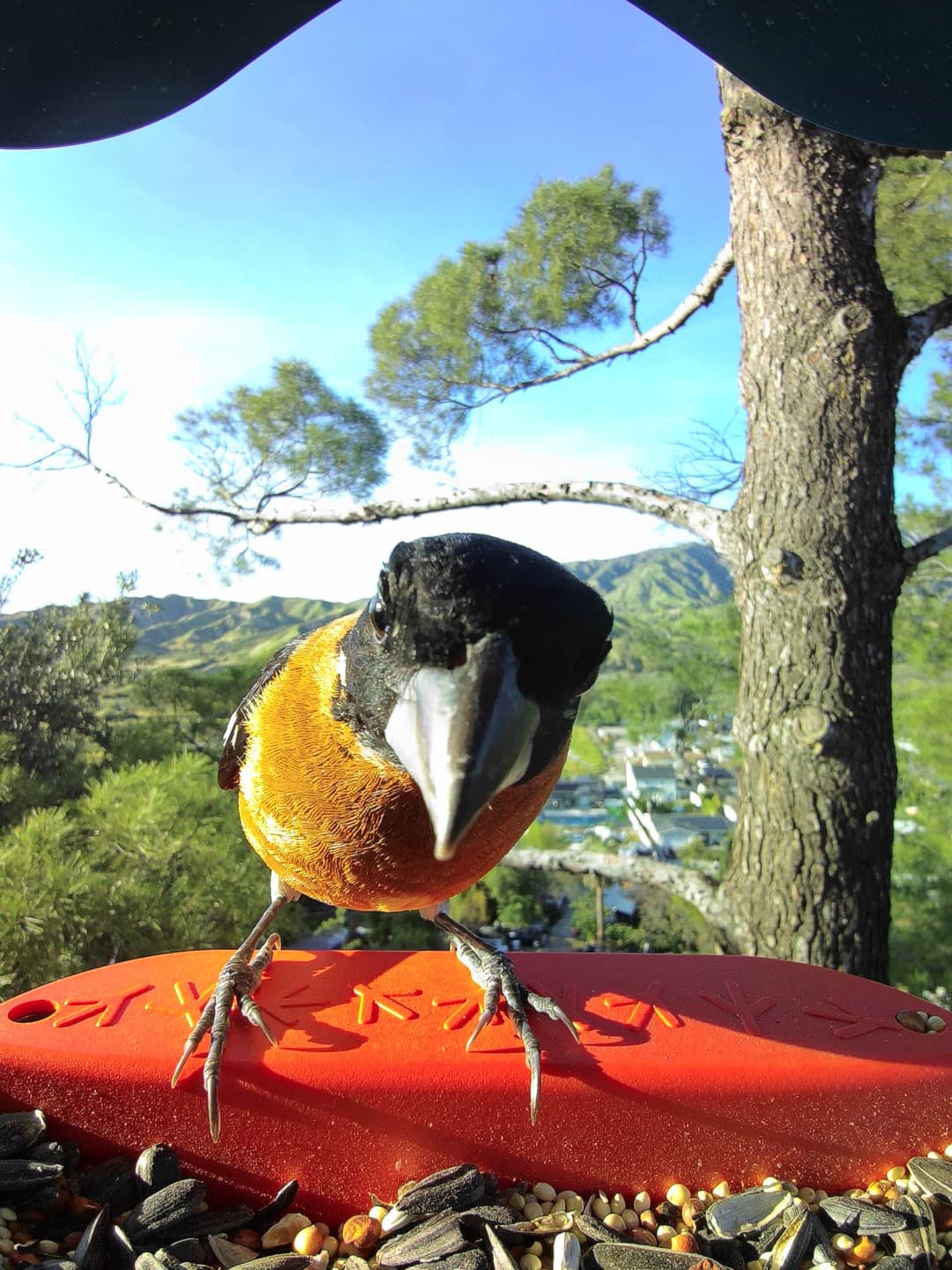
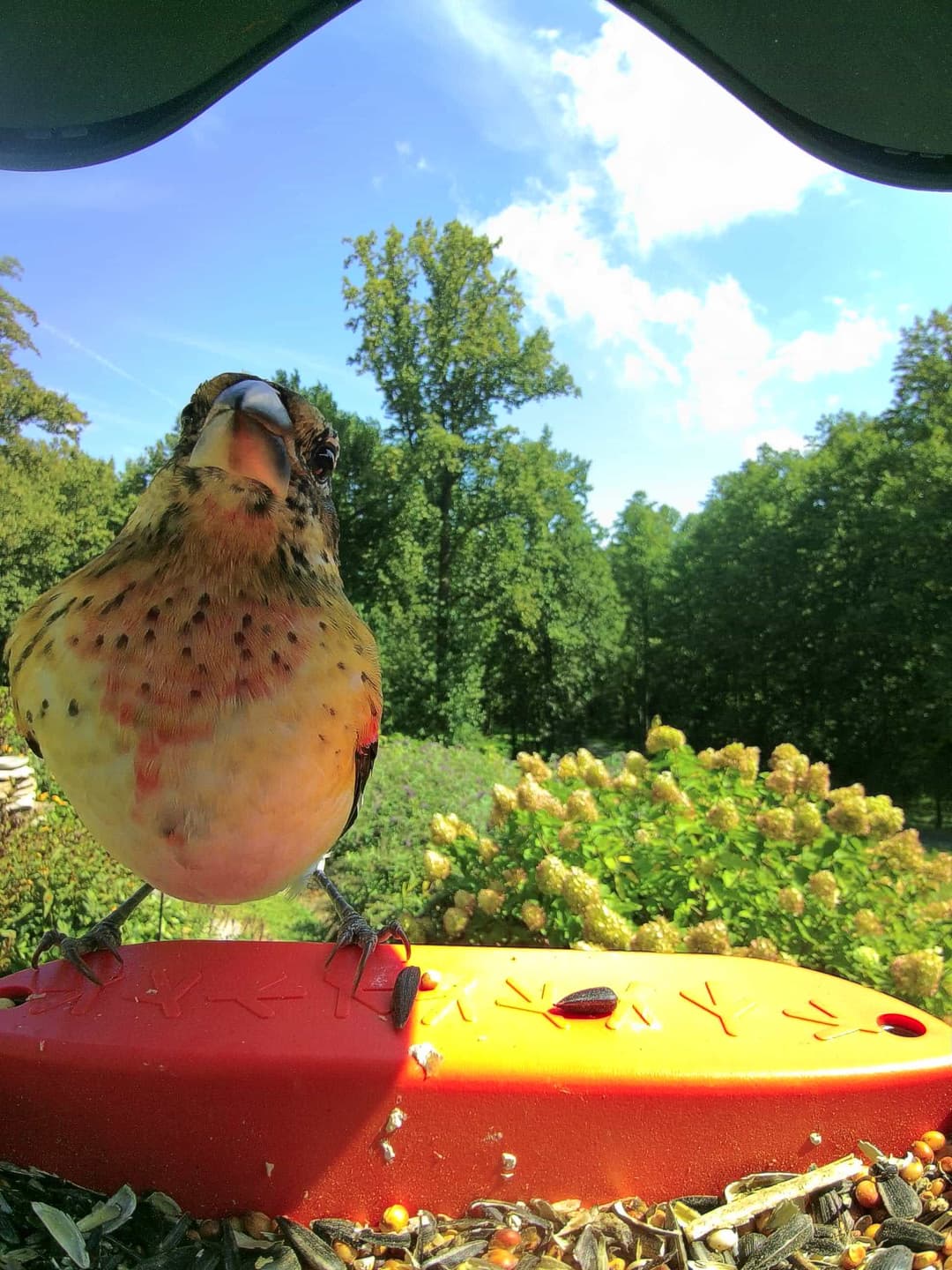
Black-Headed Grosbeak vs Rose-Breasted Grosbeak
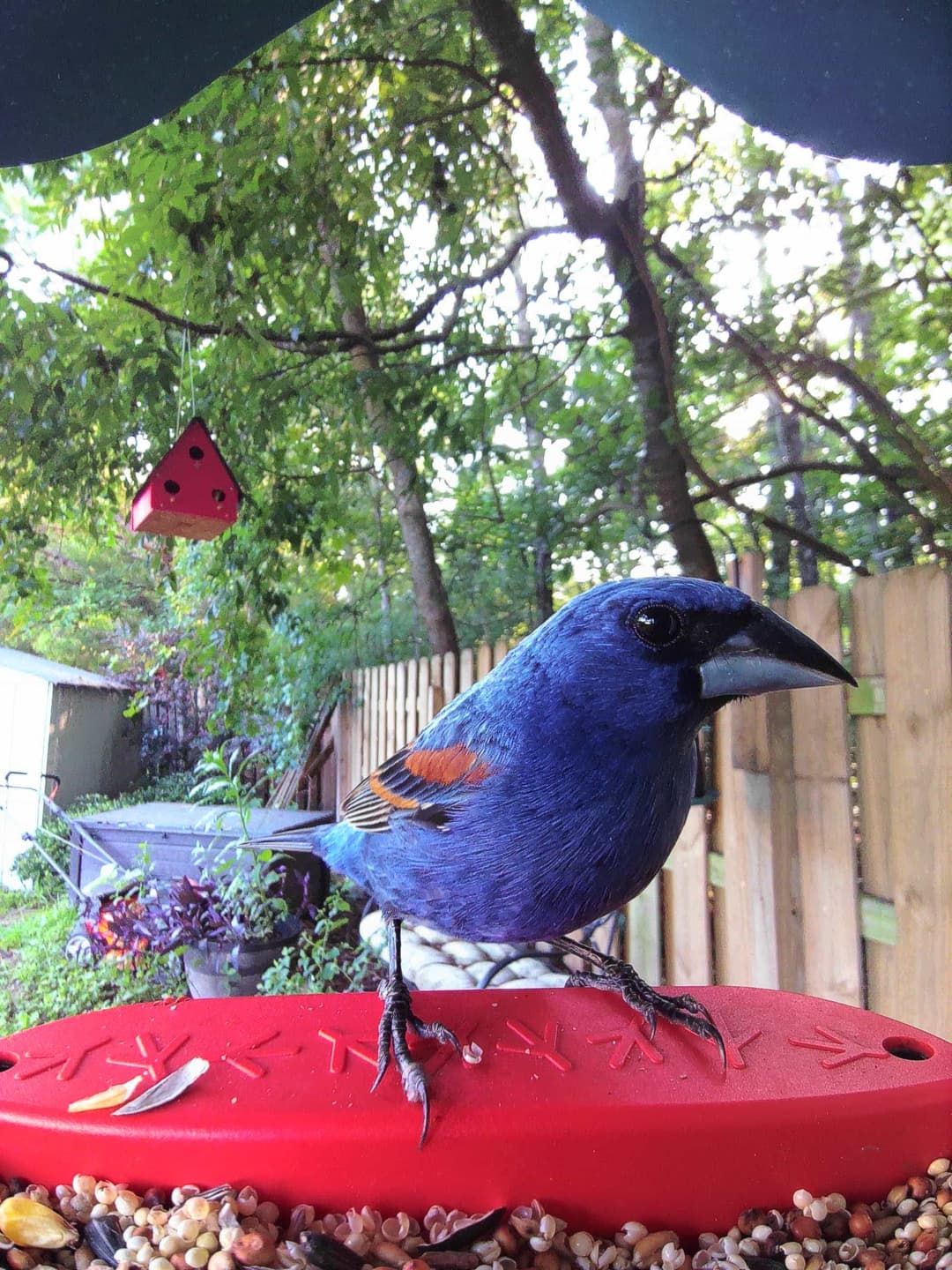
Black-Headed Grosbeak vs Blue Grosbeak
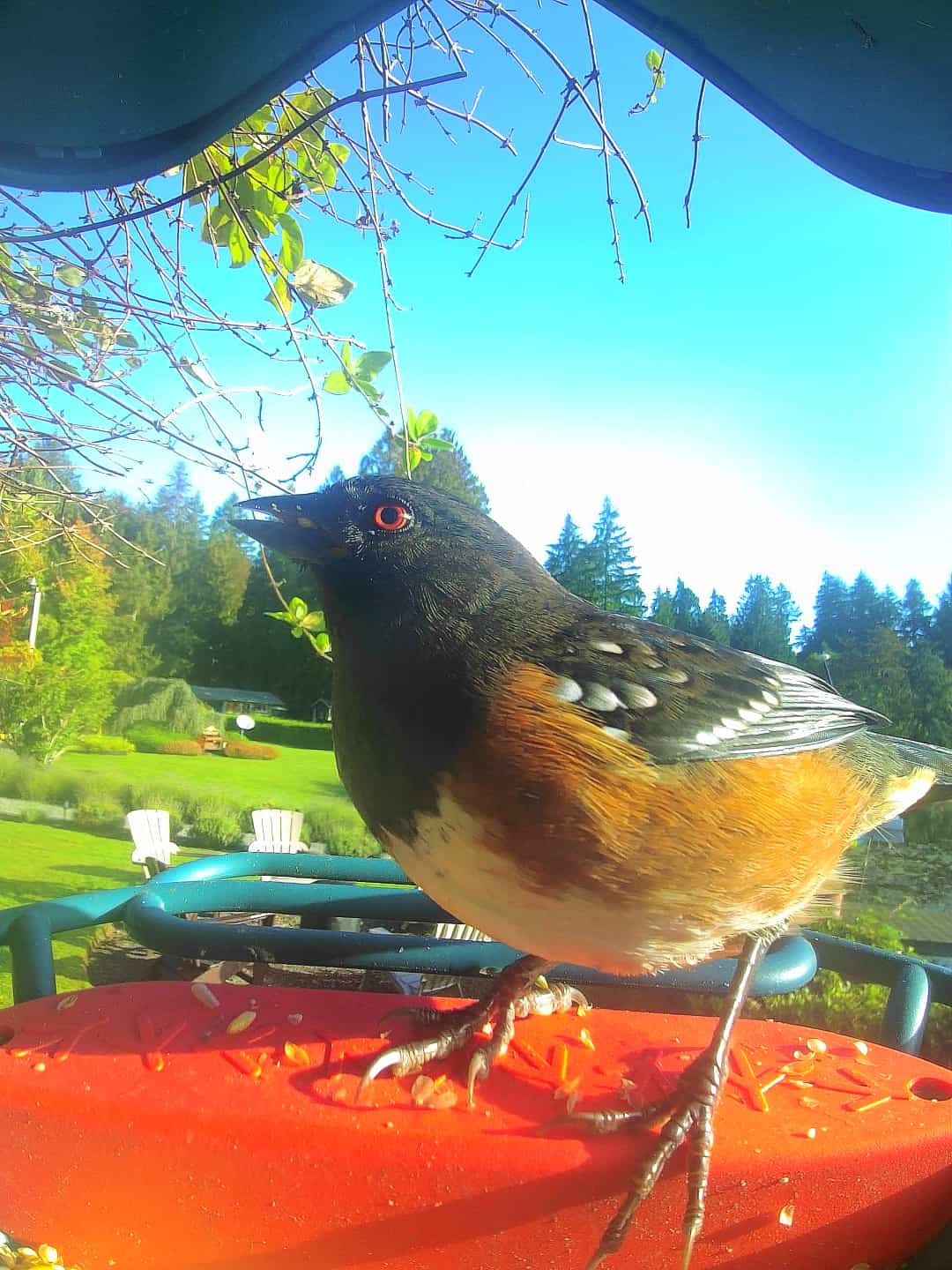
Black-Headed Grosbeak vs Spotted Towhee
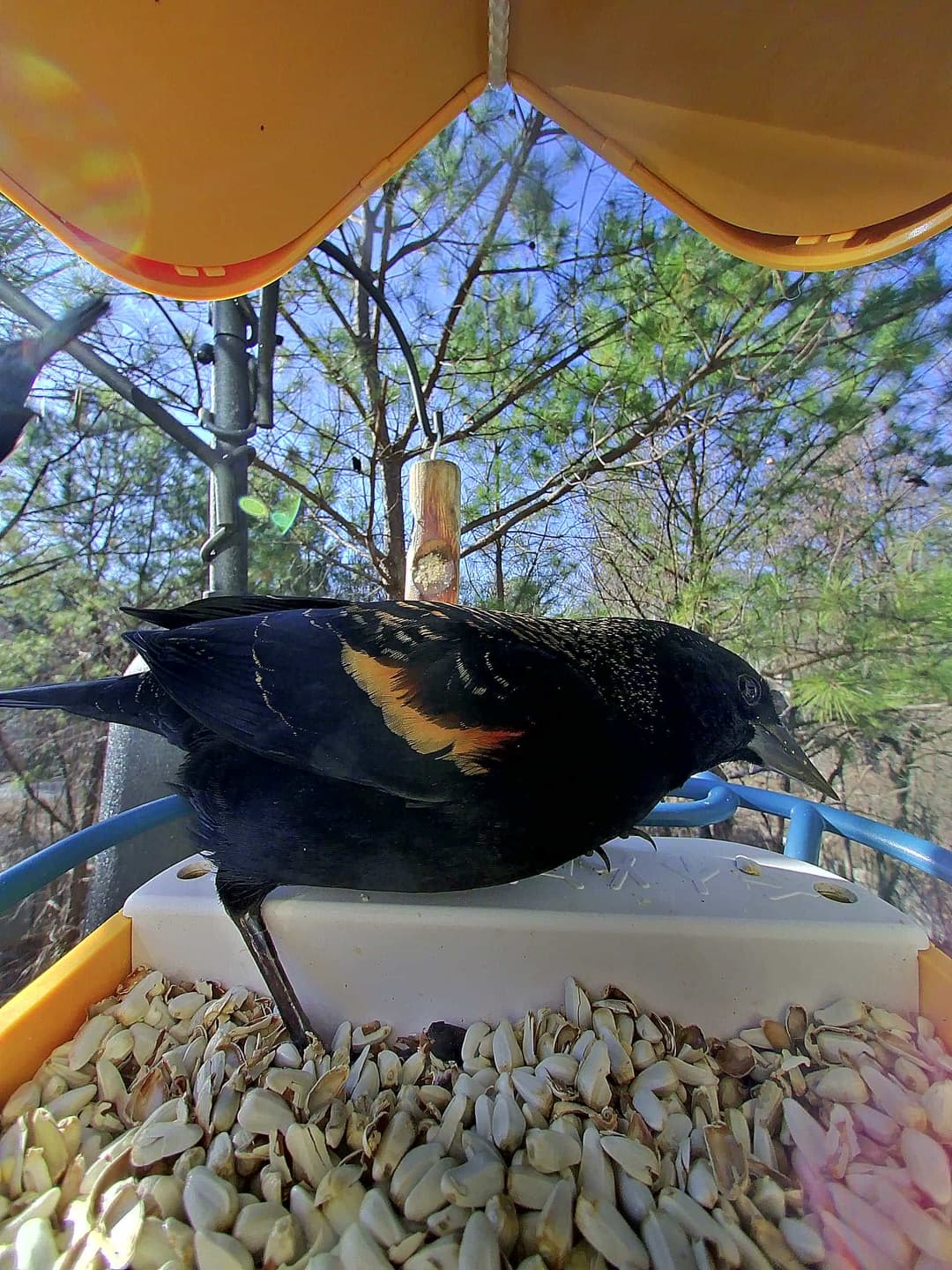
Black-Headed Grosbeak vs Red-Winged Blackbird
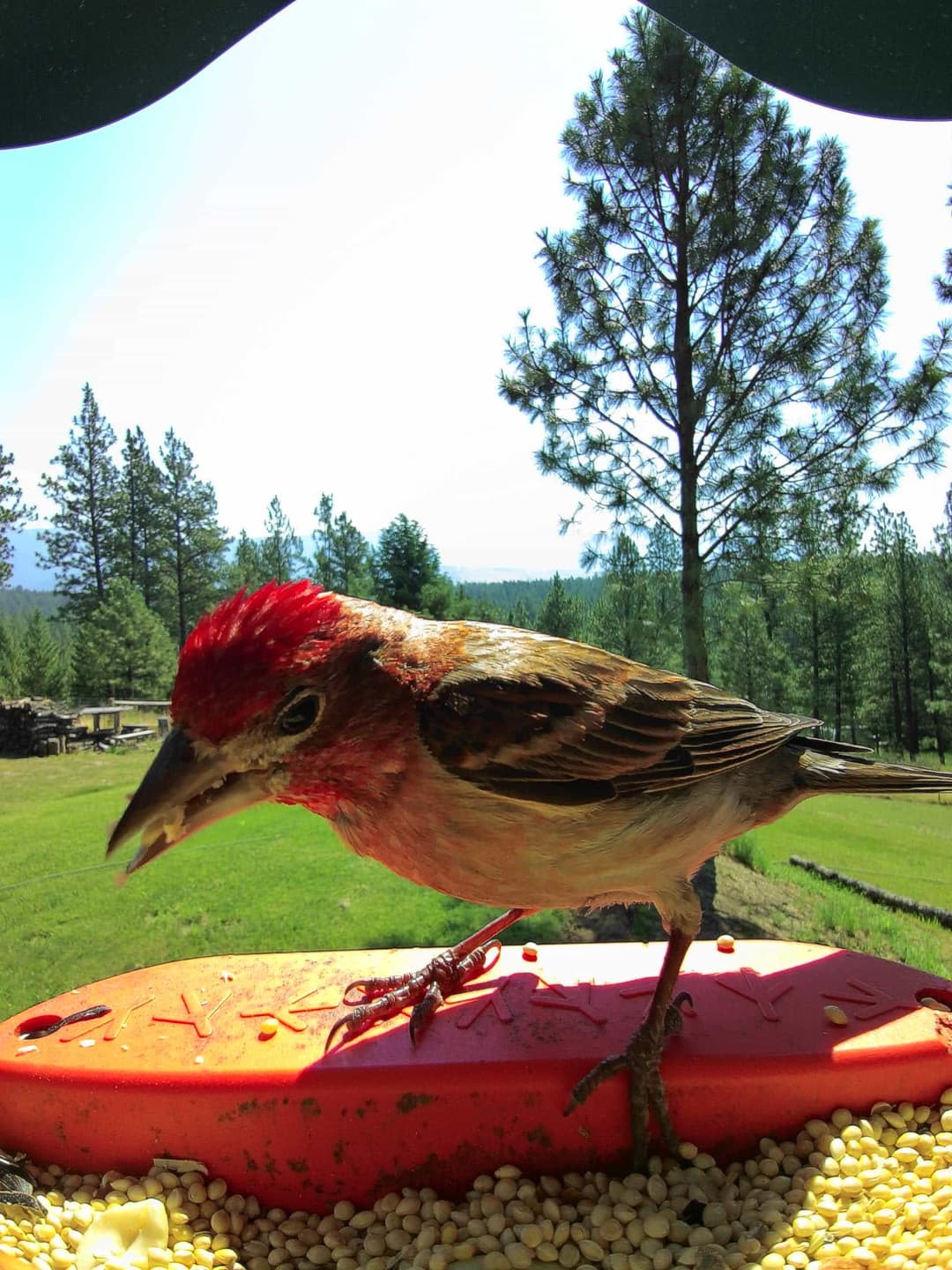
Black-Headed Grosbeak vs Cassin’s Finch
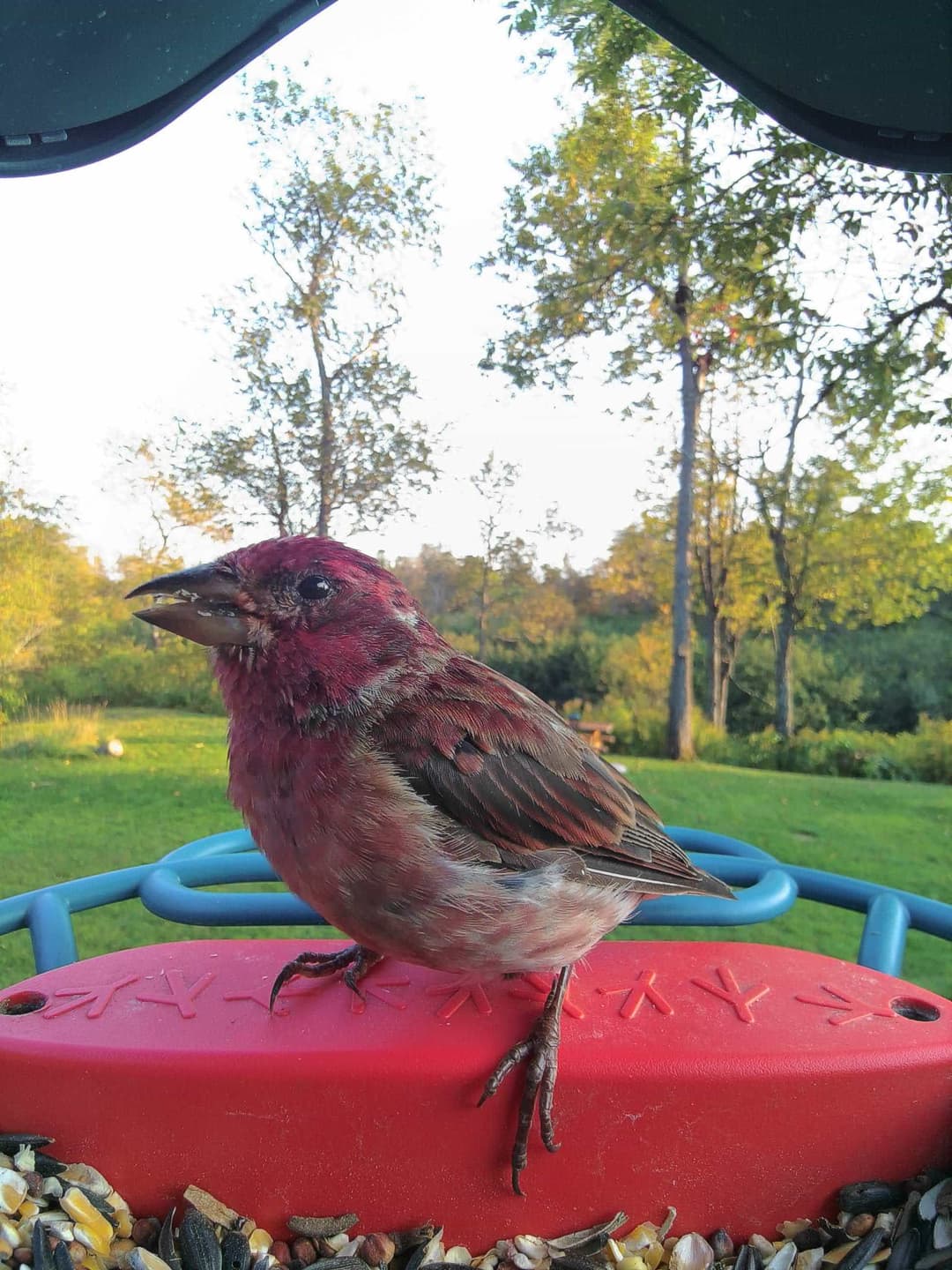
Black-Headed Grosbeak vs Purple Finch
Bullock’s Oriole vs Baltimore Oriole
Black-Headed Grosbeak vs [Select a bird]

[Select a bird]
Pick a bird to compare
Bullock’s Oriole vs [Select a bird]
[Select a bird]
Pick a bird to compare