Long-Billed Thrasher or Curve-Billed Thrasher?
Here's how to tell the difference

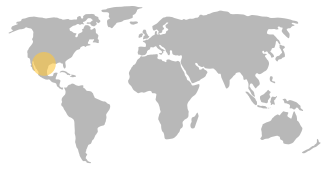

Long-Billed Thrasher
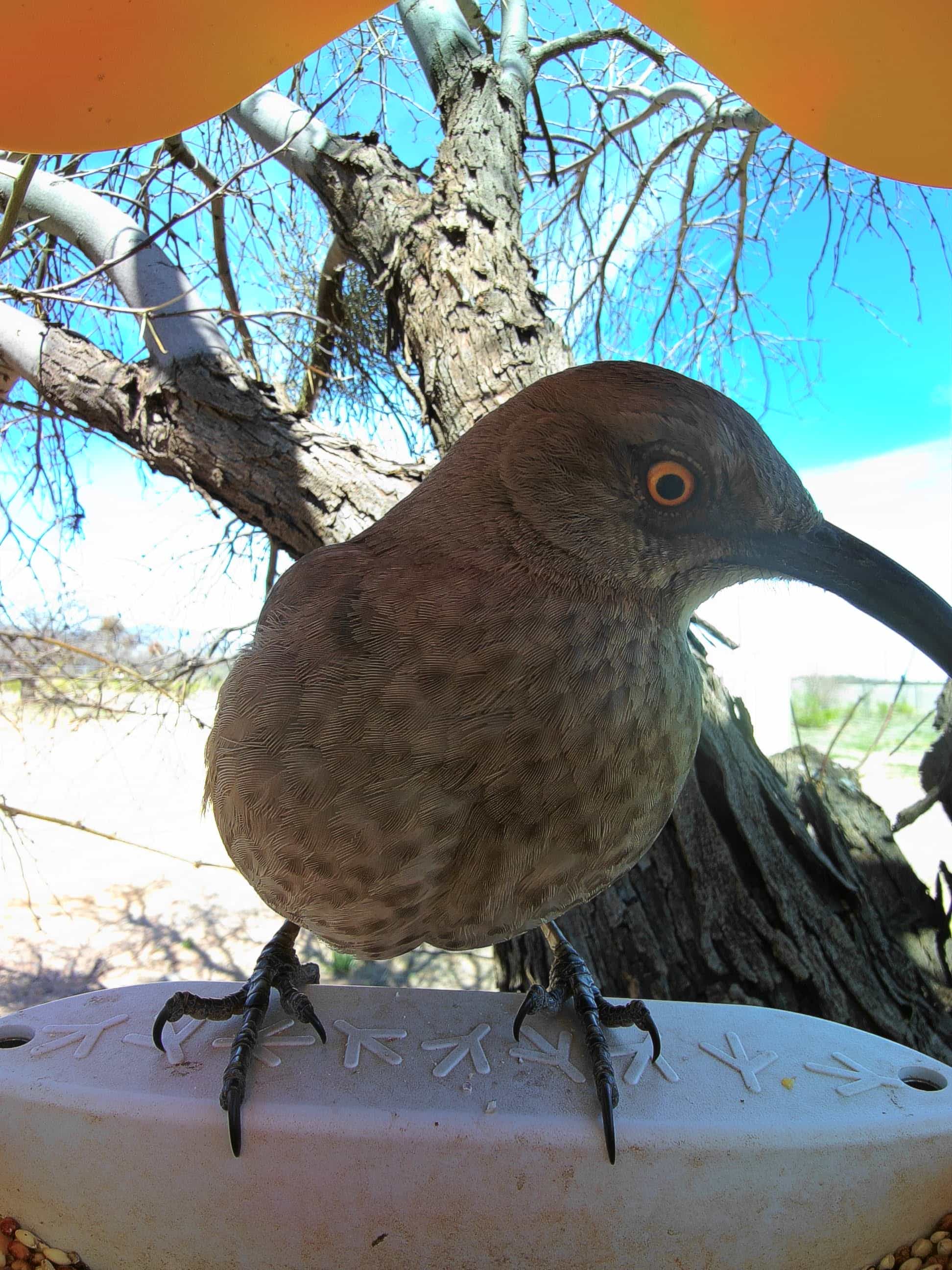


Curve-Billed Thrasher
Long-Billed Thrasher
Toxostoma longirostre
General appearance
The Long-billed thrasher has a body size of approximately 11 1/2" (29 cm), similar to the size of a Crow or a Robin. It has a broad-wing shape with long, rounded, wedge-shaped tail. The species is noted for its more grayish face compared to the Brown Thrasher, along with brighter orange eyes and slightly longer and curved bill. Its coloration features black, brown, gray, orange, red, and white.
Male vs female
There is no significant sexual dimorphism in the Long-billed thrasher. Both males and females share the same general appearance regarding size, coloration, and physical traits such as the broad wings, long bill, rounded and wedge-shaped tail.
Juvenile
Juvenile Long-billed thrashers are similar to adults in general appearance, but they may have a less intense coloration compared to adults. The gray on the face, the orange of the eyes, and the colors on the body might not be as bright as in adults. With age, they develop the definitive adult plumage and the distinct bright orange eye color.
Size
9.8 - 10.6 in/2.2 - 2.4 oz
There's more to learn about Long-Billed Thrasher
View full detailsCurve-Billed Thrasher
Toxostoma curvirostre
General appearance
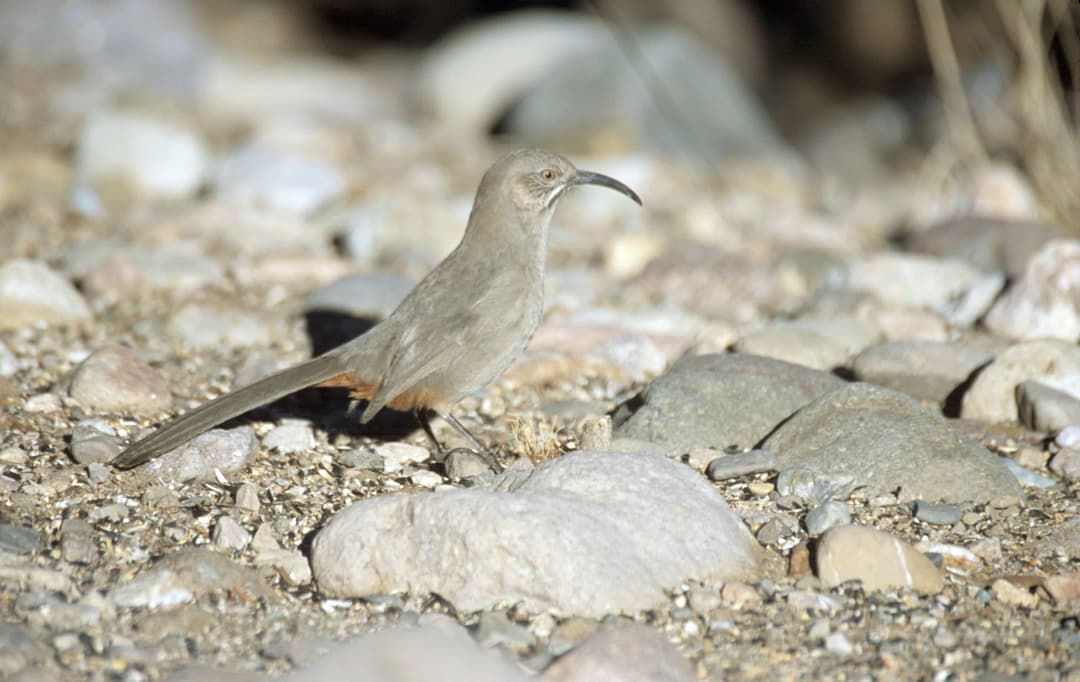
The Curve-billed Thrasher measures between 9.5 to 11.5 inches, equivalent to 24-29 cm, with similar sizes of a Crow. It has a broad wing shape and a long, rounded, and wedge-shaped tail. The overall color profile is a dull gray-brown featuring a black, moderately curved bill. Its eyes are distinctive with a yellow-orange coloration. In Texas specifically, they have more visible chest spots.
Male vs female
Unlike some bird species, the male and female Curve-billed Thrashers do not exhibit any noticeable physical differences in coloration, size, or marking. Both sexes possess the same dull gray-brown coloration, yellow-orange eyes, and the distinctive moderately curved black bill.
Juvenile
The juvenile Curve-billed Thrasher has a shorter bill compared to adults. Their upper chest carries sharper and more pronounced spots. Similar to their adult counterparts, they present with the same general color profile of gray-brown, though the coloring may slightly vary by season.
Size
10.6 - 11.0 in/2.0 - 3.3 oz
There's more to learn about Curve-Billed Thrasher
View full detailsHow to tell the Long-Billed Thrasher from the Curve-Billed Thrasher
Visual differences
The Long-Billed Thrasher measures about 11.5 inches, with a brighter gray face, bright orange eyes, and a more pronounced, slightly longer curved bill. In contrast, the Curve-Billed Thrasher ranges from 9.5 to 11.5 inches, is uniformly dull gray-brown, and features a moderately curved black bill with yellow-orange eyes. Additionally, the Curve-Billed Thrasher displays more visible chest spots, particularly in Texas. Both have broad wing shapes and rounded, wedge-shaped tails, but the Long-Billed Thrasher's wing colors are more vibrant.
Key differences and behavior
The Long-Billed Thrasher and Curve-Billed Thrasher exhibit distinct behaviors and preferences. Long-Billed Thrashers are notable for their strong pair bonds and collaborative nesting efforts in dense woodland habitats, thriving on a diet of insects and berries. Curve-Billed Thrashers, on the other hand, are more adapted to desert and suburban areas, identifiable by their distinct whistling calls and less collaborative mating rituals. They prefer cactus-dotted terrains, feeding on insects, berries, and cactus fruits. While Long-Billed Thrashers rarely visit bird feeders, Curve-Billed Thrashers are slightly more inclined but favor natural food sources. Both species are monogamous and share parenting duties, though their nesting habits differ, with Long-Billed Thrashers favoring dense shrubs and Curve-Billed Thrashers opting for cacti or low shrubs. These behavioral distinctions play a key role in identifying these thrashers in their respective habitats.
Still not sure? Here are more lookalikes!
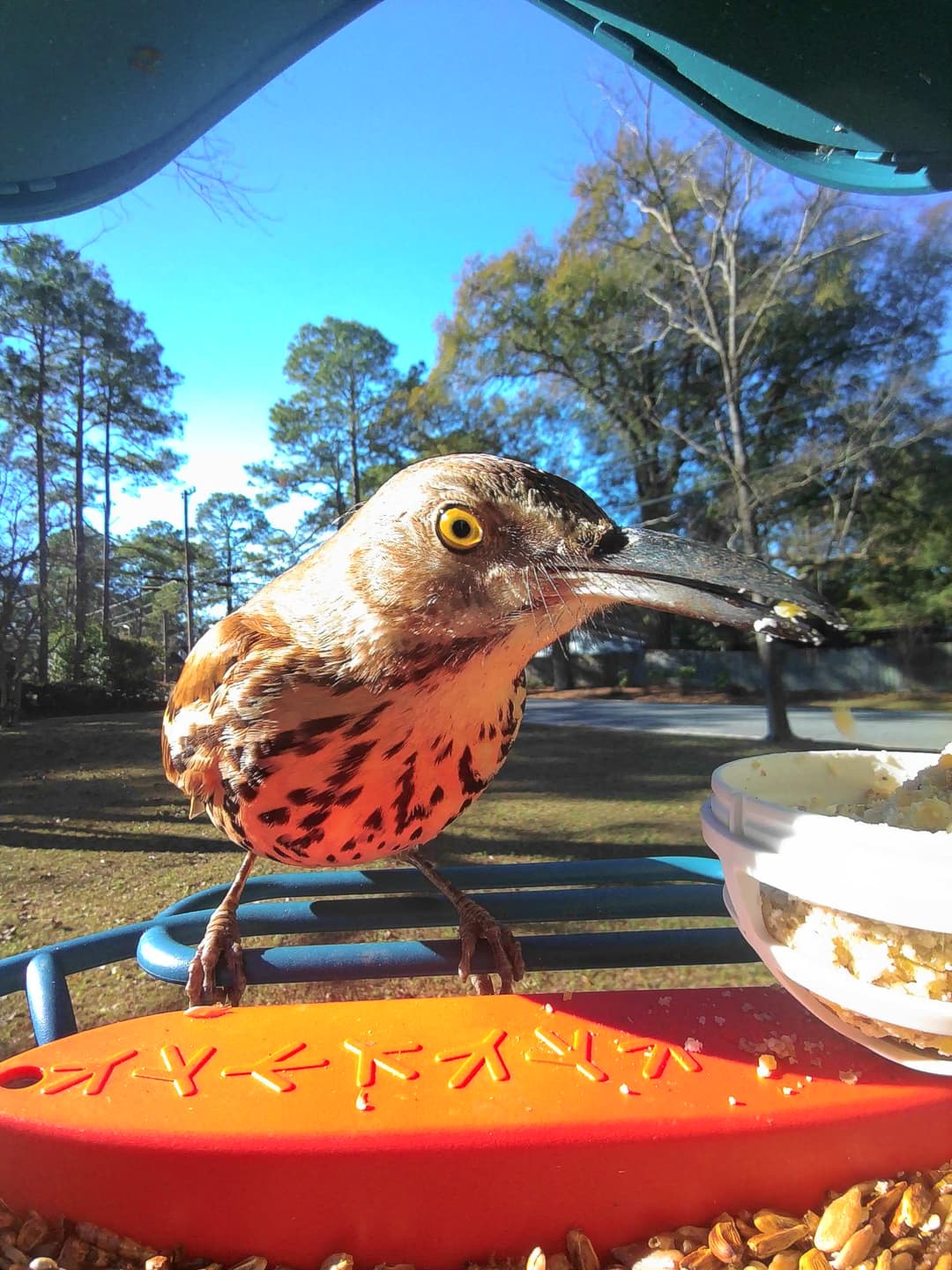
Long-Billed Thrasher vs Brown Thrasher

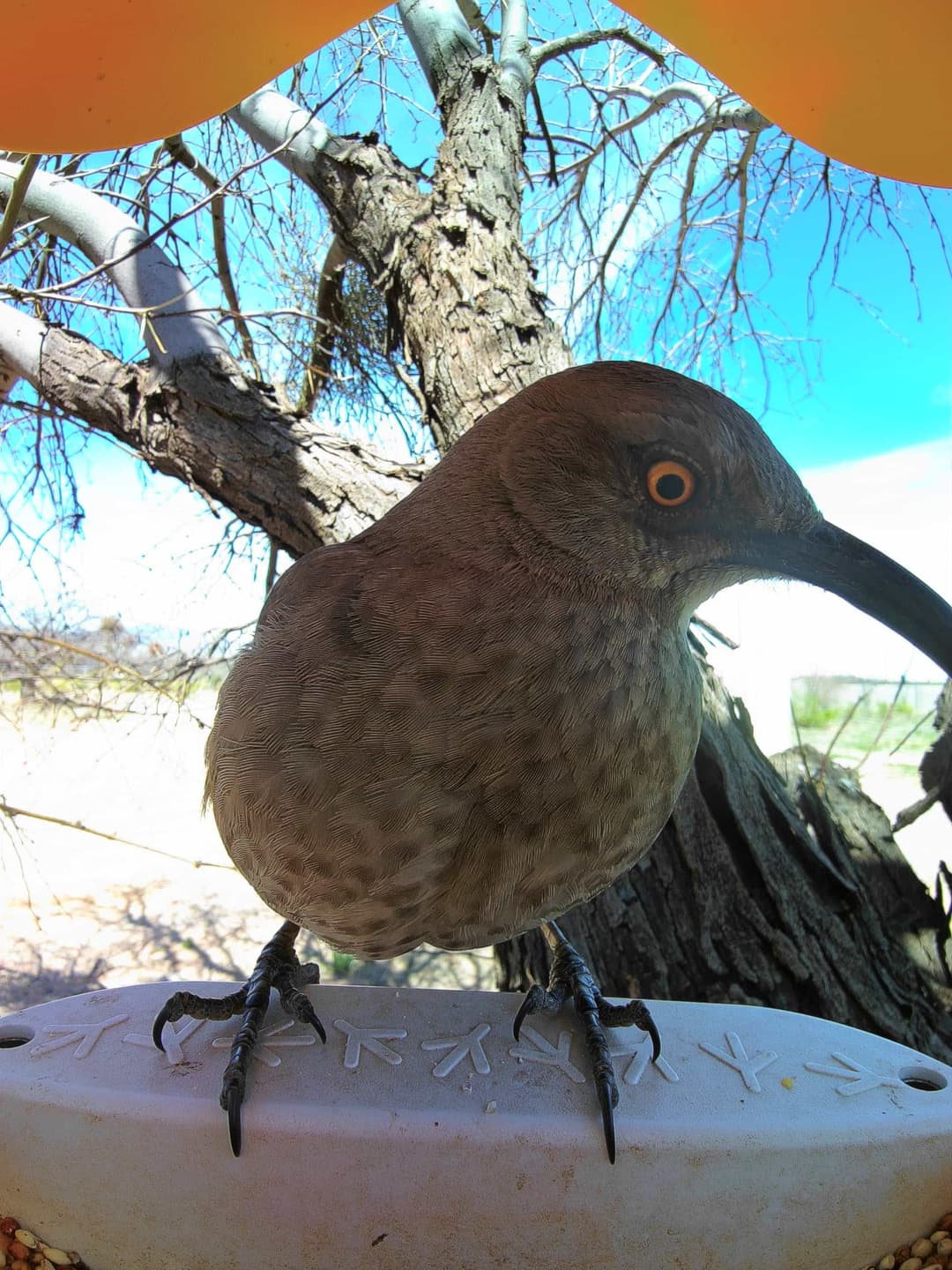
Curve-Billed Thrasher vs Crissal Thrasher
Long-Billed Thrasher vs [Select a bird]

[Select a bird]
Pick a bird to compare
Curve-Billed Thrasher vs [Select a bird]
[Select a bird]
Pick a bird to compare